
Library | ESG issues
Long-termism
Long-termism prioritises enduring strategies over immediate gains, ensuring sustainable development and resource availability for future generations. Corporations and investors are encouraged to consider the long-term consequences of their decisions, moving beyond short-term profit motives to incorporate sustainability and intergenerational impacts. A long-term approach can enhance financial resilience, mitigate risks, and generate more stable and sustainable returns over time.



Refine
215 results
REFINE
SHOW: 16


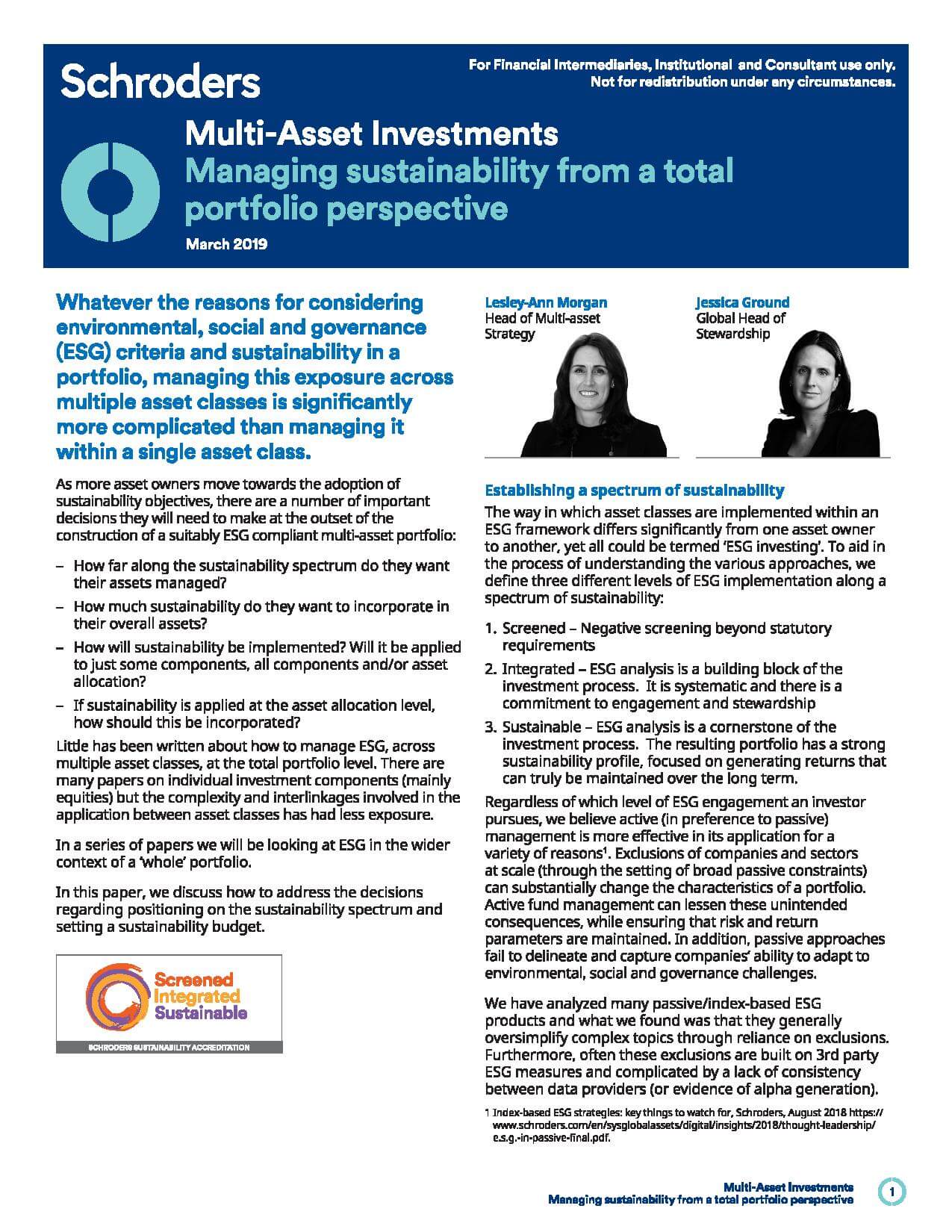
Multi-asset investments: Managing sustainability from a total portfolio perspective
Integrating environmental, social and governance (ESG) criteria into existing portfolios involves considerations beyond benchmark tracking and diversification such as budgets for governance and risk as well as portfolio impacts of different types of ESG implementation. The report explores ESG portfolio integration as well as outlining trade-offs in portfolio management.

Mapping of global responsible investment best practices
Responsible investment is gaining momentum globally as an integral part of asset management, incorporating Environmental, Social and Governance (ESG) considerations into investment decision-making. Inflection Point Capital Management analyses the efforts by a number of asset owners to implement responsible investment processes, and provides best practices for institutional investors to follow.

The world's dumbest idea
An exploration into the problems that are present within the concept of shareholders value maximisation (SVM). Montier examines the history which has lead to the adaptation of this idea and the potential impact it has on the economy.
Investment Leaders Group
Investment Leaders Group (ILG) is a project to help shift the investment chain towards responsible, long-term value creation, such that economic, social and environmental sustainability are delivered as an outcome of the investment process alongside satisfactory, long-term investment returns. Jointly conceived by the University of Cambridge and Natixis Asset Management.

Navigating the sustainable investment landscape
This paper informs asset owners about the current state of sustainable investing for US institutional investors. Drawing on the experiences of over 100 asset owners and investment professional as well as evidence from WRI’s own endowment the paper constructs a detailed outline of sustainable investing. It highlights the underlying motives and drivers, governance structures, relevant data and standards, investment vehicles, and key barriers that shape opportunities for implementation.
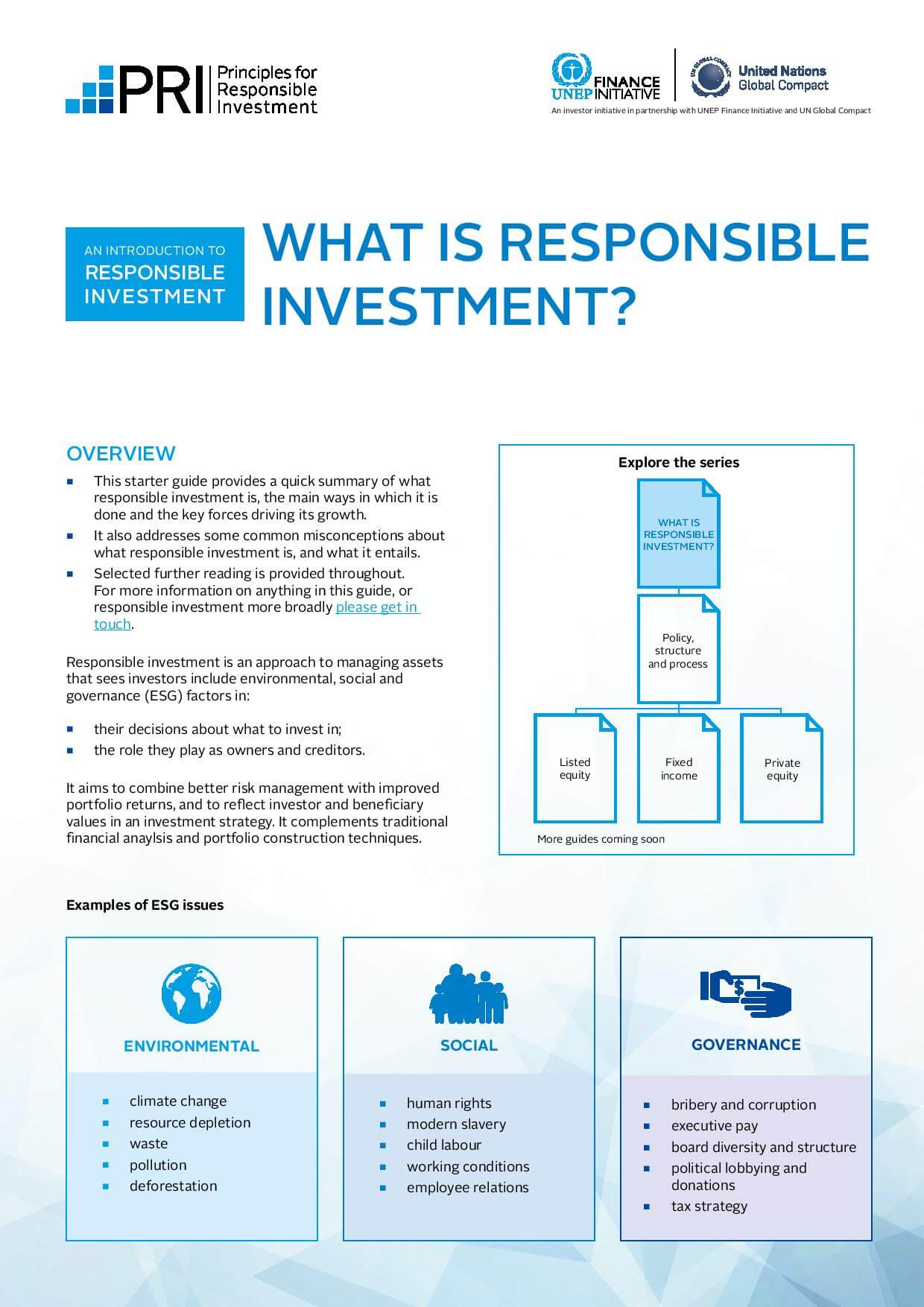
What is responsible investment?
This article defines responsible investment, highlights the ways in which it is currently applied to managing assets, and outlines the key forces driving its growth. Additionally, it discusses common misconceptions about responsible investment.
Long-term portfolio guide
This research focuses on providing a framework for institutional investors to improve long-term outcomes for their portfolios, their investee companies and for their stakeholders. This framework is comprised of five core action areas: investment beliefs, risk appetite statement, benchmarking process, evaluations and incentives, and investment mandates.


