
Library | ESG issues
Reporting & Disclosures
Reporting and disclosures provide transparency on a company’s financial performance, strategy, and sustainability practices. Clear, reliable disclosures improve stakeholder trust, inform investment decisions, and drive corporate accountability.
Team Altiorem recommends


Refine
708 results
REFINE
SHOW: 16


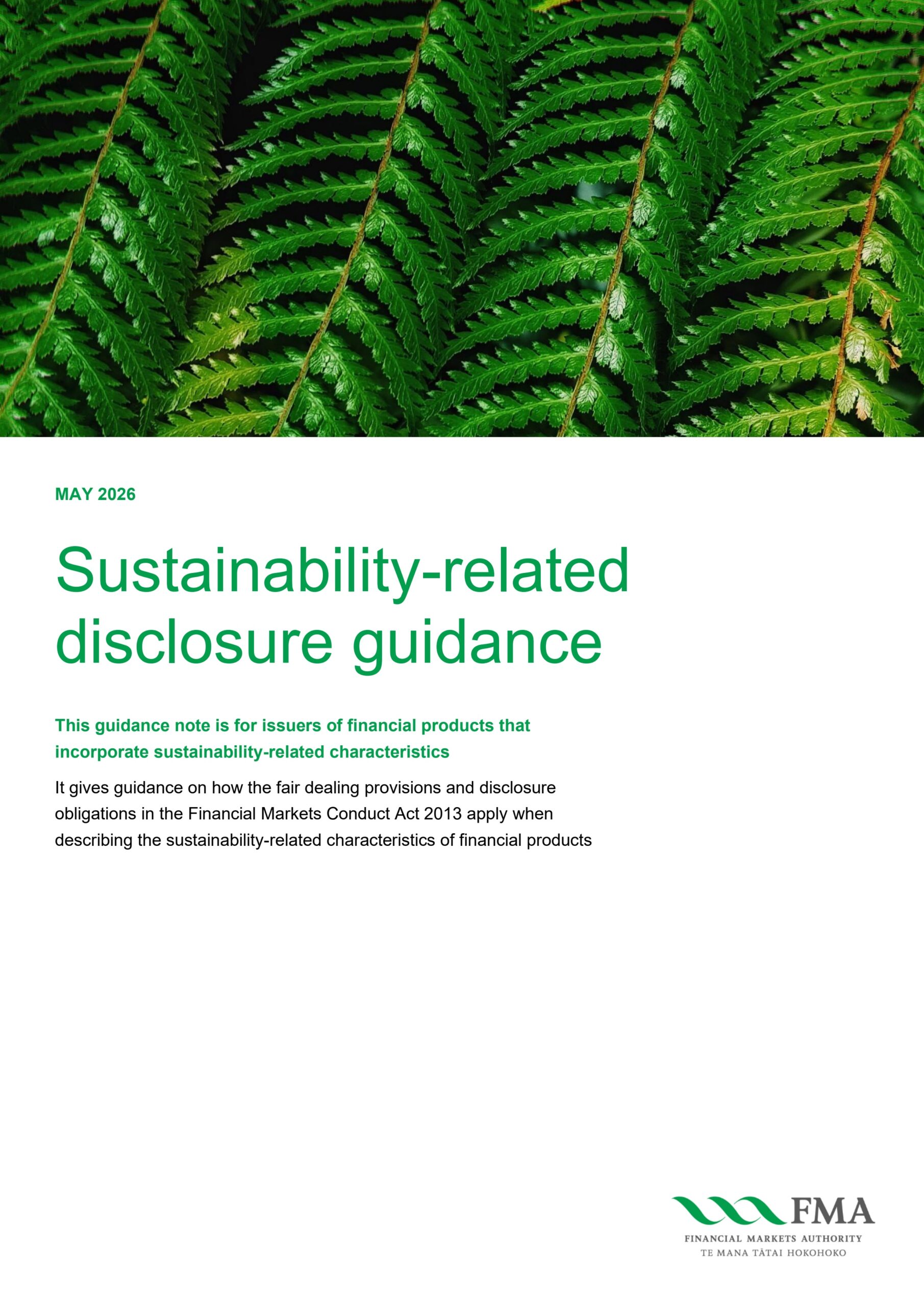
Sustainability-related disclosure guidance
New Zealand's Financial Markets Authority guidance on sustainability-related disclosure for financial product issuers. Covers fair dealing obligations under the Financial Markets Conduct Act 2013, addressing greenwashing and greenhushing risks, with practical guidance on clear claims, substantiation, consistent messaging and third-party management.
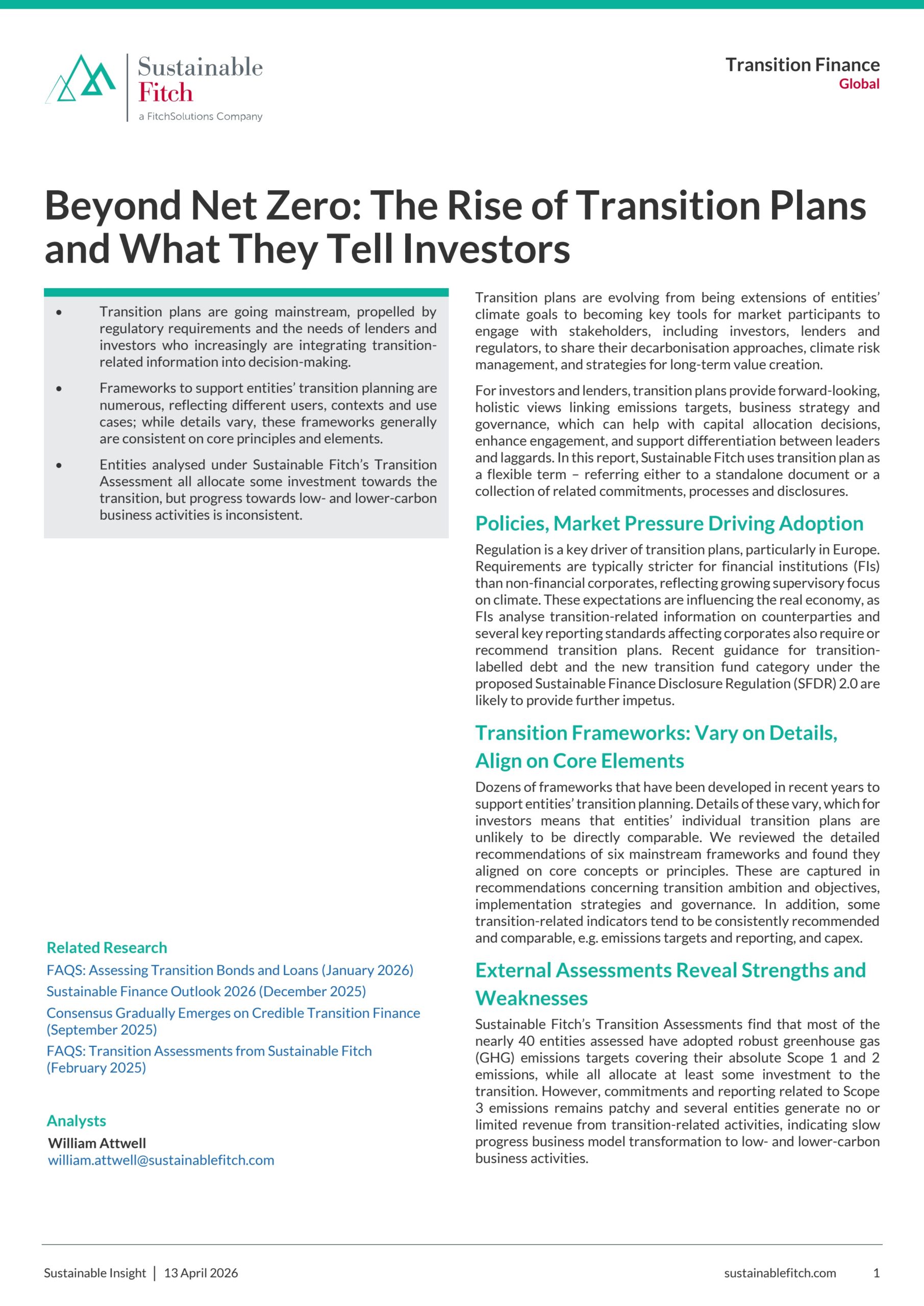
Beyond net zero: The rise of transition plans and what they tell investors
This Sustainable Fitch report examines the rise of corporate transition plans, driven by regulatory requirements and investor demand. It reviews six mainstream transition planning frameworks, finding alignment on core principles but variation in detail, and analyses around 40 entities, revealing strong Scope 1 and 2 targets but patchy Scope 3 commitments and limited transition revenue.
From fragmentation to insight: Why data convergence matters for scaling impact
This report examines the need for data convergence in impact investing to address fragmentation. It advocates adopting a structured, Theory of Change-based data model to standardise information across portfolios. Such a structure enhances interoperability, streamlines data management, and enables advanced analytics, ultimately improving decision-making and scaling impact effectively.
Sustainable finance and corporate law: Lessons from the US
This report analyses the trajectory of sustainable finance and corporate law in the US. It focuses on the SEC's proposed climate disclosure rule and California's state-level reporting mandates, examining the political and institutional challenges these initiatives face and the implications of a federalist approach for corporate compliance.
Making your city investable: A practical guide to green finance
This guide outlines how local governments can access green finance by shifting from ad hoc initiatives to embedded institutional strategies. Highlighting successful international examples, it emphasises the importance of transparent governance, predictable project pipelines, and standardised reporting to build investor confidence and secure long-term climate capital.
Socially-minded investors and corporate behavior
This report examines whether socially-minded investors influence corporate behaviour through voting, managerial incentives, or identity investing. It concludes that existing channels offer limited impact and evaluates potential legal reforms, such as binding shareholder votes and mandatory disclosures, to better align corporate actions with these investors' preferences.

Cracking the code: Using nature data to understand the impact of the ASX200
This report analyses the nature-related impacts of Australia's ASX200 companies. It finds that utilities, energy, and materials sectors exert the highest direct environmental pressures, whereas financials and retail sectors possess significant supply chain impacts. The report advocates for TNFD-aligned disclosures and proactive investor stewardship to mitigate systemic risks.
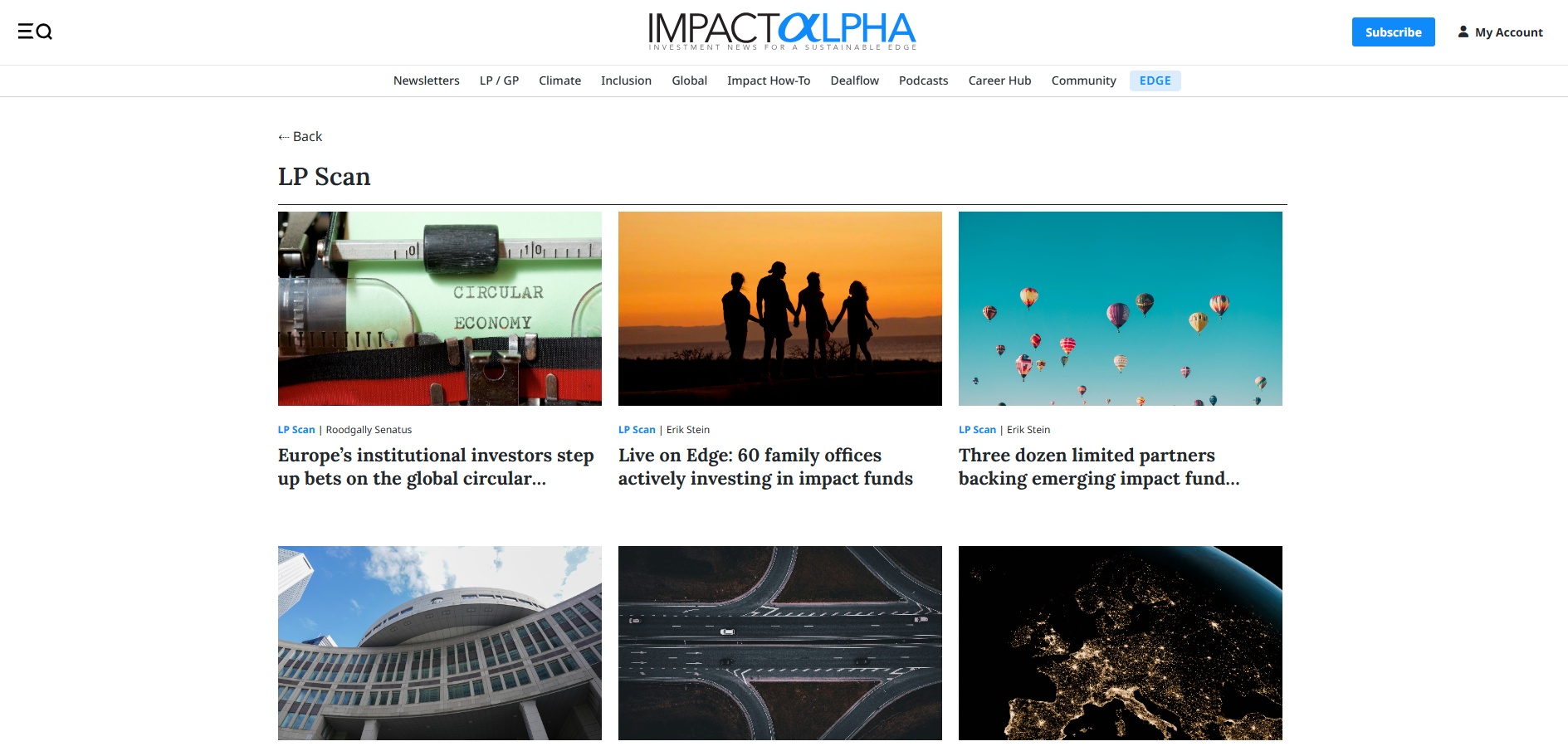
LP Scan
ImpactAlpha’s LP Scan is a dealflow and market intelligence resource that tracks limited partner (LP) activity, fund allocations and investment trends across impact investing. It provides insights into institutional investors, capital flows and fundraising activity to help market participants identify opportunities and understand developments in sustainable and impact finance.
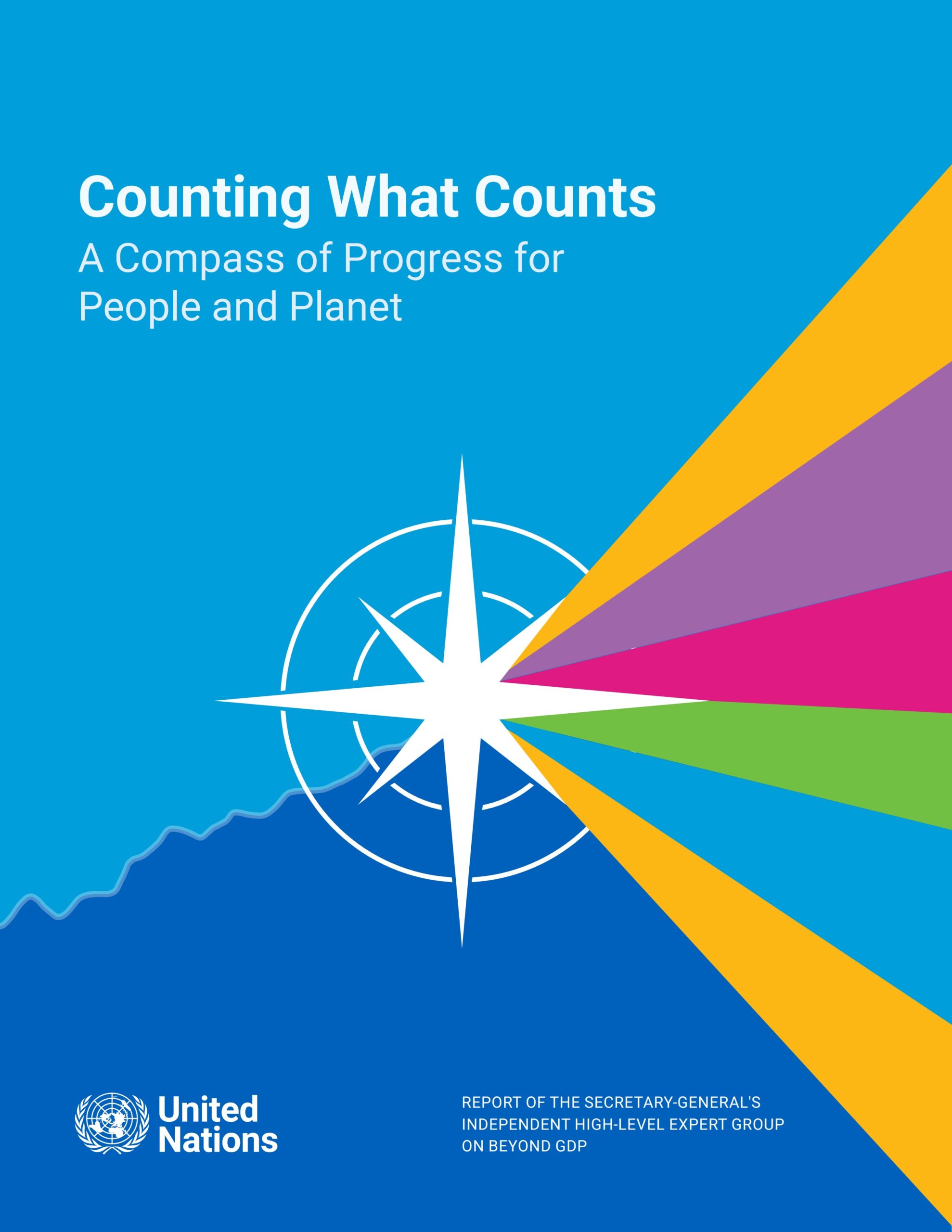
Counting what counts: A compass of progress for people and planet
This report presents a new framework and a dashboard of 31 indicators proposed by the UN High-Level Expert Group to measure societal progress beyond GDP. It emphasises equitable, inclusive and sustainable well-being, offering actionable recommendations for global adoption and enhanced statistical capacity by 2027.
The state of sustainable finance (2025-2030) global architecture, jurisdictional approaches and emerging trends
This report examines global sustainable finance architecture and institutional shifts from 2025 to 2030. It assesses regulatory approaches across nine major jurisdictions, highlighting the European Union as the benchmark. The analysis identifies structural trends, including transition finance scaling, nature risk integration, and the harmonisation of sustainability reporting.

RIAA Conference Australia 2026 - Companion Resources
Responsible investment has moved well beyond principles and pledges. Today’s challenges require practical capability and informed judgement. The RIAA Conference is a must-attend event for finance, sustainability and industry practitioners who want to focus on the key themes for responsible investment in 2026 and what implementation really looks like. Designed as an immersive, hands-on experience, the program focuses on the systems that underpin strong financial performance, and will help you understand how climate, nature, technology, governance and regulation intersect.
These specially curated companion resources have been recommended by the conference speakers and Altiorem team.
These specially curated companion resources have been recommended by the conference speakers and Altiorem team.
Applying TNFD nature-related metrics in the fishing sector: Insights from investors and industry
TNFD guidance for the fishing sector outlines how investors and seafood companies use nature-related metrics to assess risks, disclosure and stewardship. Findings highlight growing demand for traceability, stock health and bycatch data, while noting certification interoperability, persistent data gaps and emerging access to blue finance instruments.
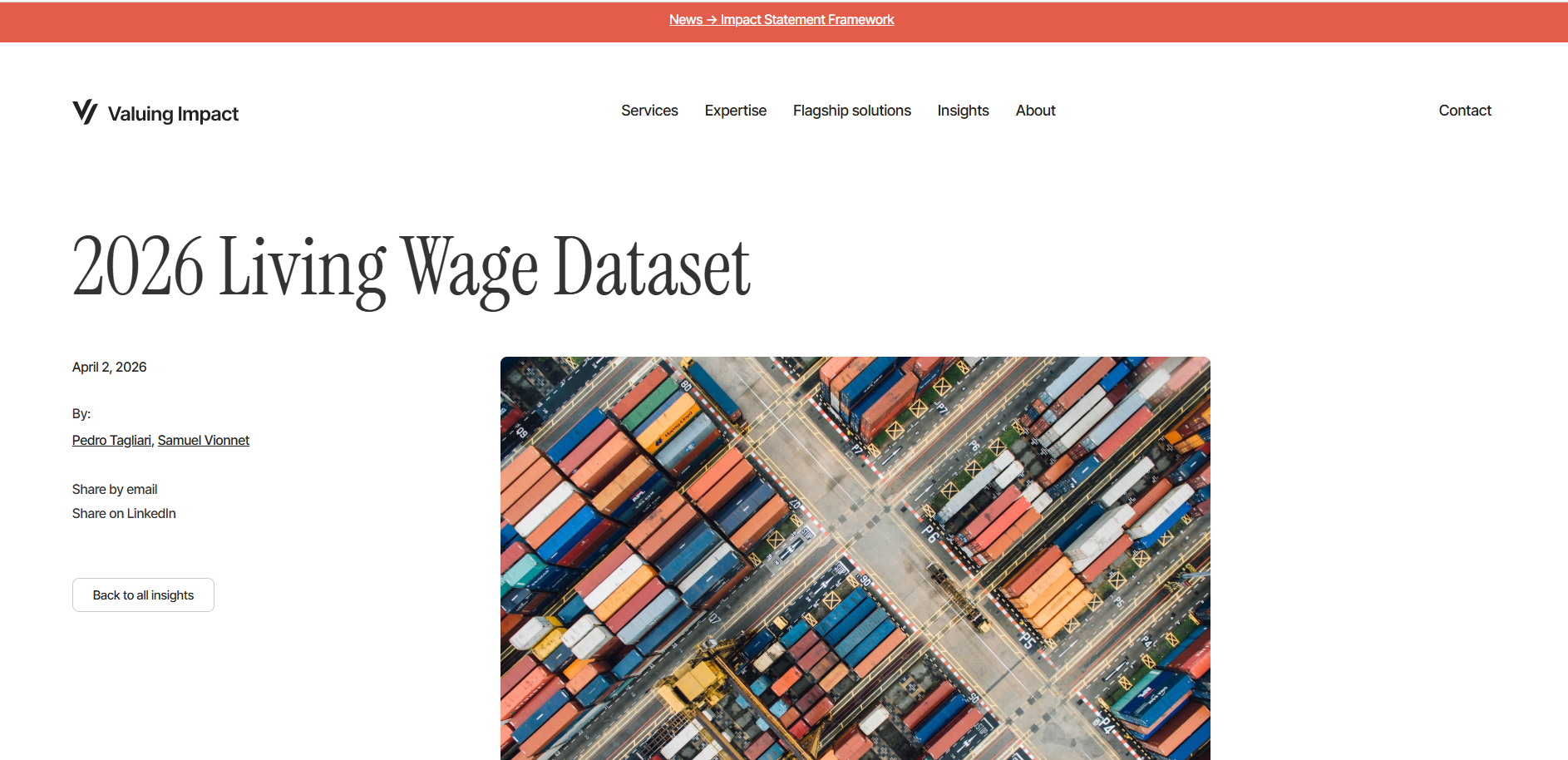
2026 Living Wage Dataset
The 2026 Living Wage Dataset by Valuing Impact is a free global database covering 217 countries and eight household scenarios. It uses the Anker and Anker methodology with updated cost-of-living data to estimate living wages for urban and rural households, supporting sustainability, labour practice and supply chain analysis.
Discussion paper on state of nature measurement
Discussion paper outlines integrating state of nature metrics into TNFD, GRI and SBTN frameworks. It proposes embedding consensus metrics from the Nature Positive Initiative across assessment, disclosure, transition planning and target-setting, highlighting ecosystem extent and condition as central to evaluating nature-related dependencies, risks and opportunities.
Impact statement framework: Valuing, accounting and reporting societal impact
Framework for impact statements, valuing organisations’ societal effects across natural, human and social capital using eQALY. It outlines scope, data, modelling, reporting, governance and case studies to support comparable, decision-useful impact valuation.
A director’s guide to mandatory climate reporting: Version 2
Provides guidance for directors on Australia’s mandatory climate reporting regime, outlining regulatory requirements, governance expectations, and disclosure obligations under AASB S2. Explains implementation timelines, assurance pathways, and practical steps to manage climate-related risks, opportunities, and reporting processes within corporate reporting frameworks.


