
Library | SDGs
GOAL 09: Industry, Innovation and Infrastructure
Refine
301 results
REFINE
SHOW: 16



Leveraging copper for economic transformation: Policy choices for value addition in Zambia
This report examines strategies for Zambia to add value to its copper resources. It identifies expanding smelting and refining as immediate opportunities to increase annual exports by USD 3.7 billion by 2030. Success requires addressing binding constraints, primarily unreliable electricity, high finance costs, and trade logistics inefficiencies.
Raw power: China locks-in global dominance of critical minerals and metals with $120bn outbound investment surge
This report details China's structural "Going Global" strategy, tracking over US$120 billion in outbound investment since 2023 to secure critical mineral supply chains. It examines China's refining dominance and provides strategic recommendations for Australian policymakers to build domestic value-adding capacity in the zero-emissions economy.
The microstructure of AI diffusion: Evidence from firms, business functions, and worker tasks
This research examines AI diffusion through US firms, distinguishing between organisational adoption and worker-level use. While adoption is growing, it remains concentrated in large, knowledge-intensive sectors. Findings indicate AI primarily augments worker tasks, with capital substitution being more prevalent than labour displacement at this stage of technological integration.
Global MDB Investments in Petrochemicals Tracker
An interactive database and map developed by IEEFA and IAP that tracks over USD 10 billion in petrochemical investments from 16 multilateral development banks, highlighting institutional exposure to fossil-fuel-intensive projects.
Investing in tomorrow: The electrification opportunity
New Zealand households and businesses could save $10.7 billion annually by 2040 through electrification. This report details how replacing fossil fuel appliances and vehicles with electric alternatives, supported by solar and batteries, reduces total energy use by 70% and provides cumulative national savings of $95 billion while substantially cutting emissions.

Urban planning for the circular economy: A spatial turn in theory and practice
This report examines how urban planning can operationalise the circular economy by addressing spatial dimensions. Drawing on European city experiences, it explores circular developments, infrastructure, land management and multi-level governance. It provides strategic directions for integrating circularity into core planning instruments to support systemic, territorially grounded transitions.
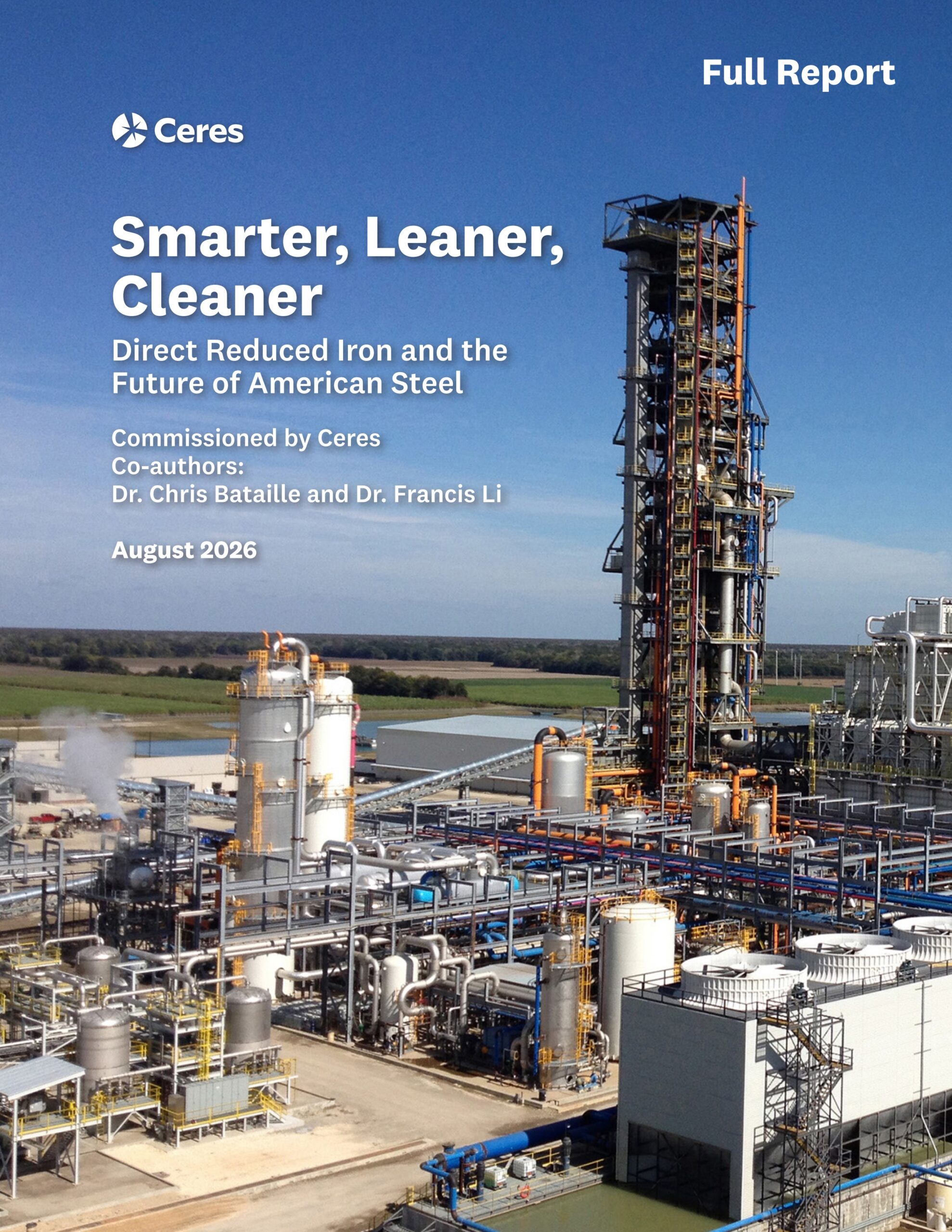
Smarter, leaner, cleaner: Direct reduced iron and the future of American steel
Direct Reduced Iron (DRI) is the most cost-effective new-build investment for the American steel sector. This analysis confirms that natural-gas-based DRI meets investment hurdles across all regions, offering a 15% real return and significant emissions reductions while providing flexibility for future hydrogen integration.

BSI Net Zero Barometer Report Series
This benchmark series examines the UK business landscape's transition to net zero. It tracks commitment levels, drivers, and barriers among senior decision-makers. The research explores how organisations are reframing sustainability as a commercial necessity and highlights the demand for government support, financial incentives, and standardised guidance to achieve 2050 targets.
Artificial intelligence and the future of finance: A framework for structural change
This report examines how artificial intelligence is transforming capital markets by shifting the industry from informational scarcity to analytical abundance. It introduces a structural framework involving capability, adoption, substitution, and recomposition, exploring alternative future states and the evolving nature of fiduciary accountability, market stability, and professional expertise.
Clean economic corridors in Africa: Integrating energy, industry, and transport for low carbon growth
This report examines the development of integrated energy-industry-transport corridors in Africa to foster low-carbon growth. It details strategies for decarbonising logistics and manufacturing, particularly in steel and cement. By linking industrial hubs with renewable energy, African nations can enhance regional trade, competitiveness, and sustainable economic development.
Firm data on AI
This research provides international data on firm-level artificial intelligence adoption across the US, UK, Germany, and Australia. While current impacts on employment and productivity are small, senior executives predict a 1.4 per cent productivity boost and a 0.7 per cent reduction in employment over the next three years.
Industrial policies for multi-stage production: The battle for battery-powered vehicles
This research analyses industrial policies for the multi-stage electric vehicle supply chain. It evaluates consumer subsidies and local content requirements, finding that while protectionist measures expand domestic production, they can significantly increase costs and reduce overall adoption compared to unconditional subsidies that maximise scale economies.
AI managed household portfolios: A preliminary report
This research investigates AI-managed household portfolios, finding that large language models recommend undiversified portfolios concentrated in high-momentum, large-cap technology stocks. While returns may exceed market benchmarks, they do not provide abnormal returns when adjusted for risk characteristics. Recommendations are primarily driven by media attention rather than investment skill.
Seeing the goal, missing the truth: Human accountability for AI bias
Research demonstrates that Large Language Models exhibit purpose-conditioned bias when informed of downstream tasks. Goal-aware prompting leads to in-sample overfitting and inflated performance before knowledge cutoffs. Results indicate that disclosing objectives compromises neutrality, necessitating the separation of measurement and evaluation in AI-assisted workflows to ensure statistical validity.

Global Nature Watch
Global Nature Watch is an AI-powered Earth monitoring platform developed by the World Resources Institute and Google. It provides near-real-time data on land-use changes across various ecosystems to support nature-based risk assessment and environmental reporting.
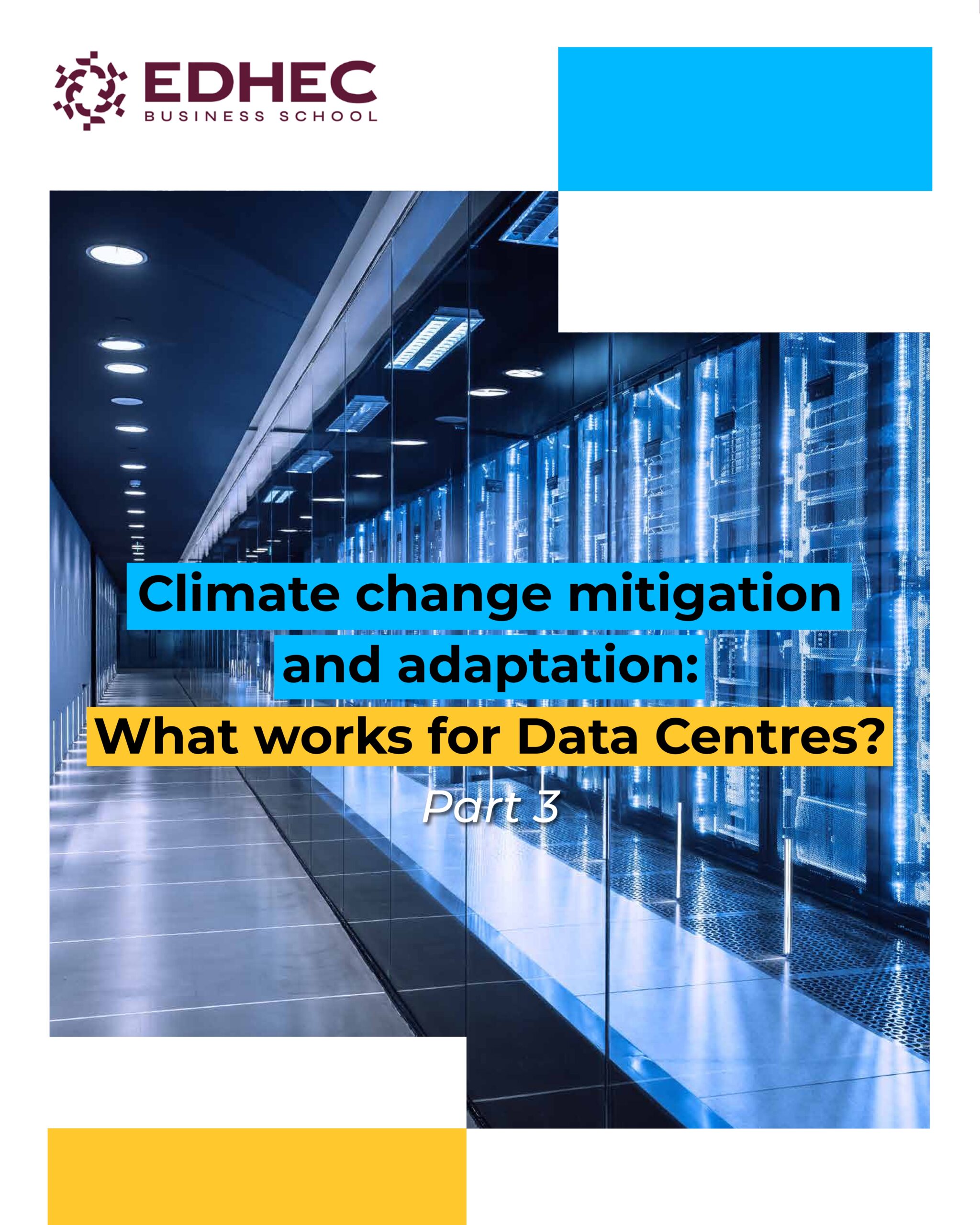
Climate change mitigation and adaptation: What works for data centres? Part 3
This report evaluates climate change mitigation and adaptation strategies for data centres using the ClimaTech database. It assesses the effectiveness of decarbonisation across three scopes and analyses resilience measures for flood, storm, heat, and wildfire risks, providing quantitative performance metrics for various technological solutions.


