
Library | SASB Sustainability Sector
Apparel & Textiles
Refine
68 results
REFINE
SHOW: 16


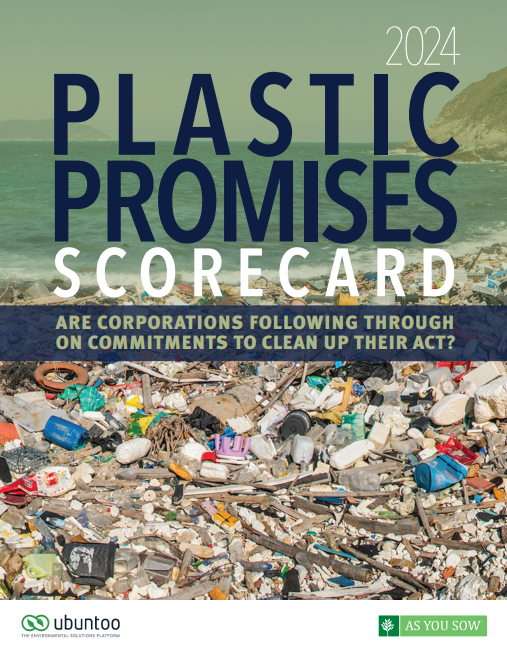
Plastic promises scorecard series
The Corporate Plastic Pollution Scorecard is a benchmark series that assesses how large consumer-facing companies address plastic packaging responsibility. It reviews corporate policies, commitments, disclosures, and practices across key areas of packaging design, reuse, recycled content, transparency, recycling support, and producer responsibility, enabling consistent comparison over time.
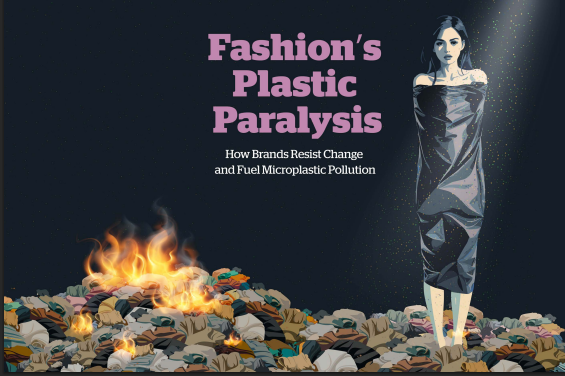
Fashion’s plastic paralysis: How brands resist change and fuel microplastic pollution
The report examines fashion brands’ continued reliance on synthetic fibres, highlighting how voluntary commitments, lobbying, and weak accountability delay fibre reduction and regulation. It links current business models to rising microplastic pollution and concludes that systemic policy and production changes are required.

One-earth fashion: 33 transformation targets for a just fashion system within planetary boundaries
The report outlines fashion’s environmental and social impacts and proposes 33 time-bound transformation targets across materials, labour, value distribution and governance. It calls for reduced virgin inputs, fair working conditions and paradigm shifts to align the global fashion system with planetary boundaries and social justice.

Transparentem
Transparentem is a non-profit organisation that investigates human-rights and environmental abuses — including child labour, forced labour and pollution — across global supply chains. Through detailed field investigations, supply-chain mapping, and engagement with companies, Transparentem pushes for remediation and systemic industry change to ensure fair working conditions and environmental justice.
The Hotspot Analysis Tool for Sustainable Consumption and Production (SCP-HAT)
SCP-HAT (Sustainable Consumption and Production Hotspots Analysis Tool) is an online tool that maps national and sector-level “hotspots” of unsustainable production and consumption using input-output and lifecycle methodologies.

Life Cycle Initiative
Life Cycle Initiative stewards global standards, tools and training for life-cycle assessment (LCA) and life-cycle thinking. It supports practitioners, policymakers and industry in applying LCA across plastics, textiles, tourism and construction. The initiative develops data networks, e-learning modules and hotspot analysis frameworks to advance sustainable decision making.
One hundred and thirty years of corporate responsibility
This report develops a 130-year index (ESIX) measuring public attention to environmental and social issues in business using historical news data. Findings show that such attention rises during instability (social) or prosperity (environmental), depresses short-term investment efficiency, but improves investment outcomes over longer horizons.
Water footprint implementation
Water Footprint Implementation supports companies and governments with water accounting, sustainability assessment and water-footprint compensation. A spin-off of Water Footprint Network research, it delivers actionable insights for ESG reporting, water stewardship, water-footprint benchmarking and tailored reduction strategies to enhance resilience, reduce risk and foster sustainable water management.
Starting up: Responsible investment in venture capital
This report examines how environmental, social, and governance (ESG) factors are being adopted in venture capital. It outlines current practices, challenges, and industry-specific considerations, and highlights the need for tailored guidance, collaboration, and early-stage engagement to advance responsible investment across the venture capital ecosystem.
Plastics bank tracker
The Plastic Banks Tracker evaluates banks' roles in financing the plastics lifecycle, focusing on single-use plastics. It assesses banks across three phases—acknowledgement, policy development, and implementation—using 21 criteria aligned with international standards. The tool aims to encourage banks to reduce financing for harmful plastic production and support sustainable alternatives.
Corporate nature targets: Ensuring the credibility of EU-regulated commitments
This report analyses EU corporate nature-target setting under the Corporate Sustainability Reporting Directive and European Sustainability Reporting Standards. It recommends aligning targets with Science Based Targets for Nature (SBTN) to enhance credibility, comparability, and ensure alignment with ecological thresholds, fostering transparency across corporate value chains and EU environmental objectives.
The value of NGO activism
NGO campaigns alleging environmental and social “E&S-washing” lead to negative stock and media responses, especially on financially material issues. Firms reduce direct emissions following climate-related allegations—often shifting them to supply chains. NGOs also prompt investor engagement, suggesting a monitoring role despite unintended consequences such as increased indirect emissions.
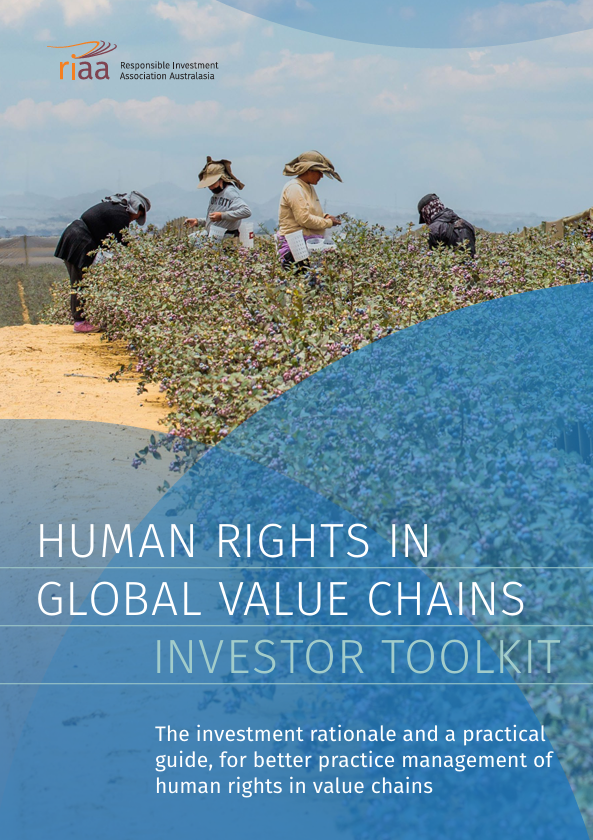
Human rights in global value chains investor toolkit
This toolkit guides investors in addressing human rights risks in global value chains. It outlines regulatory developments, risk identification practices, and engagement strategies to improve corporate accountability. Practical steps include audits, grievance mechanisms, collaboration, and traceability to mitigate modern slavery and labour abuses, enhancing long-term investment and operational resilience.
Impact economies tractions and trends: Insights from 34 GSG National Partners
This report presents insights from 34 national ecosystems advancing impact investing. It highlights trends in policy, capital mobilisation, and transparency, showing governments and institutions integrating social and environmental outcomes into investment strategies. It tracks growth in green finance, outcome-based funding, and investment readiness across emerging and developed economies.
Putting TNFD to work: Insights from early adopters
This report analyses how early adopters are implementing the TNFD framework, highlighting integration with climate disclosures, flexible use of the LEAP approach, and application of data tools. Insights show how businesses align nature-related risks with strategy and reporting, with regional uptake led by Asia Pacific and Europe.
How to identify human rights risks: A practical guide in due diligence
This guide outlines a structured approach for investors to identify and prioritise human rights risks across countries, sectors, and companies. It supports due diligence through risk mapping, severity assessment, and prioritisation frameworks, promoting responsible investment aligned with international human rights standards.


