
Library | SASB Sustainability Sector
Extractives and Minerals Processing
Refine
310 results
REFINE
SHOW: 16


A toolbox of sustainable crisis response measures for central banks and supervisors – second edition: Lessons from practice
This report is a toolbox of options for central banks and supervisors to align crisis response measures with climate and sustainability objectives. The second edition includes an extended analysis of sustainability-linked measures. It also highlights the importance of moving from voluntary to mandatory environmental reporting and recommends efficient disclosure to regulated financial institutions.

Converging on climate lobbying: Aligning corporate practice with investor expectations
This report details the importance of climate lobbying for the long-term interests of institutional investors. It covers recommendations for future engagement and case studies, and is primarily aimed at investment professionals. The report does not have any specific focus on discussing a list of companies, rather, it is an investor initiative that advocates for climate lobbying practices and investor expectations for companies globally.

Chapter Zero New Zealand Board Toolkit
This toolkit is published to provide tools, support, and encouragement to prioritise climate change on boards and within organisations. The resource outlines 5 steps to ensure boards are well-equipped to address climate change, with relevant industry sector case studies.

Decarbonising cement: The role of institutional investors
This report outlines why cement production is carbon-intensive and provides pathways for decarbonisation. A 60% reduction in emissions by 2050 is required to limit temperature increases to 1.75°C. Institutional investors need to engage with cement companies and cut off funding for carbon-intensive infrastructure to mitigate climate-related risks.

Connecting the dots: Energy transition scenarios and credit quality
This report explores the implications of climate transition scenarios for the credit quality of nine companies in power utilities, cement, and steel. It shows the potential credit consequences of failing to mitigate risks and grasp opportunities associated with the low-carbon transition. The study highlights the value of granular scenario analysis for investors.

Geopolitics of the energy transition: Critical materials
This paper explores strategic approaches for ensuring a sustainable energy transition by investigating the geopolitical aspects of critical materials including their supply chain, responsible efficiency, emergence of new technologies, their impact on labour rights, as well as suggesting ways to mitigate their risks and boost cooperation between countries.

Taking stock of investor implementation of the UN Guiding Principles on Business and Human Rights
This report assesses the first decade of implementation of the UN Guiding Principles for Business and Human Rights and the role of institutional investors in promoting investor responsibility to respect human rights. Enabling environments for rights-respecting investment have emerged, however, access to remedy for victims requires urgent attention, and other investment ecosystem actors must step up.

Sustainability at a turning point: Consumers are pushing companies to pivot
This research of 14,000 people from 9 countries discovered that 93% say that the COVID-19 pandemic has changed their perception of environmental sustainability. Individuals are, as a result, looking to invest in companies that prioritise environmental responsibility and expect them to communicate sustainability benchmarks and future plans clearly. In addition, more than half of consumers would work for a company that values sustainability, which is increasingly becoming a top hiring consideration.

Bridging ESG silos: The intersection of climate change and modern slavery
This briefing for investors examines the intersection of climate change and modern slavery. It details how environmental and social risks are interconnected and can materially affect a company's long-term profitability. The report provides case studies and tools to help investors identify, assess, and respond to these risks in their portfolios.

The Passives Problem and Paris goals: How index investing trends threaten climate action
This report sheds light on the Passives Problem, highlighting the dangers of an excessively passive investment market. It argues that this trend is hindering progress on mitigating climate change and exacerbating the risks of market instability. The report suggests possible solutions to the problem and examines how investors can align with climate action.

A critical minerals value-adding superpower
This report explores the potential for the nation to become a leader in mining and refining critical minerals. It highlights the economic, employment, and environmental benefits that could be unlocked by prioritising onshore processing, particularly against a backdrop of global decarbonisation.

Future of waste
This report examines the future of waste reduction, the environmental and financial impacts of waste, and investment opportunities in waste management globally. The report provides regional, country, and sector insights on companies most affected by waste and ways for mainstream companies to proactively manage waste and pollution.
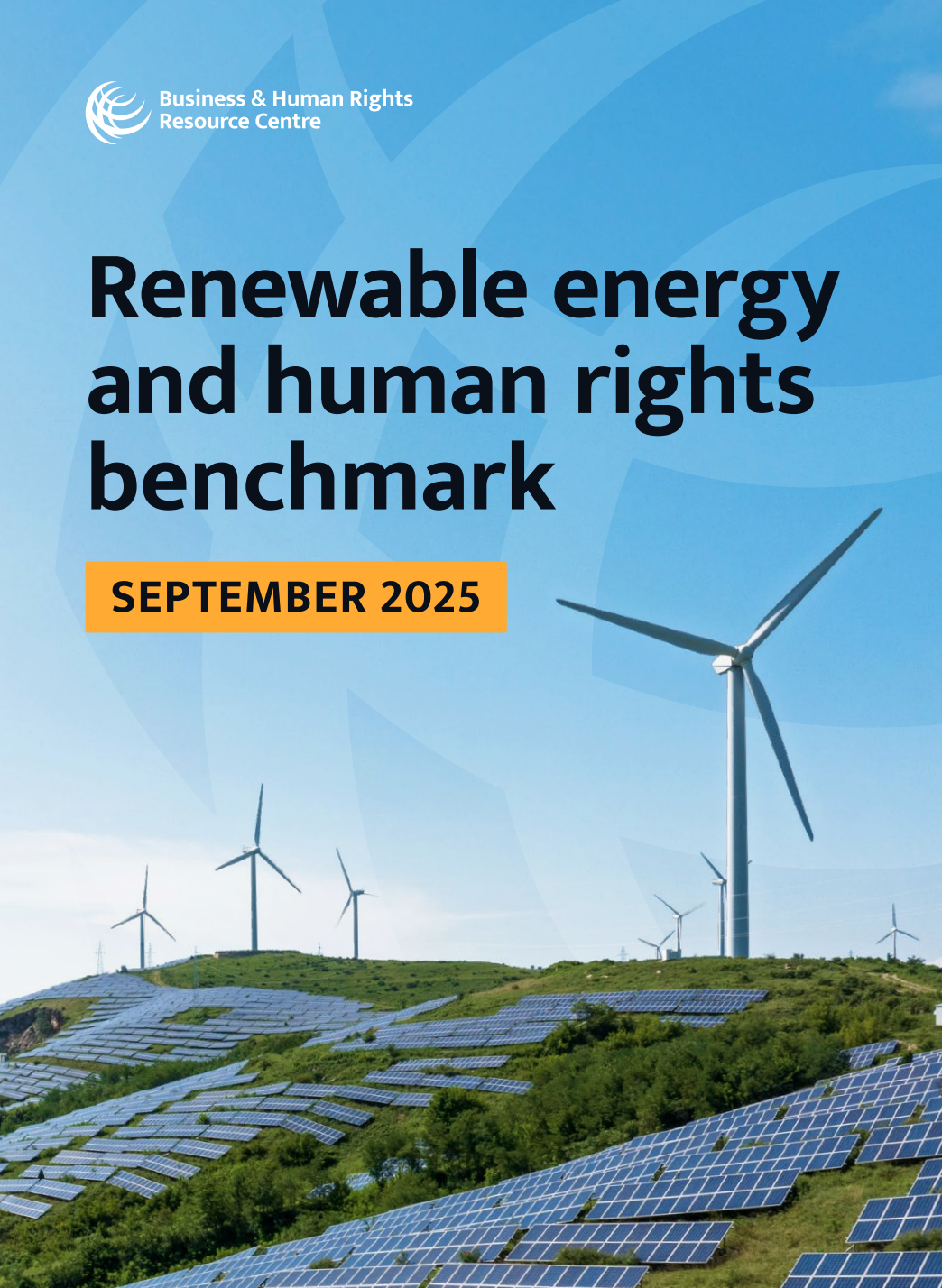
Renewable energy and human rights benchmark report series
The Renewable Energy and Human Rights Benchmark series assesses how leading renewable energy companies manage and respect human rights across their operations and value chains. The series provides a consistent, comparative framework to track corporate practices and accountability in the global energy transition.

Why and how investors should act on human rights
This report outlines how institutional investors can respect human rights as defined by international standards. The six principles of ESG investing, such as incorporating ESG issues into decision-making processes and seeking appropriate disclosure help to promote acceptance of human rights in the investment industry.

Transition risk framework: Managing the impacts of the low carbon transition on infrastructure investments
This report introduces a transition risk framework aiding investors and regulators in navigating risks and seizing opportunities in the low-carbon transition. It enhances comprehension of how transition risks impact financial performance in infrastructure investments, offering a transparent, adaptable, and robust methodology for assessing the financial implications of a shift towards a low-carbon economy.

Opportunity NOCs: How investors can jumpstart energy transitions in national oil companies
This report outlines how national oil companies (NOCs) must begin decarbonising to meet the goals of the Paris Agreement, and how investors can influence and incentivise the energy transition. It shows that NOCs constitute half of the world’s oil and gas production and control two-thirds of global reserves, making them of great interest to investors.


