
Library | SASB Sustainability Sector
Infrastructure
Refine
142 results
REFINE
SHOW: 16


Putting TNFD to work: Insights from early adopters
This report analyses how early adopters are implementing the TNFD framework, highlighting integration with climate disclosures, flexible use of the LEAP approach, and application of data tools. Insights show how businesses align nature-related risks with strategy and reporting, with regional uptake led by Asia Pacific and Europe.
Human rights due diligence for private markets investors: A technical guide
This guide outlines how private markets investors can integrate human rights due diligence into investment processes, aligned with the UN Guiding Principles. It covers policy commitments, risk assessment, stakeholder engagement, and remedy provision to address human rights impacts, mitigate risk, and meet evolving legal and societal expectations.
PRI's human rights due diligence tool for infrastructure investors
The PRI Human Rights Due Diligence Tool assists infrastructure investors in identifying, assessing, and managing human rights risks throughout the investment lifecycle. It provides practical guidance aligned with international standards to support responsible investment practices in infrastructure and other real assets.

International Council on Mining and Metals
The International Council on Mining and Metals (ICMM) is a global leadership organisation dedicated to enhancing the mining and metals industry's contribution to sustainable development. ICMM brings together a third of the global industry, promoting ethical business practices, environmental stewardship, and social responsibility. Members commit to stringent Mining Principles, aiming for a safe, just, and sustainable world enabled by responsibly produced minerals and metals.
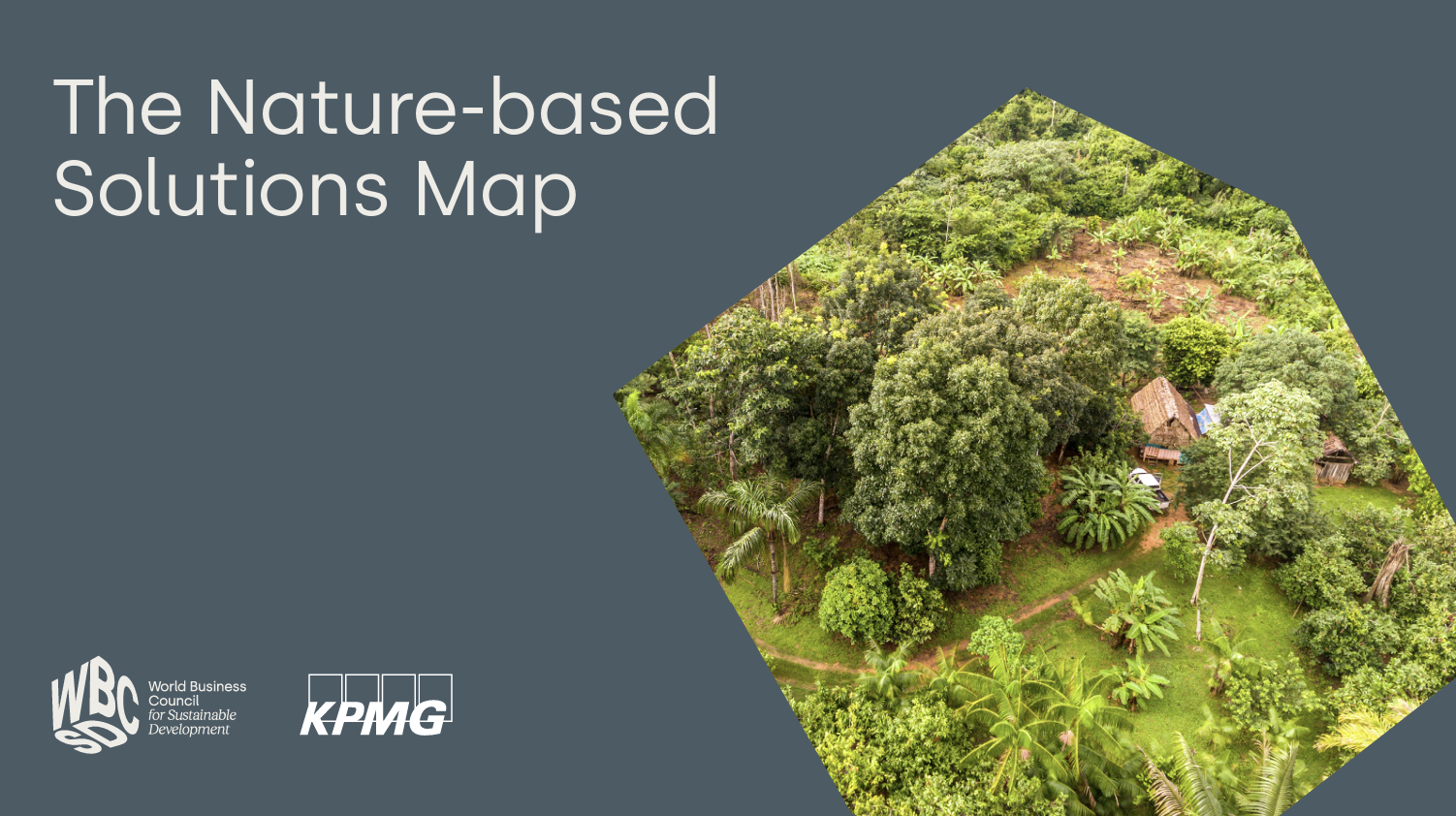
The nature-based solutions map
This tool is designed to help businesses identify relevant nature-based solutions (NbS) for addressing challenges related to core business operations, climate, nature, water, and social equity. It categorises NbS based on business needs and biomes, facilitating decision-making. The map serves as a starting point, requiring further development for implementation.
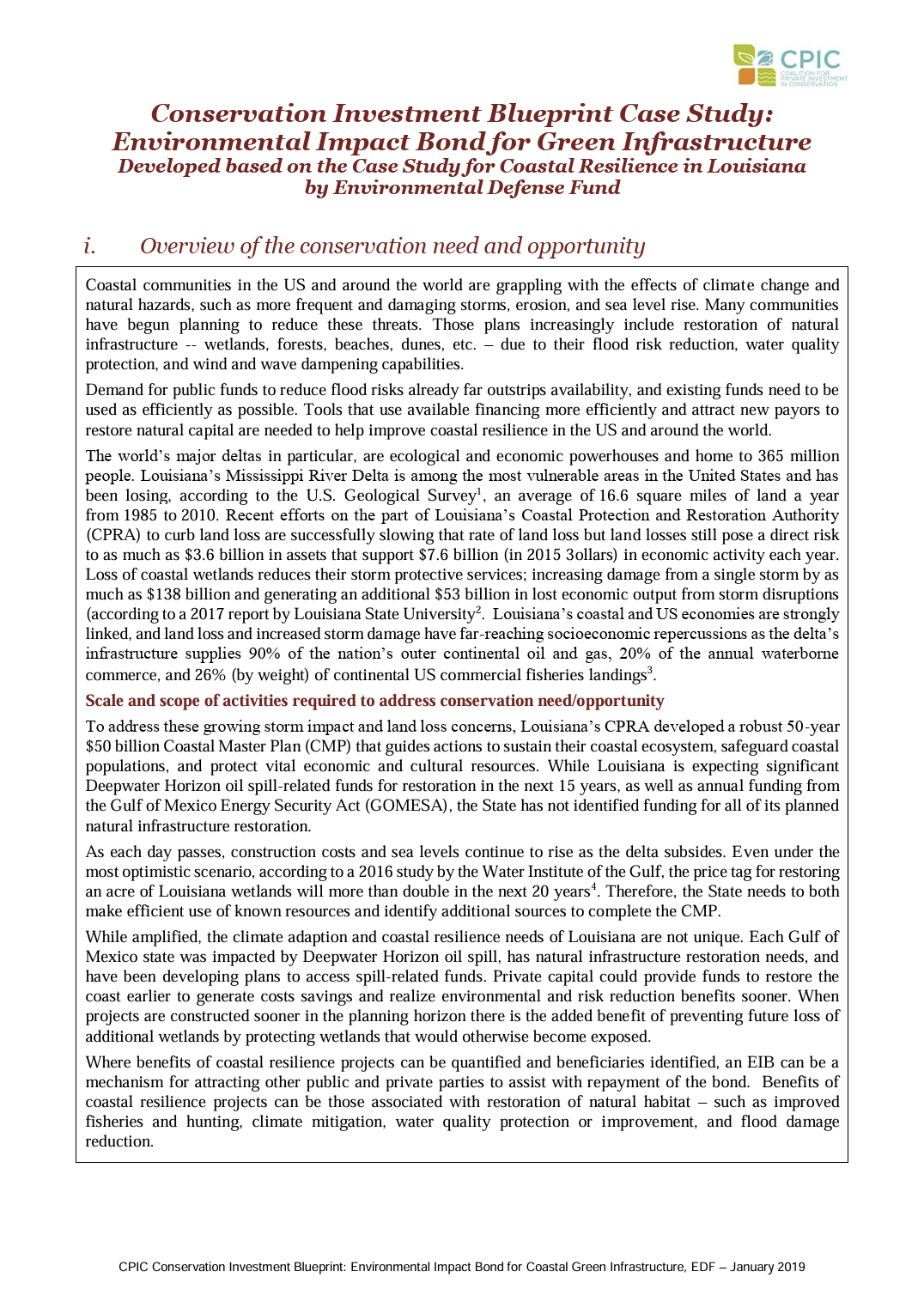
Conservation investment blueprint: Environmental impact bond for green infrastructure - coastal resilience
This case study outlines the Environmental Impact Bond (EIB) model for funding coastal resilience projects. It focuses on Louisiana’s wetland restoration to mitigate storm damage and land loss. The EIB attracts private investment, enabling earlier project implementation, cost savings, and ecological benefits. It aligns financial incentives with conservation goals through performance-based returns.

Conservation investment blueprint: Environmental impact bond for green infrastructure
This blueprint details the application of Environmental Impact Bonds (EIBs) to finance green infrastructure projects. It illustrates how EIBs can be used to attract private investment to public infrastructure projects that offer significant environmental benefits, such as enhanced stormwater management and increased urban resilience. The document provides a framework for structuring these bonds to ensure both financial returns and positive environmental outcomes.

Building disaster- and climate-resilient infrastructure through public–private partnerships
The report discusses leveraging public–private partnerships (PPPs) to build disaster- and climate-resilient infrastructure in Southeast Asia, addressing funding gaps, enhancing regulatory frameworks, and integrating resilience measures. It highlights Australian practices, aligning climate, disaster, and inclusion goals for sustainable infrastructure development.

Building transition: Financing market transition
The report outlines a framework for decarbonising and enhancing resilience in the built environment. It emphasises sustainable finance, improving low-performing buildings, and adapting to climate risks. Key strategies include evolving taxonomies, defining credible pathways, and addressing broader resilience, urging inclusive, scalable investments to achieve global sustainability goals.

Financing transformations: A guide to green building for green bonds and green loans
The report provides a guide to sustainable finance in the real estate sector, focusing on green building projects eligible for green bonds and loans. It details key principles, certification frameworks like BREEAM and LEED, and sustainable finance's role in addressing climate action, resource efficiency, and social impact.

Green Building Council of Australia
The Green Building Council of Australia (GBCA) is dedicated to transforming the built environment into a sustainable, healthy, and resilient sector. GBCA drives environmental best practices through certifications like Green Star, education programs, and advocacy. Explore their initiatives to advance sustainable communities, reduce carbon emissions, and shape Australia’s sustainable building future.

Infrastructure tokenization: Does blockchain have a role in the financing of infrastructure?
The report explores the potential of blockchain technology in financing infrastructure projects. It evaluates blockchain's capabilities in enhancing efficiency, transparency, and accessibility in infrastructure tokenisation, while addressing challenges like regulatory constraints, market adoption, and technical barriers. The findings highlight both opportunities and limitations for integrating blockchain into infrastructure financing.

How business and finance can contribute to a nature positive future now
This report provides an in-depth exploration of the term "nature positive" and its implications for business and finance. It aims to build a shared understanding and alignment on what nature positive means, offering insights and recommendations to drive meaningful action towards halting and reversing nature loss. This report is particularly valuable for investors as it clarifies the concept of "nature positive" and its relevance to investment strategies. It helps investors understand the risks and opportunities associated with nature loss and provides a framework for integrating nature-positive principles into investment decisions.

SBTN sector materiality tool
The aim of the Sectoral Materiality Tool is to help users carry out a first screening of what types of environmental impact are potentially materially relevant to their sector and their company's activities, as part of Step 1a of the SBTN guidance.

Activating private investment in adaptation: Turning capital flight risk into the next multibillion opportunity
This report highlights the need to scale private investment in climate adaptation to mitigate capital flight from vulnerable areas. It outlines barriers like resilience valuation and fiduciary concerns, and recommends actions for governments and investors to facilitate resilience innovation, regulatory support, and shared understanding of physical risks, ensuring long-term economic stability and community protection.

Sustainable behavior in climate pledges: An analysis of top emitters’ strategies
This report analyses how the top 20 highest-emitting countries address pro-climate behaviour through their Nationally Determined Contributions (NDCs). It highlights that while progress has been made in promoting electric vehicles, public transport, and household energy efficiency, crucial areas like sustainable diets and air travel are often overlooked, limiting the potential for impactful change.


