
Library | SASB Sustainability Sector
Renewable Resources & Alternative Energy
Refine
274 results
REFINE
SHOW: 16


Angel networks in emerging markets: A guide for development institutions
This is a comprehensive and insightful guide for organisations seeking to engage with angel investors and support the development of entrepreneurship ecosystems in emerging markets. The report covers key topics such as the nature of angel investing, challenges facing angel networks, best practices and strategies, and practical tools for development institutions.

Truth in impact: A Tideline guide to using the impact investment label
This report provides insights on sustainable investing labelling. Investors can self-classify and maintain market integrity through clear, accurate labelling backed by independent verification. The report offers a proprietary Framework for Impact Labeling, case studies, and observations about sustainable investing.

Full disclosure: Improving corporate reporting on climate risk
This report summarises how investors utilize corporate reporting to manage climate-related financial risks, identify opportunities, and set strategies for transitioning to net-zero emissions. The report contains investors' expectations from climate reports, insights on scenario analysis, and recommendations for improving corporate disclosure on climate risks.

Prioritising nature-related disclosures: Considerations for high-risk sectors
This report outlines information on high-risk sectors for nature-related disclosures and their dependencies and impacts. It identifies sectors with the greatest risk and vulnerabilities and provides sector-based insights to deploy financial risk management and report nature-related financial disclosure in a consistent and meaningful manner.

Financing environmental and energy transitions for regions and cities: Creating local solutions for global challenges
This report presents recommendations for bridging the gap between financial institutions' lack of structures for local initiatives and subnational governments' lack of knowledge to take that role. It proposes adapting finance data to include integrated value.

Environmental beta or how institutional investors think about climate change and fossil fuel risk
This report examines how institutional investors think about climate change and fossil fuel risk. It finds that investors consider these issues subjectively and are primarily concerned with short-term investment horizons. The report argues that understanding investor perspectives is crucial for enhanced mechanisms both to mitigate GHG emissions and minimise climate change-related financial instability.

Sustainable investing capabilities of private banks
This report presents the findings of research into the sustainable investing capabilities of private banks, including governance, sustainability risk, and client interactions. The report notes progress among leading banks but highlights the need for continuing education for client advisors and improved ESG and impact reporting and monitoring capabilities.

Climate governance study 2024: Moving from vision to action
This study reveals that Australian directors increasingly prioritise climate change as a material governance issue. However, stakeholders are pulling in a variety of directions, making it challenging for organisations to execute their climate strategies. Policy uncertainty poses the most significant obstacle for climate governance, although the implementation of mandatory climate reporting from July 2025 presents an opportunity for greater accountability.

Towards financing large-scale holistic landscape restoration in Europe: Recommendations for EU policy actors to attain inspirational, social, natural and financial returns
The report provides financing recommendations for large-scale holistic landscape restoration in Europe, addressing climate change, biodiversity loss, and food and water insecurity. It emphasises the effectiveness of landscape finance in promoting healthy ecosystems, offering practical frameworks for policymakers to accelerate impactful activities and align natural and community needs for comprehensive restoration.

Adaptation, loss and damage: A global climate impact fund for climate justice
This report delves into climate justice amid anthropogenic climate change, advocating for a pilot Global Climate Impact Fund (GCIF). The fund aims to distribute the financial responsibility for the climate change transition based on attribution and contribution studies, employing standardised criteria. The report emphasises prioritising long-term resilience and sustainable development pathways.

How asset managers can set interim net zero targets that are fit for purpose: Responsible investment standards and expectations
This paper provides guidelines for asset managers to strengthen their interim net zero targets, help promote transparency, effective emissions reduction and promote responsible finance within a modern world faced with an ever-increasing problem of climate change and inequality.

Mobilising climate investment in emerging markets: Opportunities for Australian pension and superannuation funds
This report delves into the potential of pension funds in driving climate solutions in developing economies. Highlighting barriers like geopolitical risks and policy uncertainties, the report underscores collaboration, ESG standards, and internal expertise as pivotal for sustainable investments in these regions.
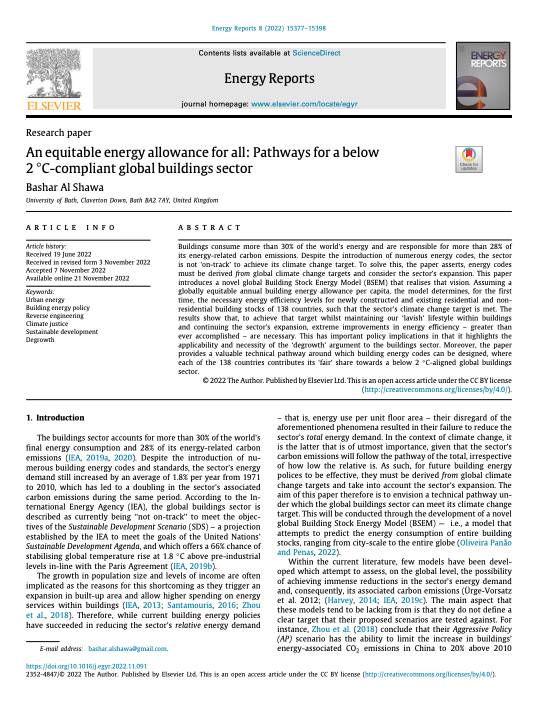
An equitable energy allowance for all: Pathways for a below 2◦ C-compliant global buildings sector
The article asserts that building energy codes must be derived from global climate change targets. Thus, an innovate global Building Stock Energy Model is developed to determine the required energy efficiency levels for building stocks of 138 countries in alignment with the Paris Agreement’s below 2°C climate change scenario.

Recommendations of the Taskforce on Nature-related Financial Disclosures
This report aims to provide a unified approach to the disclosure of natural dependencies, impacts and risks for financial institutions and corporates. As the issue of natural loss and climate change continues to grow, a harmonised way of tackling these risks needs to be agreed to safeguard against material impacts.
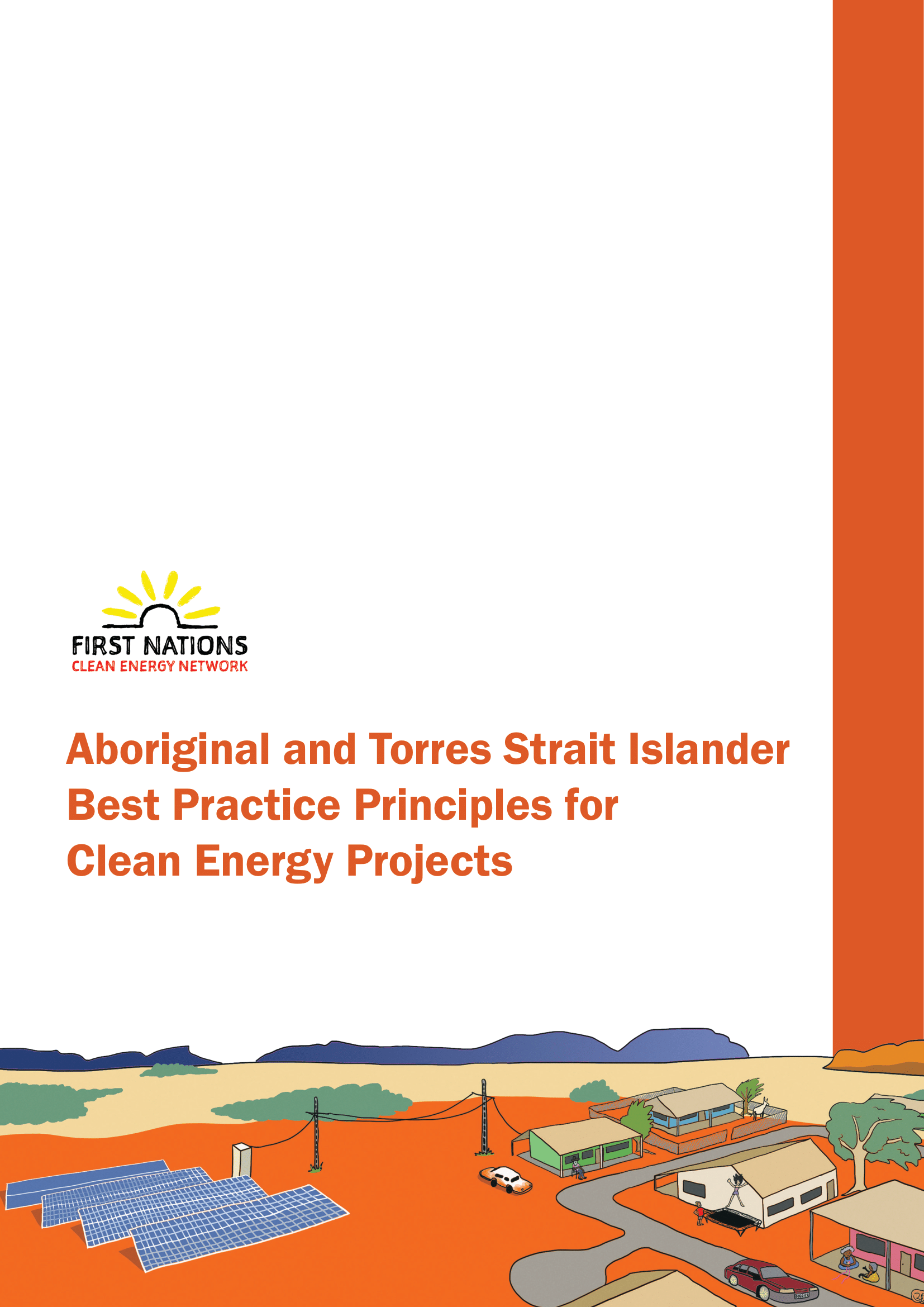
Aboriginal and Torres Strait Islander best practice principles for clean energy projects
Ten principles placing Australia's First Nations people and communities at the centre of clean energy projects. The Principles ensure that projects provide economic and social benefits, include cultural and environmental considerations, and provide employment opportunities. The Principles are for all stakeholders involved in clean energy projects, including investors and government.

Taking the carbon out of credit: An integrated approach to removing climate emissions from lending
This report makes a complete case for banks and lending institutions to avoid further damaging of the climate. It provides both justification for why this is an important financial undertaking, and principles for how to go about and do it.


