
Library | SASB Sustainability Sector
Technology & Communications
Refine
219 results
REFINE
SHOW: 16


An investor guide to addressing electric power risk from data center growth
This report examines risks to electricity companies from rapid data centre growth, including community opposition and grid reliability. It evaluates solutions like clean energy, flexible contracting, and demand-side management. The guide provides framework questions for shareholder engagement to ensure utilities manage expansion in a financially disciplined and sustainable manner.
AI Tailwinds, Energy Headwinds
This benchmark series examines economic growth and development across the East Asia and Pacific region. It explores the impact of artificial intelligence on industrial sectors and supply chains, alongside the challenges posed by energy costs and environmental factors for small states and emerging market economies.
Governing decentralized social media in a centralized policy world
This report examines the challenges of regulating decentralised social media like Mastodon and Bluesky within centralised policy frameworks. It highlights how community-governed moderation offers alternatives to corporate control and recommends that Canada adopts proportionate, tiered regulations to support digital sovereignty and public-interest infrastructure.
MIT AI Risk Repository
The MIT AI Risk Repository is a comprehensive database of over 1,600 AI risks and real-world incidents. It provides frameworks and data to help finance professionals and organisations identify, prioritise, and manage technical, social, and regulatory risks associated with artificial intelligence.
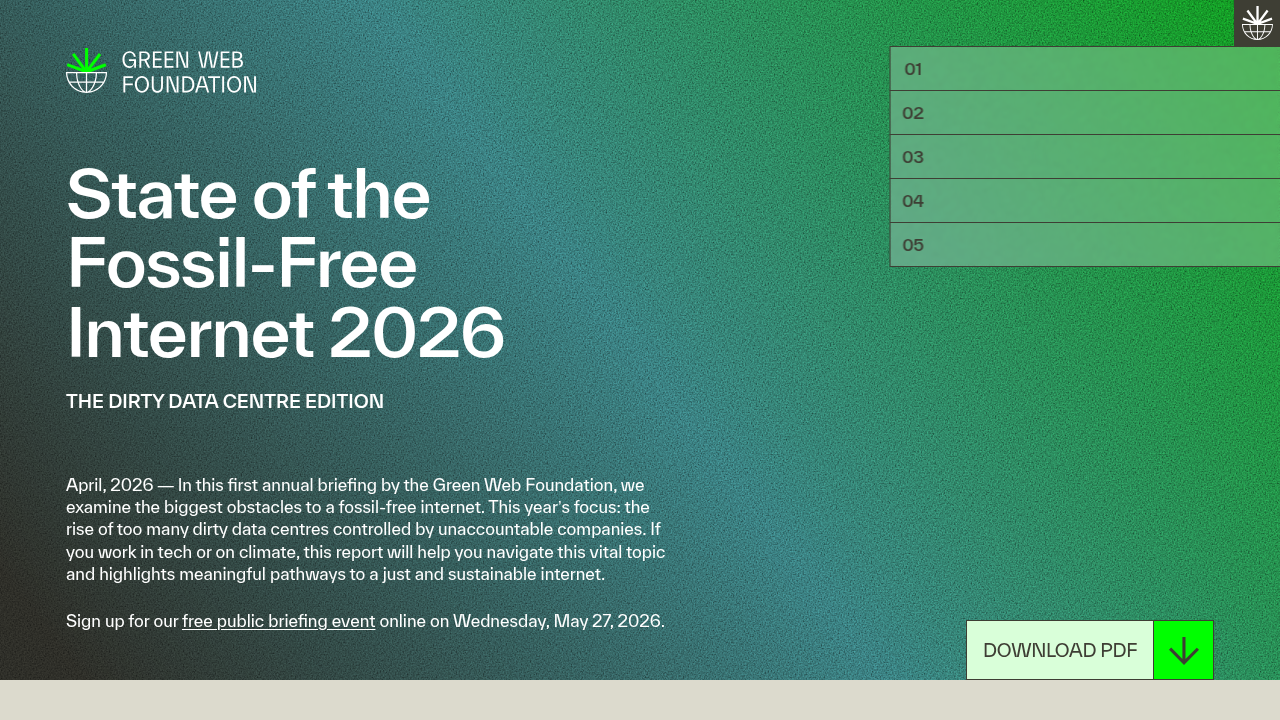
Fossil Free Web 2026
A report and data resource by the Green Web Foundation tracking the internet's transition to green energy. It highlights the environmental impact of AI and hyperscale data centres.
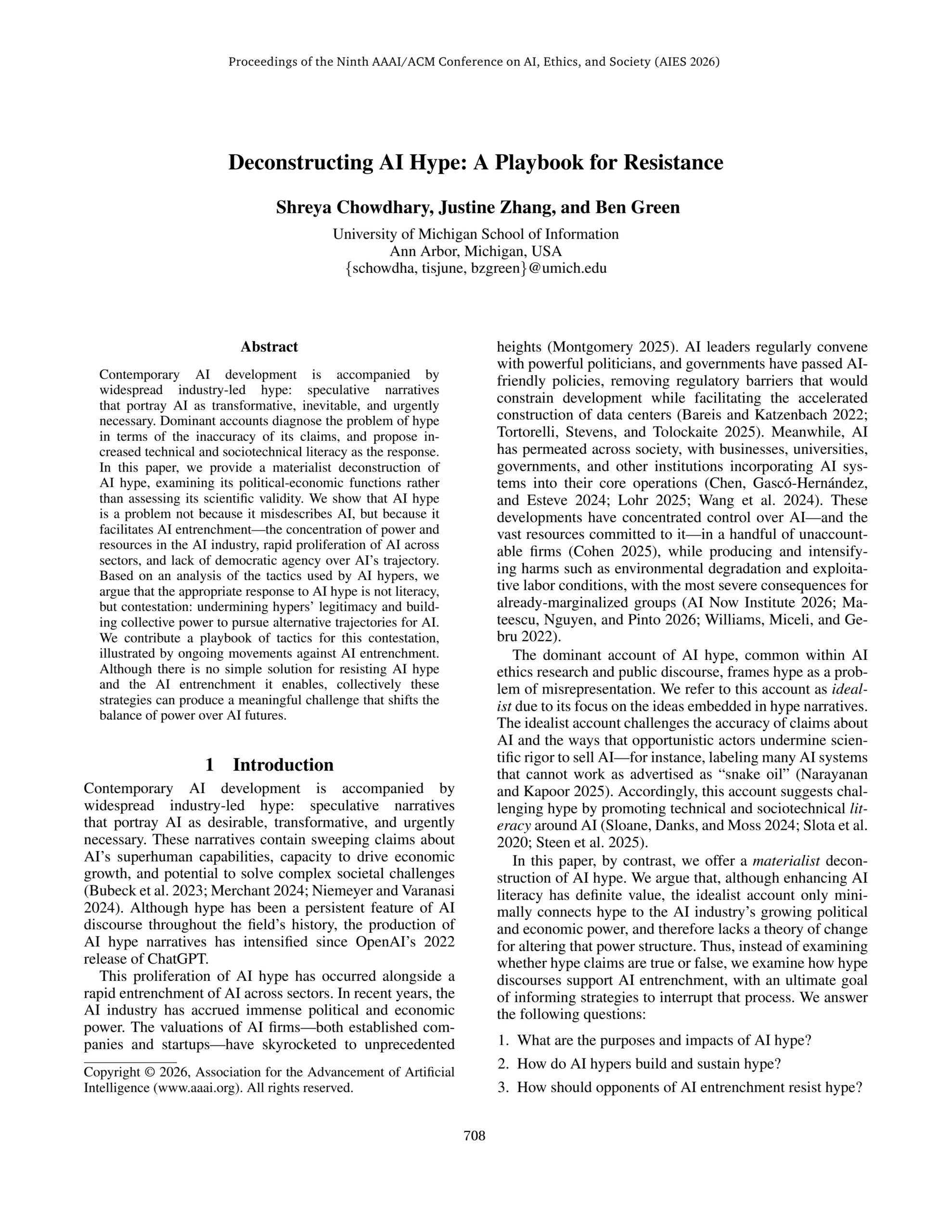
Deconstructing AI hype: A playbook for resistance
This research provides a materialist deconstruction of AI hype, arguing it facilitates power concentration rather than just misrepresenting technology. It details how "hypers" manufacture urgency and capture credibility. The paper offers a playbook for resistance through contestation, undermining legitimacy and building collective agency to challenge AI entrenchment.
Artificial intelligence and climate change: balancing innovation and sustainability
This report examines the interaction between artificial intelligence and climate change, highlighting potential for mitigation and adaptation alongside significant environmental costs. It explores two technological trajectories—AI copilot and artificial general intelligence—while discussing implications for central banks regarding productivity, inflation, financial stability, and emerging global policy frameworks.
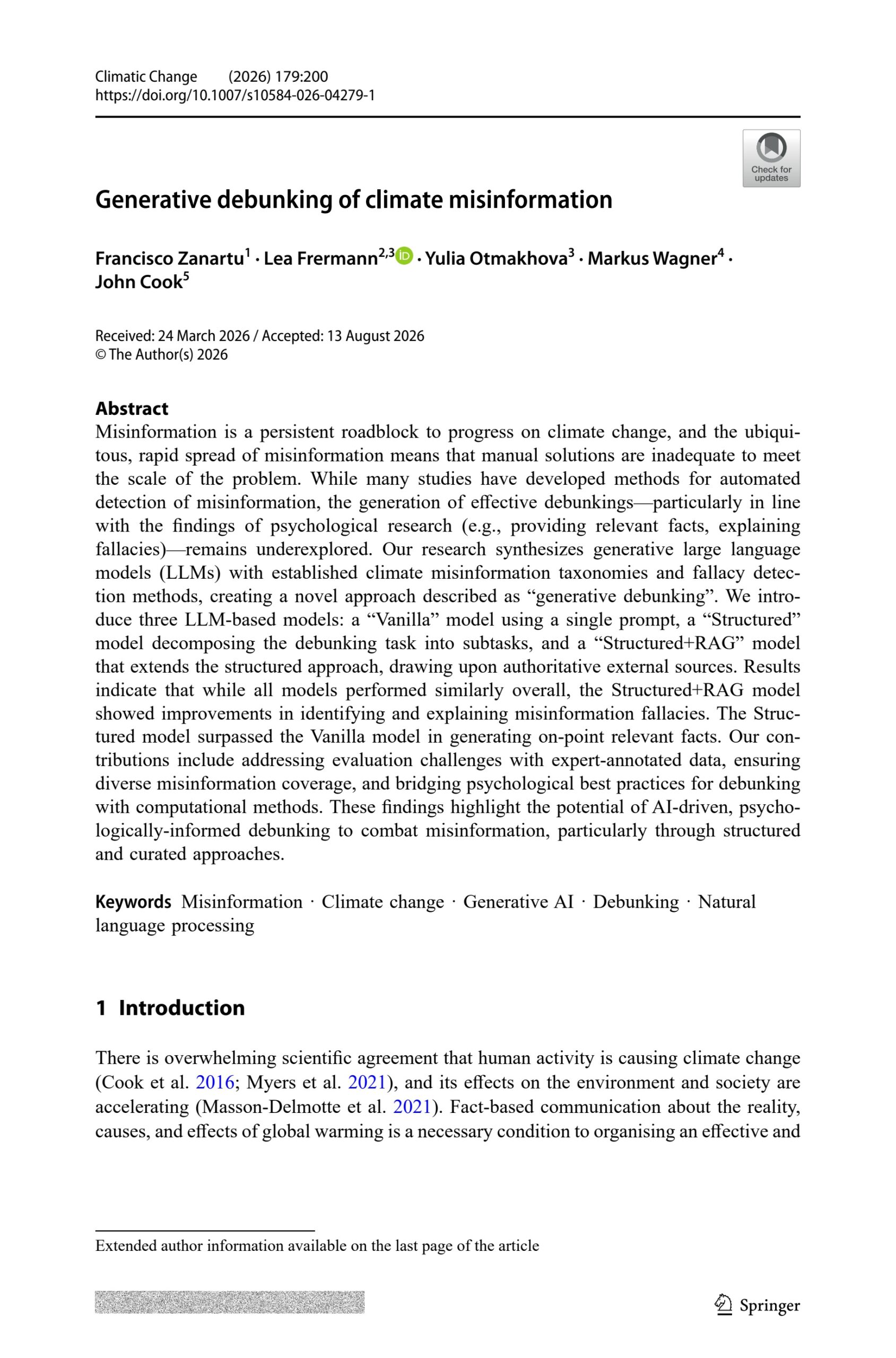
Generative debunking of climate misinformation
This research introduces 'generative debunking' using large language models to combat climate misinformation. By synthesising psychological best practices with computational tools, the study develops three models using the 'truth sandwich' approach. Expert evaluation indicates that structured prompting and retrieval-augmented generation significantly improve the identification and explanation of logical fallacies.
Public procurement and AI governance: Developing a strategic framework for middle powers
This report evaluates how 'AI middle powers' can use public procurement as a strategic governance tool to mitigate risks from foreign-led frontier AI. It proposes a framework of contractual guarantees and recommends international coordination to increase bargaining leverage, enhance visibility, and secure data sovereignty against technological dependencies.
Who pays for growth? Evidence from data centers and the grid
This research examines the impact of data centre expansion on US electricity prices. Findings indicate that entry between 2010 and 2024 increased average retail rates by 2.7%. These costs are concentrated among investor-owned utilities and pronounced in deregulated markets or regions with limited spare capacity.
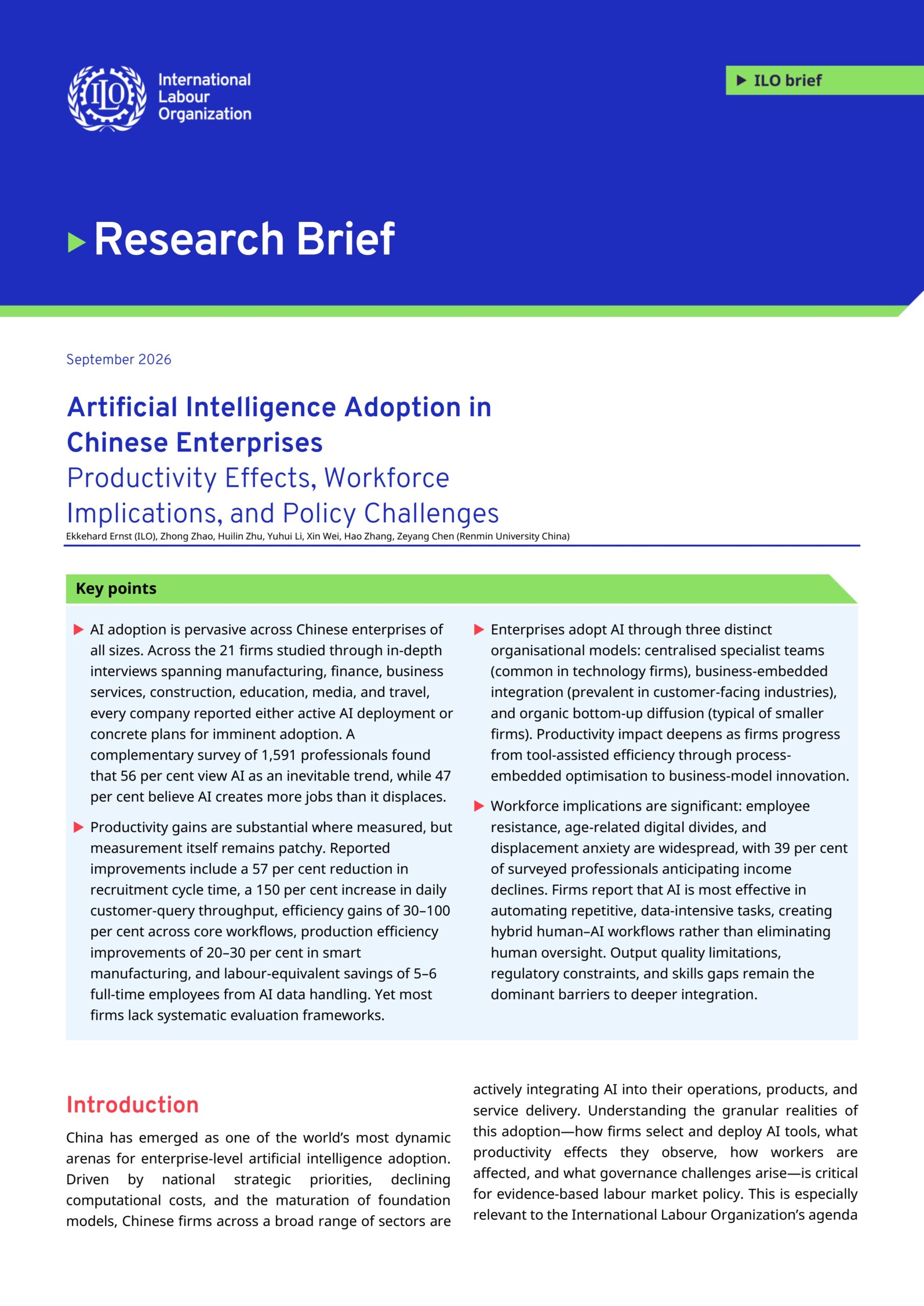
Artificial intelligence adoption in Chinese enterprises: Productivity effects, workforce implications, and policy challenges
This research explores artificial intelligence adoption within Chinese enterprises using qualitative interviews and quantitative surveys. It identifies significant productivity gains, various organisational models, and workforce impacts, including income anxiety and skills gaps. The report highlights the human–AI collaboration paradigm and offers policy recommendations for skills development and governance.
The governance of dual-class firms
This research examines the governance of dual-class firms, documenting a significant rise in their prevalence among US initial public offerings between 2000 and 2025. It identifies that these structures are increasingly concentrated in founder-led, venture-backed technology companies, while empirical evidence suggests they do not necessarily lead to CEO entrenchment.
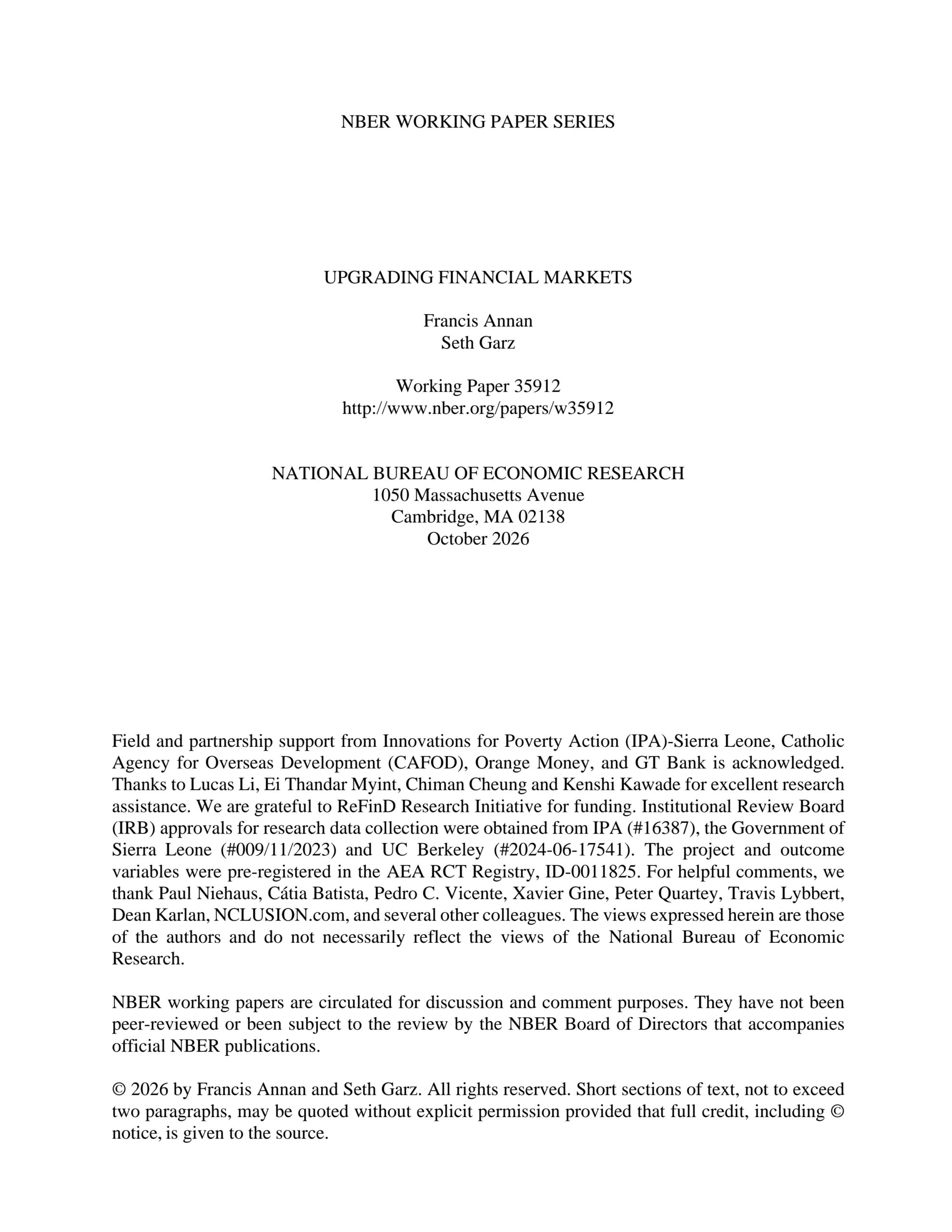
Upgrading financial markets
This field experiment in rural Sierra Leone evaluates upgrading Village Savings and Loan Associations into digital financial service agents. While infrastructure expands access, introducing consumer feedback mechanisms significantly improves service quality, transaction usage, and household shock mitigation. Results demonstrate that accountability is essential for developing functional, scalable financial markets.
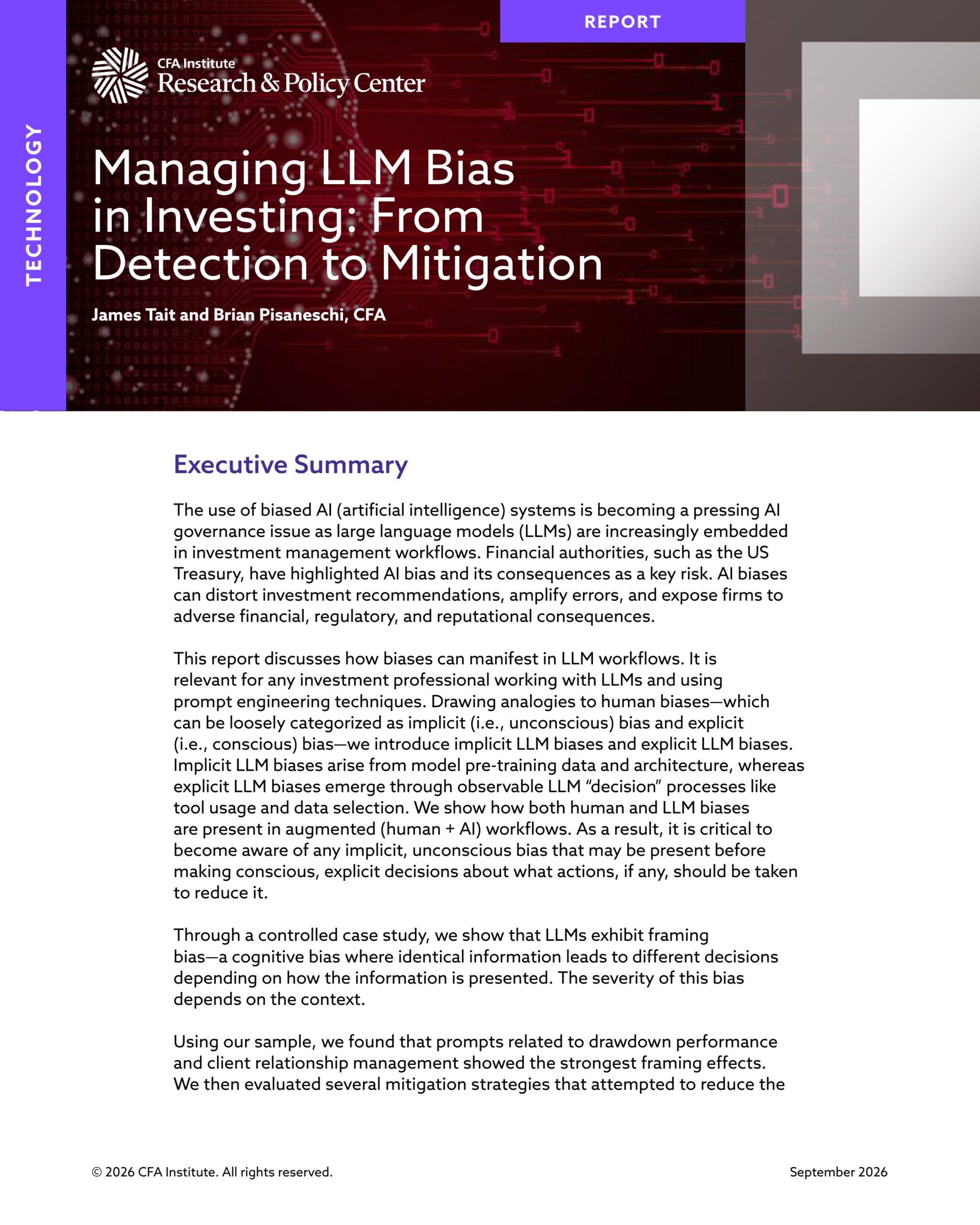
Managing LLM bias in investing: From detection to mitigation
This report examines implicit and explicit LLM biases in investment management. Through a case study on framing bias across nine OpenAI models, it identifies significant sensitivities in drawdown and client retention scenarios. It concludes that manual prompt restructuring and human-in-the-loop protocols are the most effective mitigation strategies.
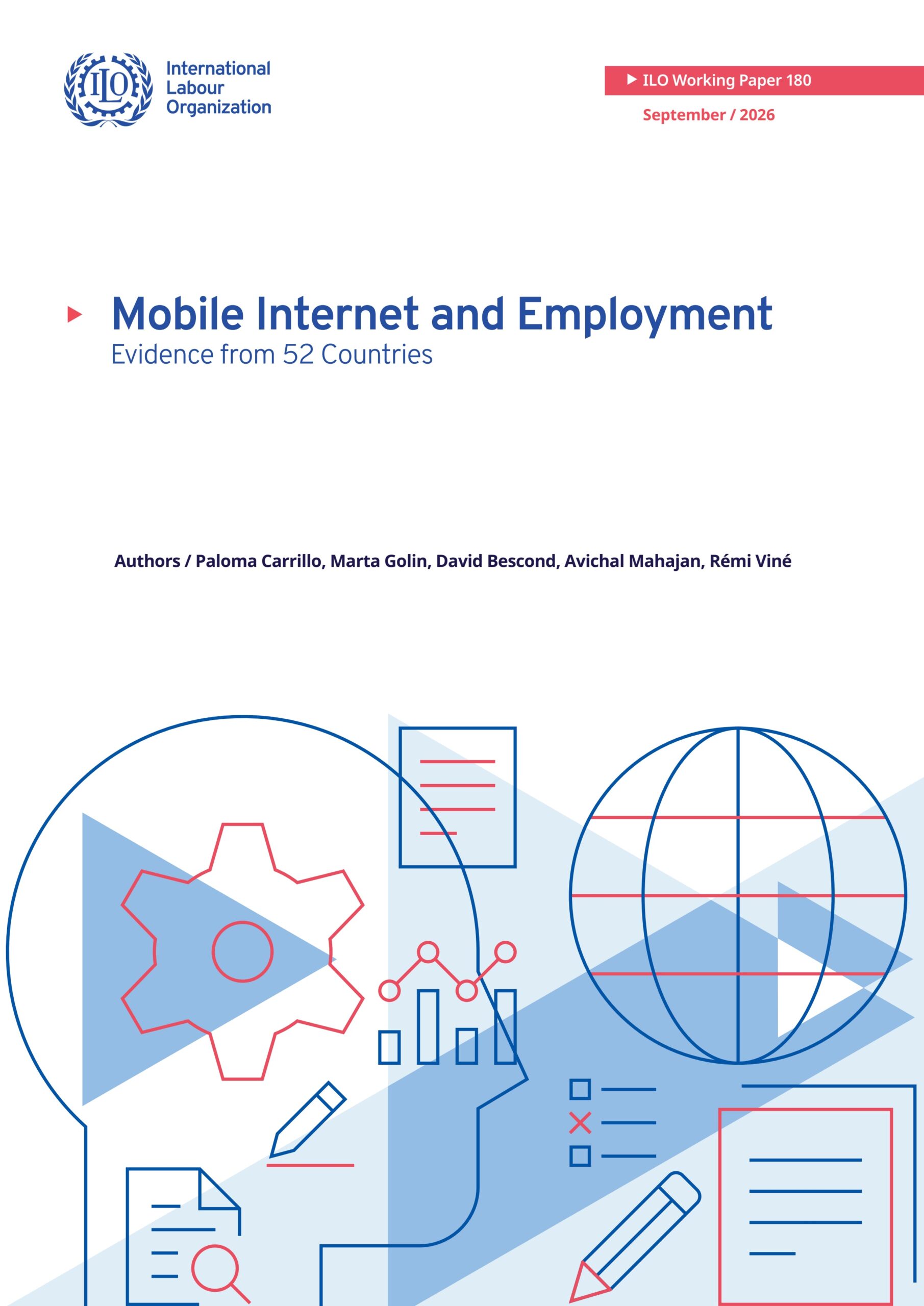
Mobile internet and employment: Evidence from 52 countries
This report analyses the impact of 3G expansion on employment across 52 countries from 2004 to 2023. It finds that while connectivity increases participation in low-income regions, it is associated with declining employment in mature economies. Gender gaps remain persistent, particularly regarding youth disengagement in poorer contexts.
Regulating artificial intelligence in finance: Lessons from Singapore
This research analyses Singapore's multi-layered approach to regulating artificial intelligence in finance. It evaluates frameworks like the FEAT Principles and Project MindForge while identifying risks such as deepfakes and bias. The paper recommends establishing a dedicated regulatory sandbox and shared responsibility frameworks to manage evolving technological and third-party risks.


