
Library | Finance relevance
Impact investors
Refine
716 results
REFINE
SHOW: 16


Recalibrating feedback loops: Guidance for asset owners and institutional investors assessing the influence of system-level investing
This report guides asset owners in assessing how their investments affect systemic environmental and social issues. It introduces a framework to align investment practices with system-level goals and improve financial system resilience. Case studies explore climate change, income inequality, and racial inequity to illustrate practical applications.
Ceres' food emissions 50 company benchmark
A guide for institutional investors on using shareholder engagement to address SDG-related impacts in Mexico's food sector, with benchmarking and recommendations.
Risky business: How Australian financial institutions are managing nature-related risks and opportunities
This report assesses how ten banks and ten super funds in Australia are addressing nature-related risks and opportunities. It evaluates their strategies, risk management, target setting, and stakeholder engagement, highlighting areas of progress and identifying where further action is needed to mitigate financial risks associated with nature loss.
Climate risk and adaptation in global food
The report outlines rising climate risks to global food supply chains, projecting up to $38 trillion in damages by 2050. It explores mitigation and adaptation strategies across crops, livestock, and fisheries, and highlights investor actions to build resilience, support sustainable practices, and adapt to shifting market, environmental, and regulatory conditions.
AIGCC's the state of investor climate transition in Asia benchmark series
This benchmark series examines how Asian investors are approaching net zero and climate-aligned investment, including target setting, portfolio alignment, climate risk assessment, stewardship, investment strategies and barriers to implementation across asset classes and markets in Asia.
IGCC's state of net zero investment series
Annual survey-based analysis of net zero investment practices among 65 Australian institutional investors managing AU$4.2 trillion, covering climate targets, physical risk, engagement, disclosure, and governance.
Addressing biodiversity risk and opportunity at PensionDanmark
PensionDanmark developed a biodiversity strategy targeting its real estate and infrastructure assets to mitigate nature loss. It employs data-led initiatives, stakeholder engagement, and nature-based solutions to protect and restore biodiversity, aligning with EU taxonomy and Science Based Targets for Nature. Implementation includes construction screening, sustainable sourcing, and performance monitoring.

WHEB Asset Management
WHEB is a specialist boutique asset manager focused entirely on sustainable and positive impact investing. In 2025, WHEB was acquired by Foresight Group, a leading investment manager providing diverse investment solutions aimed at reducing carbon emissions and supporting sustainable growth.
Closing the gap: Investing in natural capital to meet the SDGs
The report analyses the investment required to address the natural capital gap for achieving Sustainable Development Goals in 40 countries, finding that investing US$7.4 trillion could generate returns exceeding US$152 trillion, greatly benefiting air quality, human health, ecosystems, and reducing premature deaths and resource depletion globally.
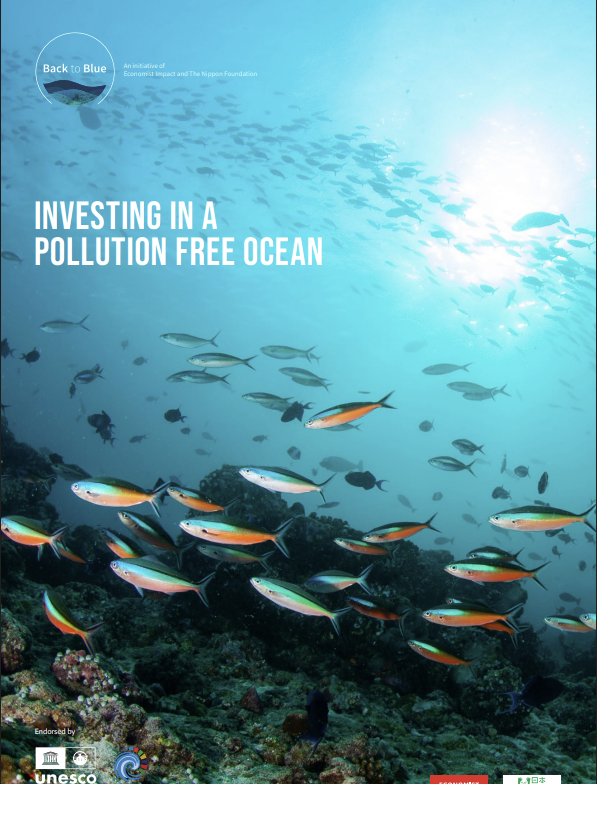
Investing in a pollution free ocean
The report explores how ocean pollution poses financial, legal and reputational risks to businesses, particularly land-based sectors. It identifies data gaps as a barrier to effective decision-making and highlights opportunities in green chemistry, data innovation and sustainable finance. It recommends integrating ocean health into corporate and financial strategies.
Between impact and returns: Private investors and the sustainable development goals
Wealthy private investors increasingly align their portfolios with the UN Sustainable Development Goals (SDGs), seeking both measurable impact and financial returns. Investors favour SDGs linked to higher expected profits, leading to underinvestment in less profitable goals. Findings are based on portfolio data, surveys, and interviews with 60 high-net-worth individuals.
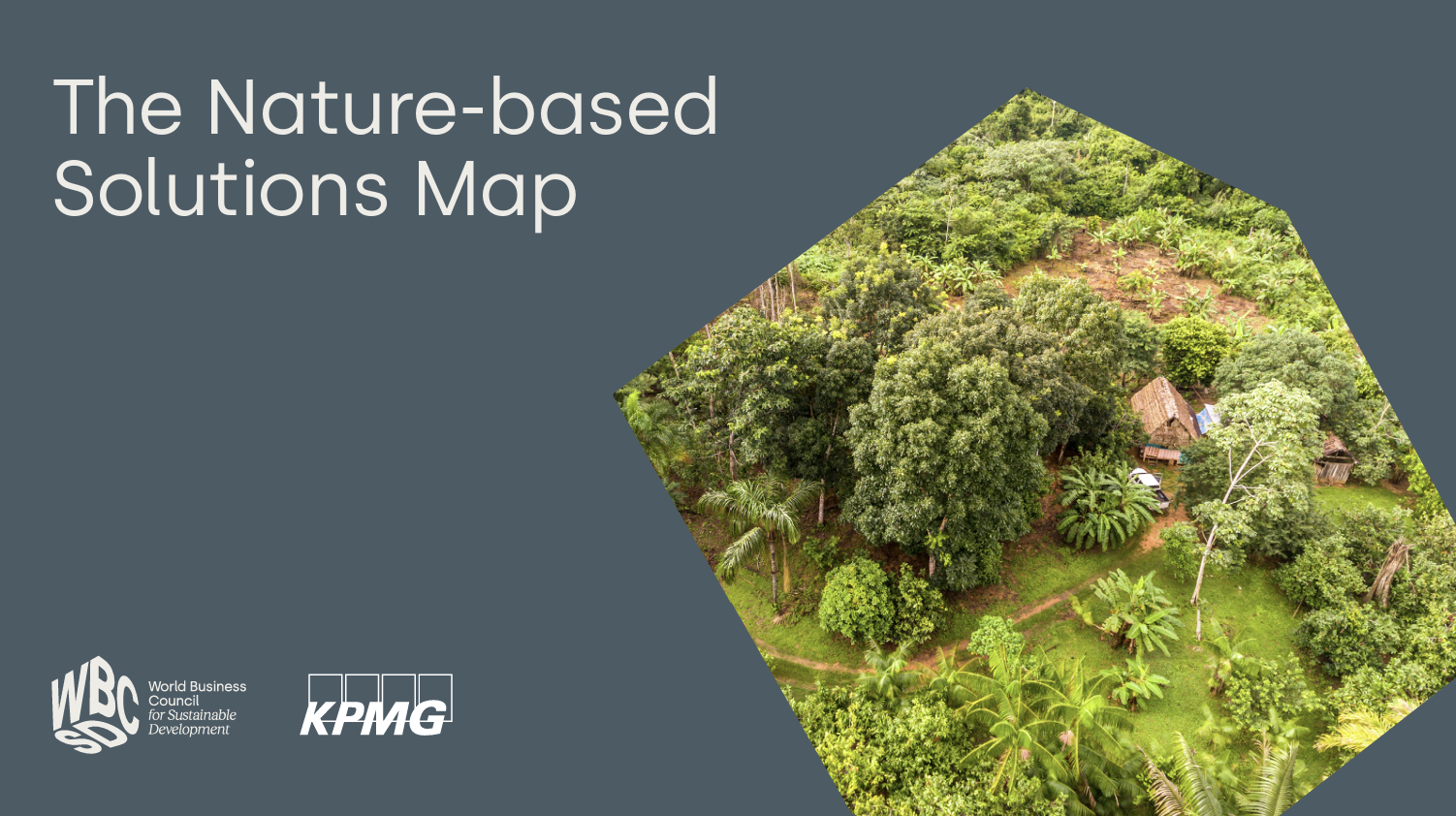
The nature-based solutions map
This tool is designed to help businesses identify relevant nature-based solutions (NbS) for addressing challenges related to core business operations, climate, nature, water, and social equity. It categorises NbS based on business needs and biomes, facilitating decision-making. The map serves as a starting point, requiring further development for implementation.
Accountability Framework
The Accountability Framework guides financial institutions on how to establish policies for responsible lending and investment in the food, agribusiness, and forestry sectors. It also helps financial institutions to screen and engage their clients and portfolios to fulfil these policies. It also assists with assessing environmental and social risk and performance in investment portfolios, and supports company engagement.
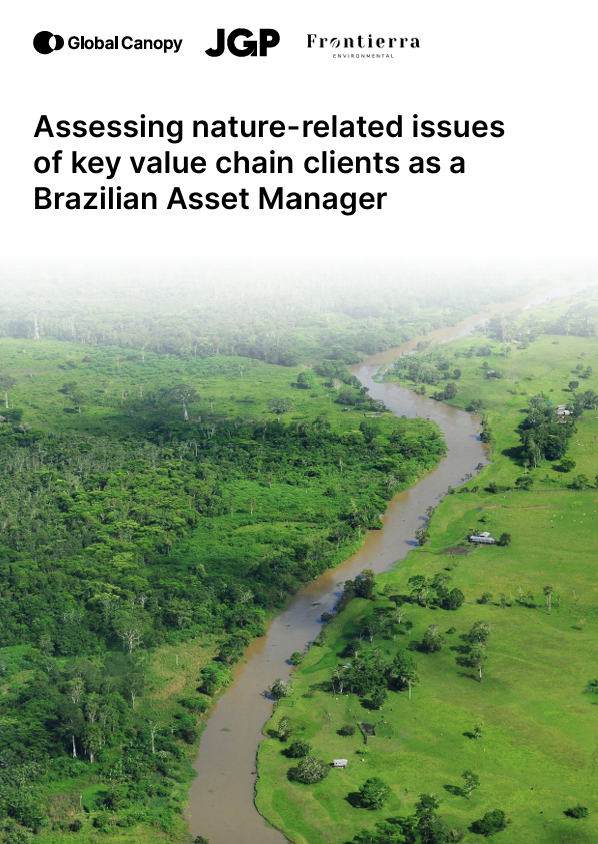
Assessing nature-related issues of key value chain clients as a Brazilian Asset Manager
This case study details JGP's participation in piloting the Taskforce on Nature-related Financial Disclosures (TNFD) LEAP approach. The study focuses on assessing JGP's exposure to tropical deforestation through companies connected to the agriculture sector in its investment portfolio.
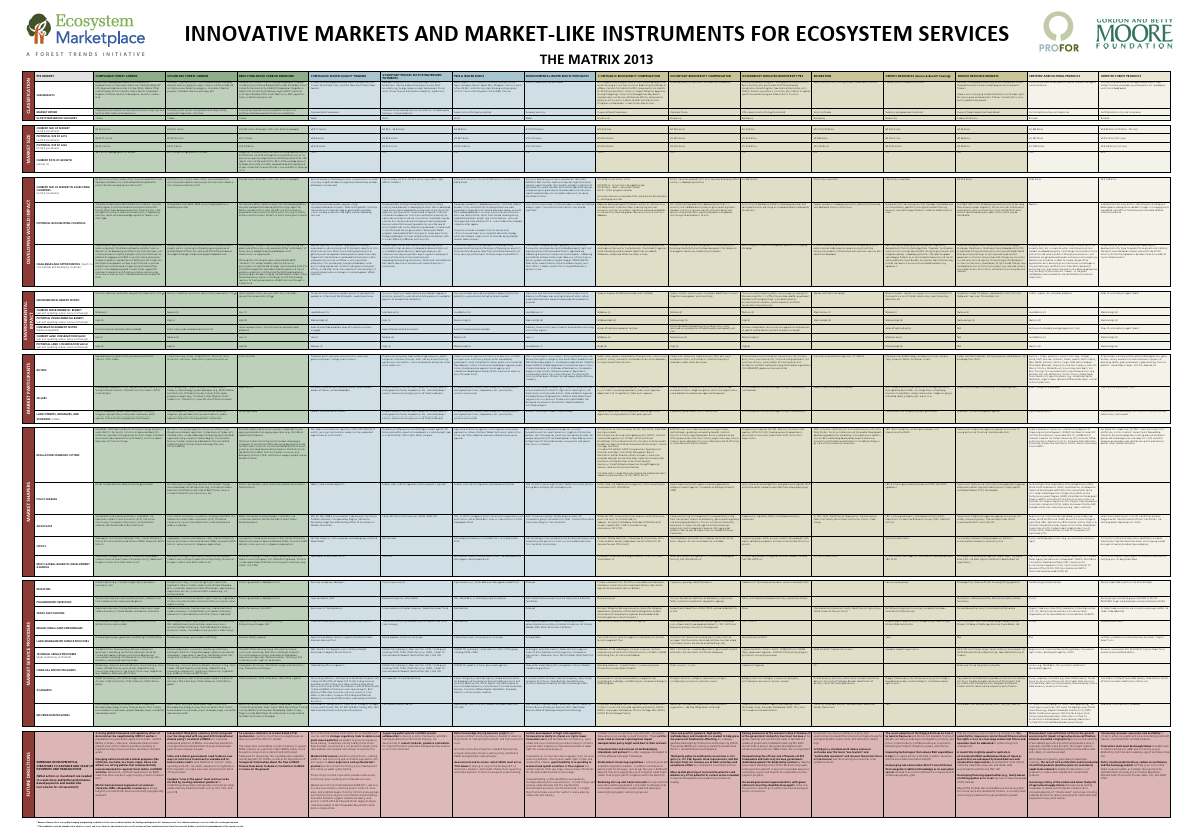
Innovative markets and market-like instruments for ecosystem services
This tool provides investors with a framework for evaluating and comparing different nature-based investment opportunities. It helps identify projects that offer the best combination of financial returns and environmental impact, supporting informed investment decisions.
The blended finance playbook for nature-based solutions
This playbook contains a collection of useful case studies for investors, highlighting growing evidence of investment opportunities in nature. The playbook also contains guidance for investors looking to grow their blended finance portfolio.


