
Library | Finance relevance
Investment managers / asset managers
Refine
1146 results
REFINE
SHOW: 16


China Sustainable Investment Forum
China Sustainable Investment Forum (China SIF) is a non-profit platform promoting sustainable finance and responsible investment in China.China SIF convenes investors, policymakers and researchers, producing ESG research, trend reports and high-profile events to advance environmental, social and governance practices in financial markets.
Mining and money: Financial fault lines in the energy transition
This report analyses global financing of transition mineral mining, showing concentrated capital flows, weak financial institution policies, and material environmental and human rights risks. It links bank and investor finance to mining harms across key regions and calls for stronger regulation and safeguards to enable a just energy transition.

We can’t ignore the largest source of methane
This article argues the global food system is the largest source of human-caused methane and deserves far more policy and funding attention. It maps key emission “hot spots”—ruminant livestock, food waste in landfills, biomass burning, and flooded rice fields—and outlines practical mitigation options from dietary shifts to landfill capture and improved rice management.

Systems-informed stewardship part II: Bringing a systems perspective to stewardship
This article applies a systems lens to stewardship, arguing that fragmented intermediation and entrenched short-term time horizons undermine sustainability outcomes. It calls for recognising these structural barriers as a critical step toward more effective, systems-informed stewardship.
State of transition in sovereigns series
Assessing Sovereign Climate-related Opportunities and Risks (ASCOR) is a benchmark series that provides an investor-led framework to assess how sovereigns manage climate-related risks and opportunities. It supports sovereign bond analysis, engagement, and comparison by evaluating national policies, emissions pathways, and climate finance using transparent, publicly available information.
Transition forecast series
This benchmark series presents forward-looking assessments of global energy, land use and nature transitions. It consolidates expert judgement with structured policy tracking to outline plausible transition pathways across major economies, supporting investors and financial institutions in scenario analysis, risk assessment and strategic planning.
The Inevitable Policy Response (IPR)
Inevitable Policy Response (IPR) is a climate policy analysis initiative focused on forecasting government responses to climate change. IPR produces investor-focused research, scenarios and tools, including the Transition Monitor, to assess transition risk, policy timing and financial impacts across sectors and regions for global financial markets and capital allocation decisions.

Climate Engagement Canada
Climate Engagement Canada is an investor-led collaborative initiative supporting corporate climate action in Canada. It engages companies on net-zero alignment, climate governance and transition planning, using benchmarks, dialogue and public reporting to drive accountability, manage climate risk and support a just transition.
Climate Engagement Canada
Climate Engagement Canada is a public database that tracks and analyses climate-related engagement activities by Canadian institutional investors. It provides company-level information on engagement themes, progress, and outcomes to support transparency, accountability, and informed assessment of investor stewardship practices.
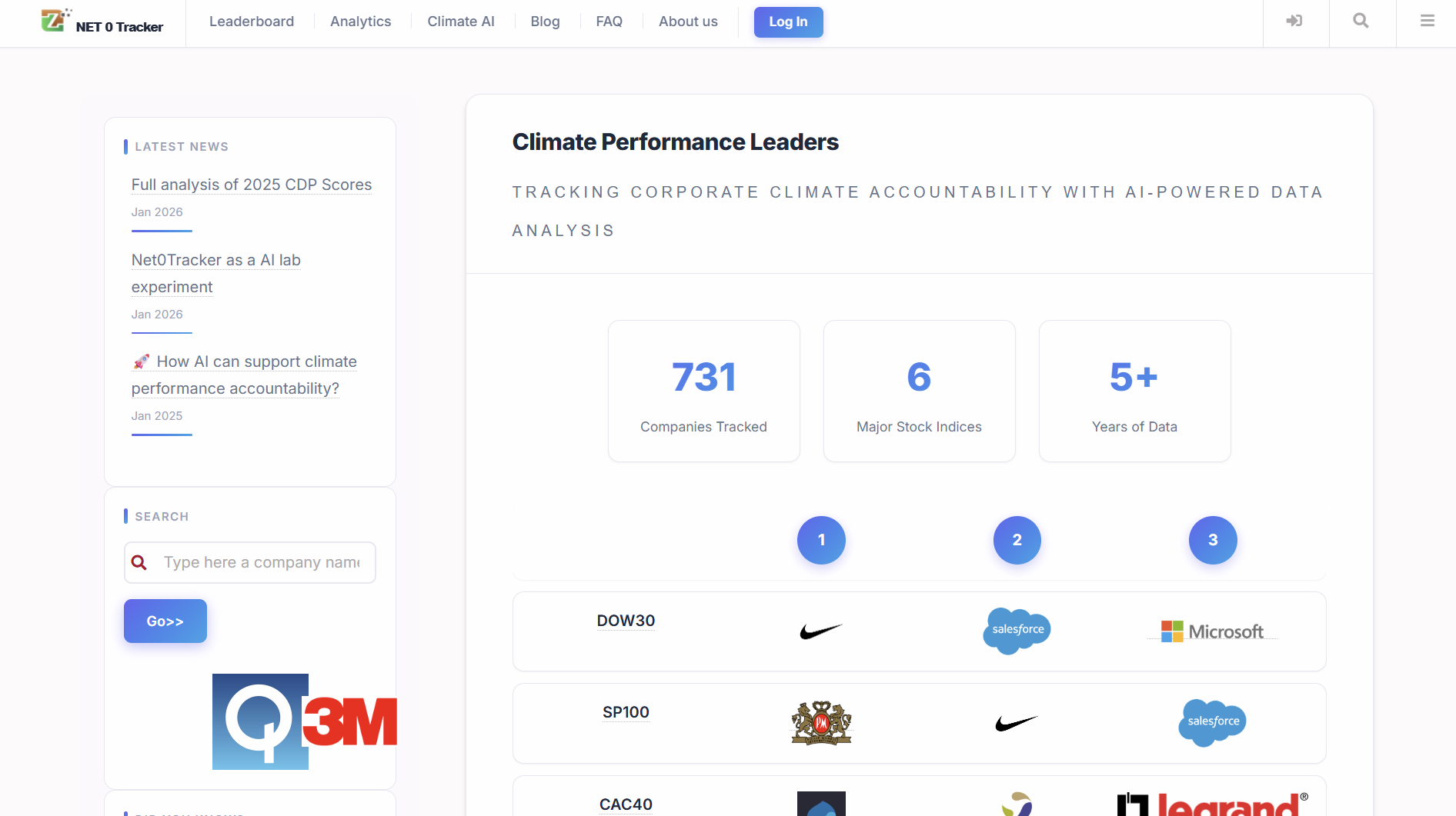
Net 0 Tracker
Net Zero Tracker is a publicly accessible database tracking net zero targets and progress of countries, regions, cities and companies. It standardises information on pledges, legal status and implementation, supporting comparison, accountability and evidence-based analysis of climate commitments.

Climate fiduciaries: part III – mind the model gap
The article explores how pension funds rely on imperfect climate models to assess financial risk and whether fiduciary duty requires deeper scrutiny of their assumptions. It highlights emerging legal challenges, model limitations, and the shift toward richer scenarios and climate narratives in investment decision-making.
A path to post-growth pensions: How rethinking retirement savings could help us ensure wellbeing for all
This report examines how pension systems reliant on perpetual economic growth face systemic financial, social and environmental risks. It proposes reorienting pensions towards a post-growth framework, emphasising wellbeing and multicapital outcomes over financial returns alone, and outlines pathways and barriers for pension fund reform.
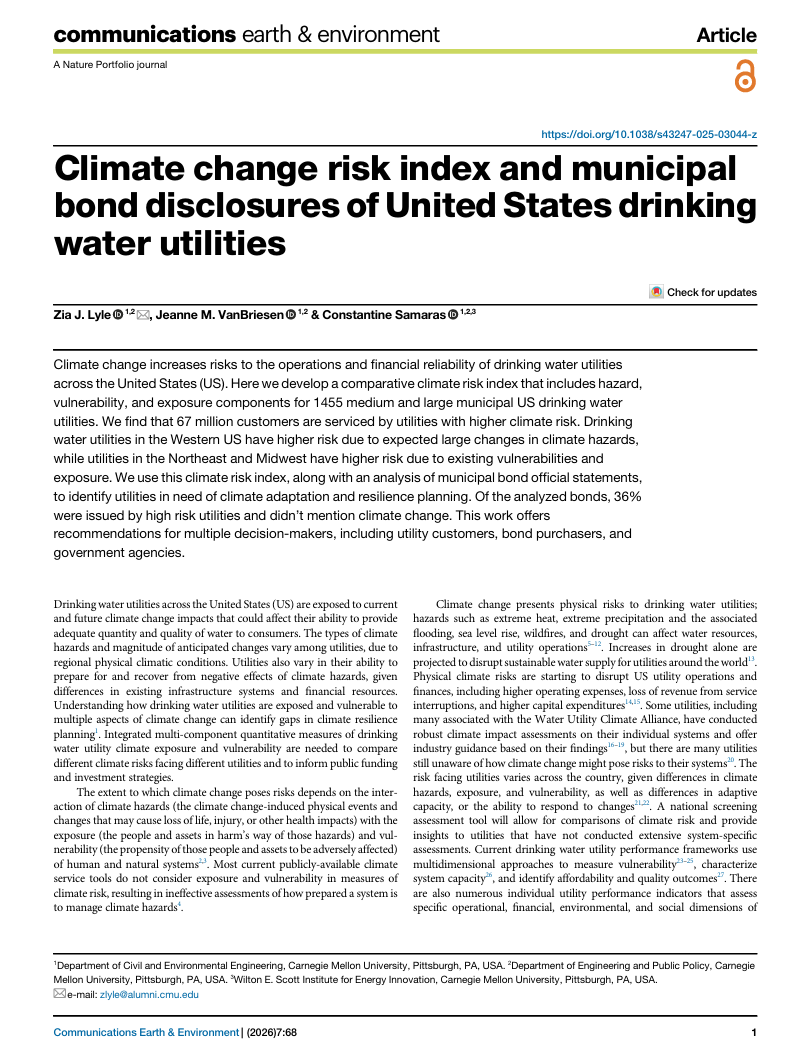
Climate change risk index and municipal bond disclosures of United States drinking water utilities
This study develops a climate risk index for 1,455 US municipal drinking water utilities and compares projected risks with municipal bond disclosures. It finds material mismatches between climate risk and disclosure, highlighting utilities where climate adaptation and financial risk management may be insufficient.
Women’s equality in the workplace series
This research series examines workplace gender equality across publicly listed companies using a consistent assessment framework. It evaluates corporate policies, practices, and disclosures related to gender balance, pay equity, leadership representation, and inclusion to support comparative analysis and responsible investment decision-making.
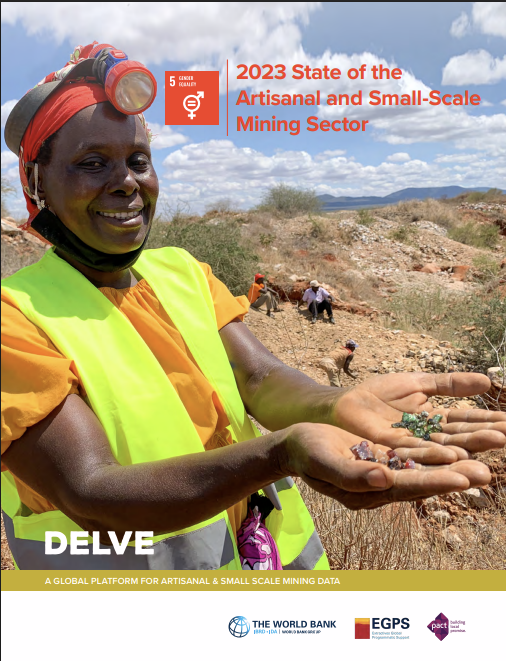
State of the artisanal and small-scale mining sector series
This series provides an overview of the artisanal and small-scale mining sector, examining its structure, operating context, and governance considerations. It explores economic, social, environmental, and regulatory dimensions to support informed analysis, comparison, and ongoing assessment of developments across the sector over time.
Global rights index series
This benchmark series provides an annual, country-level assessment of how governments and employers respect internationally recognised labour rights. It offers a consistent framework to compare workers’ rights protections across regions and over time, supporting analysis of legal conditions, enforcement practices, and systemic risks affecting working people.


