
Library | Asset Class
Multi-Asset / General
Investment strategies that allocate across multiple asset classes (e.g., equities, bonds, real estate, alternatives) for diversification.
Refine
864 results
REFINE
SHOW: 16


Sustainable investment funds: Design, implementation, monitoring and communication of sustainability attributes
PAS 7342:2025 sets out specifications for designing, implementing, monitoring and communicating sustainability attributes of sustainable investment funds. It provides requirements to support clear objectives, governance, evidence, disclosures and labelling, aiming to reduce greenwashing and improve consistency in fund communication.
Nature-related risk and financial implications for investors
This investor briefing examines how nature-related physical, transition and system-level risks translate into financial risks for investors. It outlines macroeconomic and company-level impacts, and describes how institutional investors can integrate nature considerations into investment strategies, stewardship and policy engagement.
Advancing gender equality and women’s empowerment: Target setting guidance for banks
This guidance outlines how banks can set and implement measurable targets to advance gender equality and women’s empowerment across leadership, portfolios, financial inclusion and ecosystems, aligned with the Principles for Responsible Banking and Women’s Empowerment Principles.
Sustainability disclosure landscape report for risk management: Insights from climate-focused case studies
This report reviews sustainability disclosure standards and regulatory uptake, focusing on climate-related risk management. Using case studies, it examines IFRS S1 and S2 implementation, materiality assessments and transition plans, highlighting disclosure gaps, data challenges and practical approaches to improve decision-useful climate risk reporting.

IFRS S2: Climate-related disclosures
IFRS S2 sets mandatory climate-related disclosure requirements for entities, covering governance, strategy, risk management, and metrics and targets. It integrates TCFD recommendations and SASB guidance to improve consistency, comparability and decision-useful information for users of general purpose financial reports.
Mobilising investment for climate adaptation
This report assesses Australia’s escalating climate risks and argues for scaling adaptation investment. It recommends improved valuation methods, a nationally coordinated adaptation investment framework, and diversified public-private financing mechanisms to reduce long-term economic damage and enhance resilience.
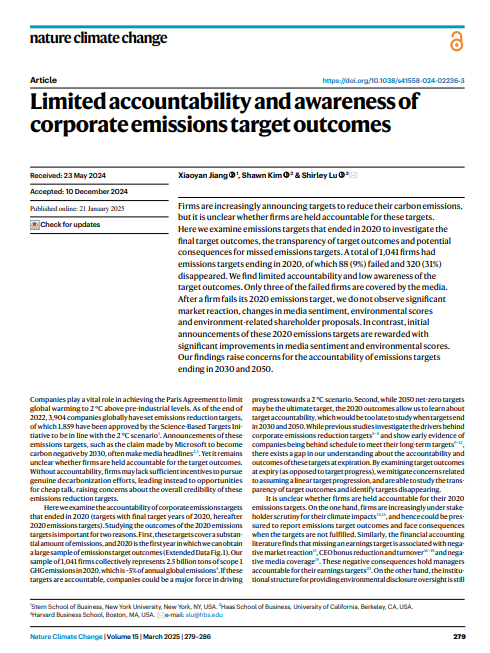
Limited accountability and awareness of corporate emissions target outcomes
The study analyses 1,041 corporate emissions targets ending in 2020, finding limited accountability. Thirty-one per cent of targets disappeared and 9% failed, with minimal disclosure, media attention or market penalties. By contrast, target announcements improved media sentiment and ESG scores, raising concerns for future climate targets.
Net Zero Asset Managers' target disclosures series
The Net Zero Asset Managers Target Disclosures is a reporting series that tracks how participating asset managers set, disclose, and update net zero targets over time. It provides a consistent, initiative-wide view of commitments, disclosure practices, governance arrangements, and methodological approaches across reporting years.

Sustainable Finance Roundup January 2026: Geopolitics, Energy Transitions, and Systemic Risk
This month’s sustainable finance article roundup examines a landscape increasingly shaped by geopolitics and climate risk, as near-term fragmentation, energy security, and affordability pressures collide with intensifying long-term threats from climate change, biodiversity loss, and water stress. The works featured analyse how these dynamics are reshaping capital allocation, disclosure, and resilience planning, demonstrating the growing need for sustainable finance to integrate geopolitical risk with real-economy transition.
Canadian pension climate report card series
Grades 11 Canadian pension funds on climate performance across six indicators including net-zero targets, fossil fuel exclusions, and climate engagement.
Global landscape of climate finance series
The Global Landscape of Climate Finance is a benchmark series by Climate Policy Initiative that tracks global climate finance flows, examining the sources, financial instruments, sectors, uses and geographic distribution of public and private investment supporting climate mitigation, adaptation and resilience.
IQAir world air quality series
The World Air Quality Report is an annual research series assessing global air quality using ground-level PM2.5 monitoring data. It provides consistent country, regional and city-level comparisons, supported by transparent methodology and harmonised datasets to inform policy, research and investment analysis.
Benchmarking impact: Australian impact investor insights activity and performance series
Benchmarking Impact is a benchmark series that provides a structured, recurring assessment of Australia’s impact investing market. It examines investor activity, market practices, and product development to support comparability over time and inform understanding of how impact investing is evolving across the financial system.
The global tipping points series
The Global Tipping Points Report is a research series examining Earth system tipping points and positive tipping dynamics. It synthesises interdisciplinary evidence on systemic risks, governance considerations and pathways for transformation, supporting decision-makers in understanding non-linear climate and environmental change across global systems.
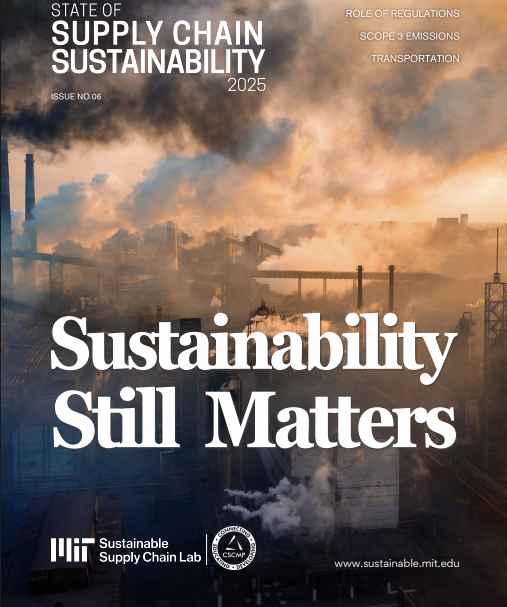
State of supply chain sustainability series
The State of Supply Chain Sustainability is an annual benchmark series that examines how organisations define, govern, and implement environmental and social sustainability across global supply chains. It provides a consistent research framework to track evolving practices, pressures, and management approaches over time.
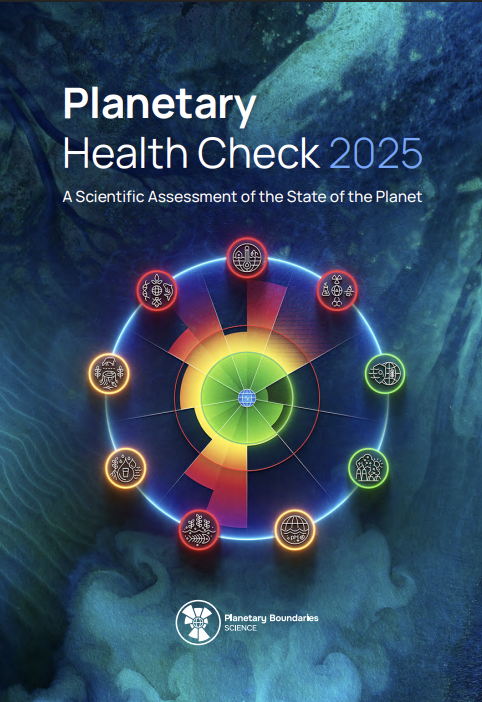
Planetary health check series
The Planetary Health Check is an annual benchmark series providing a consistent, science-based assessment of the Earth system. It applies the Planetary Boundaries framework to monitor planetary stability, resilience, and life-support functions, supporting comparability over time and informing policy, finance, and strategic decision-making and Planetary Boundaries Science is a research lab within the Potsdam Institute for Climate Impact Research (PIK), focused on advancing scientific understanding of the planetary boundaries framework. It does not operate as an independent organisation and should be covered under PIK’s institutional profile.


