
Library | Asset Class
Multi-Asset / General
Investment strategies that allocate across multiple asset classes (e.g., equities, bonds, real estate, alternatives) for diversification.
Refine
1366 results
REFINE
SHOW: 16


Who bears the transition risk? Uneven climate risk assessment of SMEs across German banking groups
This report examines how German banks assess climate transition risks, specifically for SMEs. It finds that private banks significantly increased risk weights for carbon-intensive firms after 2018, while cooperative and savings banks did not. The reliance on sector-level metrics suggests potential loan mispricing and systemic risks within regional banking groups.
Beyond greenwashing: ESG disclosure substance, investor flows, and fund behavior
This research examines mutual fund ESG disclosures in shareholder letters. It finds that only 'opportunistic' disclosures focused on financial value attract significant investor flows. While aggregate data suggests greenwashing, granular analysis reveals 'impact' disclosures result in genuine portfolio improvements. However, opportunistic claims increase outflow risks if performance disappoints.
Peer groups matter: Comparative industry effects in ESG rating disagreement
This research identifies the 'comparative industry effect'—differences in industry classification and peer group construction—as a major driver of ESG rating divergence. It explains 30% of industry-level score differences, particularly affecting environmental ratings and firms with limited public disclosure or complex ownership structures.
Climate governance under pressure: The Anti-ESG movement’s impact on Canadian institutional investors
This report analyses the impact of the US anti-ESG movement on Canadian institutional investors. It examines governance challenges in integrated markets, shifts in proxy voting, and regulatory changes. Despite political spillover, the analysis highlights the resilience of Canadian legal frameworks and the ongoing commitment to climate-risk oversight.
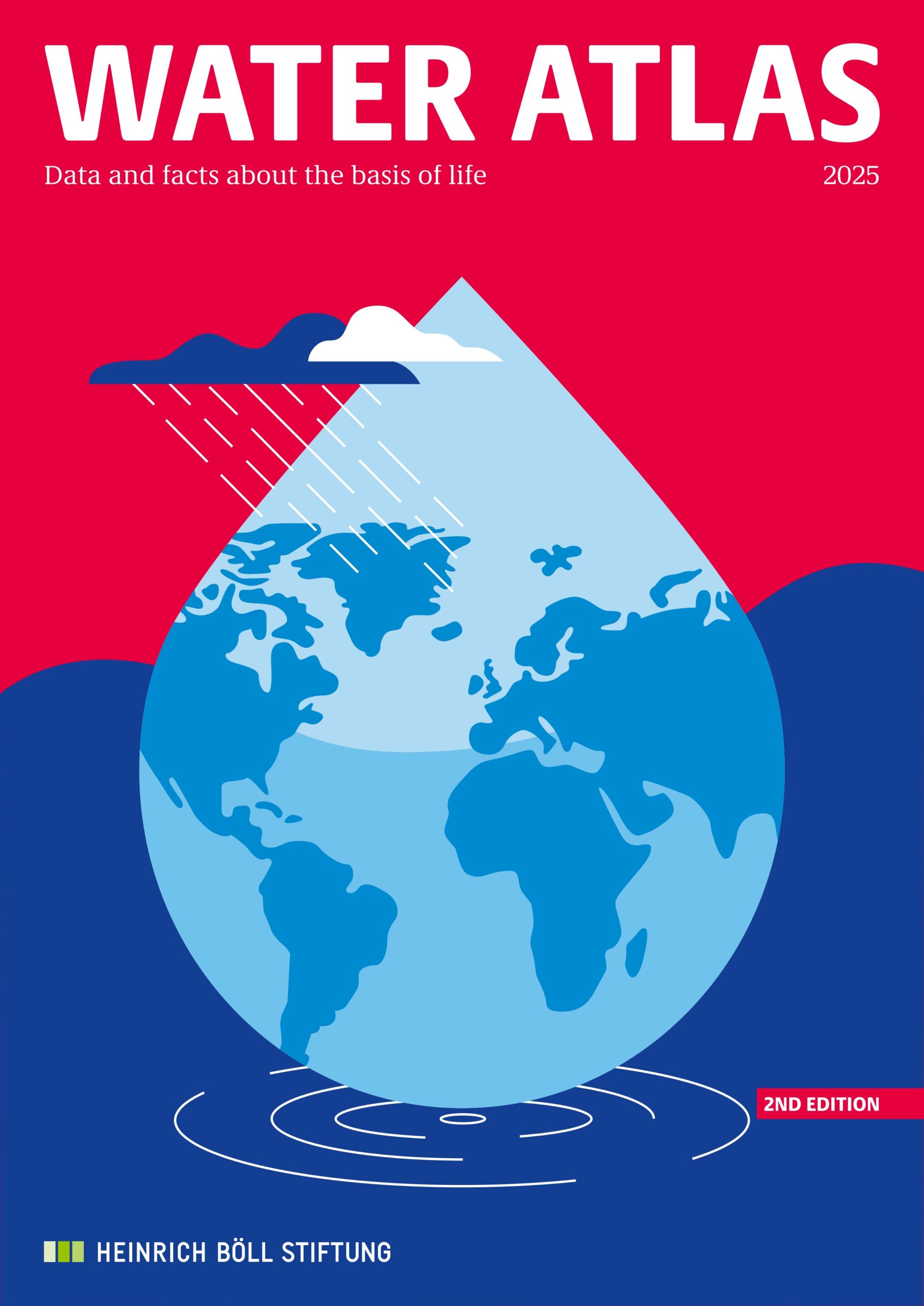
Water atlas: Data and facts about the basis of life 2025
This report analyses the global water crisis, examining the impacts of climate change, pollution, and industrial demand. It highlights the strain from agriculture and digitalisation, explores the failure of privatisation, and advocates for sustainable governance and ecosystem restoration to ensure water security and human rights are protected globally.

Agribusiness Atlas: Facts and figures about the corporations that control what we eat 2026
The Agribusiness Atlas 2026 details the unprecedented concentration of corporate power within global food systems. It examines how dominant firms influence policy, drive environmental degradation, and impact food security. The report advocates for democratic food governance, fair pricing for farmers, and public sector alternatives to curb corporate control.
Building resilient global governance for an era of recurring crises
This report examines strategies for building resilient global governance amidst recurring transnational crises. It advocates for hybrid institutional complexes that balance robust and flexible institutions. By prioritising institutional diversity and leadership, governance systems can better absorb shocks, adapt through innovation, and prepare for future disruptions through institutional learning.
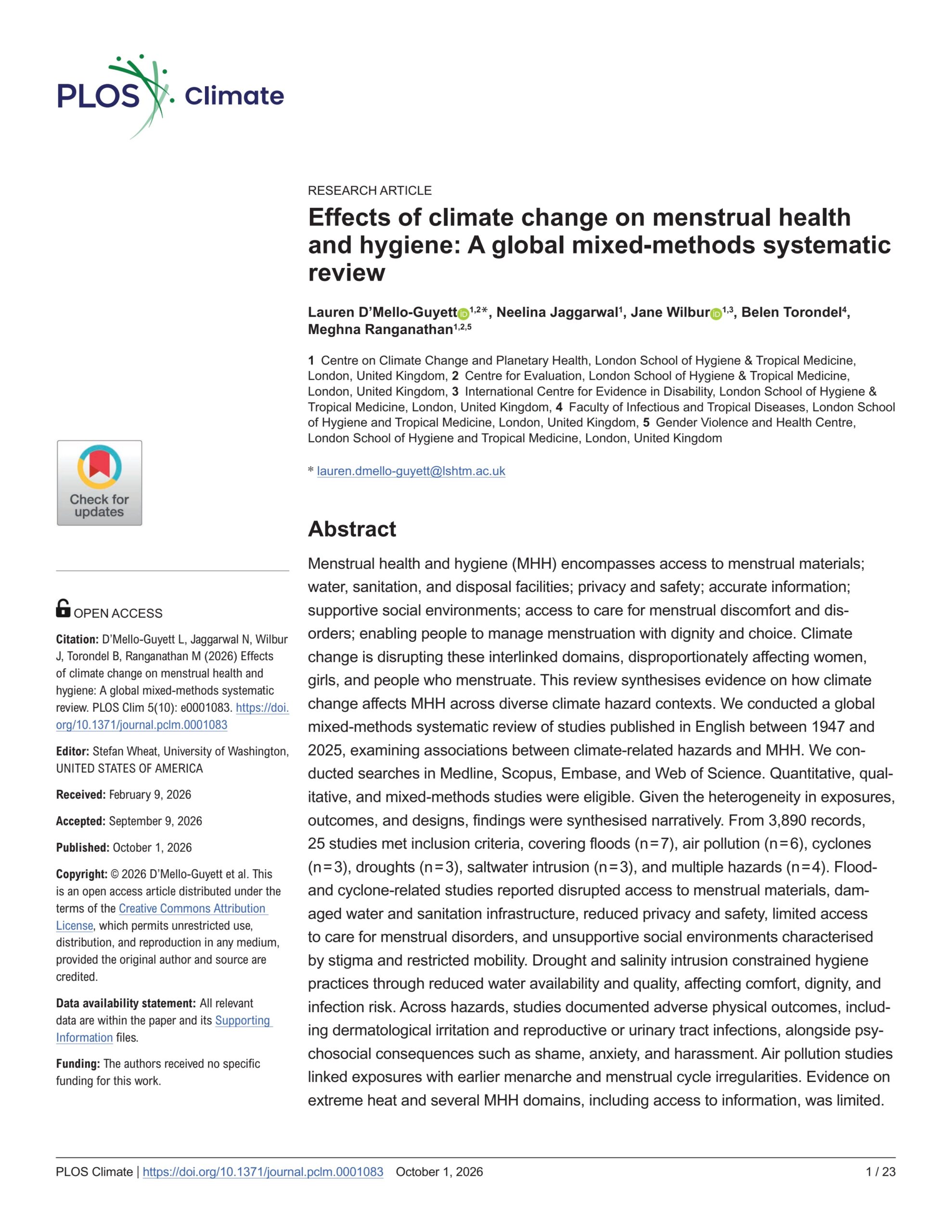
Effects of climate change on menstrual health and hygiene: A global mixed-methods systematic review
This systematic review synthesises evidence on how climate change affects menstrual health and hygiene globally. It finds that floods, cyclones, and droughts disrupt access to materials and sanitation, while air pollution correlates with earlier menarche. The report highlights critical gaps in research regarding extreme heat and equity.
The effects of long-term exposure to pollution on health
This research provides causal evidence that long-term exposure to fine particulate matter at contemporary levels increases circulatory morbidity, particularly hypertension. Using a quasi-random assignment of U.S. Army soldiers, the study demonstrates that sustained exposure erodes health capital, even in young, initially healthy populations, highlighting the risks of chronic pollution.
Rethinking readiness: Enhancing the foundations for climate finance in fragile and conflict-affected situations
This report analyses climate finance readiness in fragile and conflict-affected situations. It identifies systemic barriers, including institutional instability and under-resourcing, that prevent readiness support from translating into finance. It proposes four principles to adapt readiness, advocating for a whole-of-government approach anchored in political and fiscal realities.
IPSASB SRS 1, Climate-related disclosures
This IPSASB standard establishes principles for public sector entities to disclose climate-related risks and opportunities. Aligned with IFRS S2, it mandates disclosures regarding governance, strategy, risk management, and performance metrics. The standard prioritises accountability for long-term fiscal sustainability and service delivery, with an effective date of 1 January 2028.
Unlocking textile circularity in the EU: From challenges to opportunities
This report examines barriers and enablers for scaling up textile recycling in the EU. Combining literature reviews with 20 stakeholder interviews, it identifies technological, financial, and regulatory constraints. Recommendations include supporting demand-side measures, funding sorting technology research, and strengthening value chain collaboration to achieve circularity targets.
Generative debunking of climate misinformation
This research introduces 'generative debunking' using large language models to combat climate misinformation. By synthesising psychological best practices with computational tools, the study develops three models using the 'truth sandwich' approach. Expert evaluation indicates that structured prompting and retrieval-augmented generation significantly improve the identification and explanation of logical fallacies.
Public procurement and AI governance: Developing a strategic framework for middle powers
This report evaluates how 'AI middle powers' can use public procurement as a strategic governance tool to mitigate risks from foreign-led frontier AI. It proposes a framework of contractual guarantees and recommends international coordination to increase bargaining leverage, enhance visibility, and secure data sovereignty against technological dependencies.
Measuring what matters: A practical framework to integrate health into urban climate action
This report introduces a practical framework for integrating health co-benefits into urban climate monitoring. It details a five-step process for selecting robust indicators across air pollution, active travel, and sustainable diets. The framework helps cities justify climate policies, enhance accountability, and strengthen public support through evidence-based decision-making.
Leveraging co-creation for city-level climate action and health co-benefits: Policy lessons from citiES 2030
This report explores how evidence-informed co-creation supports city-level climate action and health co-benefits. Using the citiES 2030 platform as a case study, it details the development of practical health indicators and provides recommendations for policymakers, cities, and researchers to strengthen urban climate governance and implementation.


