
Library | Sustainable Finance Practices
ESG Integration and analysis
Tools, methodologies, and frameworks for embedding ESG factors into financial analysis, valuation, credit assessment, underwriting, and portfolio management, while separating out broader strategic elements.
Team Altiorem recommends

Refine
699 results
REFINE
SHOW: 16


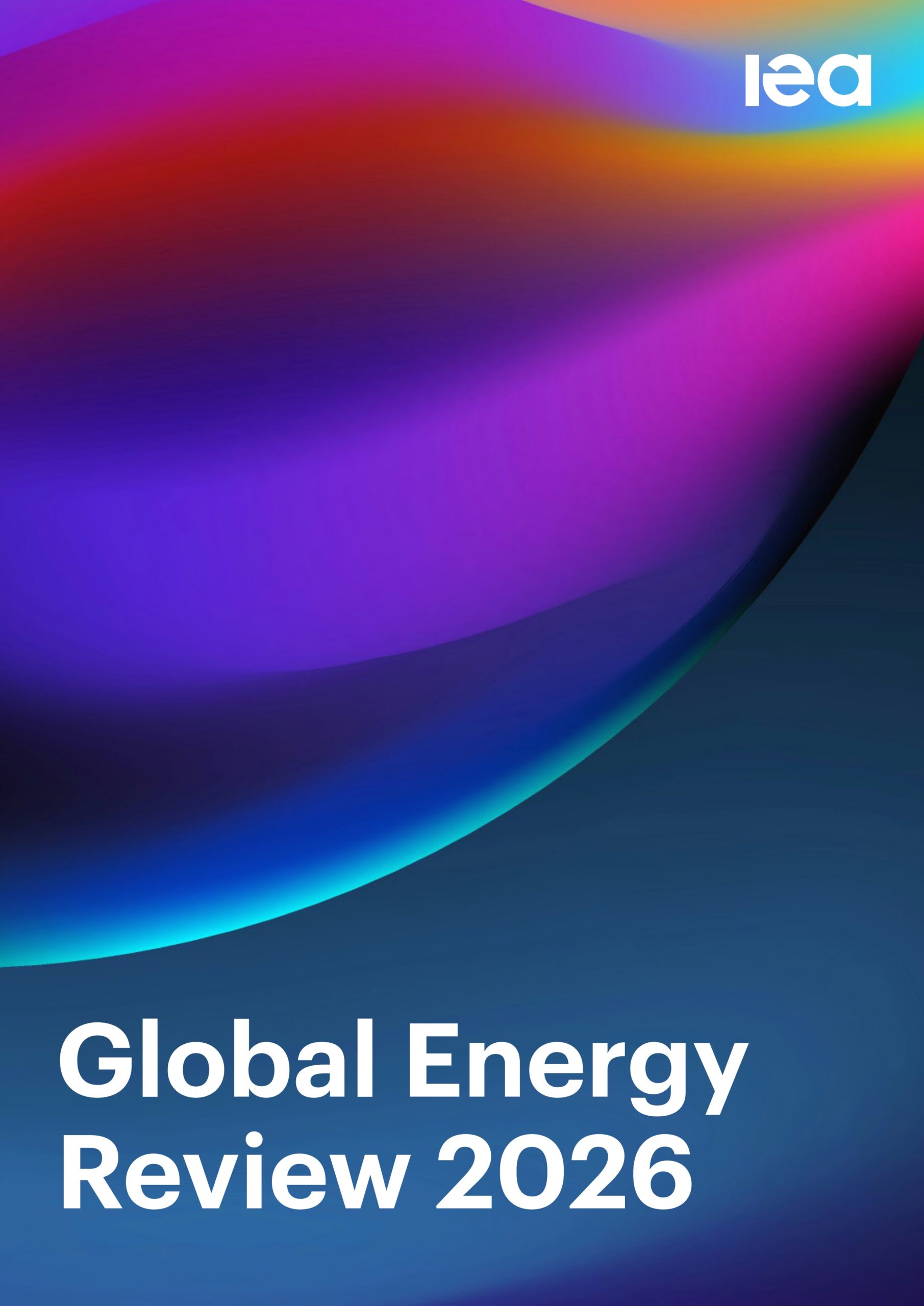
Global energy review series
The Global Energy Review is an annual benchmark series published by the International Energy Agency (IEA) that assesses trends across the entire energy sector, covering all fuels, technologies, regions, and energy-related CO2 emissions for the preceding calendar year.
Corporate diversification and corporate carbon performance
This research examines how corporate diversification and cash flow coinsurance reduce carbon intensity in Japanese firms. It finds that industrial diversification alleviates financing constraints, enabling substantial decarbonisation investments. The effect is most significant in carbon-intensive industries and for Scope 1 emissions following the Paris Agreement.
Mapping the landscape of net-zero nature-positive finance: A review of definitions and frameworks
This report provides a comprehensive review of definitions and frameworks for net-zero, nature-positive, and climate-nature finance. It identifies alignment areas and implementation gaps, advocating for integrated risk and investment approaches to achieve global sustainability goals under the Paris Agreement and the Kunming-Montreal Global Biodiversity Framework.
Just transition metrics benchmark
Just Transition Metrics is a benchmark series developed by Shift in collaboration with multiple organisations. It provides a foundational, sector-agnostic set of quantitative metrics designed to assess the 'justness' of companies' climate-related transition plans, covering workforce, communities, and value chain impacts.

Sector insights: Real estate series
Sustainable Fitch Sector Insights Report Series is a series providing analytical assessments of the sustainability profiles of different sectors. It examines sustainability impacts, ESG rating trends, sustainable finance developments, sector-specific issues, and relevant sustainability-related regulations to support finance professionals’ understanding of sector performance.
GIIN state of the market series
The GIIN's State of the Market is an annual benchmark series tracking the scale, activity, financial performance, and allocation patterns of the global impact investing market through a comprehensive survey of impact investors across asset classes, geographies, and sectors.
Sustainable signals: Individual investors series
Sustainable Signals: Individual Investors is an annual survey series by the Morgan Stanley Institute for Sustainable Investing. It tracks global individual investor sentiment, portfolio allocations, return expectations, thematic priorities, and barriers related to sustainable investing across North America, Europe, Asia Pacific, and MENA.

Rate the raters series
Rate the Raters is a benchmark series by the ERM Sustainability Institute tracking corporate perceptions of ESG rating agencies. It examines quality, usefulness, trust, and engagement with ESG raters across regions and industries, offering a longitudinal view of the evolving ESG ratings landscape for companies and investors.
Scientific Climate Ratings
Scientific Climate Ratings delivers forward-looking, science-based climate risk ratings quantifying financial materiality of physical and transition risks for infrastructure assets globally.
Transition Acceleration Framework (TAF)
TAF is a forward-looking analytical framework by Rhodium Group that evaluates where climate investment and policy will accelerate decarbonisation.

Plastic footprint guidelines
The Plastic Footprint Network's guidance document presents a science-based methodology for assessing corporate plastic footprints. Developed by over 100 professionals from 35 organisations, the framework comprises 11 modules covering macroplastics and microplastics, providing practitioners with a step-by-step process for measuring plastic leakage and reporting results.
Guidance on integrating deforestation into net zero strategies
This IIGCC guidance supports institutional investors in integrating deforestation, land conversion, and associated human rights risks into net zero strategies. Aligned with the Net Zero Investment Framework 2.0, it provides practical, asset class-specific action points across listed equity, sovereign bonds, real estate, and private equity and debt.
Using scenario analysis for future resilience: Top tips for pension fund chairs and trustees
This guide from Accounting for Sustainability supports pension fund chairs and trustees to move beyond simplified climate scenario analysis. It outlines the limitations of current models, provides practical examples from USS, NBIM and APG, and offers six actionable tips to embed scenario insights into strategic decision making.
AI data centers and electricity demand: Taming the energy guzzlers
This paper examines AI data centre electricity demand and its costs for ratepayers and the environment. It finds that Big Tech market capitalisations have risen far above predicted levels since ChatGPT's 2022 launch, while data centres drive up electricity prices and fossil fuel use. Regulatory reforms and innovations are recommended.
EDHEC Climate Institute Resource Hub
EDHEC Climate Institute is a climate finance research resource that provides research, analytical tools and data on climate-related financial risks, transition pathways and climate policy. It supports finance professionals with evidence-based insights for investment analysis, risk assessment and decision-making on climate-related issues.
Widening the lens: Scaling climate adaptation and resilience through sustainable finance
This report examines climate adaptation and resilience in sustainable finance, highlighting a significant financing gap in emerging markets and limited formal allocation in labelled debt markets. It argues for a broader lens that recognises resilience outcomes already embedded in policy-driven investments, using Ecuador's sovereign housing framework as a case study.


