
Library | Sustainable Finance Practices
Issue/sector focused research
General research and analysis that provides deep dives and insights into specific sustainability issues or industry sectors, addressing the current status, trends, risks, and opportunities for the issue but not specifically addressing a finance or business audience.
Refine
761 results
REFINE
SHOW: 16


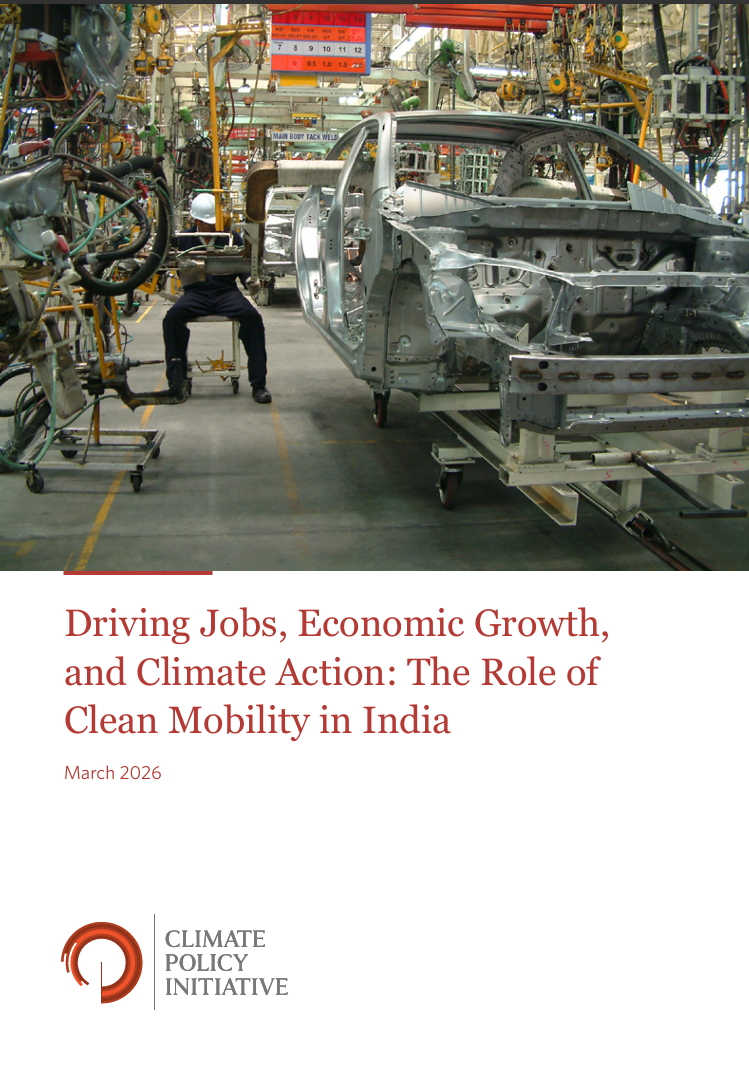
Driving jobs, economic growth, and climate action: The role of clean mobility in India
India’s transition to full electric vehicle adoption by 2047 could increase manufacturing output, create new jobs, reduce oil import dependence, and lower transport emissions. The report highlights substantial investment, infrastructure, and workforce reskilling requirements, with policy coordination and domestic manufacturing identified as critical to capturing long-term economic and climate benefits.
Equity in principle, misalignment in practice: Adaptation finance governance in the adaptation fund and green climate fund
The report argues that adaptation finance through the Adaptation Fund and Green Climate Fund formally prioritises equity, vulnerability and country ownership, but remains constrained by voluntary funding, access barriers and project-based delivery, limiting alignment with Global South priorities.
PFAS: From non-stick to stuck in court – Dashboard
The PFAS: From Non-stick to Stuck in Court Dashboard is an online tool developed by Planet Tracker to help investors assess PFAS litigation risk. It maps facility-level exposure across publicly listed companies, supporting ESG analysis, risk assessment and investment decisions related to environmental liabilities.
Exposing tobacco companies’ retail presence and highlighting regulatory options
The report outlines how tobacco companies use retailer incentives, targeted in-store marketing, and retailer lobbying to sustain product visibility and influence regulation. It reviews policy options, including retail licensing, outlet restrictions, and sales limitations, aimed at reducing tobacco availability and countering industry presence in retail settings.
Climate risks to Syria’s urban water and sanitation systems
Syria’s urban water and sanitation systems face rising climate-driven water scarcity, infrastructure damage and growing demand. The report recommends integrated water management, infrastructure rehabilitation, agricultural water efficiency, wastewater reuse and stronger governance to reduce future water insecurity, contamination risks and maladaptive investment.
The thematic assessment report on the interlinkages among biodiversity, water, food and health
IPBES assesses links between biodiversity, water, food, health and climate, finding siloed decisions worsen trade-offs. It identifies integrated governance, sustainable consumption, ecosystem restoration and finance reform as response options to support more just and sustainable outcomes.
Climate finance as a catalyst for peace
Research across 85 developing countries found climate finance was associated with lower resource-related conflict risk, particularly through reduced water scarcity and greater renewable energy access. The study suggests climate finance may support stability in fragile regions, with stronger effects observed where higher funding levels were directed towards adaptation and social infrastructure.
A Lens on the transition: Trends shaping the future economy: Sector in focus: Healthcare
Impax Asset Management reviews sustainability-driven trends shaping healthcare, highlighting AI-enabled productivity gains, regulatory pressures, and supply chain localisation. The report examines opportunities in healthcare equipment, life sciences and managed care, alongside risks from regulation, product liability, affordability concerns and geopolitical tensions.
Deploying established climate technologies and solutions for buildings
Policy brief outlining market-ready climate technologies for buildings, including heat pumps, insulation, renewable energy systems and circular construction practices. The report highlights financing, policy and capacity barriers, particularly in developing economies, and recommends stronger building codes, targeted funding, and integration of traditional knowledge to accelerate low-emissions, climate-resilient buildings.
2026 Living Wage Dataset
The 2026 Living Wage Dataset by Valuing Impact is a free global database covering 217 countries and eight household scenarios. It uses the Anker and Anker methodology with updated cost-of-living data to estimate living wages for urban and rural households, supporting sustainability, labour practice and supply chain analysis.
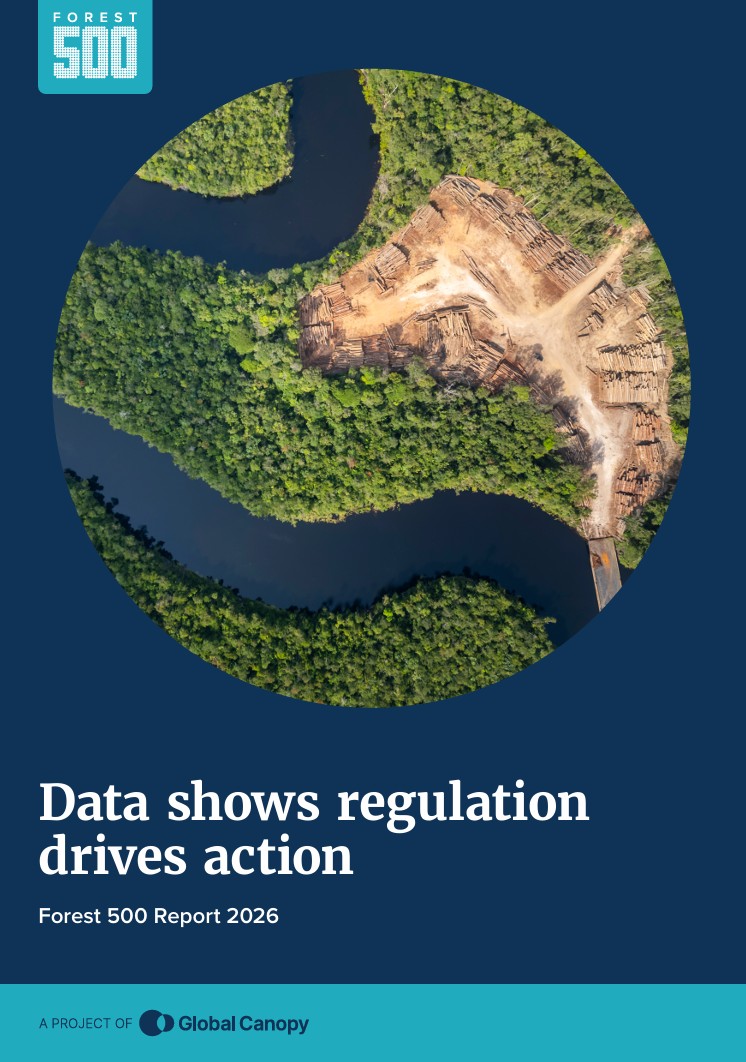
Data shows regulation drives action: Forest 500 report 2026
Forest 500 finds that anticipated EUDR regulation is already driving corporate traceability and deforestation action, though progress remains uneven: only 4% of assessed companies are leaders, 63% show partial action and 33% remain laggards.
Mission 300 Progress Portal
Mission 300 Progress Portal is an interactive World Bank tool tracking electrification across Sub-Saharan Africa. It provides data on electricity connections, financing, and project pipelines, supporting analysis of energy access, infrastructure investment, and development finance relevant to ESG and emerging market decision-making.
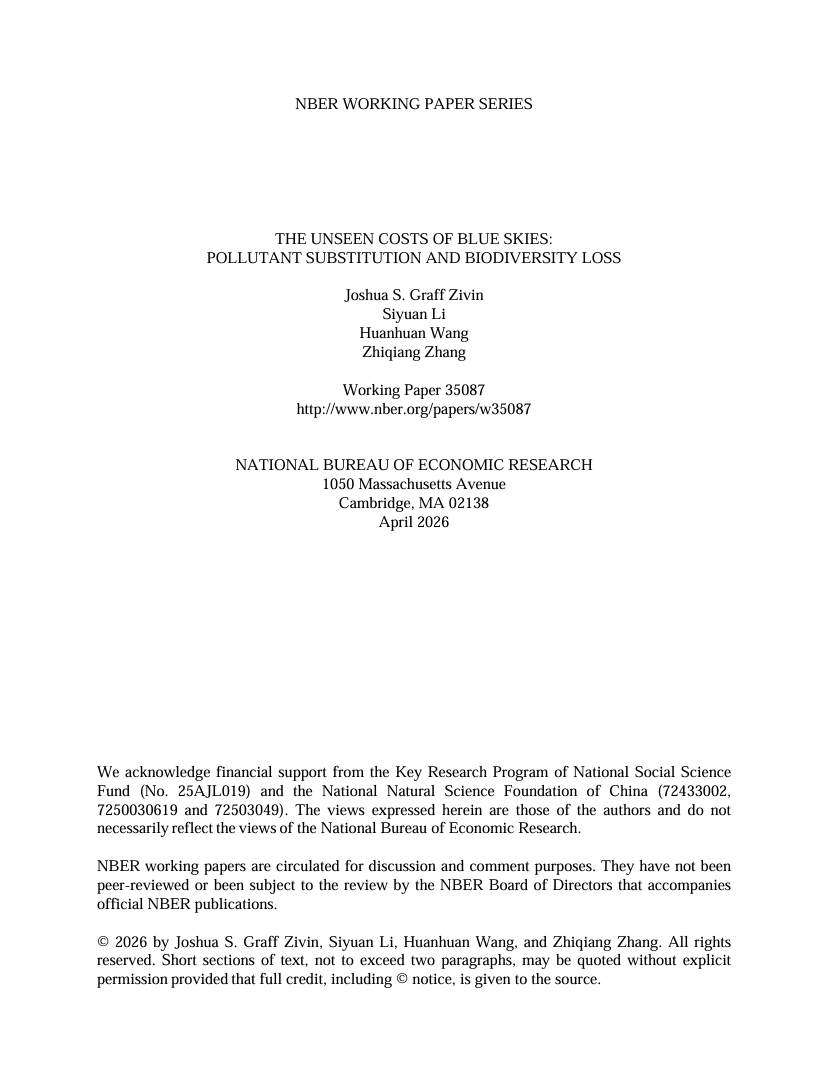
The unseen costs of blue skies: Pollutant substitution and biodiversity loss
China’s PM₂.₅-targeted regulation reduced particulates but increased O₃ via pollutant substitution driven by incentive distortions. Resulting ozone rises increased mortality and reduced biodiversity, offsetting ~24% of policy benefits. Findings highlight welfare losses from narrow performance metrics and the need for multi-pollutant regulation.
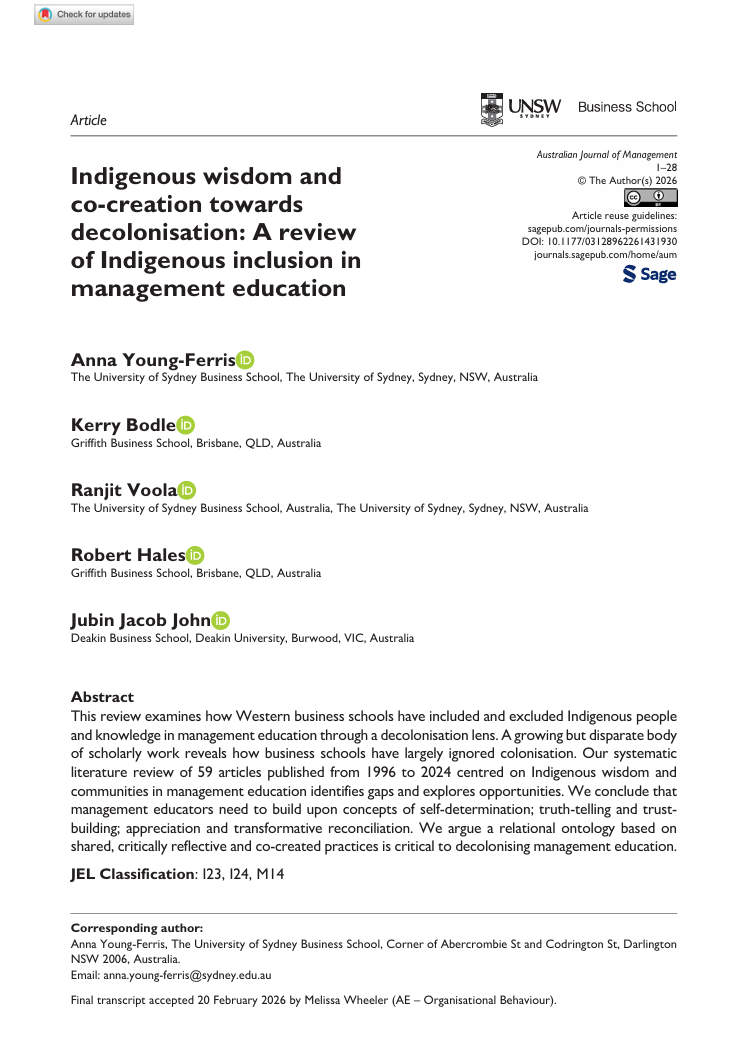
Indigenous wisdom and co-creation towards decolonisation: A review of Indigenous inclusion in management education
This review finds Western business schools have often excluded Indigenous knowledge, and argues decolonising management education requires Indigenous self-determination, truth-telling, trust-building, co-created curricula and relational pedagogies grounded in Indigenous wisdom and communities.
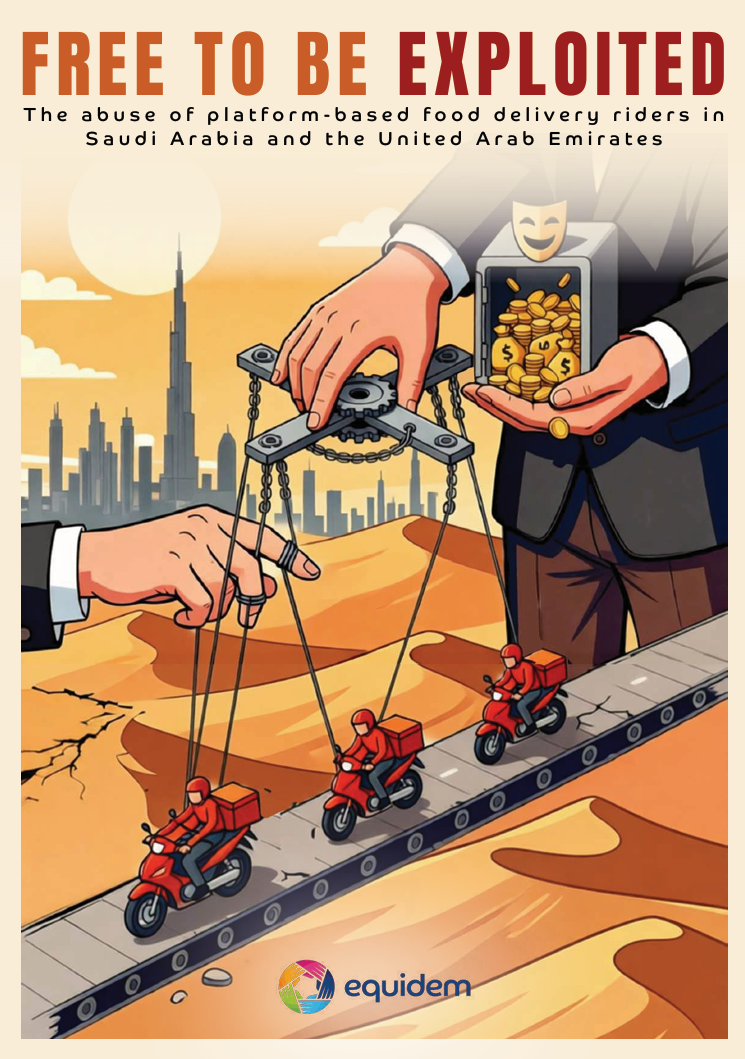
Free to be exploited: The abuse of platform-based food delivery riders in Saudi Arabia and the UAE
Report finds migrant delivery riders in Saudi Arabia and UAE face systemic exploitation via third-party logistics, including coercive employment, wage abuses, unsafe conditions, and restricted mobility. Weak enforcement and outsourcing obscure accountability. Recommends stronger regulation, corporate oversight, and international labour standards.

Equidem
Equidem is an independent human rights and labour rights organisation working globally to expose injustice and support marginalised communities. It conducts research, investigates abuses in supply chains, and promotes accountability. Through advocacy and partnerships, Equidem develops practical solutions to strengthen labour rights, migrant worker protections, and the wider human rights movement.


