Overview
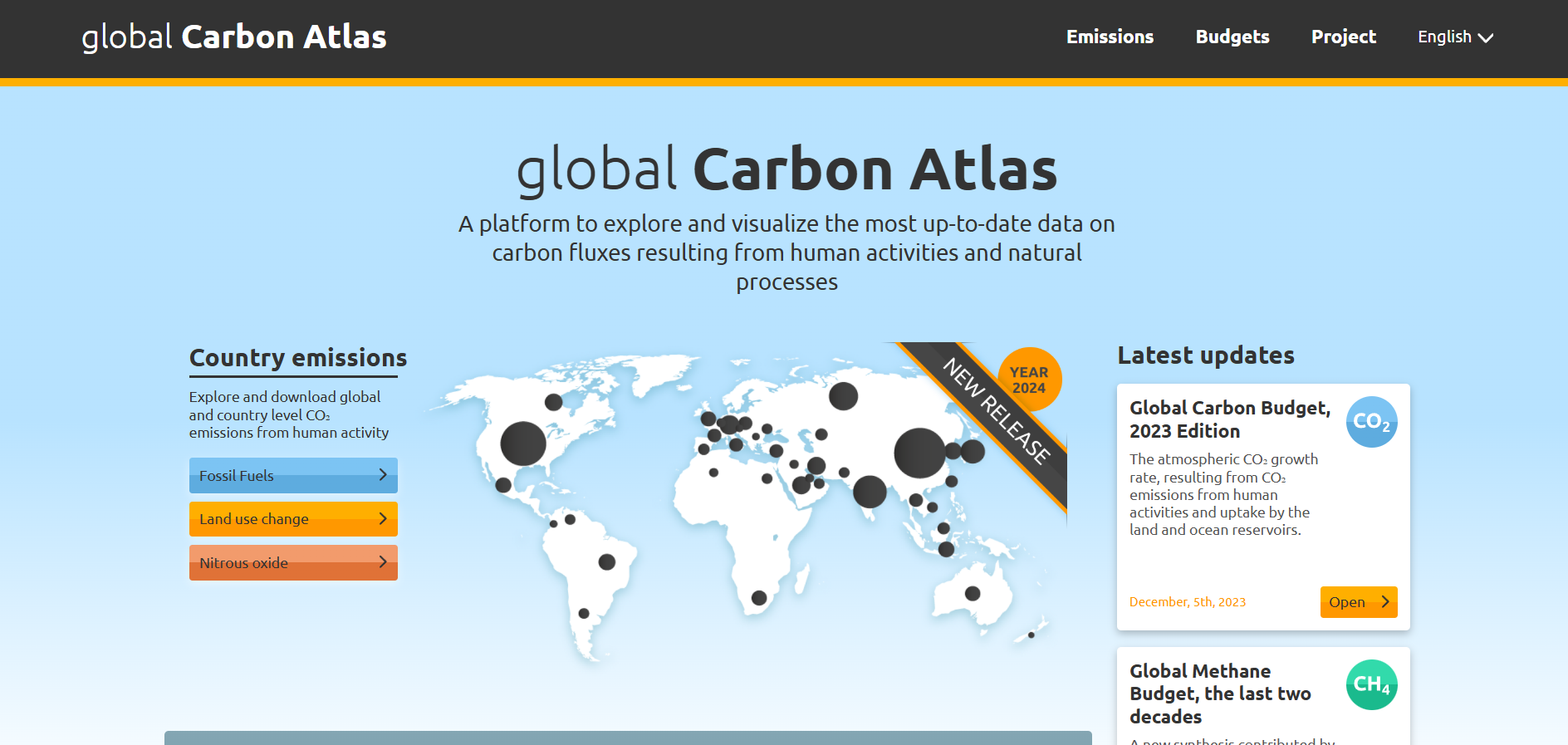
GlobalCarbonAtlas.org is an online platform for exploring, visualising and interpreting global and regional carbon flux and greenhouse gas emissions data. It provides interactive maps, charts and downloadable datasets on CO₂, methane and nitrous oxide from human activities and natural processes. Finance professionals may use the tool for environmental risk analysis and sustainability reporting, as it provides empirical emissions data relevant to climate-related financial disclosures.
Organisation behind the tool
The Global Carbon Atlas is operated under the Global Carbon Project, a community research initiative supported by a range of research institutions and funded initially by the BNP Paribas Foundation. The Project integrates scientific expertise on greenhouse gas budgets to make carbon cycle data accessible.
What the tool does
- Provides interactive visualisation of carbon emissions and fluxes at global, regional and national levels.
- Displays data on fossil fuel CO₂, land-use change, methane and nitrous oxide emissions.
- Offers country and city emissions comparisons and rankings.
- Enables users to download datasets and figures for analysis.
- Includes components for education (Outreach), research data, and emissions exploration.
- Links to related carbon budgets (Global Carbon Budget, Global Methane Budget).
Target audience
The platform is intended for researchers, policymakers, educators and analysts. It also serves the general public and sectors such as environmental science, climate policy and sustainability reporting.
Relevance to finance professionals
- Risk assessment – exposure to hazards, disaster impacts.
Understand regional and sectoral carbon intensity which may influence climate-related transition risks.
- ESG analysis – environmental or social metrics useful for reporting.
Use empirical emissions data in environmental, social and governance disclosures and climate risk reporting.
- Market/commodity insights – agriculture, water, infrastructure, energy.
Identify trends in emissions related to energy production, land use and industrial sectors that can affect commodity markets.
- Investment context – long-term environmental or economic trends.
Inform long-term investment strategies with data on global emissions trajectories and policy contexts.