TCFD and SASB are now part of IFRS. This profile and the respective publications are maintained for historical purposes. Updated resources are collected under IFRS.
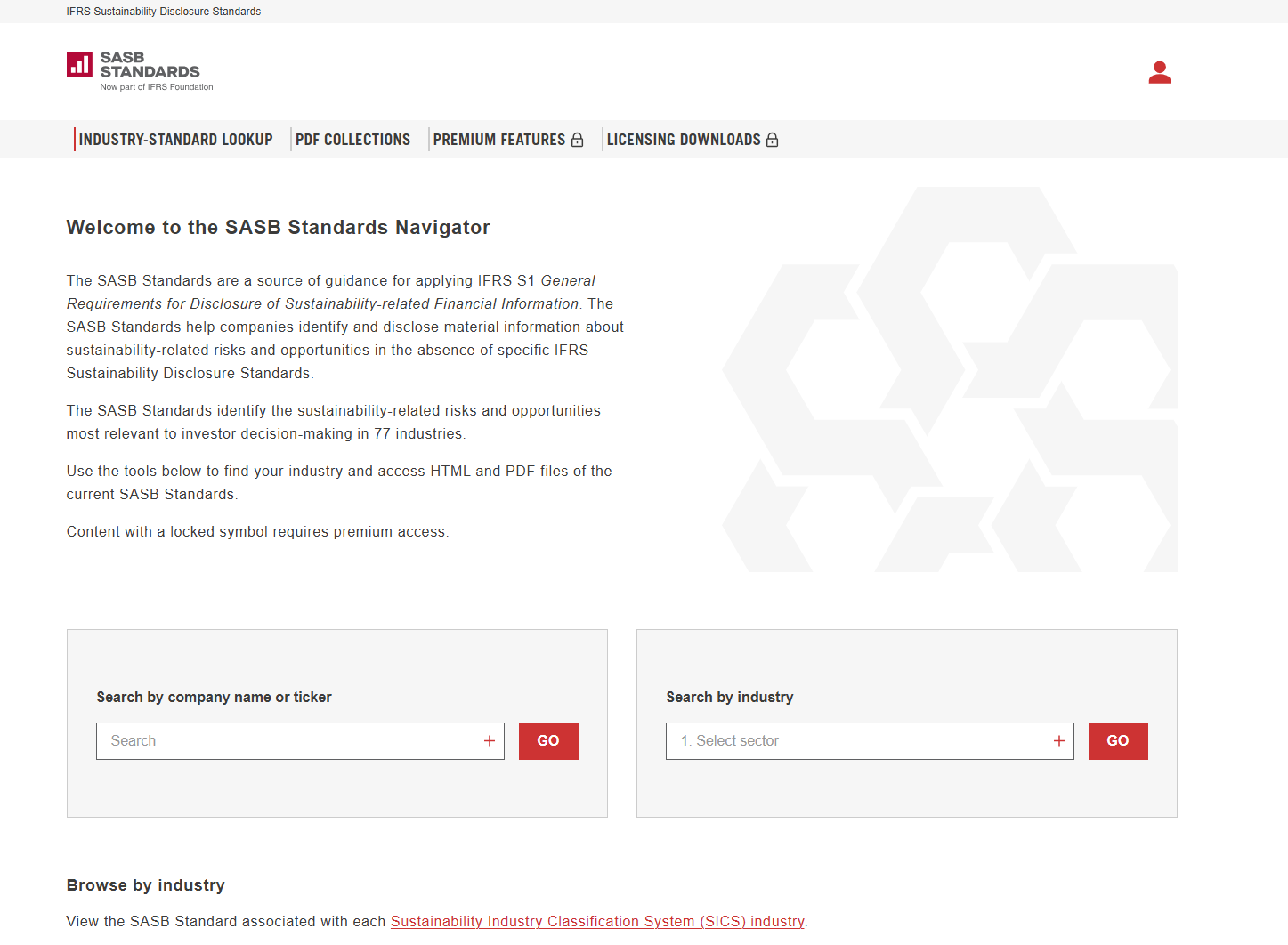
The SASB Standards Navigator is an online tool that provides structured access to the Sustainability Accounting Standards Board (SASB) Standards. Its main purpose is to help users identify industry-specific sustainability topics and metrics that are financially material. Finance professionals may find it relevant for ESG analysis, corporate disclosures, and integration of sustainability factors into investment and risk frameworks.
Organisation behind the tool
The tool is developed and maintained by the IFRS Foundation through the International Sustainability Standards Board (ISSB). SASB Standards were consolidated under the IFRS Foundation following its merger with the Value Reporting Foundation, aligning them with global sustainability reporting initiatives.
What the tool does
The SASB Standards Navigator allows users to explore and analyse sustainability disclosure standards by industry.
Key functions include:
- Browsing standards across 77 industries using the SASB Sustainable Industry Classification System (SICS).
- Viewing financially material sustainability topics for each industry.
- Accessing detailed metrics, technical protocols, and activity metrics.
- Comparing topics and metrics across industries.
- Downloading standards and related guidance in digital formats.
- Linking sustainability topics to accounting, governance, and performance considerations.
Target audience
The primary users are corporate reporting teams, finance professionals, and investors. Other audiences include ESG analysts, auditors, consultants, researchers, and regulators involved in sustainability reporting and capital markets.
Relevance to finance professionals
The tool supports multiple finance-related applications:
Risk assessment
- Identification of industry-specific sustainability risks with potential financial impacts.
- Support for assessing exposure to environmental, social, and governance issues.
ESG analysis
- Standardised metrics that enable consistent comparison across companies and industries.
- Input for ESG scoring, benchmarking, and reporting processes.
Market and sector analysis
- Insights into sustainability issues relevant to specific sectors, such as energy, financial services, transport, and agriculture.
- Improved understanding of sector-level non-financial drivers of performance.
Investment context
- Integration of material sustainability factors into investment research and due diligence.
- Alignment with long-term value creation and stewardship considerations.
The structured design makes the tool suitable for use within sustainable finance knowledge libraries and professional workflows.