
Library | Sustainable Finance Practices
ESG Integration and analysis
Tools, methodologies, and frameworks for embedding ESG factors into financial analysis, valuation, credit assessment, underwriting, and portfolio management, while separating out broader strategic elements.
Team Altiorem recommends

Refine
699 results
REFINE
SHOW: 16


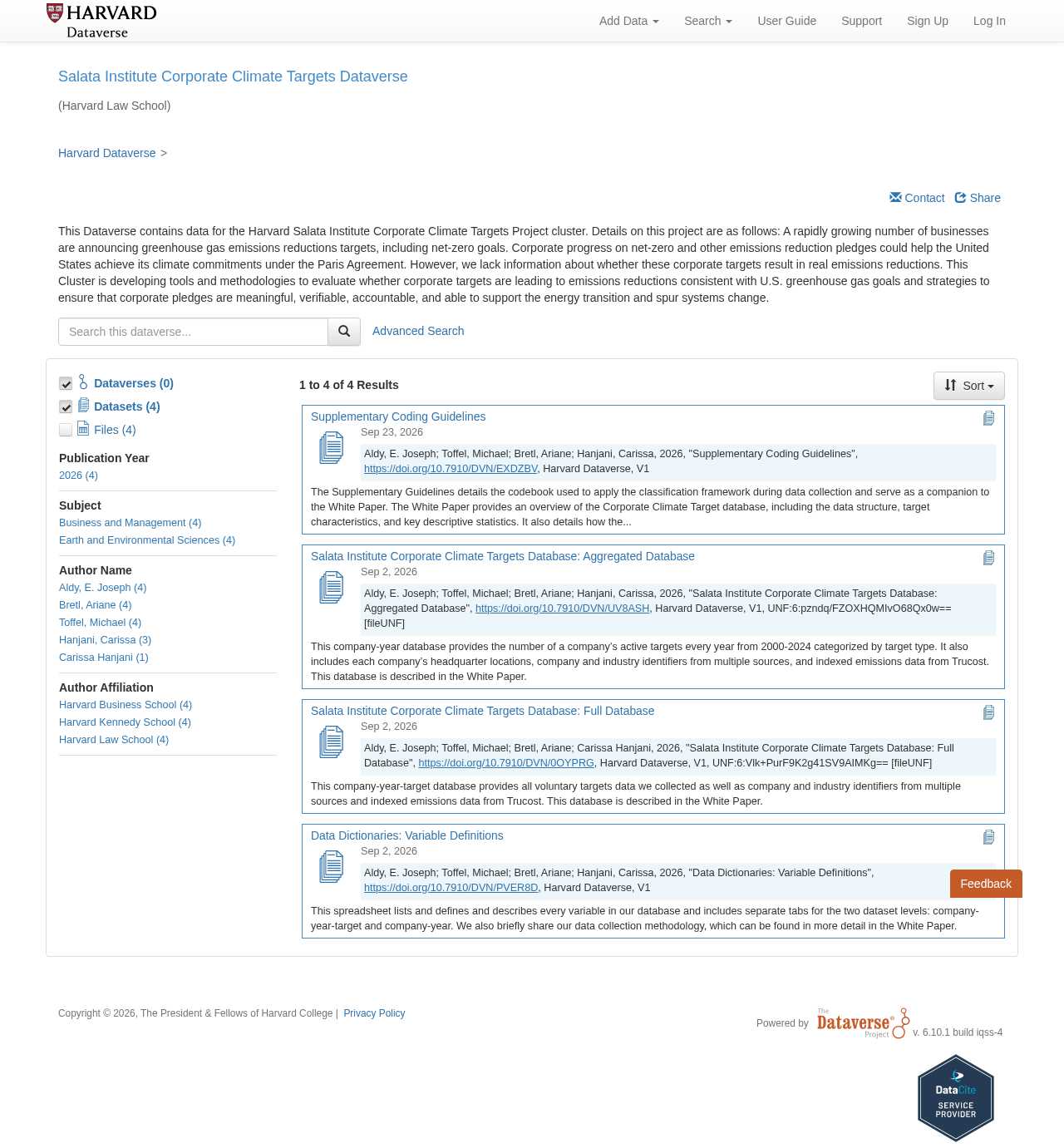
Corporate Climate Targets Database and Dashboard
A longitudinal database tracking voluntary climate commitments and greenhouse gas targets for U.S. public companies in the Russell 3000 index from 2000 to 2024.
Stakeholder engagement and ESG in China
This research analyses China’s state-led stakeholder empowerment model for ESG integration. It identifies economic, policy, compliance, and sustainability drivers while examining channels such as shareholder activism and representative litigation. The article proposes a tiered institutionalisation framework to resolve procedural indeterminacy and strengthen collective action infrastructure within concentrated ownership structures.
Managing LLM bias in investing: From detection to mitigation
This report examines implicit and explicit LLM biases in investment management. Through a case study on framing bias across nine OpenAI models, it identifies significant sensitivities in drawdown and client retention scenarios. It concludes that manual prompt restructuring and human-in-the-loop protocols are the most effective mitigation strategies.
Survey of Aotearoa New Zealand investors: Climate policies and actions series
This benchmark series examines the climate-related investment policies and actions of institutional investors in Aotearoa New Zealand. It monitors progress in embedding climate risks into financial decision-making, target setting, and investment in climate solutions, providing transparency and accountability across the local investment sector.
Bridging climate and credit risk: Current approaches and emerging trends for climate-related credit risk assessment methodologies—insights from a global survey
This report examines findings from a survey of 32 global banks on climate-related credit risk assessment. It highlights progress in probability of default modelling and widespread adoption of NGFS scenarios, while identifying persistent challenges in data reliability, technical expertise, and the quantification of financial impacts on capital requirements.
Climate-related risks, opportunities and impacts – Identification to quantification: An approach for identifying and assessing climate-related risks and opportunities and their associated anticipated impacts and anticipated financial impacts
This guidance for New Zealand climate reporting entities details a five-phase framework to identify and assess climate-related risks and opportunities. It provides a structured approach for moving from qualitative impact assessment to the quantification of financial impacts, supporting compliance with climate standards and strengthening strategic resilience.
Place-based biodiversity investment tool
The Place-based Impact Estimator (PIE) is a geospatial tool by WWF that helps organisations identify optimal locations for nature-based investments. It balances objectives like carbon storage and biodiversity to help finance professionals select high-impact projects while managing environmental trade-offs.
Corruption perceptions index series
The Corruption Perceptions Index is a global benchmark series assessing perceived public sector corruption levels across 182 countries and territories. Produced by Transparency International, the index draws on independent data to provide comparative scores, assisting stakeholders in identifying governance risks and evaluating the effectiveness of anti-corruption reforms and institutional integrity.
Metals-as-a-Service economic analysis: Comparing the MAAS and linear business models in the context of a wind project
This research compares Metals-as-a-Service (MaaS) and linear business models in onshore wind projects. It finds that MaaS improves risk-adjusted performance, increasing project internal rate of return to 19.94% and reducing levelised cost of energy by 15%. The analysis assesses financial viability and risk mitigation strategies for stakeholders.
ESG ratings and the French Duty of Vigilance Law
An analysis of the 2017 French Duty of Vigilance Law’s impact on corporate ESG and financial performance. Using difference-in-differences analysis, the study finds a significant negative association with social and environmental ESG scores, suggesting the law reduces rating "gaming" or prompts the production of more realistic risk disclosures.
First Street Research Library
The First Street Research Library provides transparent, peer-reviewed reports and climate risk data focused on flooding, fire, and heat. It helps finance professionals quantify physical risks and their economic impacts.
Landscape of Climate Finance in Latin America and the Caribbean
The report assesses climate finance across Latin America and the Caribbean from 2020–2024. Finance doubled to US$108 billion but remains well below estimated needs and unevenly distributed. It examines public and private flows, mitigation and adaptation investment, financing constraints, and measures to mobilise capital and strengthen climate resilience.
Embracing carbon uncertainty in portfolio construction
This research introduces a framework for decarbonising sovereign bond portfolios using 'carbon returns'—treating emissions as random variables rather than deterministic values. By applying a modified Hierarchical Risk Parity algorithm with Expected Shortfall, it effectively balances financial and environmental goals, mitigating climate-related tail risks both in-sample and out-of-sample.
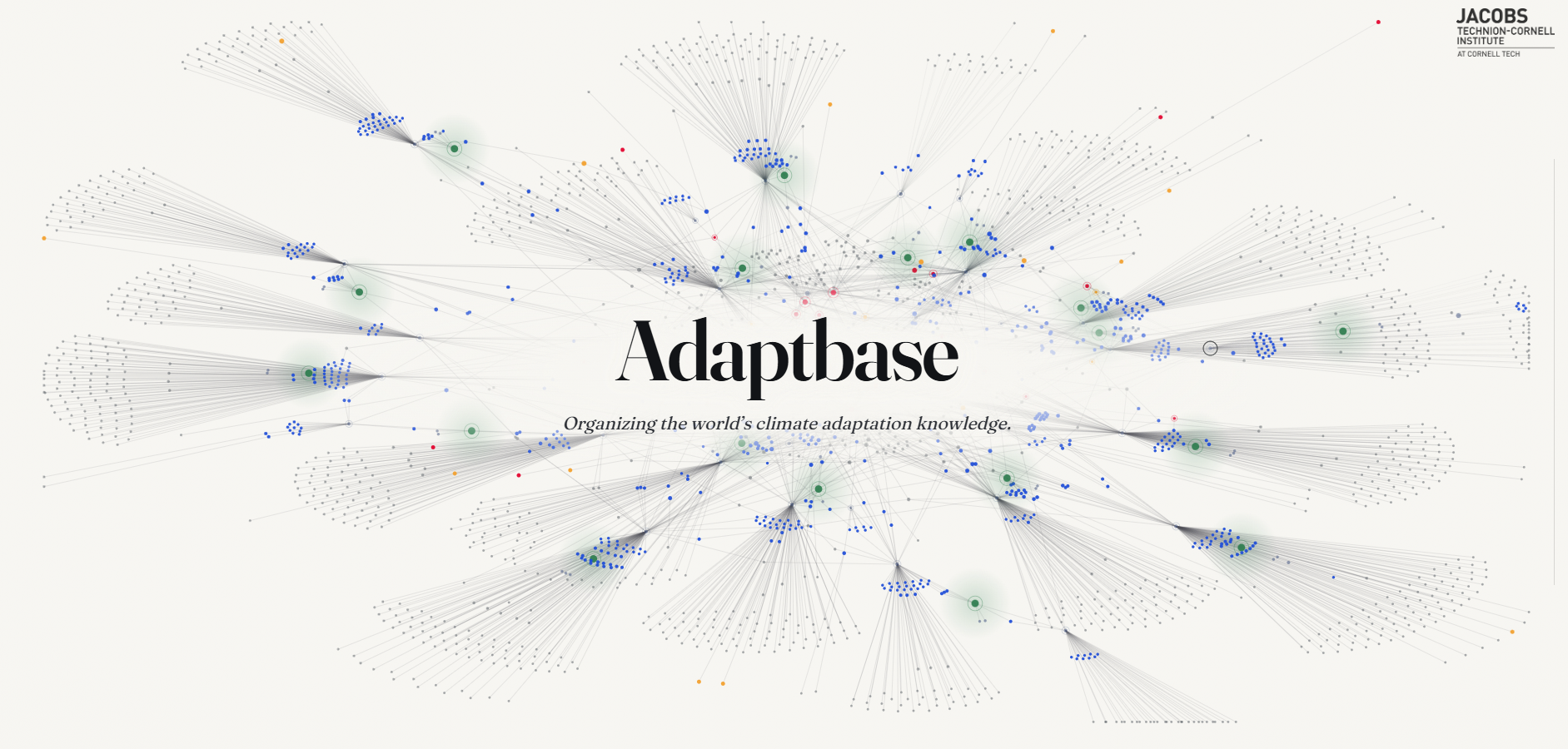
Adaptbase Search
Adaptbase Search is an AI-powered knowledge base that structures climate adaptation data from global city plans. It allows finance professionals to track urban resilience investments, benchmark city responses to climate hazards, and verify adaptation claims through a standardised knowledge graph of actions and outcomes.
Sovereign risk ceilings: Rethinking methodology through risk disaggregation
This report critiques sovereign ceiling practices in credit ratings for emerging market infrastructure. It proposes a disaggregated framework to assess eight specific transmission channels and mitigants, arguing that empirical data shows high survival rates for well-structured projects during sovereign crises, contrary to current blanket rating caps.
Government announced increases in carbon pricing and their implications for corporate valuations
This report explores global corporate environmental costs, finding that unpriced carbon emissions represent a material risk to valuations. Analysing approximately 20,000 companies, it illustrates how projected carbon price increases in jurisdictions like Norway and Canada could significantly erode enterprise values, especially within the aviation and maritime sectors.


