
Library | Tag
case studies
Refine
648 results
REFINE
SHOW: 16



Strengthening the S in ESG series
Strengthening the S in ESG is a research series examining the design and use of social indicators and metrics within ESG frameworks. It provides guidance and analysis to improve how companies’ impacts on people are measured, supporting more decision-useful insights for investors and better alignment with real business practices.
Horizon Scanning: Risk and regulation in the GCC
This report outlines 2026 financial crime and regulatory risks in the GCC, focusing on AI-enabled fraud, digital assets, cybercrime, beneficial ownership, supply chains, sanctions, and tougher AML/CFT oversight linked to upcoming FATF evaluations and recent legal reforms in the UAE, Bahrain and Saudi Arabia.
Human rights due diligence in the financial sector: A compendium of industry case studies and practice
Examines how financial institutions implement human rights due diligence, aligned with UNGPs and OECD guidelines, using case studies. Highlights challenges in data, prioritisation and leverage, and emphasises integrating human rights into governance, risk processes and client engagement to manage impacts across lending, investment and insurance activities.
Nourish and flourish: Water solutions to feed 10 billion people on a livable planet
This World Bank report outlines transforming agricultural water management to feed 10 billion people sustainably. It introduces a water-food nexus framework, highlights inefficiencies in current systems, and emphasises data-driven, service-oriented irrigation and financing reforms to improve productivity, resilience, and environmental outcomes.
Toxic finance: The banks and investors funding the expansion of petrochemicals in the US
This report argues that banks and investors are enabling US petrochemical expansion despite rising market, legal, climate and public health risks, identifying major financiers and investors while warning that continued support may expose them to financial, reputational and regulatory harm.
Unlocking AI’s potential to serve humanity: Robotics, geospatial AI and communications networks
Examines how AI in robotics, geospatial analysis and communications networks can address global challenges. Highlights applications for human and planetary well-being, including healthcare, disaster response and climate action, and outlines five enabling pathways covering data governance, infrastructure, skills, policy and digital ecosystems.
Horizon scanning: Financial crime risks and regulation in the UK
This report outlines emerging UK financial crime risks for 2026, highlighting AI-enabled fraud, cyber-enabled crime, sanctions evasion, and organised networks. It examines evolving regulatory expectations, stricter enforcement, and expanded oversight, emphasising the need for proactive risk management, robust controls, and enhanced compliance frameworks.
Governing for net zero: The board's role in organisational transition planning
This report guides Australian boards on integrating net zero transition planning into strategy, governance, disclosure and stakeholder engagement. It outlines directors’ legal duties, mandatory climate reporting requirements, and practical oversight questions to help organisations manage climate-related risks, opportunities and implementation.
Guidance for applying absolute environmental sustainability assessment on activities at different scales (BETA version)
Provides beta guidance for applying Absolute Environmental Sustainability Assessment, comparing activities’ environmental burdens against planetary boundaries. It outlines a three-phase, nine-step framework, supported by case studies (buildings, cement, EU consumption), and aligns with existing accounting standards while addressing methodological gaps in allocating environmental limits.
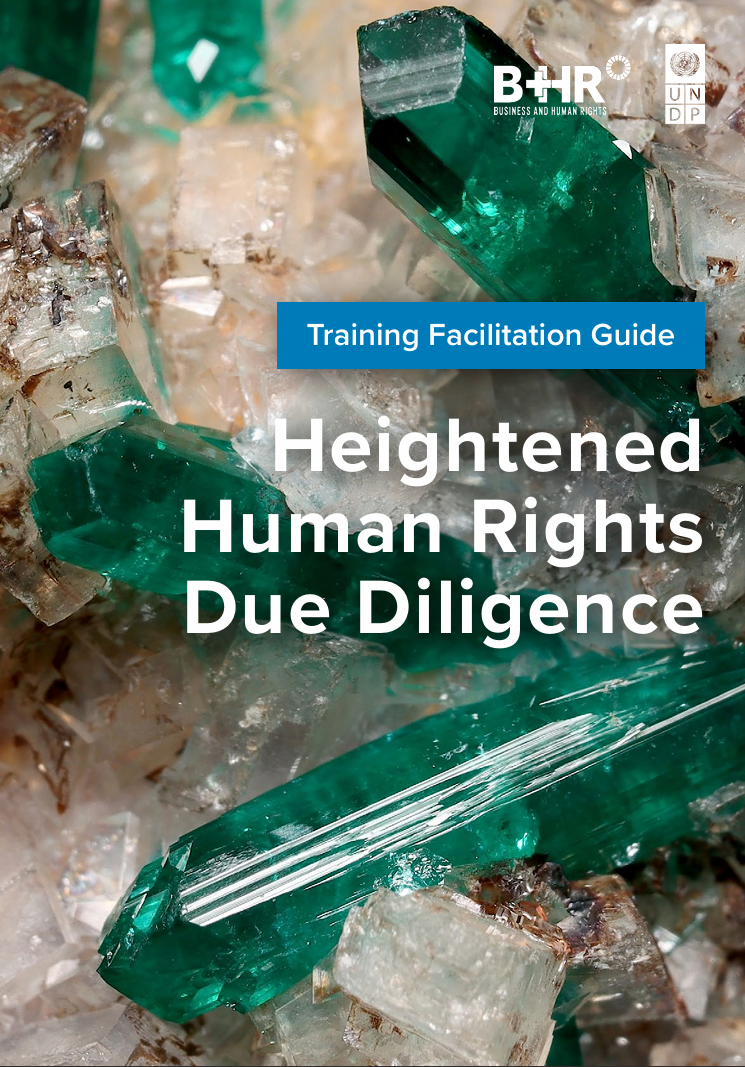
Heightened human rights due diligence
UNDP’s training guide explains heightened human rights due diligence for companies in conflict-affected contexts, outlining frameworks, legal expectations and practical steps to assess, mitigate and remedy impacts on human rights and conflict, supported by case studies and tools to guide implementation.
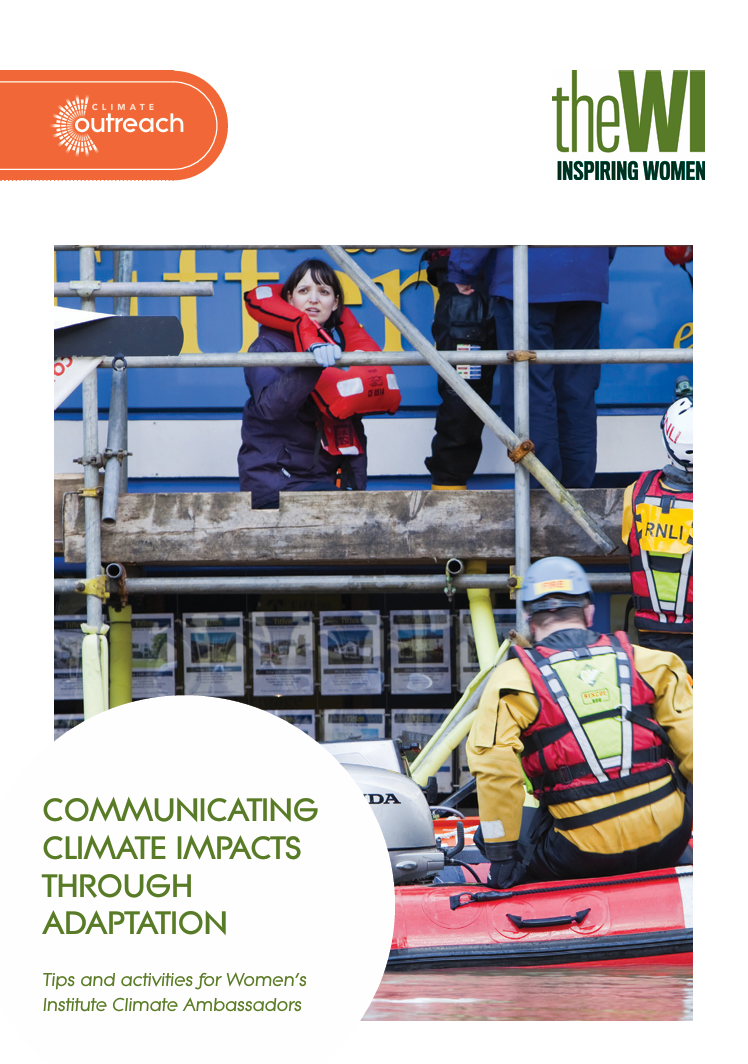
Communicating climate impacts through adaptation: Tips and activities for women's institute climate ambassadors
Guide outlines evidence-based strategies for communicating climate impacts through adaptation, emphasising values-led narratives, trusted messengers, and relatable imagery. It provides practical activities and case studies enabling community engagement on risks such as flooding, drought and heatwaves, encouraging locally relevant, action-oriented responses.
Investor climate action plans series
This series provides guidance for investors on developing and assessing climate action plans using the ICAPs Expectations Ladder. It outlines approaches across investment, corporate engagement, policy advocacy, disclosure and governance to support alignment with net zero pathways and improve management of climate-related risks and opportunities.
Seafood traceability engagement series
This series examines how investor engagement can drive improved traceability in global seafood supply chains. It focuses on assessing company progress, encouraging adoption of traceability systems, and supporting investors in identifying and managing environmental and social risks within complex seafood value chains.

Corporate enablers of Russia’s war in Ukraine: A closer look at multinational taxes and revenue in Russia in 2023
Examines multinational companies’ revenues and taxes in Russia (2021–2023), showing continued corporate activity generated significant tax contributions supporting the Russian state. Highlights sectoral drivers, limited exits, and rising fiscal pressures, concluding that ongoing operations pose financial, legal, and human rights risks.
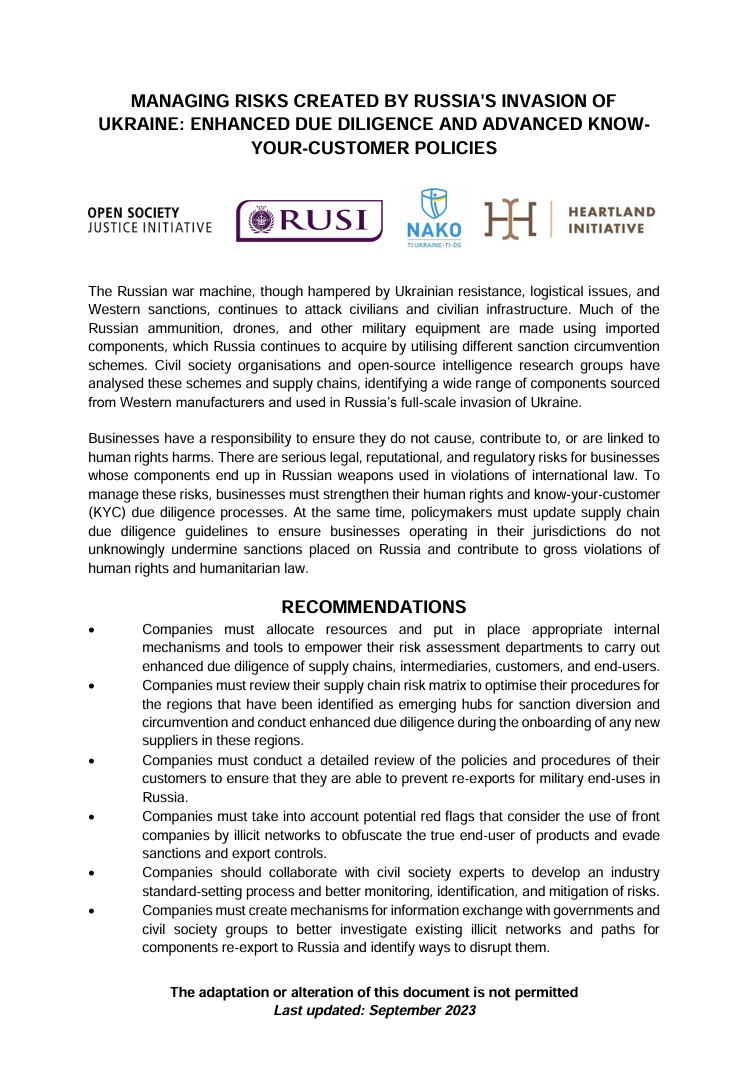
Managing risks created by Russia's invasion of Ukraine: Enhanced due diligence and advanced know your-customer policies
The report advises firms to strengthen due diligence and advanced know-your-customer checks to prevent sanctions evasion and re-exports supporting Russia’s war in Ukraine. It highlights front-company red flags, recommends stronger internal controls and information-sharing, and uses case studies to show how diversion risks can be detected.
Doughnut economics for regenerative business design
An edited volume applying Doughnut Economics to business design, using case studies and critical reflections to examine how purpose, networks, governance, ownership and finance can support regenerative and distributive business models. It focuses on redesigning firms to operate within ecological and social limits.


