Overview
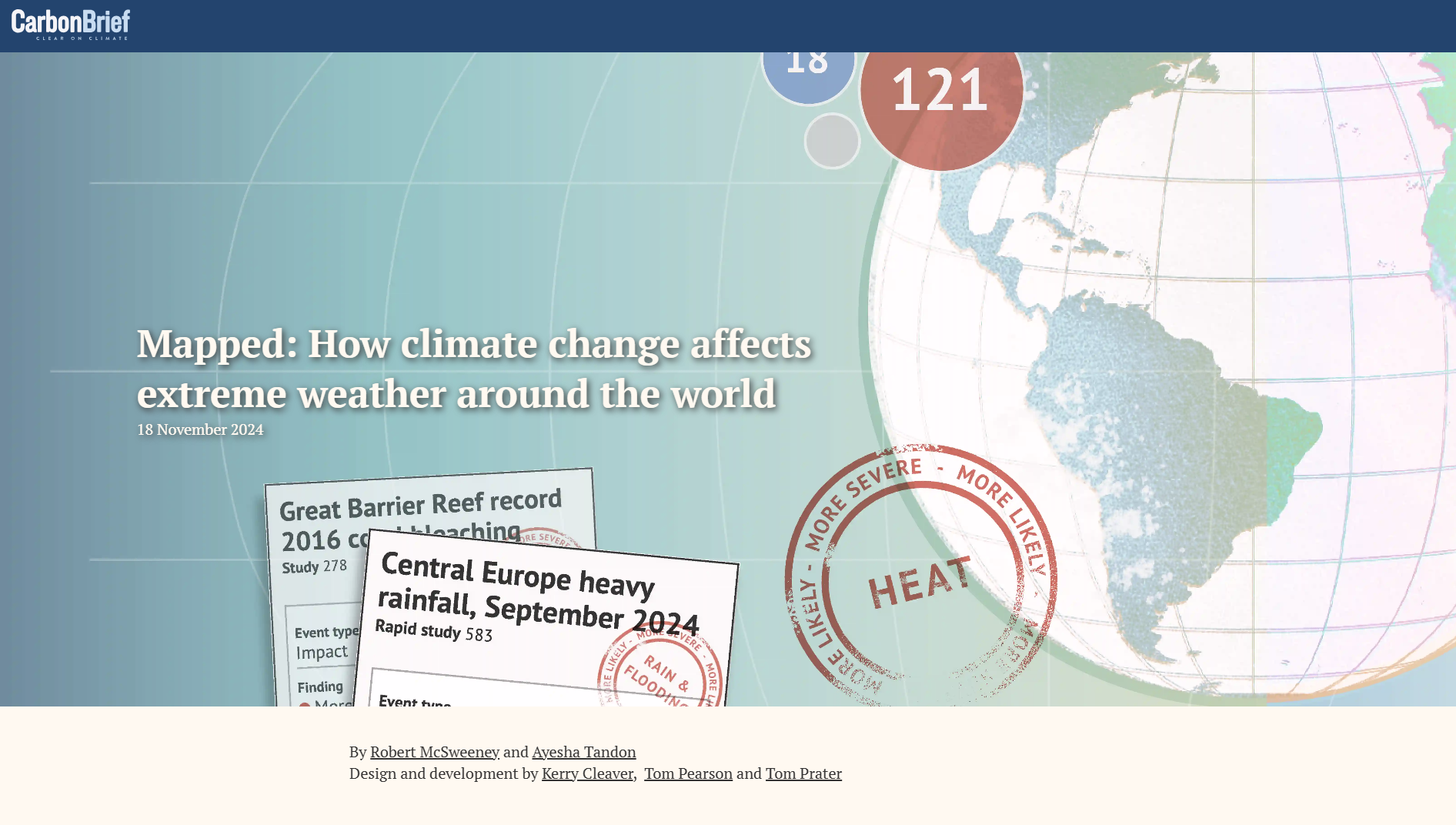
This tool is an interactive database developed by Carbon Brief that compiles climate attribution studies on extreme weather events. Its purpose is to show how human-driven climate change has influenced the likelihood or severity of specific events worldwide. Finance professionals may find it relevant for understanding climate-related physical risks and evidence-based links between extreme events and climate change.
Organisation behind the tool
The tool is developed and maintained by Carbon Brief, an independent UK-based organisation specialising in climate science, energy policy, and data-driven journalism. It draws on peer-reviewed scientific studies published by academic and research institutions globally.
What the tool does
- Aggregates published climate attribution studies in a single, searchable interface.
- Maps extreme weather events by location, event type, and year.
- Shows whether climate change made an event more likely, more severe, or had no clear influence.
- Allows filtering by hazard type (e.g. heatwaves, floods, droughts, storms).
- Provides short summaries of individual studies and links to the underlying research.
- Offers a global visual overview rather than raw datasets or financial metrics.
Target audience
The primary audience includes climate researchers, journalists, and policymakers.
Secondary audiences include educators, NGOs, and professionals seeking high-level evidence on climate impacts, including those working in finance, insurance, and risk analysis.
Relevance to finance professionals
Risk assessment
- Supports understanding of physical climate risks by linking extreme events to climate change.
- Helps contextualise regional exposure to climate-driven hazards.
ESG analysis
- Provides credible, science-based evidence that can inform climate risk narratives in ESG reporting.
- Useful for substantiating climate impact and adaptation considerations.
Market and sector insights
- Relevant for sectors sensitive to extreme weather, such as agriculture, infrastructure, energy, and insurance.
- Helps interpret how climate change may alter hazard frequency over time.
Investment context
- Informs long-term climate risk considerations for asset allocation and scenario analysis.
- Complements quantitative models with qualitative, peer-reviewed scientific evidence.