Overview
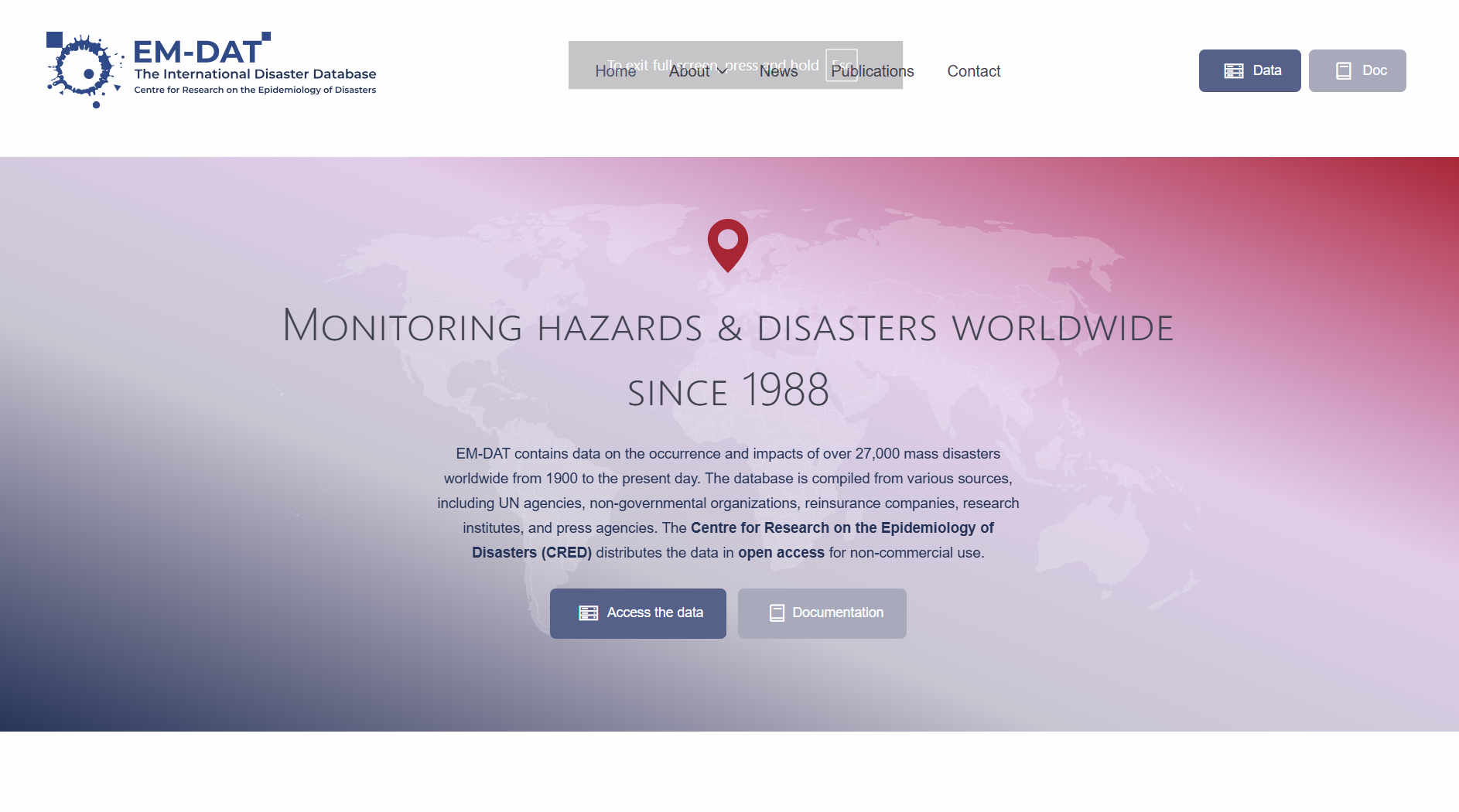
EM-DAT (the International Disaster Database) is a global database that systematically records natural and technological disasters worldwide from 1900 onwards. Its primary purpose is to provide standardised data on disaster occurrence and impacts. Finance professionals may find it relevant for assessing physical risk exposure, historical loss patterns, and long-term vulnerability trends.
Organisation behind the tool
EM-DAT is maintained by the Centre for Research on the Epidemiology of Disasters (CRED), based at the Université catholique de Louvain in Belgium. CRED focuses on disaster epidemiology, public health, and risk analysis, and collaborates with international organisations, governments, and research institutions.
What the tool does
- EM-DAT provides structured, historical data on disasters at global, regional, and country levels. Key functions include:
- Records of natural and technological disasters since 1900
- Classification by disaster type (e.g. floods, droughts, earthquakes, industrial accidents)
- Data on human impacts, including deaths, injuries, and people affected
- Estimates of economic damage where available
- Time-series and country-level disaster profiles
- Downloadable datasets for further analysis
- Filtering by hazard type, geography, and time period
- The database is designed to support comparative analysis and trend assessment rather than real-time monitoring.
Target audience
The primary users are researchers, international organisations, and policymakers working on disaster risk reduction and humanitarian response. Other audiences include insurers, development institutions, non-governmental organisations, and finance professionals conducting risk and sustainability analysis.
Relevance to finance professionals
EM-DAT can support several finance-related use cases, including:
Risk assessment
- Identification of countries or regions with repeated exposure to specific hazards
- Historical frequency and severity of disaster events
- Context for physical climate risk and stress testing
ESG analysis
- Social impact indicators such as fatalities and populations affected
- Inputs for assessing community vulnerability and resilience
- Supporting evidence for environmental and social risk disclosures
Market and asset context
- Insights into risks affecting agriculture, infrastructure, transport, and energy systems
- Background data for insurance, reinsurance, and sovereign risk analysis
Investment context
- Long-term disaster trends relevant to infrastructure, real assets, and emerging markets
- Geographic risk differentiation for portfolio allocation and due diligence
- The tool is best suited for historical analysis and strategic risk assessment rather than short-term forecasting.