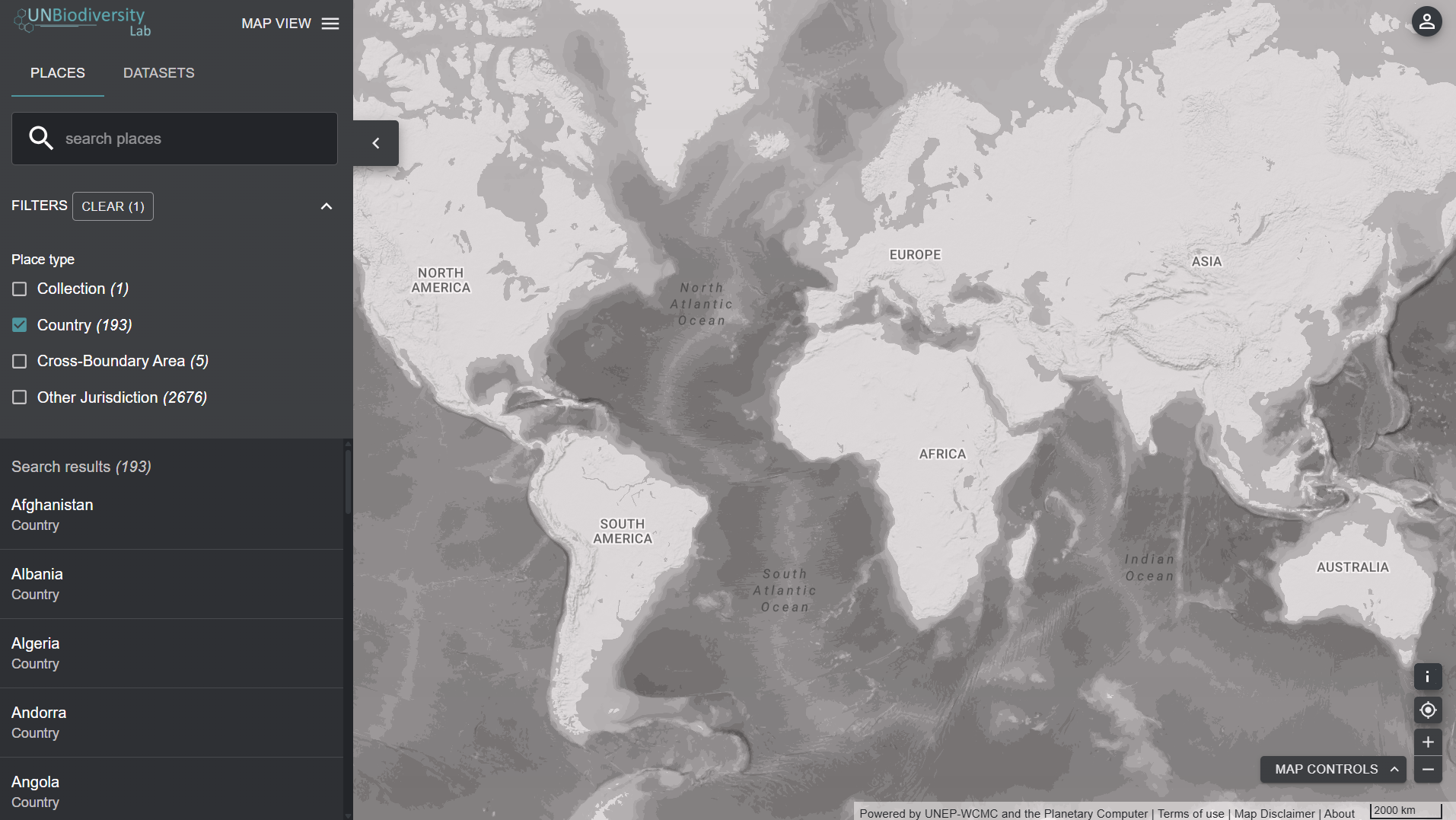
The UN Biodiversity Lab Earth map is an online geospatial platform that brings together global environmental and socio-economic datasets in a single interactive interface. Its primary purpose is to support analysis of biodiversity, climate, land use and development indicators. Finance professionals may find it relevant for understanding nature-related risks, spatial exposure and long-term environmental trends that affect assets and portfolios.
Organisation behind the tool
The tool is developed and maintained by the UN Biodiversity Lab, an initiative of the United Nations Environment Programme. It works in partnership with UN agencies, research institutions and data providers to host and standardise global spatial datasets relevant to biodiversity and sustainable development.
What the tool does
- Provides an interactive global map interface with hundreds of spatial data layers.
- Allows users to visualise biodiversity, climate, land cover, protected areas, ecosystem services and development indicators.
- Enables overlay and comparison of multiple datasets at global, regional and national scales.
- Supports basic spatial analysis, including filtering by geography and theme.
- Allows users to download selected datasets for further offline analysis.
- Integrates data aligned with international frameworks such as the Sustainable Development Goals.
Target audience
The primary users are policymakers, researchers and environmental practitioners working on biodiversity and sustainable development. The tool is also relevant to finance professionals, corporates, consultants and civil society organisations seeking spatial environmental data. It is accessible to the general public with no specialist software required.
Relevance to finance professionals
- Risk assessment – supports identification of exposure to biodiversity loss, land-use change, climate impacts and proximity to protected or sensitive ecosystems.
- ESG analysis – provides environmental indicators that can inform nature-related disclosures, environmental risk screening and sustainability reporting.
- Market and commodity insights – useful for understanding environmental context around agriculture, forestry, water resources, infrastructure and extractive activities.
- Investment context – helps assess long-term environmental trends and location-based risks relevant to project finance, portfolio allocation and transition planning.