
Library | Resource Types
Research
We summarise credible research and reports on sustainable finance and ESG issues. Our summaries, along with our AI ChatBot saves members time reading large reports, to focus on knowledge building and action.
Refine
1831 results
REFINE
SHOW: 16


Unlocking climate risk insurance: The role of public development banks
This report examines how public development banks (PDBs) can expand climate risk insurance in emerging markets and developing economies. It identifies five key barriers to insurance uptake, analyses distinct roles for national, regional, and multilateral development banks, and provides recommendations to scale insurance solutions that build climate resilience.
The Ocean framework: An investor guide to navigating ocean risks and opportunities
This investor guide examines ocean-related risks and opportunities across nine ocean-dependent sectors. It outlines five key drivers of ocean degradation, introduces a seven-step portfolio assessment framework, and provides sector-specific engagement guidance for fisheries, aquaculture and maritime transportation.
Navigating nature-related data: Metrics, sources and uses
This NGFS information note examines available nature-related data resources and methods for integrating them into financial risk assessment. It reviews metrics and indicators against five key criteria, presents four case studies, and identifies data quality, availability, and standardisation challenges. Public-private collaboration and targeted investment are recommended to address data gaps.
Anti-harassment policy and the startup labor market
This paper studies the effects of state-level NDA-weakening laws on hiring in over 50,000 U.S. VC-backed startups from 2014–2022. Anti-harassment reforms reduce female hiring by approximately 8%, concentrated among junior women and small startups, while also triggering internal restructuring including more female promotions and male manager departures.
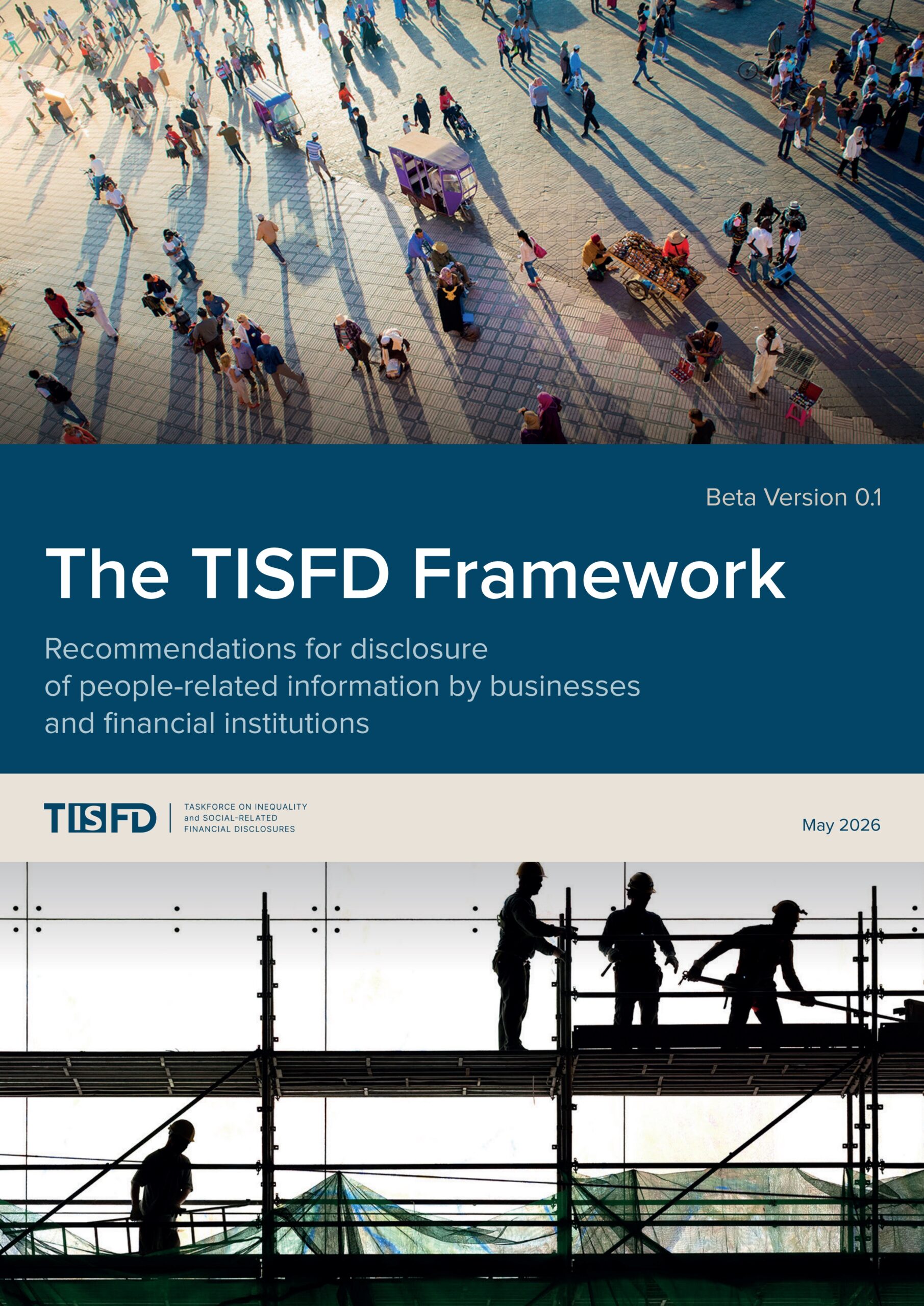
The TISFD framework: Recommendations for disclosure of people-related information by businesses and financial institutions
The TISFD Framework (Beta Version 0.1) presents draft disclosure recommendations for businesses and financial institutions on people-related impacts, dependencies, risks and opportunities. Building on ISSB, GRI and ESRS standards, it covers governance, strategy, and impact and risk management pillars, with metrics and targets to follow in future iterations.
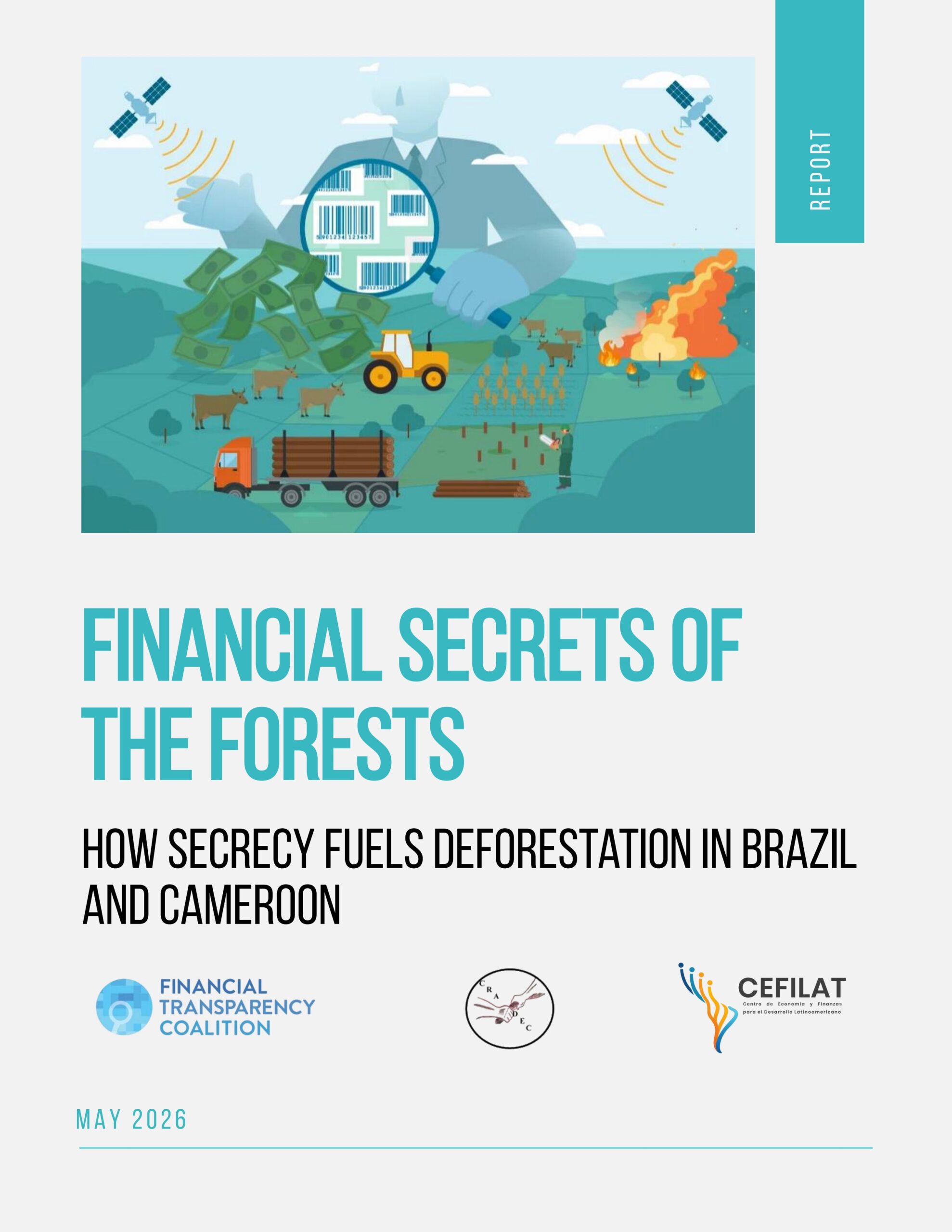
Financial secrets of the forests: How secrecy fuels deforestation in Brazil and Cameroon
This report examines illicit financial flows linked to deforestation in Brazil and Cameroon, estimating trade mispricing losses at US$289 million per year in Cameroon and US$214 million in Brazil. It finds that financial and land ownership secrecy enables illicit deforestation and recommends public beneficial ownership registries and supply chain transparency measures.
The Swiss investors in the ICE system
This BreakFree Suisse research note examines Swiss institutional investors — including UBS, SNB, Zurich Insurance, and others — holding billions of dollars in US ICE contractors Palantir, AT&T, Geo Group, and CoreCivic. The report argues these investments conflict with the investors' stated human rights policies and ESG commitments.
Driving Australian climate innovation: Unlocking capital to support a clean industrial revolution
Commissioned by IGCC and authored by Pollination, this report reviews climate innovation policy in California, Denmark, the Netherlands, South Korea and Germany to identify gaps in Australia's policy landscape and recommend measures to drive transition industry investment, including strengthening the Safeguard Mechanism and establishing a national industrial strategy.
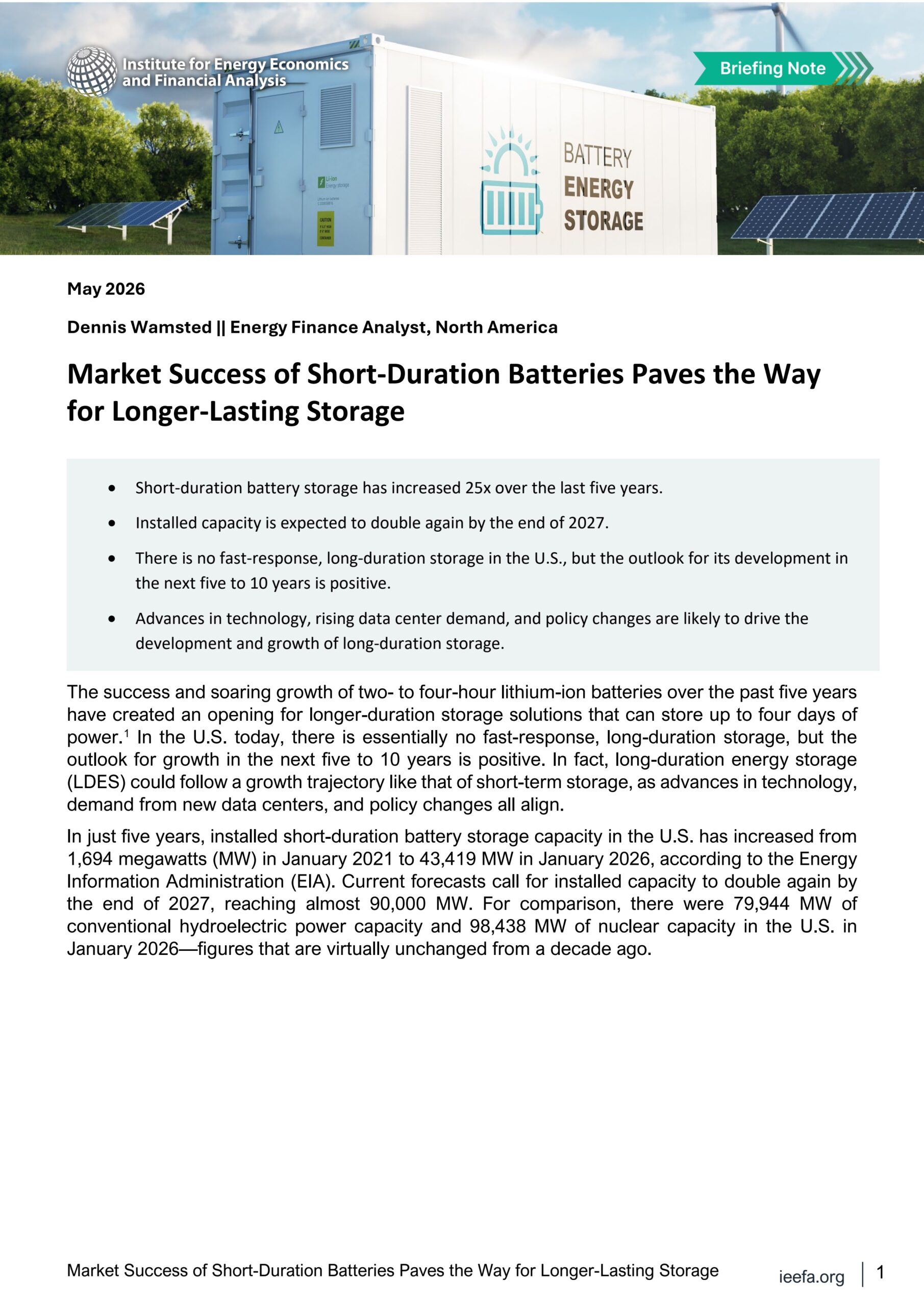
Market success of short-duration batteries paves the way for longer-lasting storage
Short-duration battery storage in the U.S. has grown 25x in five years, reaching 43,419 MW. This IEEFA report examines how that success is opening pathways for long-duration energy storage, driven by state mandates, data centre demand from AI companies, and advances in technologies including iron-air, liquid air, and carbon-oxygen systems.
Biodiversity loss will decrease the future creditworthiness of nations
This study examines how biodiversity and ecosystem service loss affect sovereign creditworthiness across 23 countries. Using ecological-economic modelling, it finds that a partial ecosystem collapse could generate US$162 billion in additional annual debt servicing costs globally, highlighting that sovereign credit ratings are systematically underpricing nature-related financial risks.
Red lines in the Abyss: Growing financier concern over deep-sea mining
This report maps 82 financial institutions — representing approximately EUR 24 trillion in combined assets — that have excluded or expressed concern over deep-sea mining. Published by Seas At Risk and the Deep Sea Mining Campaign, it charts growing financier momentum against deep-sea mining and calls for explicit exclusion policies from both financial institutions and governments.
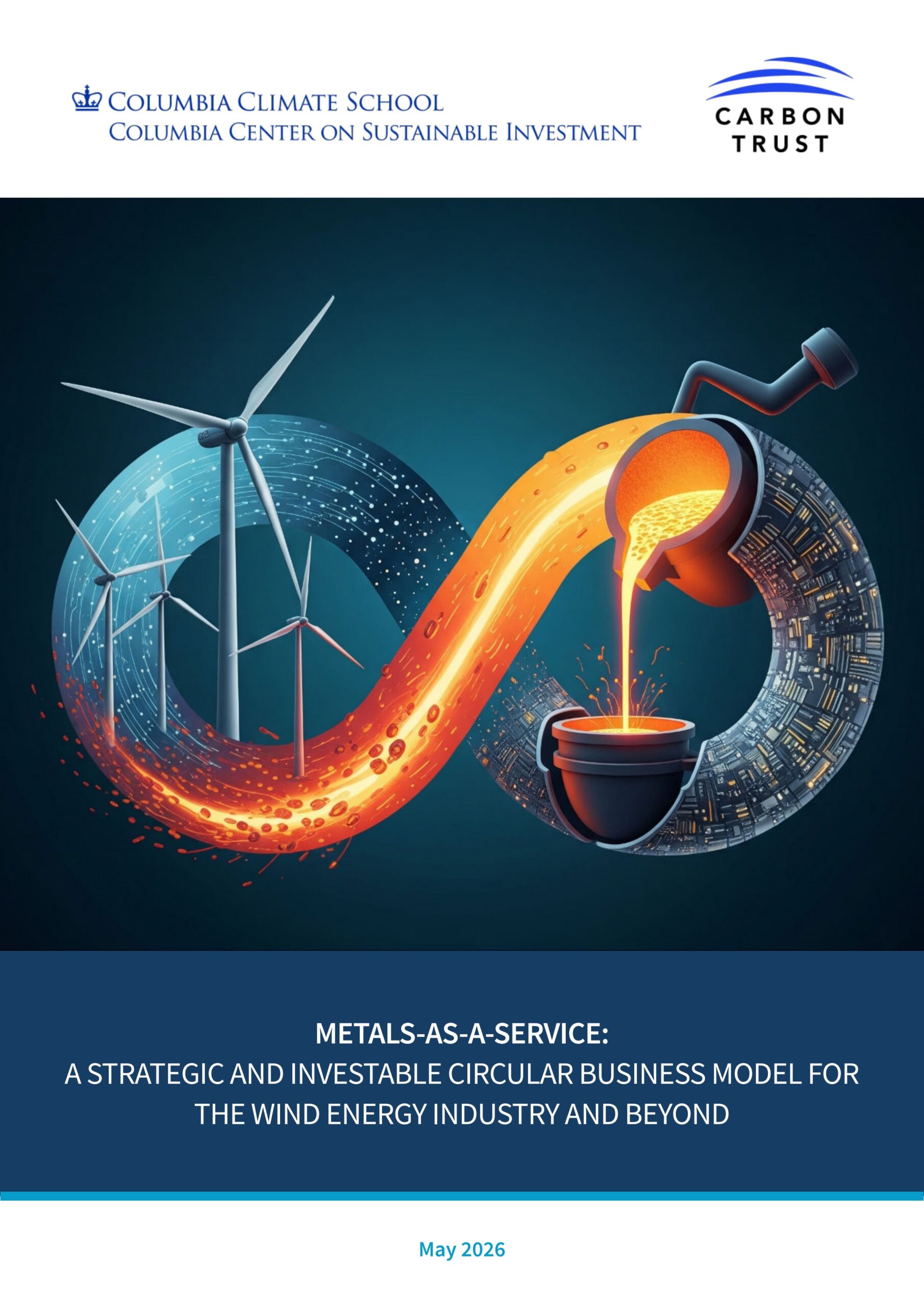
Metals-as-a-Service: A strategic and investable circular business model for the wind energy industry and beyond
Metals-as-a-Service (MaaS) proposes a circular business model for the wind energy sector and beyond, in which metal ownership is retained by a Special Purpose Vehicle throughout the asset lifecycle. The model converts metal procurement from capital expenditure into a service-based structure, enabling securitisation, improved supply security, and circular value creation.
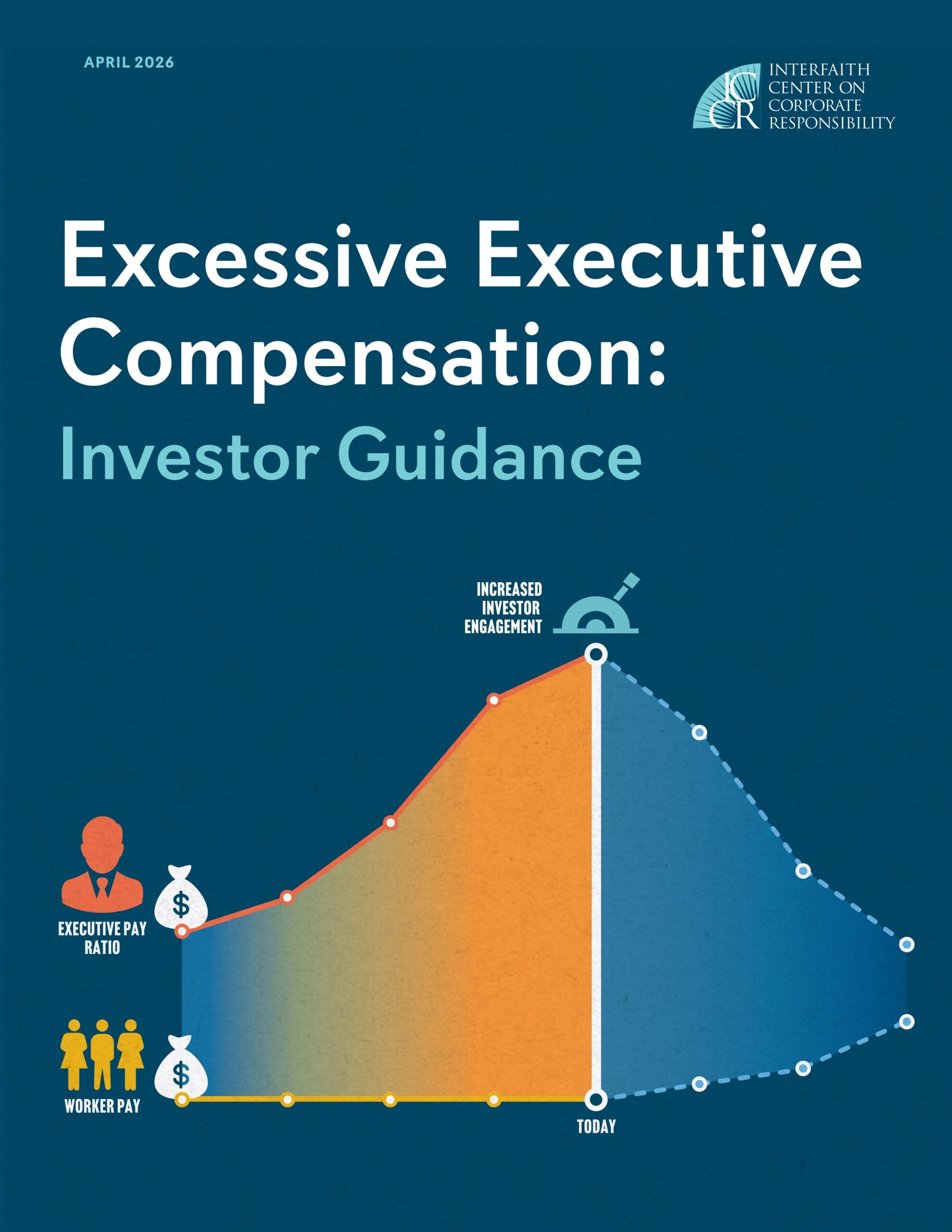
Excessive executive compensation: Investor guidance
Published by ICCR in April 2026, this report provides investor guidance on addressing excessive executive compensation. It outlines proxy voting guidelines, pay thresholds, and stewardship frameworks to help investors challenge the growing gap between CEO and worker pay, and promote greater accountability and long-term value creation.
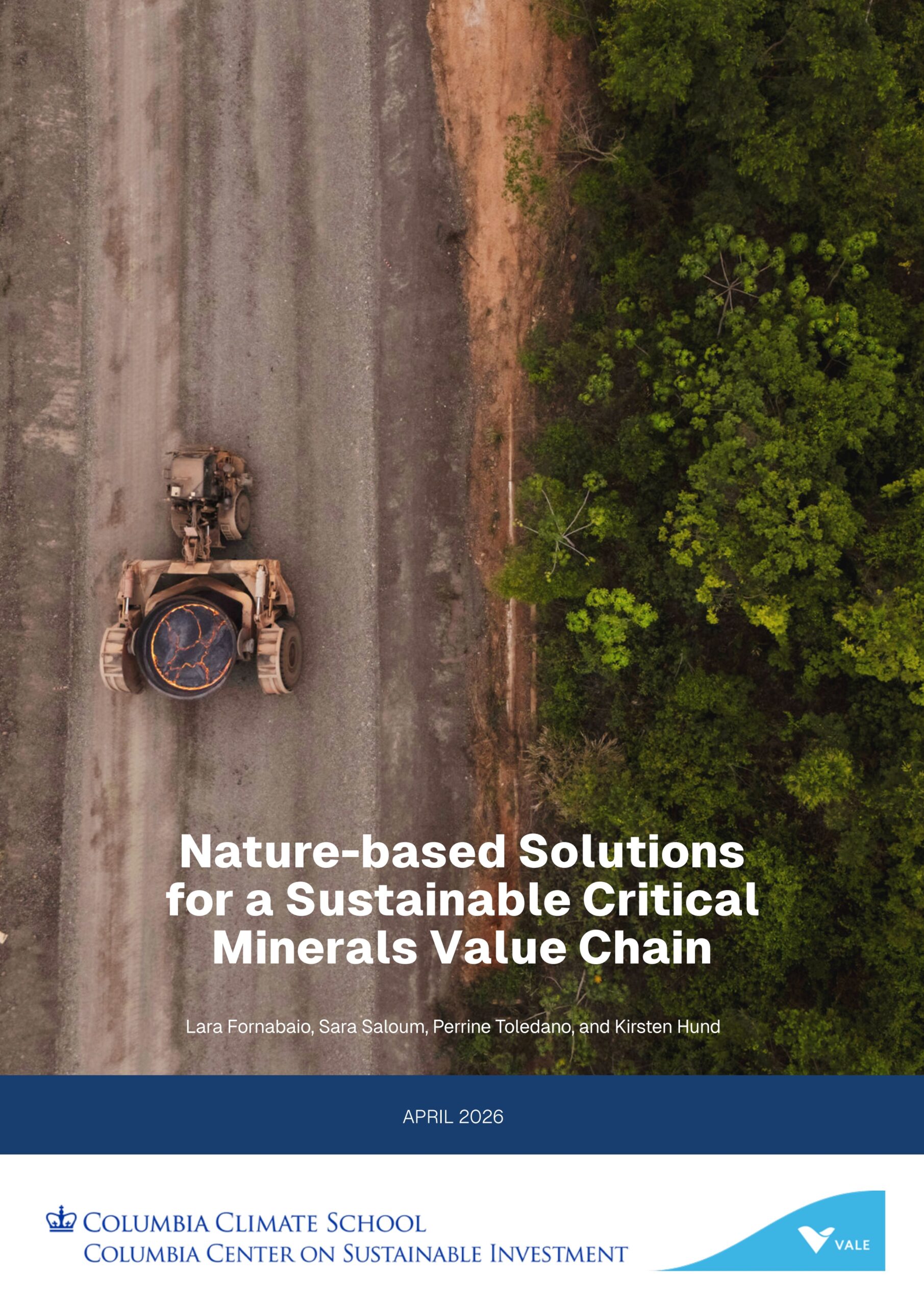
Nature-based solutions for a sustainable critical minerals value chain
This report examines how nature-based solutions (NbS) can be integrated into critical minerals mining. Drawing on case study research and expert events at Climate Week NYC and COP30, it identifies six resilience-building NbS categories and highlights the need for systems-based planning, community collaboration, and improved financing mechanisms.
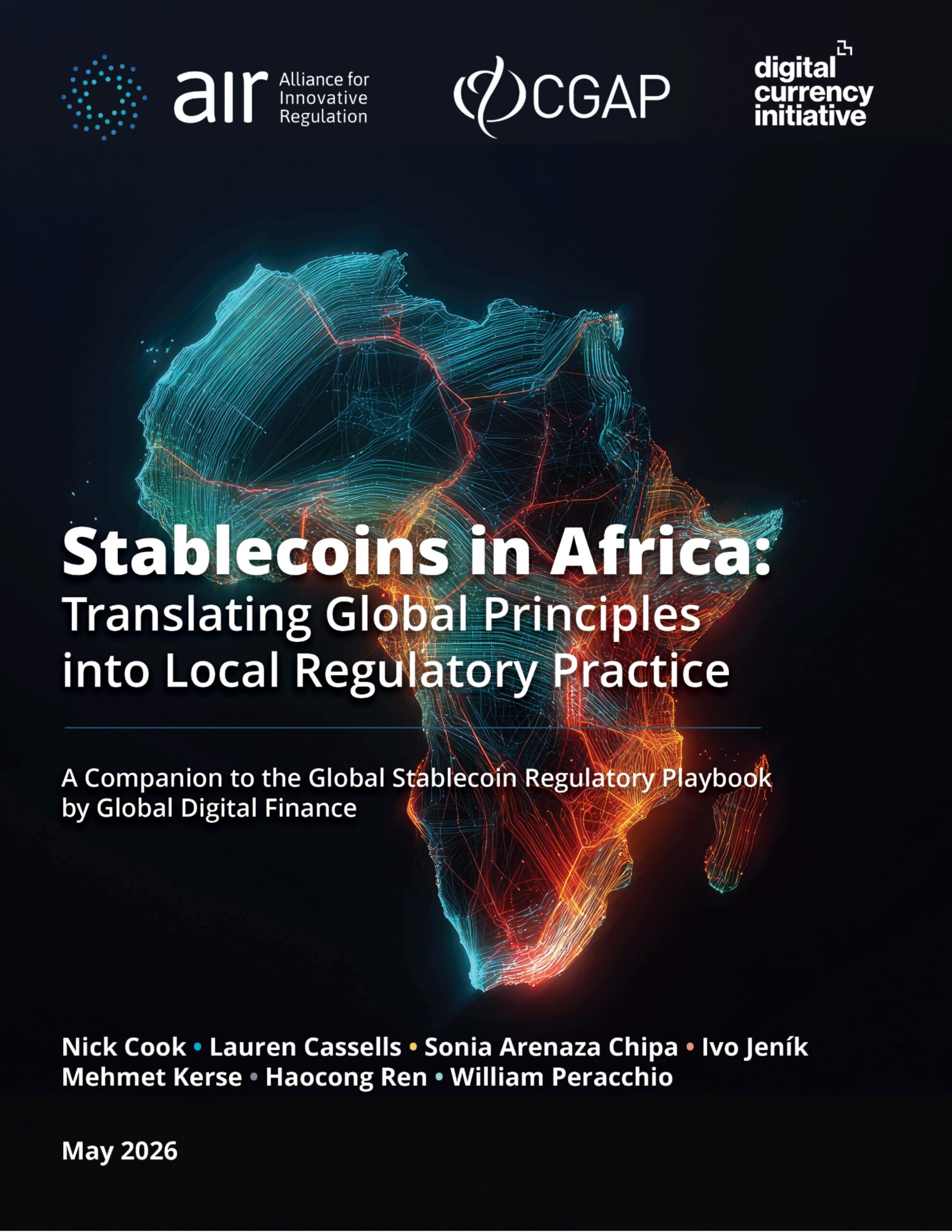
Stablecoins in Africa: Translating global principles into local regulatory practice
This paper is the African Chapter of GDF's Global Stablecoin Regulatory Playbook. It examines how global stablecoin regulatory principles can be applied across Africa's diverse markets, addressing reserve management, consumer protection, AML/CFT compliance, and cross-border coordination, while accounting for local financial infrastructure, dollarisation risks, and varying supervisory capacity.
The benefits of access: Evidence from private meetings with portfolio firms
This paper analyses over 4,700 private meetings between a large active asset manager and portfolio firms using proprietary data from Standard Life Investments (2007–2015). Meetings transmit soft information that influences analyst recommendations and fund manager trading, generating statistically significant abnormal returns and profitable trading decisions.


