
Library | ESG issues
Biodiversity
Biodiversity encompasses the variety of life on Earth, forming the ecosystems that support human well-being and economic activity. All industries rely on healthy ecosystems for resources and services, making biodiversity preservation critical for economic stability. Biodiversity loss introduces material risks including supply chain disruptions, regulatory challenges, and reputational damage, while also creating investment opportunities in biodiversity restoration and natural resource management.



Refine
465 results
REFINE
SHOW: 16


NGFS 2026 Nature Package
The NGFS 2026 Nature Package offers central banks and supervisors practical tools to integrate nature-related risks into financial stability assessments and macroeconomic modelling.
WWF Risk Filter Suite
A free online screening suite from WWF featuring Water and Biodiversity Risk Filters. It helps financial institutions and companies identify nature-related physical and regulatory risks across portfolios using 80+ global datasets.
SUSREG annual report series
This benchmark series provides a comprehensive assessment of sustainable financial regulations and central banking activities. It tracks progress across global jurisdictions in integrating climate, environmental, and social risks within banking, insurance, and capital markets sectors, supporting the transition towards a net-zero and nature-positive global economy.
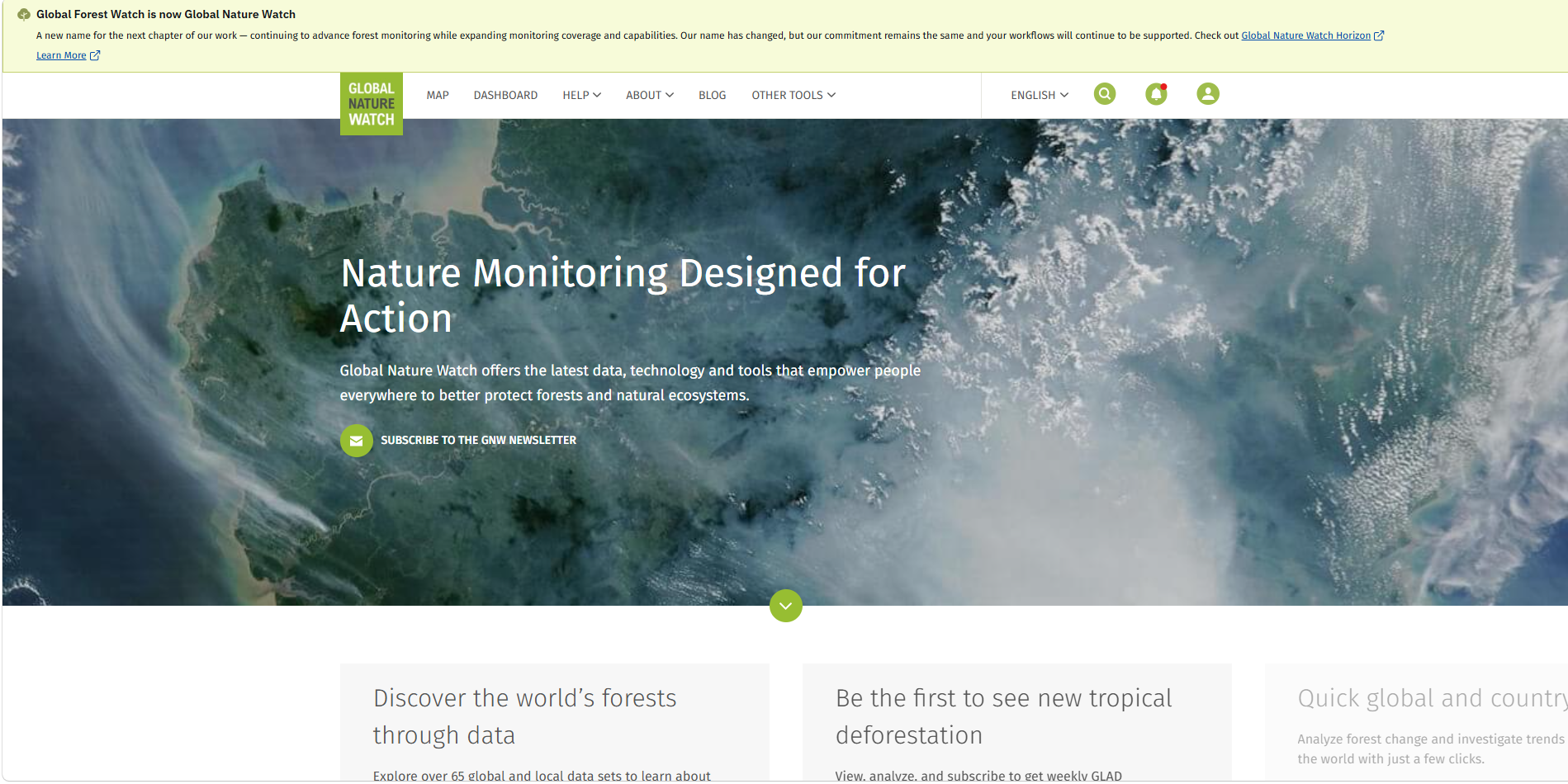
Global Nature Watch
Global Nature Watch is an AI-powered Earth monitoring platform developed by the World Resources Institute and Google. It provides near-real-time data on land-use changes across various ecosystems to support nature-based risk assessment and environmental reporting.
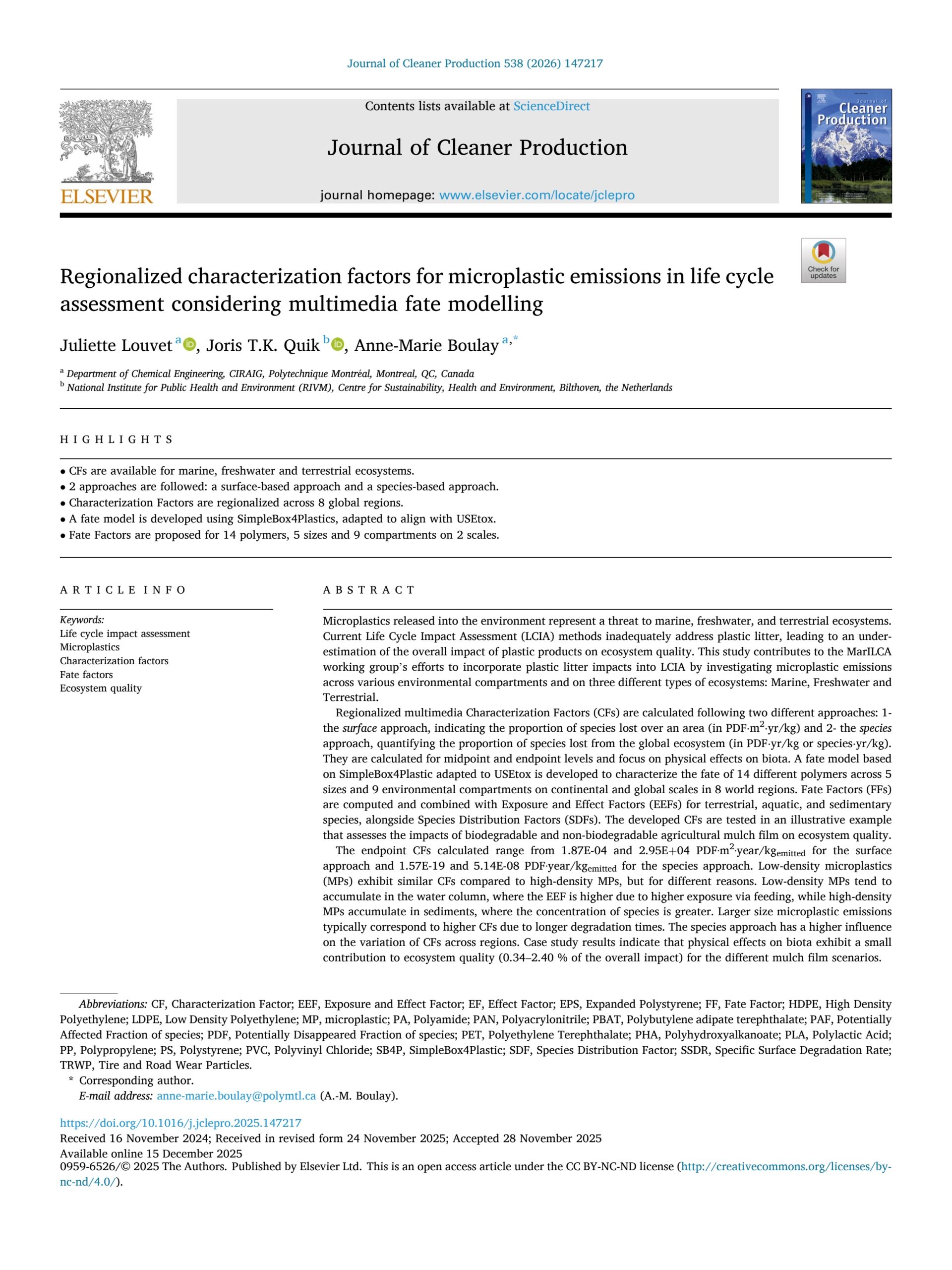
Regionalized characterization factors for microplastic emissions in life cycle assessment considering multimedia fate modelling
This research establishes regionalised characterisation factors for microplastic emissions across marine, freshwater, and terrestrial ecosystems. Using fate modelling aligned with USEtox, it evaluates 14 polymers and five size categories. Findings demonstrate that particle size and density significantly influence environmental persistence and subsequent impacts on global species richness.
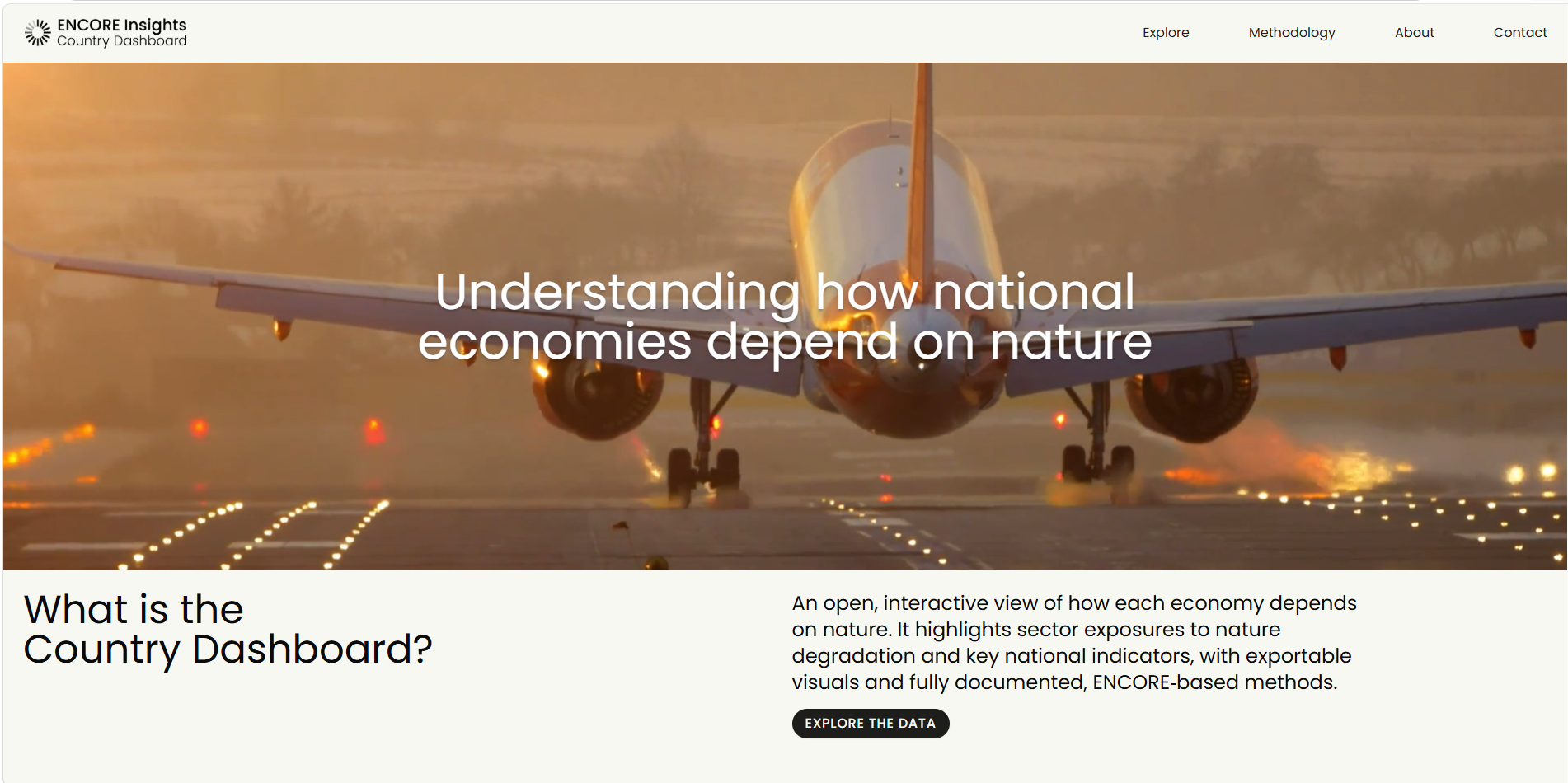
ENCORE Insights: Country Dashboard
The ENCORE Insights: Country Dashboard is an interactive tool that maps how national economies and sectors depend on nature. Developed by Global Canopy, it helps finance professionals and regulators assess macroeconomic risks associated with nature degradation and ecosystem service dependencies.
Southeast Asia nature risk toolkit: A resource for financial institutions
A resource-hub and workbook designed by ENCORE partners to help financial institutions assess nature-related risks in Indonesia, Malaysia, Thailand, and Viet Nam. It provides over 120 curated tools and datasets to support TNFD-aligned risk management and investment decisions.
Just Nature: How finance can support a just transition at the interface of action on climate and biodiversity
This report examines how the financial sector can facilitate a just transition within nature-based systems. It outlines priorities for sustainable agriculture, deforestation, nature-based solutions, and ocean restoration. The authors provide strategic recommendations for integrating human rights and social inclusion into climate and biodiversity actions to achieve a net-zero economy.
Gaining ground: State of private investment in nature 2026
This report analyses the growth of private investment in nature between 2016 and 2025, documenting a fivefold increase in annual capital deployment to $14 billion. It highlights the shift towards institutional-grade natural capital and recommends clearer policy drivers and standardised metrics to unlock investment and bridge the $700 billion finance gap.
Ocean investment protocol: 2026 revised draft for consultation: A multi-stakeholder plan to enable funding for the Sustainable Ocean Economy
This report provides a framework for scaling finance towards a sustainable ocean economy. It outlines recommendations for financial institutions, insurers, governments, and central banks to manage risks and capture opportunities. The protocol aims to mobilise the US$1 trillion required by 2030 to protect marine ecosystems and ensure prosperity.
Mapping the landscape of net-zero nature-positive finance: A review of definitions and frameworks
This report provides a comprehensive review of definitions and frameworks for net-zero, nature-positive, and climate-nature finance. It identifies alignment areas and implementation gaps, advocating for integrated risk and investment approaches to achieve global sustainability goals under the Paris Agreement and the Kunming-Montreal Global Biodiversity Framework.
Toward transformation in finance: Seeds of nature-positive futures
This research examines "finance for nature seeds" — innovative initiatives aimed at transforming the financial sector to reverse nature loss. By analysing 92 global projects, the study identifies diverse approaches to funding nature stewardship, highlighting current reliance on market-based mechanisms and the potential for inclusive, value-pluralistic financial systems.
The emancipatory potential of biodiversity reporting: Evidence from the United Kingdom and South Africa
This research evaluates the emancipatory potential of biodiversity reporting within the United Kingdom and South Africa. Analysing disclosures from 2018 to 2022, it finds significant increases in reporting intensity. The study presents a principles-based framework to distinguish between compliance-oriented disclosures and transformative, action-oriented environmental reporting.
Tropical rainforest loss slowed in 2025, but fire is a growing threat to forests worldwide
Global tropical primary forest loss decreased 36% in 2025, though 4.3 million hectares were destroyed. Significant policy-driven reductions occurred in Brazil, but global deforestation remains 70% above levels required for 2030 targets. Fires drove 42% of global tree cover loss, with severe impacts in Canada and Europe.
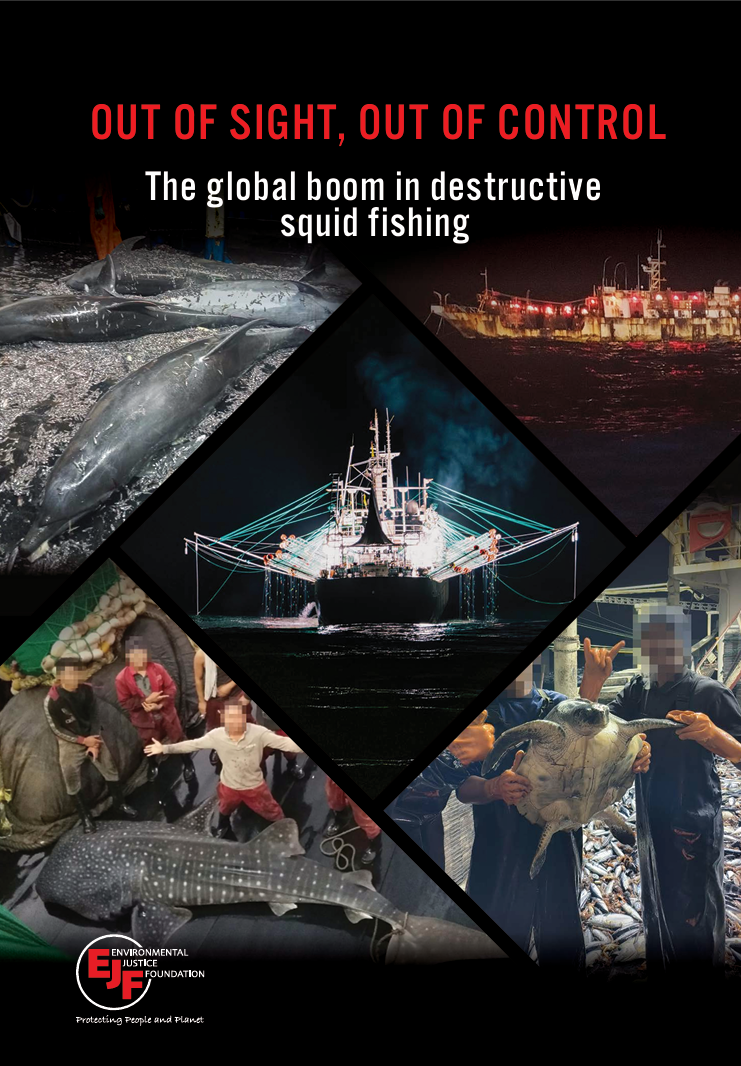
EJF's squid fisheries series
This report series examines global squid fisheries, focusing on governance gaps, illegal, unreported and unregulated (IUU) fishing, labour and human rights issues, supply chain transparency, and fisheries management. It analyses risks across key squid fisheries and explores policy and regulatory measures to support more sustainable and accountable fishing practices.
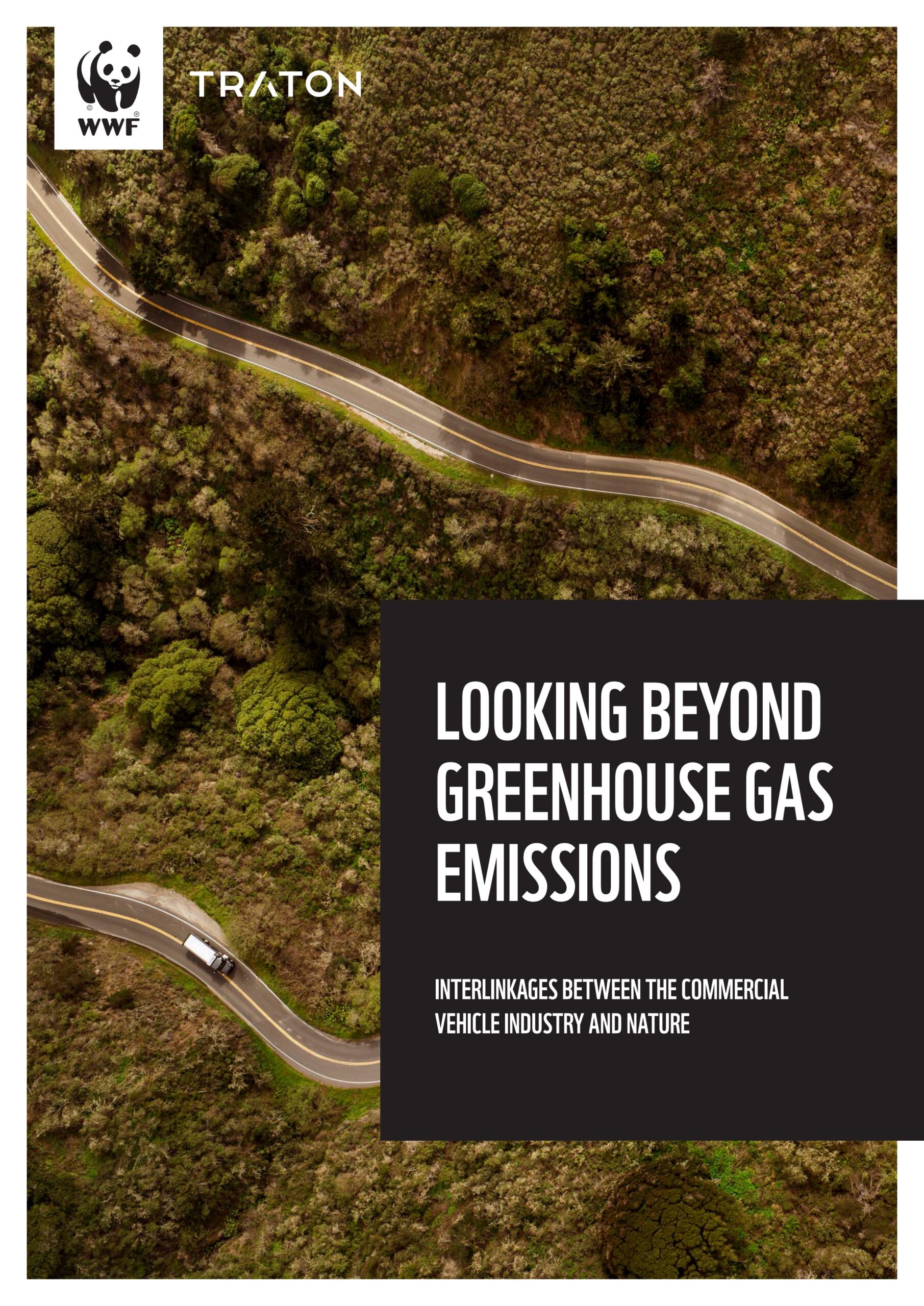
Looking beyond greenhouse gas emissions: Interlinkages between the commercial vehicle industry and nature
Published by WWF Sweden in collaboration with TRATON GROUP, this report examines the commercial vehicles sector's interlinkages with nature across its full value chain. It analyses six key commodities and value chain stages, identifies nature-related risks for businesses, and calls for sector-wide collaborative action towards a nature-positive future.


