
Library | ESG issues
Climate Change
Climate change, driven by human-induced greenhouse gas (GHG) emissions, is increasing global temperatures and extreme weather events. Major GHGs like carbon dioxide and methane primarily come from burning fossil fuels, deforestation, and agriculture. Key sectors contributing to emissions include energy, industry, transport, buildings, and land use, making mitigation and adaptation essential for environmental and economic stability.

Refine
1177 results
REFINE
SHOW: 16


Defining social norms and related concepts
This report defines social norms as the perceived unwritten rules deemed acceptable and influential in guiding human behaviour within a community. Social norms can be beneficial or harmful and influence collective change. The report distinguishes injunctive norms, descriptive norms, moral norms, and attitudes to establish behaviour change interventions.

Why circular business models fail and what to do about it: A preliminary framework and lessons learned from a case in the European Union
Circular business models fail to scale due to cultural, regulatory, economic, and technical barriers. This report proposes a preliminary empirical framework for linking circular business models to specific barriers and offers four lessons for managerial strategies.

Investor expectations of corporate transition plans: From a to zero
This report outlines key components for a credible corporate transition plan aligned with net-zero pledges under the Net Zero Investment Framework (NZIF). The guidance aims to help investors assess corporate emissions targets and progress towards decarbonisation. It is designed to be applicable across different sectors and geographies.

The impact potential assessment framework (IPAF) for financial products
The Impact Potential Assessment Framework for financial products (IPAF) is a multi-purpose tool developed to assess products based only on their actions to generate real-life impact. Using public information, it evaluates the product's maximum impact potential through four widely documented mechanisms.

Definitions for responsible investment approaches
This report provides definitions for different responsible investment approaches - Screening, ESG Integration, Thematic Investing, Stewardship, and Impact Investing. It aims to standardise terminology, enabling investors to communicate their responsible investment practices with clarity, consistency, and confidence.

Mobilizing money and movements: Creative finance for food systems transformations
This report explores creative financing strategies for transforming food systems. Through six case studies, it showcases levers of change for transformational investing, including blended finance, shared ownership, and diverse investment types. The report emphasizes community engagement and local food production to build sustainable and resilient food systems.

Constructive corporate engagements: From a corporate perspective
This research focuses on constructive corporate engagement. This report analyses survey results from 100 senior company directors and interviews with ten executives to examine the drivers of successful engagements. Insights include the importance of collaborating with companies, focusing on material issues, and using standard metrics for success.

The changing climate policy landscape: Considerations for policymakers and the needs of investors
This report outlines eight key features of effective global climate policies. It analyses how different approaches to policy design shape capital markets' responses. The report also calls on governments to create policies with clear short, medium, and long-term targets that provide the right incentives and ensure a just transition.

The climate benefits of plastic waste management in India and Southeast Asia: Investing in waste management and recycling solutions in India and Southeast Asia could reduce GHG emissions by 229 million tonnes by 2030
The Circulate Initiative's GHG calculator indicates that improved waste management and recycling could reduce GHG emissions by 229 million tonnes by 2030. Mismanaged plastic waste rates in six Southeast Asian countries range from 50% to 75%. This sector is crucial for transitioning to a low-carbon economy, attracting climate-focused investors.

Five insights for avoiding global collapse: What a 50-year-old model of the world taught me about a way forward for us today
This book analyses a 50-year-old model of the world to provide five insights for avoiding global collapse. The book examines societal pressures, the role of technology, governance structures, and finance that contribute to earth's ecosystem health and sustenance.

Road to resilience: An investor action plan for an adaptive and sustainable economy
This paper presents a strategy to manage economic and environmental stability in response to physical climate risks. This aims to bring awareness and understanding of physical climate risks and highlights the importance of innovative solutions toward a sustainable low-carbon economy.

Collaborative investor engagement with policymakers: Changing the rules of the game?
This report explores why and how institutional investors engage with governments and the challenges they face in the process. The authors analyse 11 case studies and identify drivers such as managing investment risks and fulfilling fiduciary duties, as well as challenges like limited influence on governments. The findings contribute to the sustainable finance and public policy literature.

The impact of climate change on the UK insurance sector: A climate change adaptation report by the Prudential Regulation Authority
The report warns insurance companies to prepare for the physical, transition and liability risks related to climate change. It provides a comprehensive review of how to manage future implications from climate change on financial stability and insurance.
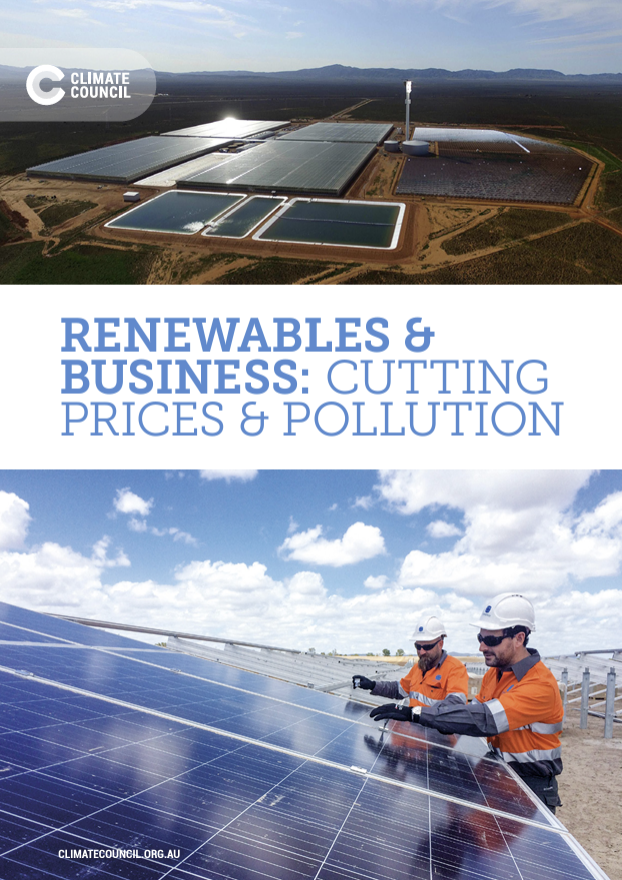
Renewables and business: Cutting prices and pollution
This report shows how investment in renewable energy can reduce exposure to volatile electricity prices and future price hikes. Over 46,000 businesses have already invested in large solar installations, and 40% of businesses are considering similar initiatives. Local and State Governments are also supporting business investment in clean, affordable and reliable renewable energy.

Innovation and resilience: A global snapshot of social enterprise responses to Covid-19
This report offers a global overview of social enterprise responses to the Covid-19 pandemic. It identifies innovation and agility as critical factors for survival. However, it notes that women-led and youth-led social enterprises face higher closure rates, greater reductions in activity, and more limited access to government support.

Growth-positive zero-emission pathways to 2050
This paper presents pathways to achieving growth positive zero-emission targets by 2050. The report concludes that significant action is required globally to achieve the low-carbon transition required to limit temperature increases to 1.5 °C, including the refashioning of multiple fundamental socio-economic systems and the international co-operation of decision-makers.


