
Library | ESG issues
Environmental
The environmental pillar in ESG (environmental, social, and governance) assesses an organisation’s impact on the planet. It includes issues such as climate change, biodiversity, waste management and water management. Strong environmental practices help businesses reduce risks, comply with regulations, and drive long-term sustainability.
Refine
1899 results
REFINE
SHOW: 16


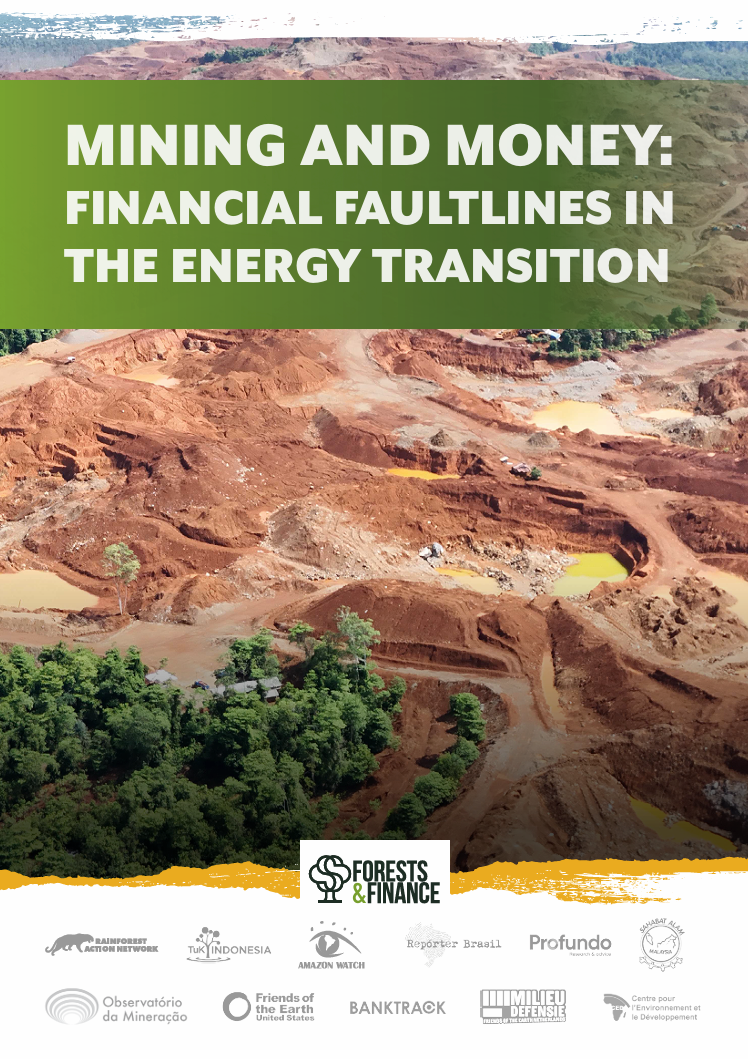
Mining and money: Financial fault lines in the energy transition
This report analyses global financing of transition mineral mining, showing concentrated capital flows, weak financial institution policies, and material environmental and human rights risks. It links bank and investor finance to mining harms across key regions and calls for stronger regulation and safeguards to enable a just energy transition.

We can’t ignore the largest source of methane
This article argues the global food system is the largest source of human-caused methane and deserves far more policy and funding attention. It maps key emission “hot spots”—ruminant livestock, food waste in landfills, biomass burning, and flooded rice fields—and outlines practical mitigation options from dietary shifts to landfill capture and improved rice management.

Systems-informed stewardship part II: Bringing a systems perspective to stewardship
This article applies a systems lens to stewardship, arguing that fragmented intermediation and entrenched short-term time horizons undermine sustainability outcomes. It calls for recognising these structural barriers as a critical step toward more effective, systems-informed stewardship.
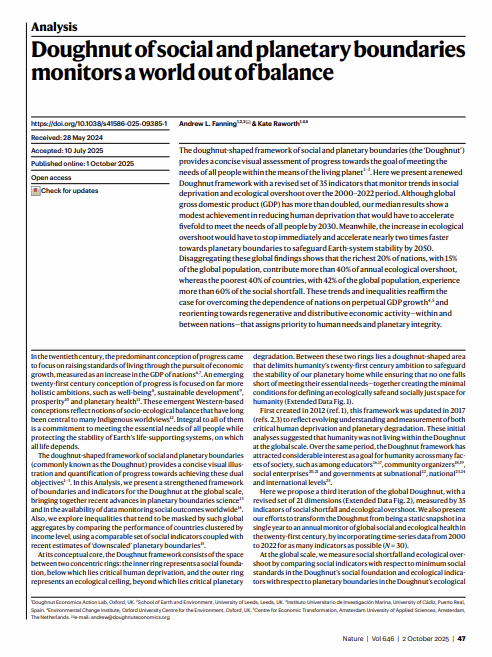
Doughnut of social and planetary boundaries monitors a world out of balance series
This series presents the Doughnut Economics framework, which assesses economic progress by balancing social foundations with ecological limits. It provides a structured approach to understanding whether human activity meets essential needs while remaining within planetary boundaries, supporting analysis, comparison and application across global, national and local contexts.
State of the sovereign transition series
An assessment of 85 countries against the ASCOR framework, evaluating sovereign climate performance across emissions pathways, climate policies, and finance to inform investor decision-making and engagement.
Transition forecast series
This benchmark series presents forward-looking assessments of global energy, land use and nature transitions. It consolidates expert judgement with structured policy tracking to outline plausible transition pathways across major economies, supporting investors and financial institutions in scenario analysis, risk assessment and strategic planning.

TuK Indonesia
Transformasi untuk Keadilan Indonesia (TuK INDONESIA) is an Indonesian non-governmental organisation based in Jakarta advocating human rights, social justice and environmental accountability in agribusiness, natural resources and finance sectors. It conducts research, campaigns and advocacy to promote sustainable finance, corporate accountability and protection of vulnerable communities.
The Inevitable Policy Response (IPR)
Inevitable Policy Response (IPR) is a climate policy analysis initiative focused on forecasting government responses to climate change. IPR produces investor-focused research, scenarios and tools, including the Transition Monitor, to assess transition risk, policy timing and financial impacts across sectors and regions for global financial markets and capital allocation decisions.

Energy Transition Advisers (ETA)
ET Advisors is a sustainability and climate advisory firm supporting investors, corporates and financial institutions. It provides research-led advice on climate transition, ESG strategy, sustainable finance and long-term value creation, helping organisations manage risk and align with global sustainability and net zero goals.
Indicators of global climate change 2024: Annual update of key indicators of the state of the climate system and human influence series
This series provides annual, peer-reviewed updates on key indicators of the global climate system and human influence. It tracks developments between IPCC assessment cycles, using consistent methods to support comparability, transparency, and evidence-based decision-making for policy and finance audiences.

Climate Engagement Canada
Climate Engagement Canada is an investor-led collaborative initiative supporting corporate climate action in Canada. It engages companies on net-zero alignment, climate governance and transition planning, using benchmarks, dialogue and public reporting to drive accountability, manage climate risk and support a just transition.

Energy & Climate Intelligence Unit (ECIU)
Energy & Climate Intelligence Unit (ECIU) is a UK-based climate and energy policy organisation providing evidence-led analysis on net zero, energy transition, climate science, and public policy. ECIU produces briefings, data insights, and media commentary to inform decision-makers, investors, and the public.
Climate Engagement Canada
Climate Engagement Canada is a public database that tracks and analyses climate-related engagement activities by Canadian institutional investors. It provides company-level information on engagement themes, progress, and outcomes to support transparency, accountability, and informed assessment of investor stewardship practices.
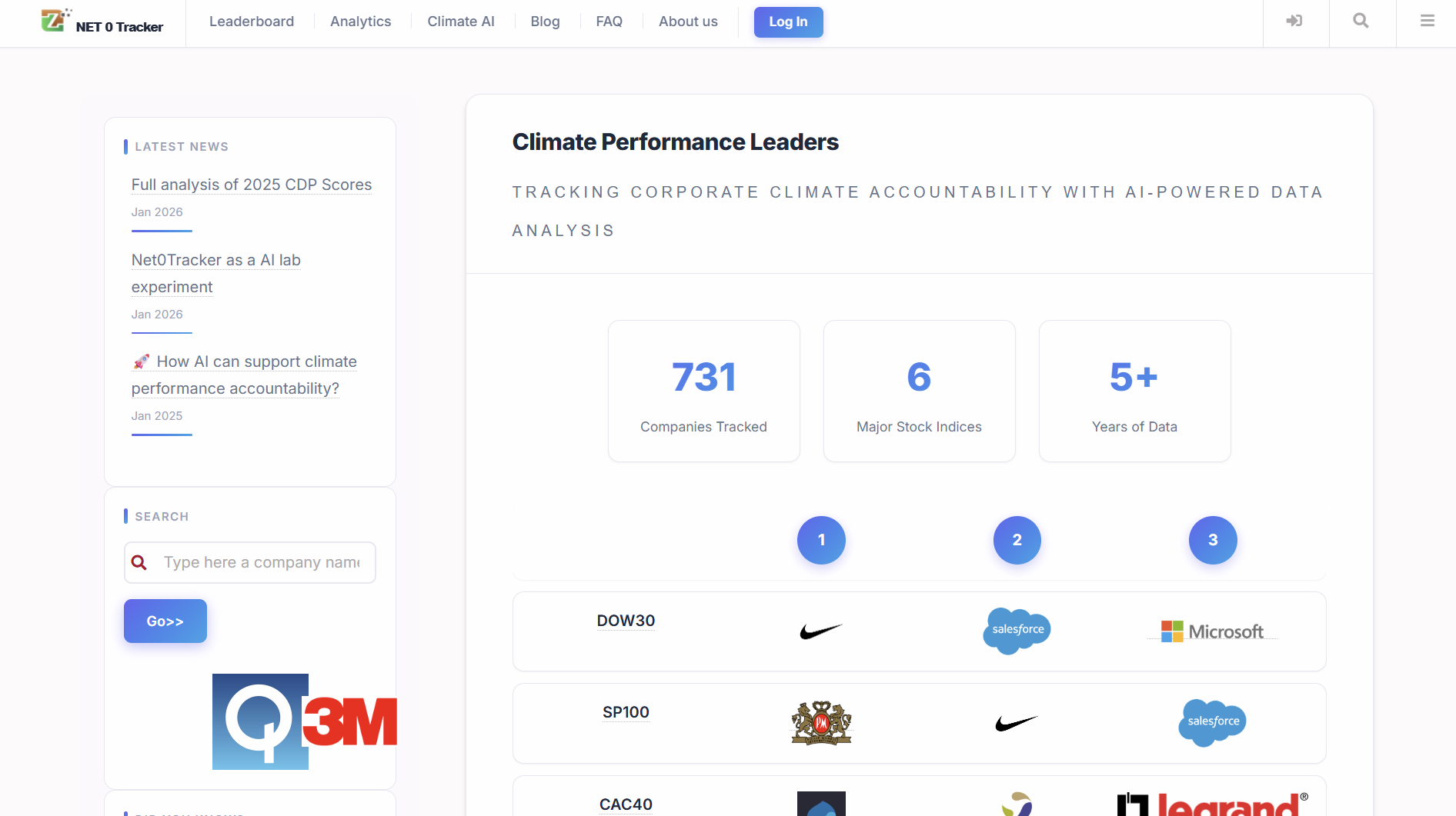
Net 0 Tracker
Net Zero Tracker is a publicly accessible database tracking net zero targets and progress of countries, regions, cities and companies. It standardises information on pledges, legal status and implementation, supporting comparison, accountability and evidence-based analysis of climate commitments.
Doughnut Economics Action Lab
Doughnut Economics Action Lab tools provide practical frameworks, guides, and interactive resources to apply Doughnut Economics in policy, business, and place-based contexts, supporting decision-making that balances social foundations with ecological limits through evidence-informed, adaptable methodologies.

Climate fiduciaries: part III – mind the model gap
The article explores how pension funds rely on imperfect climate models to assess financial risk and whether fiduciary duty requires deeper scrutiny of their assumptions. It highlights emerging legal challenges, model limitations, and the shift toward richer scenarios and climate narratives in investment decision-making.


