
Library | ESG issues
Environmental
The environmental pillar in ESG (environmental, social, and governance) assesses an organisation’s impact on the planet. It includes issues such as climate change, biodiversity, waste management and water management. Strong environmental practices help businesses reduce risks, comply with regulations, and drive long-term sustainability.
Refine
1899 results
REFINE
SHOW: 16


Net Zero Asset Managers Initiative (NZAM)
Net Zero Asset Managers Initiative (NZAM) is a global investor initiative supporting asset managers committed to net zero greenhouse gas emissions. NZAM provides guidance, accountability frameworks, and public target disclosures, helping align investment portfolios with climate goals and support the transition to a net zero economy across global financial markets.

Sustainable Finance Roundup January 2026: Geopolitics, Energy Transitions, and Systemic Risk
This month’s sustainable finance article roundup examines a landscape increasingly shaped by geopolitics and climate risk, as near-term fragmentation, energy security, and affordability pressures collide with intensifying long-term threats from climate change, biodiversity loss, and water stress. The works featured analyse how these dynamics are reshaping capital allocation, disclosure, and resilience planning, demonstrating the growing need for sustainable finance to integrate geopolitical risk with real-economy transition.
Corporate climate responsibility monitor series
The Corporate Climate Responsibility Monitor is a recurring research series that independently assesses the transparency, integrity and credibility of corporate climate strategies. It evaluates how major global companies set, disclose and implement emission reduction targets, using a consistent methodology to enable year-on-year comparison across sectors.
Canadian pension climate report card series
Grades 11 Canadian pension funds on climate performance across six indicators including net-zero targets, fossil fuel exclusions, and climate engagement.
Global landscape of climate finance series
The Global Landscape of Climate Finance is a benchmark series by Climate Policy Initiative that tracks global climate finance flows, examining the sources, financial instruments, sectors, uses and geographic distribution of public and private investment supporting climate mitigation, adaptation and resilience.
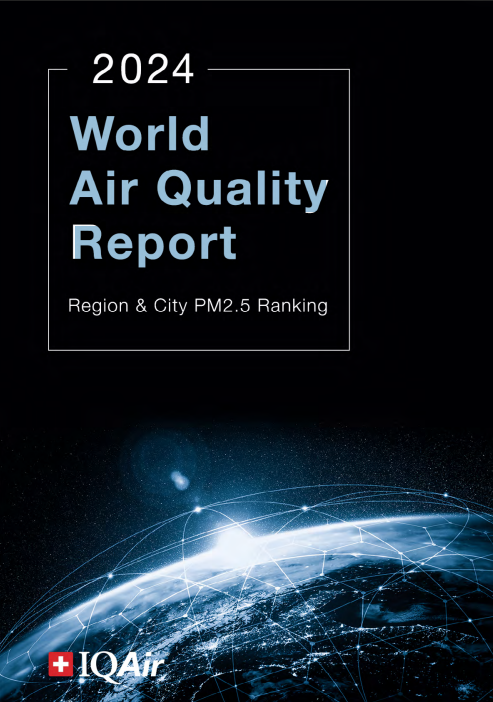
IQAir world air quality series
The World Air Quality Report is an annual research series assessing global air quality using ground-level PM2.5 monitoring data. It provides consistent country, regional and city-level comparisons, supported by transparent methodology and harmonised datasets to inform policy, research and investment analysis.
10 New insights in climate science series
The 10 New Insights in Climate Science is an annual series that synthesises recent peer-reviewed climate research across natural and social sciences. It provides a concise, policy-relevant overview of emerging scientific developments to inform decision-makers, practitioners, and stakeholders engaged in climate policy, finance, and governance.
Benchmarking impact: Australian impact investor insights activity and performance series
Benchmarking Impact is a benchmark series that provides a structured, recurring assessment of Australia’s impact investing market. It examines investor activity, market practices, and product development to support comparability over time and inform understanding of how impact investing is evolving across the financial system.
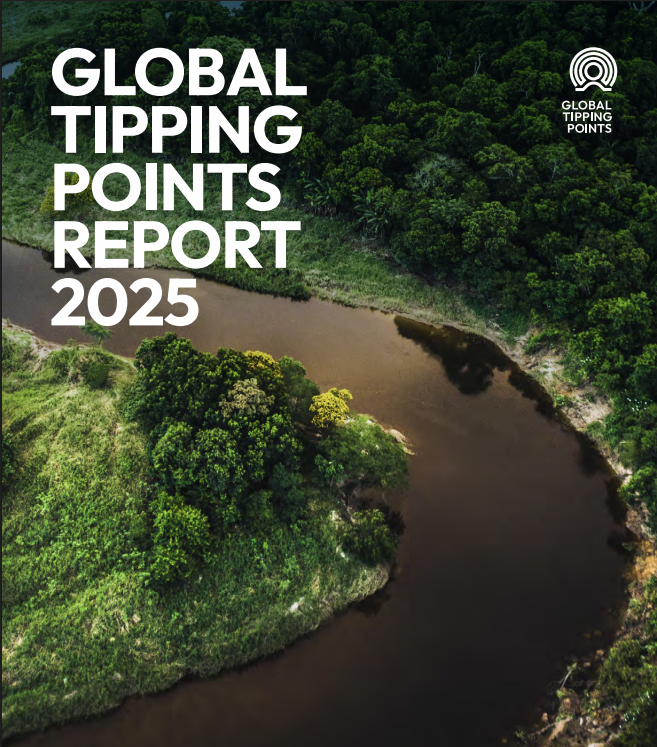
The global tipping points series
The Global Tipping Points Report is a research series examining Earth system tipping points and positive tipping dynamics. It synthesises interdisciplinary evidence on systemic risks, governance considerations and pathways for transformation, supporting decision-makers in understanding non-linear climate and environmental change across global systems.
State of supply chain sustainability series
The State of Supply Chain Sustainability is an annual benchmark series that examines how organisations define, govern, and implement environmental and social sustainability across global supply chains. It provides a consistent research framework to track evolving practices, pressures, and management approaches over time.
Planetary health check series
The Planetary Health Check is an annual benchmark series providing a consistent, science-based assessment of the Earth system. It applies the Planetary Boundaries framework to monitor planetary stability, resilience, and life-support functions, supporting comparability over time and informing policy, finance, and strategic decision-making and Planetary Boundaries Science is a research lab within the Potsdam Institute for Climate Impact Research (PIK), focused on advancing scientific understanding of the planetary boundaries framework. It does not operate as an independent organisation and should be covered under PIK’s institutional profile.
Voices of Aotearoa: Demand for ethical investment in New Zealand series
This annual research series examines public attitudes, expectations and behaviours relating to ethical, responsible and impact investing in New Zealand. It tracks how consumers engage with investment choices, transparency, fund practices and adviser interactions, providing a consistent evidence base to monitor evolving demand over time.
State of global water resources series
The State of Global Water Resources is an annual benchmark series produced by the World Meteorological Organization. It provides a consistent, global overview of freshwater conditions across key components of the hydrological cycle, supporting comparative assessment and decision-making across regions and time.

International Campaign to Abolish Nuclear Weapons (ICANW)
International Campaign to Abolish Nuclear Weapons (ICAN) is a global civil society coalition working to eliminate nuclear weapons. ICAN leads advocacy for the Treaty on the Prohibition of Nuclear Weapons, produces policy research, and supports disarmament campaigns worldwide, engaging governments, UN institutions, partners across regions, and multilateral policy forums.

Carbon Market Watch
Carbon Market Watch is an independent climate policy NGO focused on carbon markets, offsets and climate finance integrity. It monitors EU and global climate policies, produces research and policy analysis, and advocates for robust carbon market rules that protect environmental integrity, human rights and ambition across voluntary and compliance systems.

MIT Center for Transportation & Logistics
MIT Center for Transportation & Logistics (MIT CTL) is a research centre advancing supply chain management, logistics and transportation systems.Based at Massachusetts Institute of Technology, it produces applied research, executive education and industry partnerships focused on resilience, sustainability, digital innovation and global supply chain performance across sectors worldwide today.


