
Library | ESG issues
Governance
The governance pillar in ESG (environmental, social, and governance) refers to the systems, policies, and practices that ensure an organisation is managed responsibly and ethically. It includes issues such as board structure, reporting & disclosures, shareholders & voting, and risk management. Strong governance reduces risks, enhances trust, and supports long-term business sustainability.
Refine
2256 results
REFINE
SHOW: 16


The growth of dual-use by design research in Europe: Export control risks and challenges
This report explores how increased funding for 'dual-use by design' research in Europe blurs the line between civilian and military ecosystems. It highlights proliferation risks and identifies challenges for export controls, arguing for a broader, integrated governance framework to safeguard international research collaboration and security.
Built to adapt: Inclusive financial institutions in a changing climate
This report explores how inclusive financial institutions can build climate resilience for themselves and their clients. It outlines strategies for risk assessment, innovative risk financing, and adapting product offerings. By adopting a mutually beneficial approach, providers can maintain their social mission while navigating intensifying climate impacts.
Establishing risk-based resilience indicators for hard-to-abate industries
This report develops a Resilience Indicator for hard-to-abate sectors, evaluating transition and physical climate risks. It offers a transparent, risk-based tool for investment decisions, focusing on cash-flow stability and adaptive capacity, to provide more actionable insights than generic ESG scores.
Update: Tech firms’ responses to our call for action to protect children
This report assesses tech firms' responses to regulatory demands for improved online child safety. Despite new duties, children remain exposed to harmful content via personalised feeds. While some platforms committed to enhanced age assurance and grooming protections, further action is required to enforce minimum age policies effectively.
Socially-minded investors and corporate behavior
This report examines whether socially-minded investors influence corporate behaviour through voting, managerial incentives, or identity investing. It concludes that existing channels offer limited impact and evaluates potential legal reforms, such as binding shareholder votes and mandatory disclosures, to better align corporate actions with these investors' preferences.
Study on national climate litigation
This report analyses strategic climate litigation trends across Europe, examining cases against states and corporations. It highlights key legal strategies, including human rights claims and polluter-pays mechanisms, while assessing the challenges of enforcing damages and the evolving obligations of governments and high-emitting businesses.
AI corporate governance and Ben & Jerry’s risk
This report analyses the governance structures of OpenAI, Anthropic, and Ben & Jerry’s. It examines the risks of appointing independent guardians to prioritise social missions over shareholder profits. The findings highlight how fully insulated guardians can harm investors and undermine their own missions without proper accountability mechanisms.
The European chemical sector's influence on biodiversity policy
This report analyses how major European chemical companies and industry associations influence biodiversity policy in the EU and US. It reveals that no assessed company aligns fully with science-based biodiversity goals, highlighting oppositional lobbying against critical regulations concerning pesticides, PFAS, and harmful chemicals.
Optional shareholder voting
This paper examines optional shareholder voting by institutional managers (IMs) using newly available SEC data on say-on-pay votes. Only 44% of IMs vote, yet their aggregate voting footprint is twice that of mutual funds. IMs use voting as a monitoring tool, with larger positions associated with greater opposition to management.

Rankings of America's Most Just Companies
The Rankings of America's Most Just Companies evaluate the largest publicly traded US corporations on stakeholder performance and ethical behaviour.

Cracking the code: Using nature data to understand the impact of the ASX200
This report analyses the nature-related impacts of Australia's ASX200 companies. It finds that utilities, energy, and materials sectors exert the highest direct environmental pressures, whereas financials and retail sectors possess significant supply chain impacts. The report advocates for TNFD-aligned disclosures and proactive investor stewardship to mitigate systemic risks.
Reining in big tech corporations: Why platform governance requires structural regulation
This paper argues that big tech platform corporations function as state-empowered artificial legal entities rather than private contractual arrangements. Highlighting their structural and governance power, the author suggests that these organisations require structural regulation and democratic oversight to recalibrate the delegated powers granted by states.

LP Scan
ImpactAlpha’s LP Scan is a dealflow and market intelligence resource that tracks limited partner (LP) activity, fund allocations and investment trends across impact investing. It provides insights into institutional investors, capital flows and fundraising activity to help market participants identify opportunities and understand developments in sustainable and impact finance.
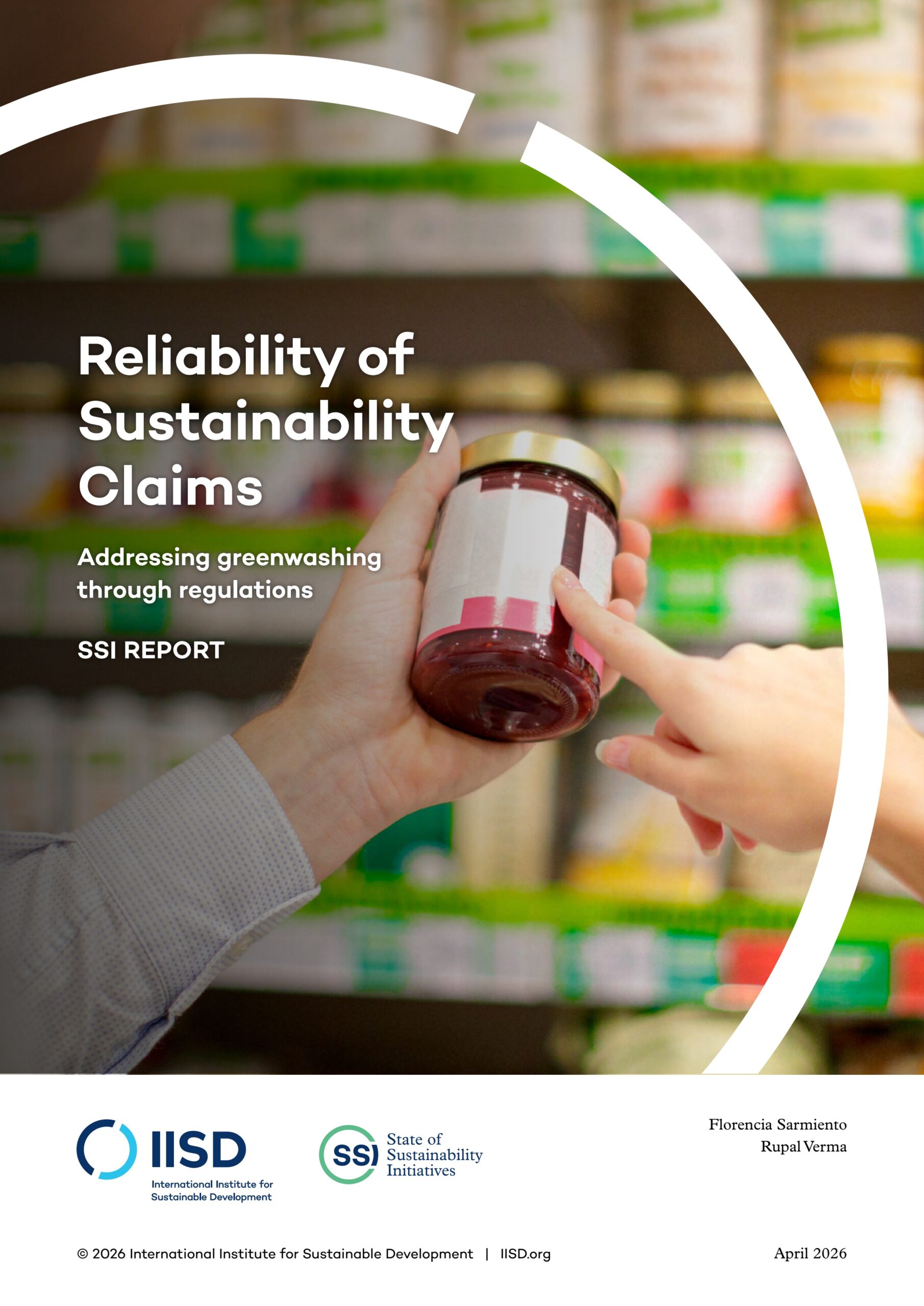
Reliability of sustainability claims: Addressing greenwashing through regulations
This report analyses 23 regulatory instruments across 12 jurisdictions to assess global responses to greenwashing. It highlights the reliance on cross-sectoral consumer protection laws and identifies challenges in substantiation. Recommendations include adopting proportionate approaches, investing in data infrastructure, and clarifying the role of voluntary sustainability standards.
Getting political finance right: Preventing corruption with UNCAC CoSP resolution 11/7
This report analyses the implications of UNCAC Resolution 11/7 on political finance, detailing key transparency measures, safeguards against illicit funding, and strategies to ensure state neutrality. It provides practical guidance for legislators and watchdogs to effectively implement oversight mechanisms and prevent corruption globally.
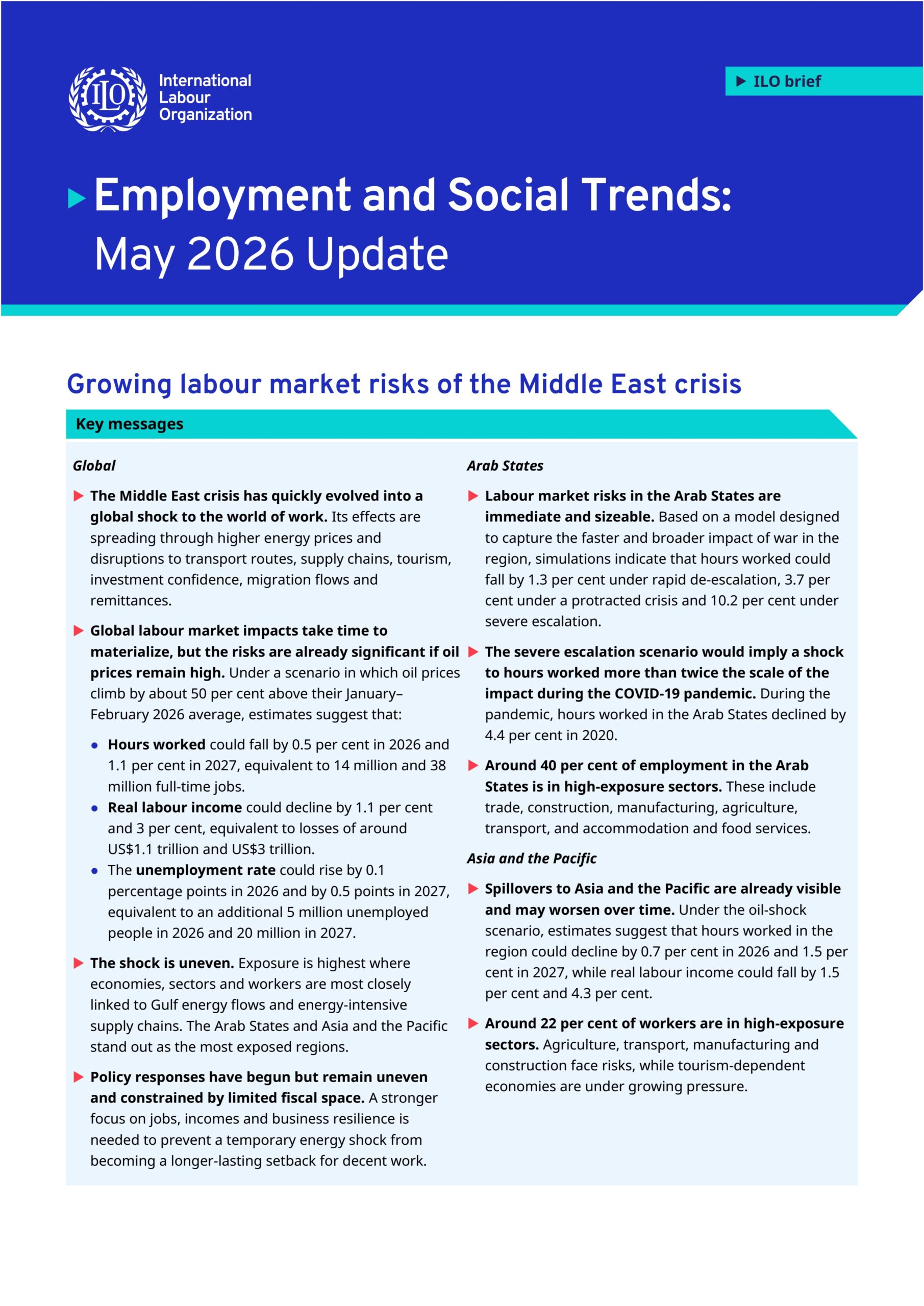
Employment and social trends: May 2026 update: Growing labour market risks of the Middle East crisis
This report analyses the global labour market risks of the Middle East crisis. It estimates significant potential declines in working hours and real labour incomes, highlighting heightened vulnerabilities in the Arab States and the Asia-Pacific region due to disrupted energy markets, supply chains, and transport routes.


