
Library | ESG issues
Human Rights
Human rights are the basic freedoms and protections every person holds regardless of nationality, status or circumstance. For financial institutions the central reference is the UN Guiding Principles on Business and Human Rights, which set out a responsibility to respect those rights through due diligence across operations, supply chains and investment portfolios. Adverse impacts such as forced labour, displacement of communities and unsafe working conditions carry legal, reputational and financial consequences, and increasingly fall within mandatory due diligence law.
Team Altiorem recommends


Refine
382 results
REFINE
SHOW: 16


The state of the climate series
This benchmark series provides concise annual assessments of the global climate, using consistent scientific indicators to monitor environmental conditions, human pressures, and system responses. It is designed to support structured analysis and comparison over time for researchers, policymakers, and finance and sustainability professionals.
Peoples' climate vote series
The Peoples’ Climate Vote is a global survey series capturing public perspectives on climate change, policy priorities and collective action. Led by international institutions, it provides a consistent framework to understand how people experience climate impacts and how they expect governments, businesses and global actors to respond.
Banking on climate chaos series
The Banking on Climate Chaos is a multi-year research series assessing how major global banks finance fossil fuel activities. It provides a consistent framework to review lending and underwriting linked to fossil fuels and expansion, supporting year-on-year comparison and broader analysis of banking practices.
Endowment impact benchmark series
The Endowment Impact Benchmark is a benchmark series that provides a structured assessment and benchmarking framework for endowments and foundations. It evaluates policies, governance, management and transparency related to sustainable and impact investing, enabling consistent comparison and ongoing progress tracking across participating institutions.
Measuring companies’ environmental and social impacts: An analysis of ESG ratings and SDG scores
This study compares ESG ratings with SDG scores across major providers. It finds little correlation. SDG scores align with investor exclusions and EU Taxonomy assessments, while ESG ratings largely measure financial risk exposure, not real-world environmental or social impacts.
Global biodiversity loss, ecosystem collapse and national security: A national security assessment
This UK national security assessment finds global biodiversity loss and ecosystem collapse pose high risks to food security, economic stability and geopolitics. Degradation is widespread, with potential ecosystem collapse from 2030–2050, intensifying migration, conflict, supply chain disruption and strategic competition without decisive intervention.
Database of Business Enterprises Pursuant to Human Rights Council Resolutions 31/36 and 53/25
A document database maintained by the Office of the United Nations High Commissioner for Human Rights providing structured access to official Human Rights Council documentation from sessions 31–36, including resolutions, reports, and meeting records, for reference, review, and archival research purposes.
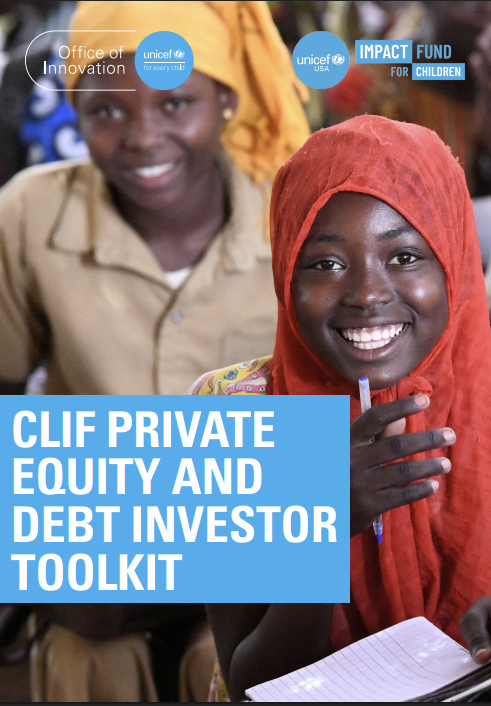
UNICEF USA’s child lens investing series
This series outlines UNICEF’s Child-Lens Investing approach, providing practical guidance for investors to integrate children’s rights and well-being into investment strategy, due diligence, contribution, and measurement across asset classes. It supports consistent application of a child lens alongside established impact and ESG practices.
openLCA Nexus
openLCA Nexus is an online repository providing access to life cycle assessment databases for environmental and sustainability analysis. It hosts free and licensed datasets from multiple providers, covering energy, materials, agriculture, transport and waste, designed for use within the openLCA software environment.
UN SDG Portal
The United Nations SDGs platform (sdgs.un.org) is an online hub for the 2030 Agenda and 17 Sustainable Development Goals, offering goals, targets, indicators, events, publications and global actions to track and support SDG implementation. It also includes registries of voluntary commitments and multi-stakeholder partnerships.
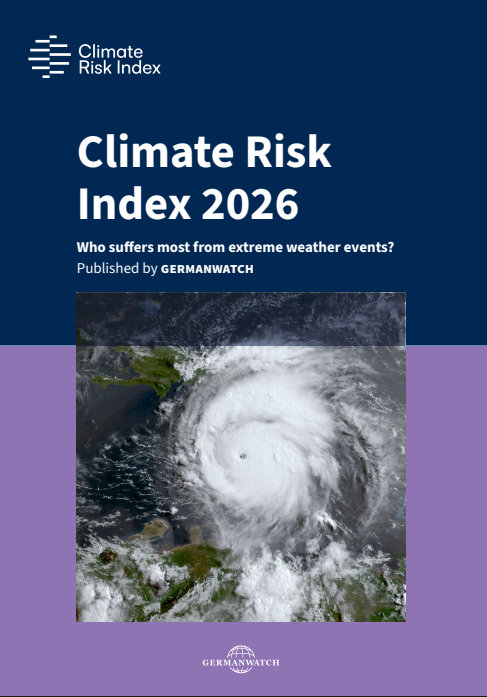
Climate risk index series
The Climate Risk Index is an annual benchmark series that compares countries’ exposure and vulnerability to extreme weather events using a consistent, historical, data-driven framework. Across all editions, it supports comparative assessment of physical climate risk over time and informs policy, risk analysis, and climate-aware financial decision-making.
Engaging the ICT sector on human rights series
This is a series of sector-wide risk assessment briefings for the Information and Communications Technology (ICT) sector. It examines salient human rights issues linked to ICT business models and technologies, providing a consistent analytical framework to support investor assessment, engagement, and governance analysis across multiple thematic areas.
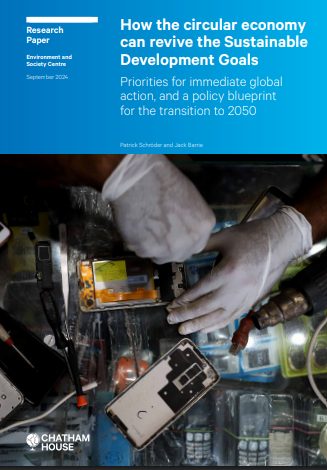
How the circular economy can revive the sustainable development goals: Priorities for immediate global action, and a policy blueprint for the transition to 2050
This report argues that embedding circular economy principles within the Sustainable Development Goals could revive stalled progress. It outlines five global policy priorities and proposes a 2050 blueprint linking circularity, inclusive growth, trade, finance and standards to post-2030 development agendas.
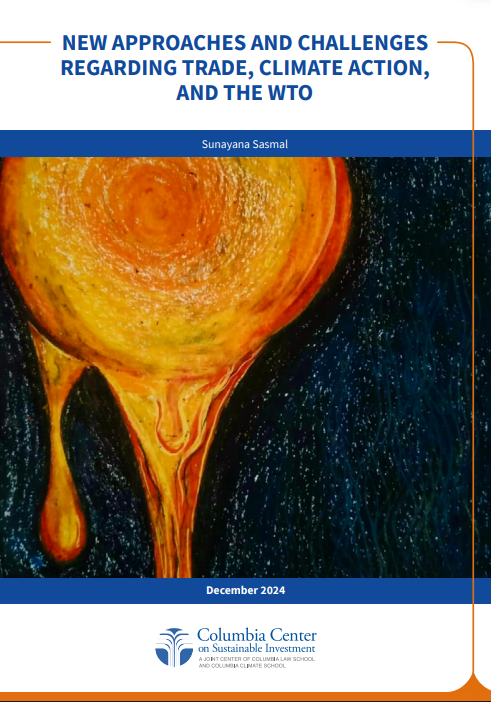
New approaches and challenges regarding trade, climate action, and the WTO
The report analyses how WTO trade rules can support climate action. It assesses tools such as border carbon adjustments, standards, subsidies and technology policy, identifying legal gaps, development impacts and the need for coordinated reforms to align multilateral trade governance with climate objectives.
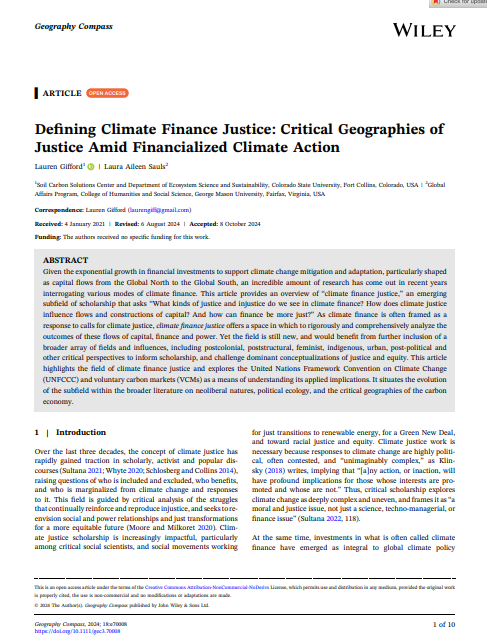
Defining climate finance justice: Critical geographies of justice amid financialized climate action
The article defines “climate finance justice” as a framework for analysing how financialised climate action shapes equity, power, and outcomes. It critiques climate finance mechanisms, including UNFCCC processes and voluntary carbon markets, and argues for justice-centred approaches that address historical responsibility, governance, and uneven impacts.
Time to plan for a future beyond 1.5 degrees
The report argues that limiting warming to 1.5°C is no longer realistic and may hinder preparedness. It calls for acknowledging higher warming scenarios, accelerating mitigation, and adopting disruptive policy, financial, and governance approaches to manage climate and nature risks in a likely 2°C-plus world.


