
Library | ESG issues
Systemic Risk Management
Systemic risk refers to the possibility that an event at the company level could trigger severe instability or collapse in an entire industry or economy. It extends beyond individual failures, encompassing large-scale threats such as climate change, natural disasters, inflation, geopolitical crises, and pandemics. Effective systemic risk management requires proactive monitoring, regulatory safeguards, and resilience strategies to mitigate risks and ensure financial stability in an increasingly complex and uncertain global landscape.


Refine
390 results
REFINE
SHOW: 16


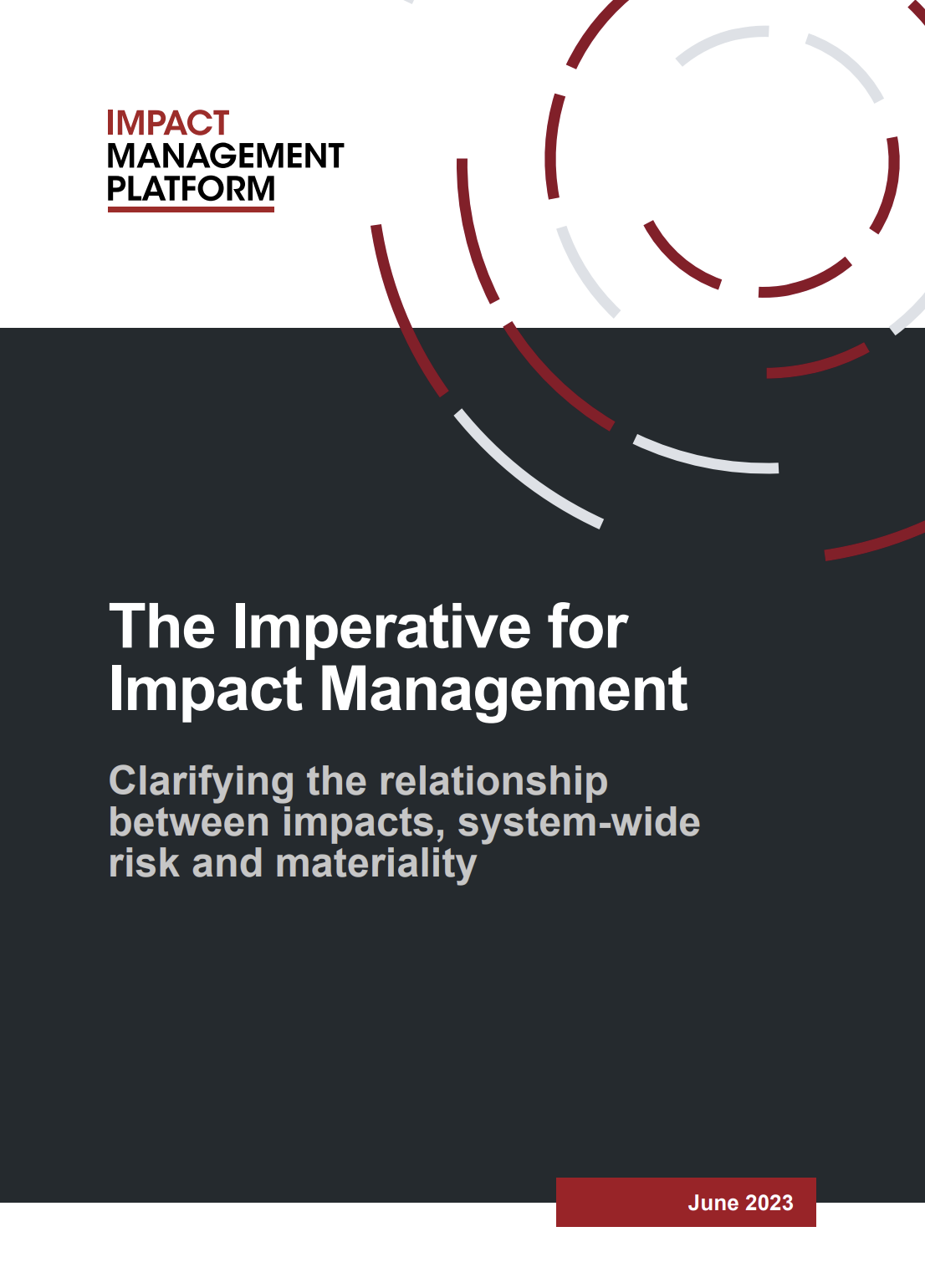
The imperative for impact management: Clarifying the relationship between impacts, system-wide risk and materiality
The report argues that managing environmental and social impacts is essential for sustainable financial performance. It connects impacts to both entity-specific and system-wide risks, urging enterprises, investors, and policymakers to adopt a unified, evidence-based impact management approach aligned with global sustainability goals and evolving disclosure standards.
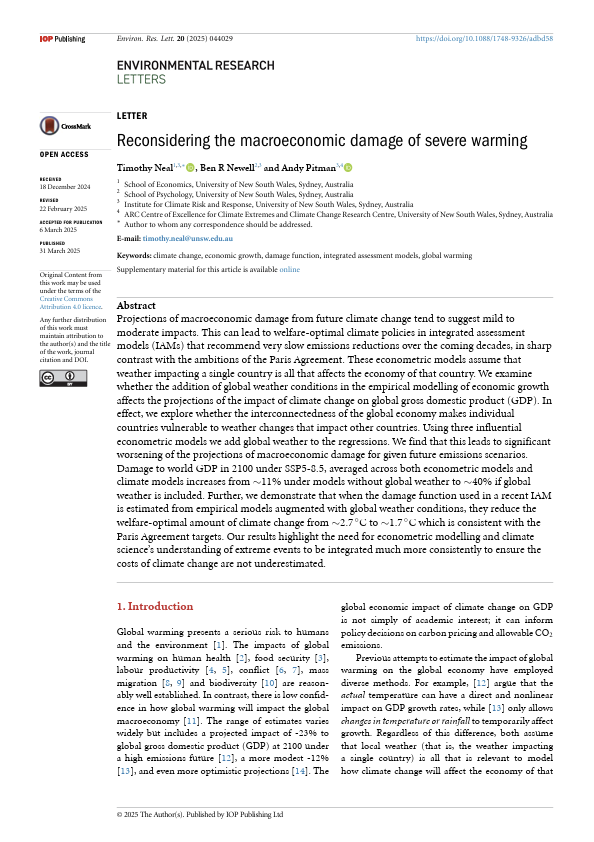
Reconsidering the macroeconomic damage of severe warming
This study finds that accounting for global weather conditions significantly increases projected macroeconomic damage from climate change. Global GDP losses by 2100 may rise from ~11% to ~40% under high emissions. Incorporating global effects also reduces the optimal warming threshold from 2.7°C to 1.7°C, aligning with Paris Agreement targets.
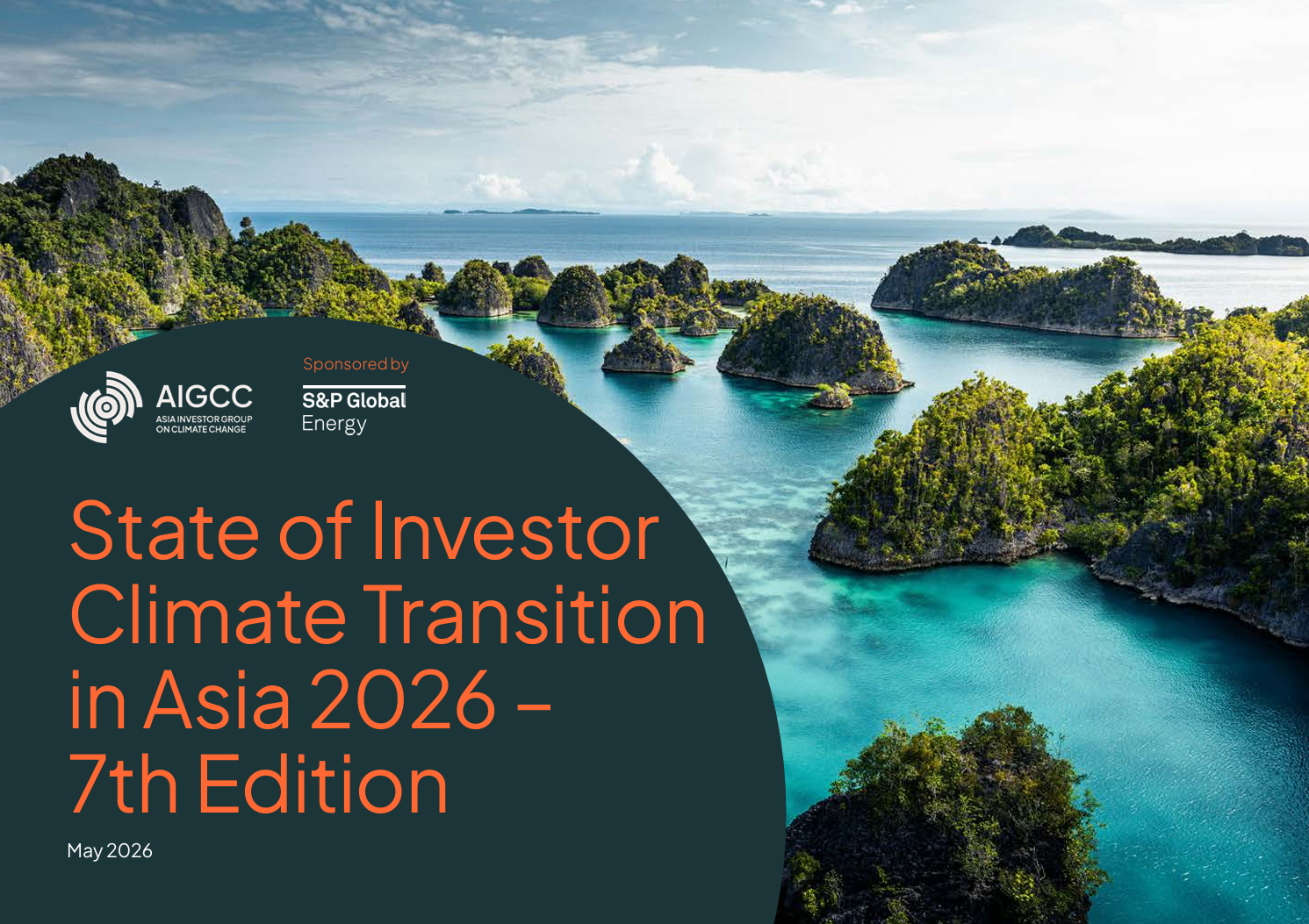
AIGCC's the state of investor climate transition in Asia benchmark series
This benchmark series examines how Asian investors are approaching net zero and climate-aligned investment, including target setting, portfolio alignment, climate risk assessment, stewardship, investment strategies and barriers to implementation across asset classes and markets in Asia.
AI, data governance and privacy: Synergies and areas of international co-operation
This report examines the synergies between artificial intelligence, data governance, and privacy, highlighting international collaboration opportunities. It identifies key regulatory frameworks, interoperability standards, and policy recommendations to address shared global challenges and promote responsible AI deployment while safeguarding data privacy across jurisdictions.
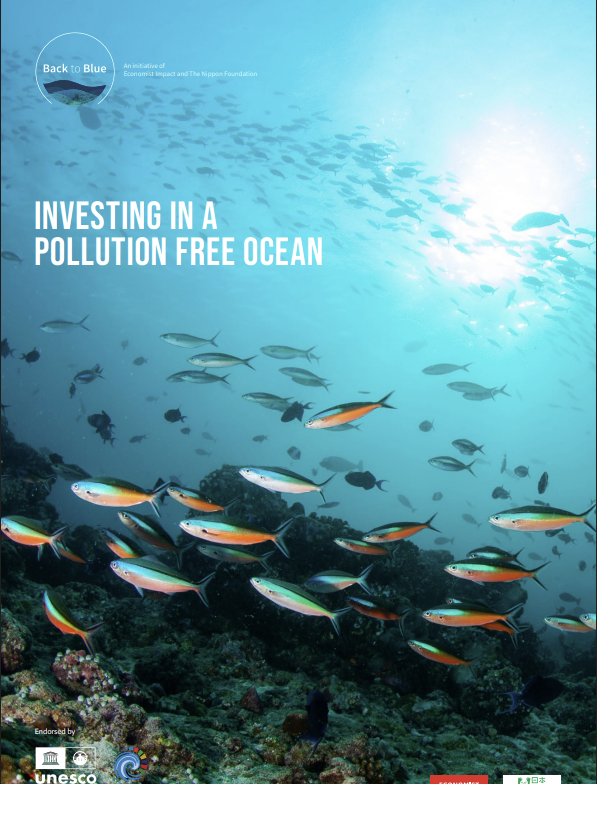
Investing in a pollution free ocean
The report explores how ocean pollution poses financial, legal and reputational risks to businesses, particularly land-based sectors. It identifies data gaps as a barrier to effective decision-making and highlights opportunities in green chemistry, data innovation and sustainable finance. It recommends integrating ocean health into corporate and financial strategies.
Environmental Finance's biodiversity insight series
This series explores the evolving role of biodiversity in sustainable finance, investment strategies, and regulatory developments. It examines biodiversity risk, natural capital investment, reporting frameworks, and financial instruments supporting conservation efforts. The series provides insights into emerging market mechanisms, data challenges, and the integration of biodiversity considerations into financial decision-making.
Storm clouds and silver linings: Long-term investing in an age of geopolitical uncertainty
The report explores the impact of geopolitical uncertainty on long-term investing, highlighting risks and opportunities for institutional investors. It emphasises the need for integrating geopolitical considerations into investment strategies, governance, and decision-making frameworks. The report provides practical tools for investors to assess geopolitical resilience, manage risks, and engage with stakeholders while balancing short-term pressures with long-term value creation.

Decarbonisation investment solutions for sectors: A discussion paper on Sector Transition Plans and their importance to investors
The report from the Investor Group on Climate Change (IGCC) discusses the development and importance of sector transition pathways to support Australia’s decarbonisation. It highlights how clear pathways aligned with the Paris Agreement can guide investment, minimise risks, and foster collaboration among investors, governments, and companies to achieve net-zero emissions by 2050.

Reframing child labour due diligence for businesses and investors in increasingly regulated and resilience challenged supply chains
The report explores reframing child labour due diligence in supply chains, emphasising systemic solutions, collaboration, and addressing root causes. It critiques current top-down models, highlighting their inefficiencies and unintended consequences.

Green fintech: Sustainability of Bitcoin
The report examines Bitcoin's environmental sustainability within the Green FinTech framework. It highlights Bitcoin's significant energy consumption during mining, correlating positively with miner revenue. While offering financial inclusivity, Bitcoin's carbon emissions challenge its environmental credentials. The study advocates for renewable energy adoption in cryptocurrency mining to align with sustainability goals.

Building a capital consortium for nature-positive investments
The report explores strategies to increase private sector investment in nature-positive projects. Using a capital continuum framework, it identifies barriers such as risk perception, funding gaps, and scalability challenges. Recommendations include development finance institution involvement, innovative funding models like DevCos, and strengthening voluntary carbon markets to provide price signals and liquidity.

Beyond 'business as usual': Biodiversity targets and finance - Managing biodiversity risks across business sectors
This report aims to enable a better understanding of the business sectors and financial mechanisms a risk from biodiversity destruction and lay the ground-work for target setting by the finance sector. It also supports investors in understanding the broader economic implications of biodiversity loss, offering insights and recommendations for integrating biodiversity into business and investment strategies.
The financial stability implications of artificial intelligence
The report discusses the rapid adoption and integration of artificial intelligence (AI) in the financial sector, driven by advancements in technology and increasing operational efficiency. Key risks include dependencies on third-party providers, market correlations, and cyber vulnerabilities. Generative AI's accessibility could amplify systemic risks, necessitating enhanced regulatory frameworks, vigilant monitoring, and robust governance to ensure financial stability amid evolving AI technologies.

Green metal statecraft: Forging Australia’s green iron industry
Australia’s "Green Metal Statecraft" outlines a transformative agenda for advancing its green iron industry. The report advocates leveraging renewables-powered iron ore processing, supported by $10-30 billion in strategic public investment. Emphasising economic, environmental, and energy security, the plan aligns national policy with decarbonisation to secure Australia’s leadership in sustainable steelmaking and green exports.

Early warning systems and early action in fragile, conflict-affected and violent contexts: Addressing growing climate and disaster risks
The report explores the implementation of early warning systems (EWS) in fragile, conflict-affected, and violent (FCV) contexts, emphasising climate and disaster risk management. It identifies key challenges like limited governance and data availability, proposes governance coordination, regional cooperation, and technology integration as solutions, and advocates for conflict-sensitive and community-based approaches to build resilience and save lives.

Interconnected justice: Understanding the cross-border implications of climate transition policies
The report explores the concept of interconnected justice in global climate and nature transitions. It highlights the need for policies that integrate environmental, social, and economic dimensions, advocating multi-actor dialogues and frameworks to mitigate cross-border inequalities.


