
Library | ESG issues
Systemic Risk Management
Systemic risk refers to the possibility that an event at the company level could trigger severe instability or collapse in an entire industry or economy. It extends beyond individual failures, encompassing large-scale threats such as climate change, natural disasters, inflation, geopolitical crises, and pandemics. Effective systemic risk management requires proactive monitoring, regulatory safeguards, and resilience strategies to mitigate risks and ensure financial stability in an increasingly complex and uncertain global landscape.

Refine
390 results
REFINE
SHOW: 16


Pension fund trustees and fiduciary duties: Decision-making in the context of sustainability and the subject of climate change
The report discusses the legal duties of pension fund trustees, especially in the context of sustainability and climate change. It highlights how trustees must balance financial risks and returns while incorporating long-term sustainability. The paper provides guidance for trustees to navigate fiduciary duties, including the implications of climate-related factors on investment decisions.

The investor case for fighting inequality: How inequality harms investors and what investors should do about it
The report argues that socioeconomic inequality poses systemic risks to investment performance. It highlights that addressing inequality aligns with investors' fiduciary duties by reducing financial risks and improving long-term returns. The report provides evidence that inequality impacts corporate performance, supply chains, and macroeconomic stability.
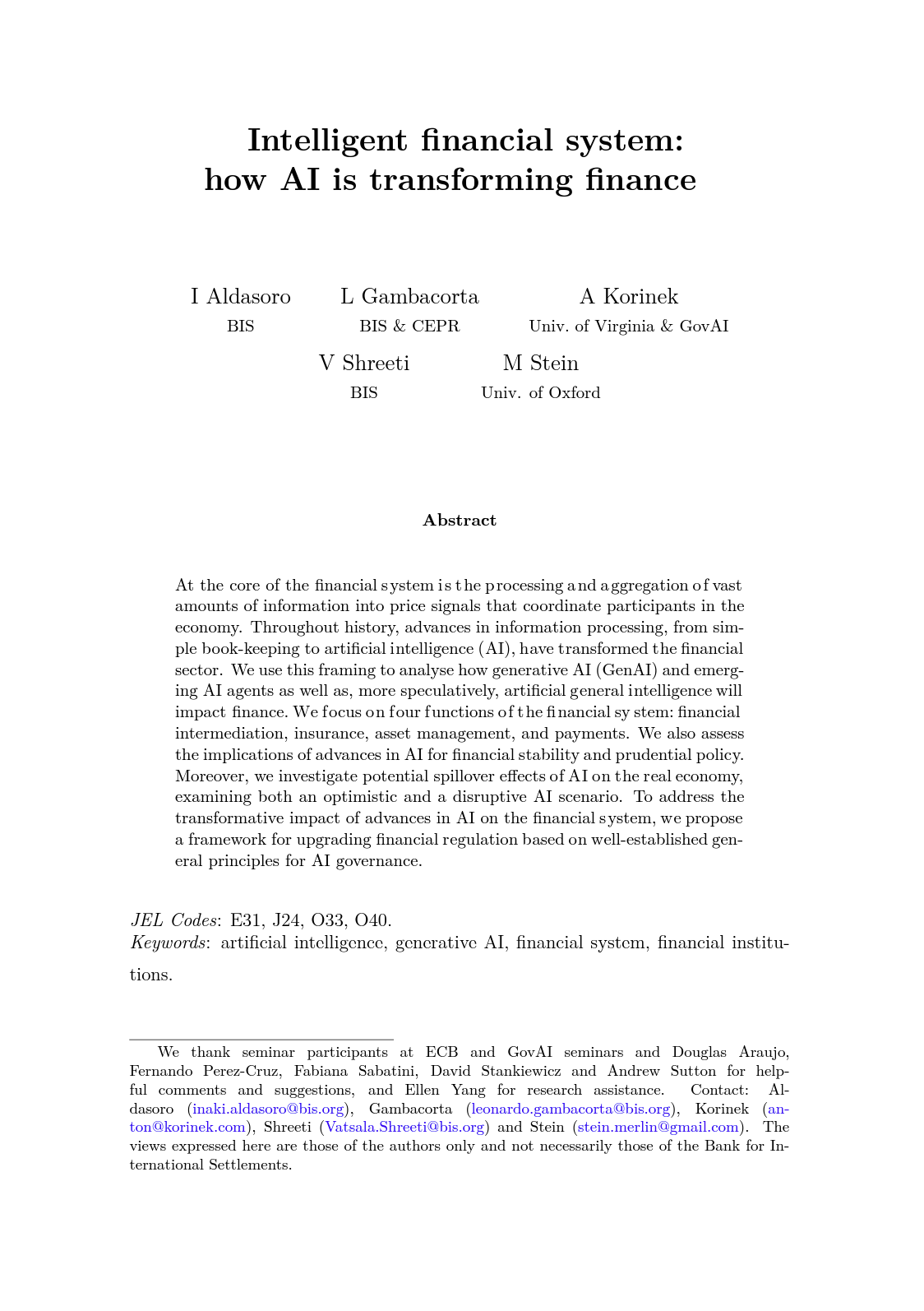
Intelligent financial system: How AI is transforming finance
The report explores the transformative role of AI in the financial sector, focusing on financial intermediation, insurance, asset management, and payments. It highlights both opportunities and challenges, including implications for financial stability and the need for upgraded financial regulation to manage the risks associated with AI's growing influence.

Briefing for finance: Climate action
Climate change poses a significant risk to businesses, with potential for financial and operational disruption. However, addressing climate change also presents opportunities for innovation, resilience, and improved reputation. Organisations can mitigate these risks and capitalise on these opportunities by setting net-zero targets, developing transition plans, and integrating climate considerations into decision-making processes.

Making things (that don’t exist) count: A study of Scope 4 emissions accounting claims
This report investigates the implications of 'Scope 4' emissions accounting claims, which refers to greenhouse gas emission reductions or removals due to a decision or action. This study suggests that extant Scope 4 assessments do not fit the established framework for scope-based emissions accounting, and calls for cautious claims of this nature and the need for more research.

System-level investing: Case studies of investors leading the way
This report from The Investment Integration Project (TIIP) summarises findings from five case studies of leading system-level investors. It begins by explaining the concept of system-level investing, describes how investors adopt this approach, and introduces five early adopters. It also discusses implications for future investment practices and processes.

Nature-positive strategy: Practical guidance for corporates
This practical guidance report provides a principles-based approach that equips corporates with an understanding of the value of nature, identifies key frameworks, and encourages a call to action. It suggests implementing “no regrets” actions for risk mitigation while progressing work on key frameworks. It further recognises that taking actions now will create business value.

Investing in nature: Opportunities for institutional investors
This guide aims to assist institutional investors in navigating the evolving landscape of nature-based finance. It offers practical insights into various investment opportunities, showcasing case studies that exemplify best practices and innovative approaches in nature investments.

Outsized impact: How investment can address the systemic risk of LGBTQIA+ inequality?
This report examines the systemic inequity faced by the LGBTQIA+ community in the US, highlighting its significant economic consequences. It provides evidence of the positive link between LGBTQIA+ inclusion and financial performance, and outlines a framework for investors to advance LGBTQIA+ equity through system-level investing.

Biodiversity finance as a technology of power: Discourses of innovation and regulation in an Australian case study
This research paper merges innovation and regulation, commodifying nature through tradeable biodiversity units. This study explores how financialisation shapes conservation policies, highlighting tensions between market-driven solutions and regulatory frameworks, and the complex power dynamics involved in biodiversity finance.

Human rights and climate change: A guide for institutional investors
This guide examines the relationship between climate change and human rights. It highlights the responsibilities of institutional investors to recognise and act on climate-related human rights risks. It also identifies crucial areas of risk for investors and provides an action plan to support investors to integrate the management of climate-related human rights risks into their existing frameworks.

Global Association of Risk Professionals (GARP)
Global Association of Risk Professionals (GARP) is a leading professional association dedicated to advancing the practice of risk management. GARP provides education, certification, and networking opportunities for risk professionals. It offers globally recognised programs such as the Financial Risk Manager (FRM) certification.

Anticipatory finance: An introductory guide
This introductory guide explores anticipatory finance, a funding mechanism released before predicted disasters to reduce humanitarian impact. It explains anticipatory action (AA), details potential finance sources (e.g. donor funds, government budgets, insurance), and presents real-world examples, challenges, and recommendations for implementation.
World Economic Forum's global risks report series
The Global Risks Report is a long-running report series published by the World Economic Forum that examines emerging global risks across environmental, social, economic, geopolitical and technological domains. It provides a forward-looking assessment to support risk awareness, strategic planning and decision-making by finance professionals and policymakers.

In search of the true greenium
The expected return of green securities relative to brown is a crucial impact measure for ESG investors, and the greenium is more negative in greener countries and over time. The equity greenium has become more negative over time. The proposed robust green score combined with forward-looking expected returns yields a more precisely estimated annual equity greenium.

Getting ahead of the curve on dynamic materiality: How U.S. investors can foster more inclusive capitalism
This discussion paper highlights tools and opportunities for US investors to foster sustainable and responsible value creation in order to support more inclusive and thriving economy. It also discusses the risks posed to portfolios by social and environmental risks and how diversified investors can mitigate them.


