
Library | ESG issues
Systemic Risk Management
Systemic risk refers to the possibility that an event at the company level could trigger severe instability or collapse in an entire industry or economy. It extends beyond individual failures, encompassing large-scale threats such as climate change, natural disasters, inflation, geopolitical crises, and pandemics. Effective systemic risk management requires proactive monitoring, regulatory safeguards, and resilience strategies to mitigate risks and ensure financial stability in an increasingly complex and uncertain global landscape.

Refine
390 results
REFINE
SHOW: 16


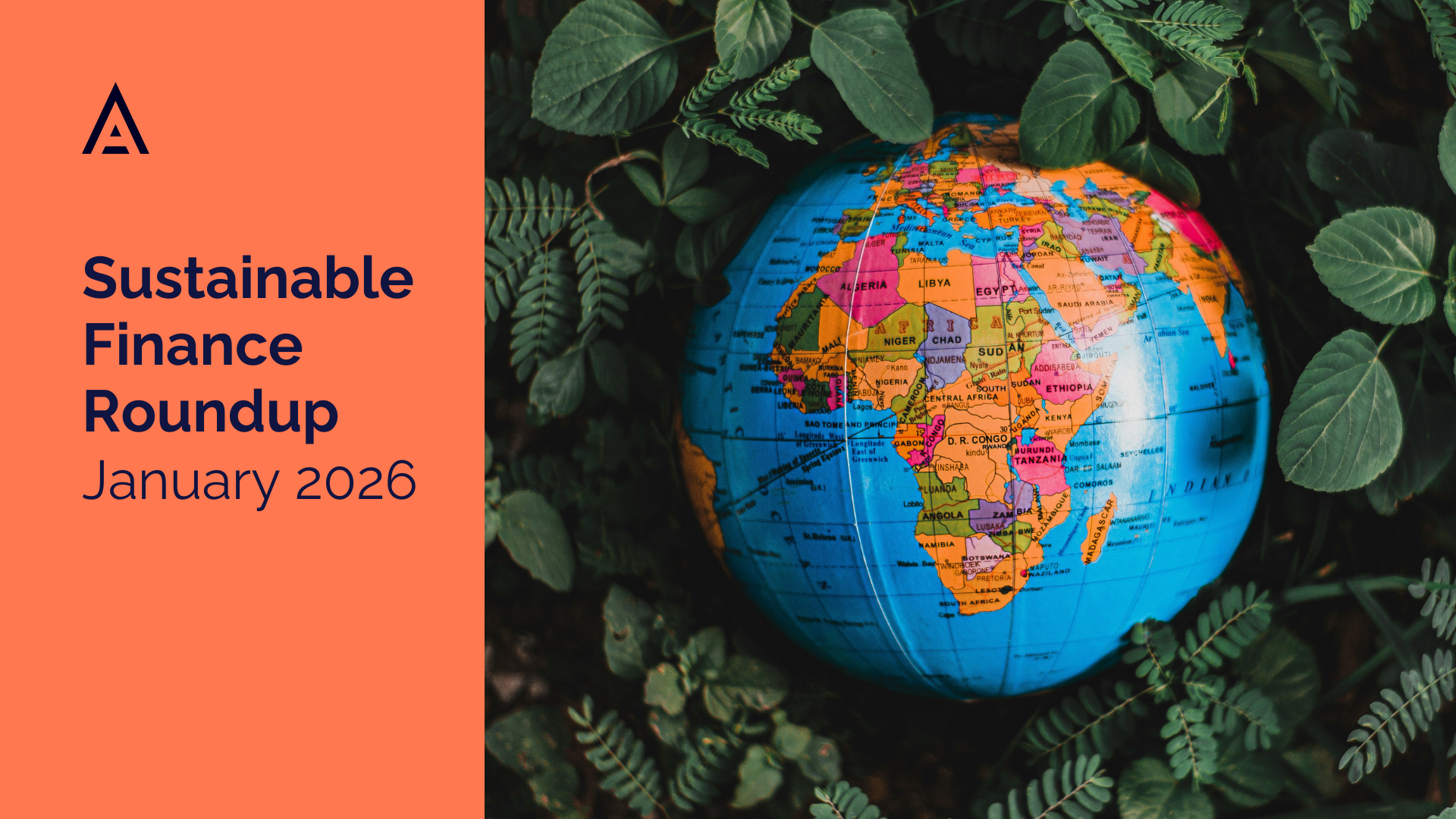
Sustainable Finance Roundup January 2026: Geopolitics, Energy Transitions, and Systemic Risk
This month’s sustainable finance article roundup examines a landscape increasingly shaped by geopolitics and climate risk, as near-term fragmentation, energy security, and affordability pressures collide with intensifying long-term threats from climate change, biodiversity loss, and water stress. The works featured analyse how these dynamics are reshaping capital allocation, disclosure, and resilience planning, demonstrating the growing need for sustainable finance to integrate geopolitical risk with real-economy transition.
10 New insights in climate science series
The 10 New Insights in Climate Science is an annual series that synthesises recent peer-reviewed climate research across natural and social sciences. It provides a concise, policy-relevant overview of emerging scientific developments to inform decision-makers, practitioners, and stakeholders engaged in climate policy, finance, and governance.
The global tipping points series
The Global Tipping Points Report is a research series examining Earth system tipping points and positive tipping dynamics. It synthesises interdisciplinary evidence on systemic risks, governance considerations and pathways for transformation, supporting decision-makers in understanding non-linear climate and environmental change across global systems.
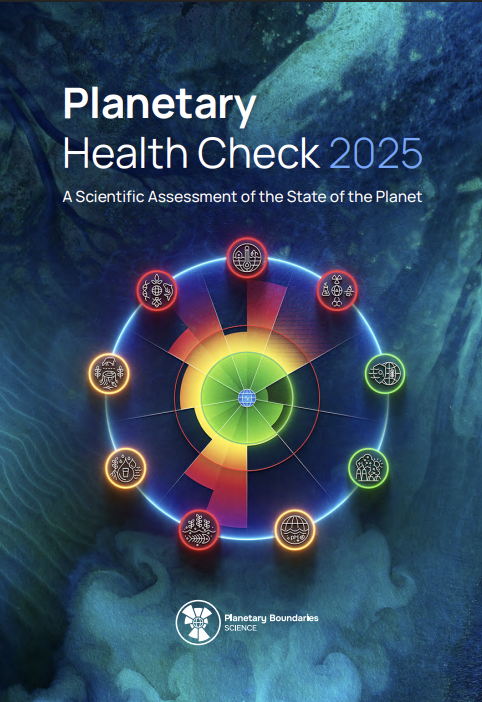
Planetary health check series
The Planetary Health Check is an annual benchmark series providing a consistent, science-based assessment of the Earth system. It applies the Planetary Boundaries framework to monitor planetary stability, resilience, and life-support functions, supporting comparability over time and informing policy, finance, and strategic decision-making and Planetary Boundaries Science is a research lab within the Potsdam Institute for Climate Impact Research (PIK), focused on advancing scientific understanding of the planetary boundaries framework. It does not operate as an independent organisation and should be covered under PIK’s institutional profile.
State of global water resources series
The State of Global Water Resources is an annual benchmark series produced by the World Meteorological Organization. It provides a consistent, global overview of freshwater conditions across key components of the hydrological cycle, supporting comparative assessment and decision-making across regions and time.
World Meteorological Organization (WMO)
World Meteorological Organization (WMO) is a United Nations specialised agency coordinating global cooperation on weather, climate, hydrology and related environmental services. WMO sets international standards, publishes authoritative climate and weather reports, supports early warning systems, and strengthens climate resilience, risk management and scientific data sharing worldwide, across governments and communities.

Climate fiduciaries: part II – the duty of even-handedness
This article explores the fiduciary duty of even-handedness and its implications for climate-aware pension fund investing, focusing on emerging legal challenges in Australia and Canada. It argues that unmanaged climate risk may breach trustees’ obligations to act equitably across generations, particularly where younger members bear disproportionate long-term harm.

Systems-informed stewardship part I: Reshaping sustainable and impact finance through systems thinking
This article introduces systems thinking and explains how it is reshaping sustainable and impact finance by addressing interconnected systemic risks like climate change and inequality. It outlines four emerging applications; from systemic risk management to systems-informed stewardship, highlighting the implications for investors’ roles, tools, and decision-making.
Global biodiversity loss, ecosystem collapse and national security: A national security assessment
This UK national security assessment finds global biodiversity loss and ecosystem collapse pose high risks to food security, economic stability and geopolitics. Degradation is widespread, with potential ecosystem collapse from 2030–2050, intensifying migration, conflict, supply chain disruption and strategic competition without decisive intervention.
Global climate highlights series
This benchmark series provides a recurring, standardised overview of global climate conditions, produced using consistent observational and reanalysis datasets. It tracks changes across key climate indicators to support comparability over time and inform assessment of longer-term climate trends within a recognised reference framework.
State of finance for nature 2026: Nature in the red: Powering the trillion dollar nature transition economy
UNEP’s State of Finance for Nature 2026 finds global finance remains heavily skewed towards nature-negative activities. In 2023, US$7.3 trillion harmed nature versus US$220 billion for nature-based solutions. Meeting Rio Convention targets requires more than doubling nature investment by 2030.
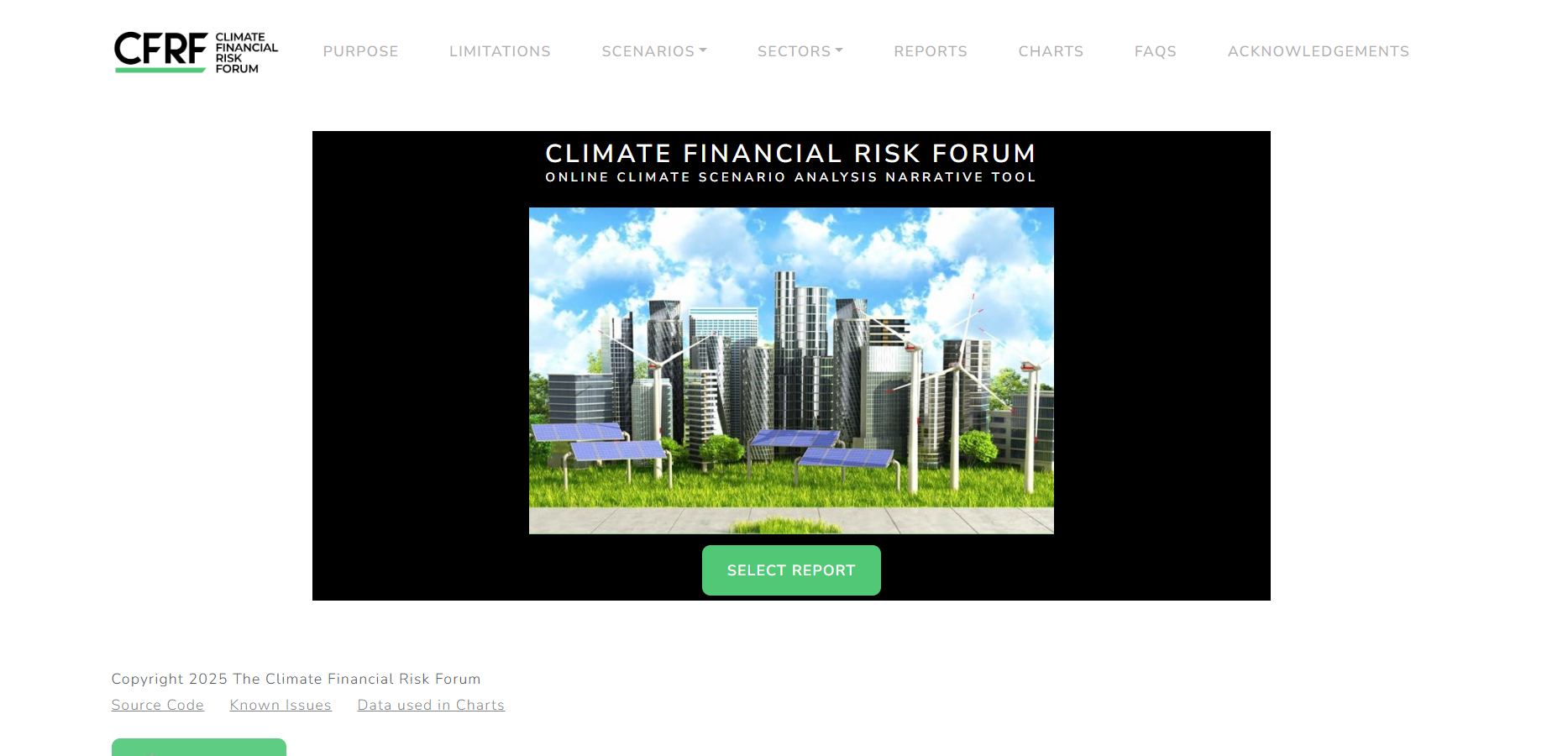
Online Climate Scenario Analysis Narrative Tool
An interactive climate financial risk tool developed by the UK Centre for Greening Finance and Investment to support scenario analysis. It enables users to explore climate transition and physical risk pathways for financial decision-making, stress testing, and research, with a focus on climate-related financial impacts.
NatureAlign
NatureAlign is a decision-support tool by Nature Finance that helps financial institutions identify, assess and respond to nature-related risks and opportunities by aligning portfolios, strategies and governance with nature-positive outcomes.
Climate transition and global financial stability
This literature review assesses evidence on how delayed, failed or uneven climate transitions affect UK and global financial stability. It finds intensifying physical and transition risks, potential mispricing and spillovers, and significant uncertainty, highlighting EMDE transitions as central to managing systemic financial risk.
Adaptation and resilience impact measurement toolkit : A practical framework for financial institutions
Provides a practical framework for financial institutions to measure climate adaptation and resilience impacts. It sets principles, indicators and decision pathways across banks, insurers, DFIs and asset managers, linking outputs, outcomes and impacts to capital allocation, risk management, compliance and reporting.

KanataQ Ltd
KanataQ Ltd provides climate and nature risk analytics for financial institutions, corporates and investors. It develops data-driven models, scenarios and tools to assess physical and transition risks, support regulatory reporting, and inform strategic decision-making across climate, ESG and sustainable finance, using forward-looking insights aligned with global climate frameworks and standards.


