
Library | ESG issues
Targets & Accountability
Targets and accountability are essential for ensuring organisations and governments follow through on commitments to sustainability, climate action, and social responsibility. Setting measurable and transparent targets such as net-zero goals, emissions reductions, diversity benchmarks, and human rights protections allows for tracking progress and holding entities accountable. Clear, data-driven targets strengthen stakeholder trust and help align financial and business strategies with long-term sustainability objectives.


Refine
354 results
REFINE
SHOW: 16


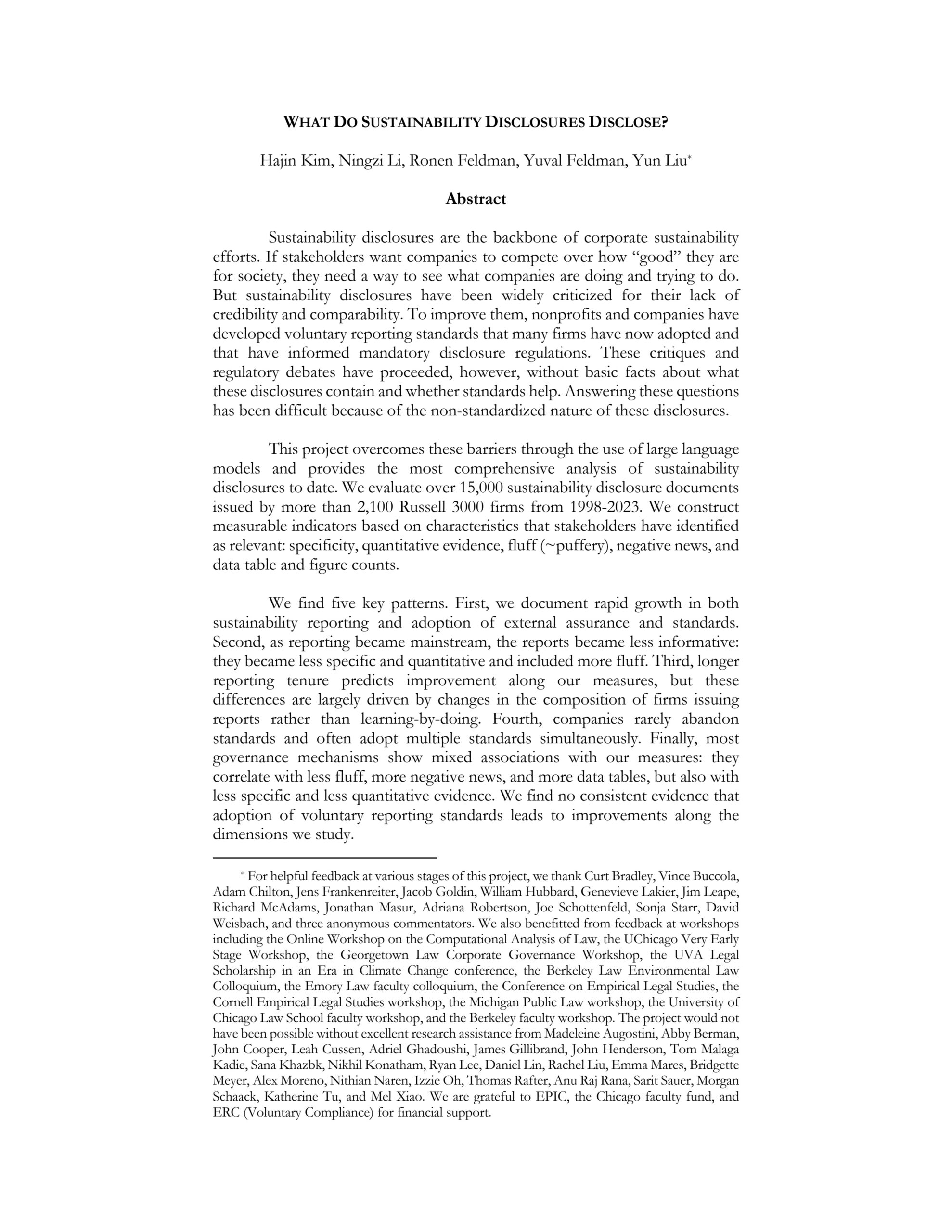
What do sustainability disclosures disclose?
This research analyses over 15,000 sustainability disclosures from Russell 3000 firms. It finds that while reporting has surged since 2015, informative quality has declined. Adoption of voluntary standards yields mixed results, correlating with reduced 'fluff' but lower narrative specificity. Improvements primarily reflect selection effects rather than organisational learning.

Handbook: Harmonised framework for impact reporting for social bonds
This handbook provides a harmonised framework for impact reporting on social bonds. It outlines core principles, recommendations, and sector-specific metrics for categories including affordable housing, essential services, and basic infrastructure. The document aims to enhance transparency and integrity in the social bond market through standardised reporting practices.

Best practice transition plans for listed equity asset managers
Most listed equity managers now have a target. Fewer have a plan that shows how it will be met. By January 2024, 264 Net Zero Asset Managers signatories had had their targets reviewed. Method is no longer the hard part.
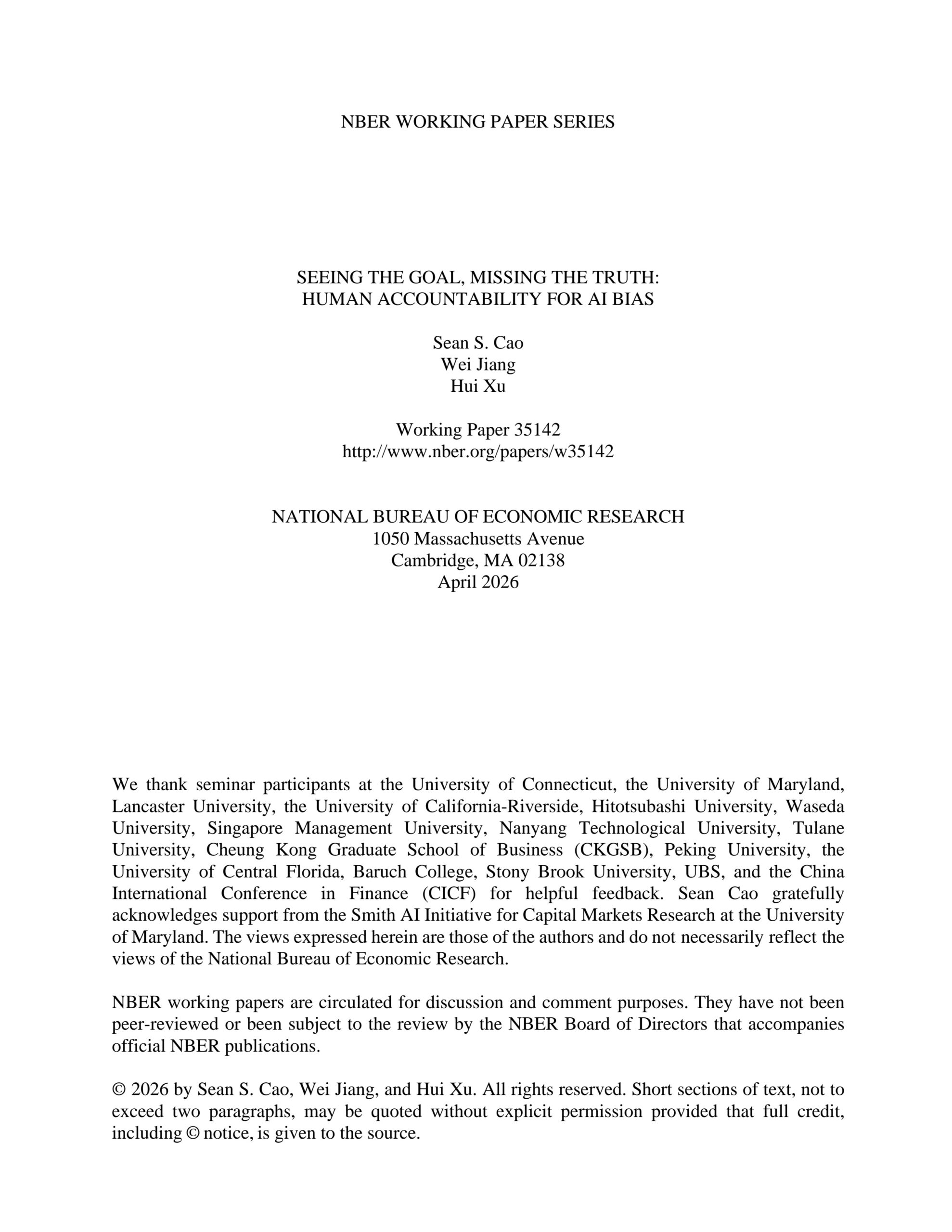
Seeing the goal, missing the truth: Human accountability for AI bias
Research demonstrates that Large Language Models exhibit purpose-conditioned bias when informed of downstream tasks. Goal-aware prompting leads to in-sample overfitting and inflated performance before knowledge cutoffs. Results indicate that disclosing objectives compromises neutrality, necessitating the separation of measurement and evaluation in AI-assisted workflows to ensure statistical validity.
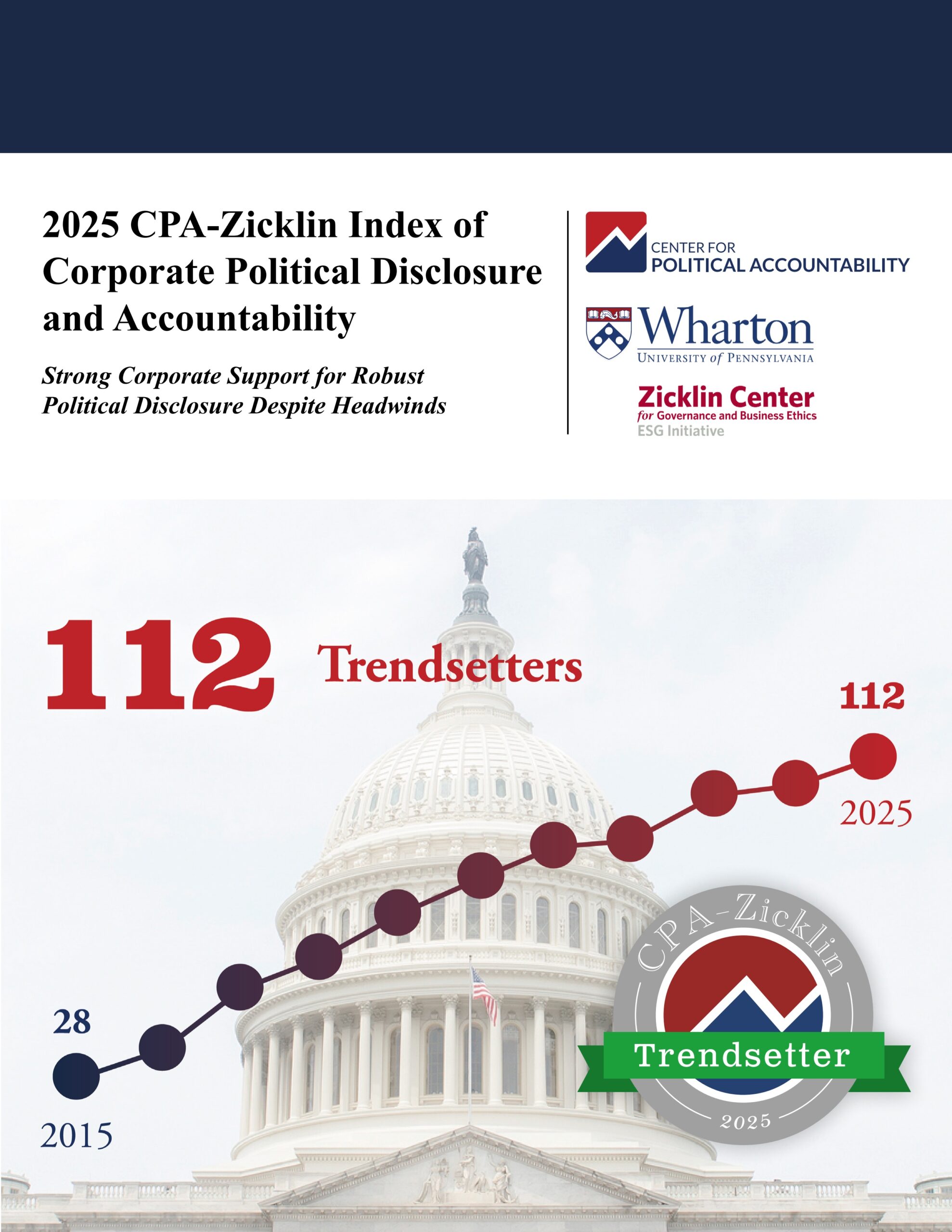
CPA-Zicklin Index of Corporate Political Disclosure and Accountability
This benchmark series evaluates corporate political disclosure and accountability practices among major US companies. It provides a structured analysis of transparency, board oversight, and spending policies for the S&P 500 and Russell 1000, enabling stakeholders to assess political risk and governance standards across different industries.
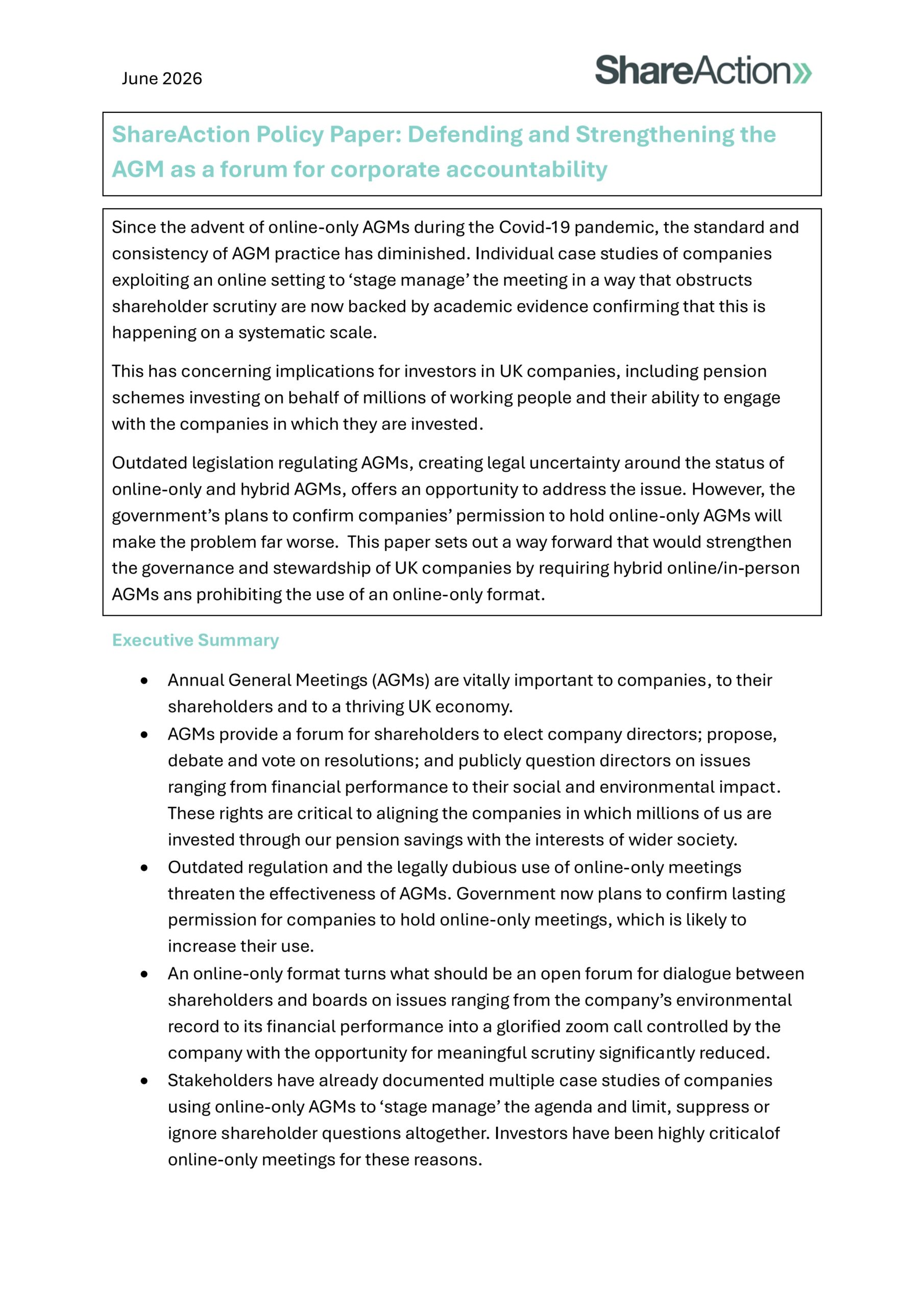
ShareAction policy paper: Defending and strengthening the AGM as a forum for corporate accountability
This ShareAction report advocates for mandatory hybrid AGMs to ensure corporate accountability. It argues that online-only formats diminish shareholder scrutiny and enable management to stage-manage proceedings. The document recommends amending the 2006 Companies Act and provides case studies of poor virtual AGM practices across several major companies.

Tracking methane action in the dairy and coffee sector
This benchmark series evaluates the progress of leading dairy and coffee companies in addressing methane emissions. It assesses corporate targets, disclosure practices, and reduction strategies within the food sector. The research provides a comparative analysis of industry performance against global climate commitments to encourage transparency and accountability.

ICMA's guidance handbooks series
This guidance series provides a comprehensive set of questions and answers regarding the application of the Green Bond Principles, Social Bond Principles, Sustainability Bond Guidelines, and Sustainability-Linked Bond Principles. It serves as a benchmark series for the sustainable bond market, promoting transparency and standardisation across various financial debt instruments.

FCLT Gold Standard: Information and resources
FCLTGlobal’s Gold Standard provides criteria for asset owners, asset managers and companies to support long-term value creation. It outlines recommended practices across governance, incentives, engagement, metrics and future success, including long-term performance measurement, aligned remuneration, sustainability reporting, carbon pricing, diverse decision-making and investment in innovation.
Regenerative agriculture: Moving from ambition to credibility
This report evaluates regenerative agriculture commitments across 78 global agri-food companies. While disclosures have increased, quantified targets have declined to 28%. Significant gaps remain in financial support for farmers and pesticide reduction targets, with the pork and poultry sectors largely overlooked in transition planning.
Assessing climate finance quality in practice: Lessons from six cases
This research report analyses six case studies to determine what constitutes high-quality public climate finance. It introduces a two-pronged framework assessing design, delivery, and results. Findings emphasise context-specific calibration, the importance of building enabling environments, and identifying data gaps that hinder systematic reporting across public climate finance providers.

Responsible investing maturity matrix: Emerging markets
A maturity framework for VC funds and LPs to assess ESG and responsible investment integration across emerging market fund operations.

Fair Finance Ghana ESG policy assessment report
This report assesses ESG policies across five Ghanaian banks using international benchmarks. Results show low sustainability integration, particularly regarding climate change and transparency. It recommends adopting global frameworks, extending ESG accountability to lending portfolios, and improving standardised reporting to align the sector with international best practice.
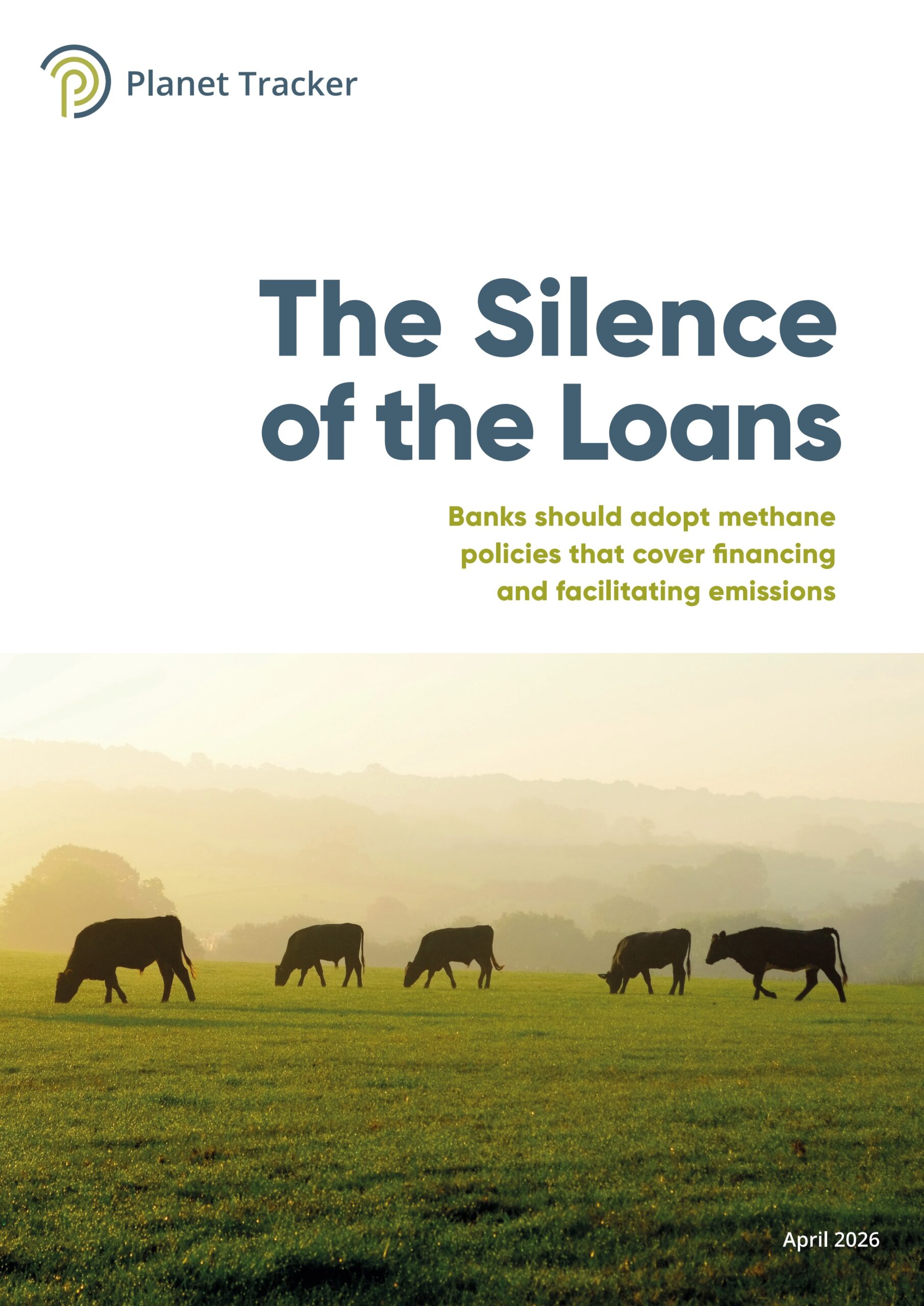
The silence of the loans: Banks should adopt methane policies that cover financing and facilitating emissions
Planet Tracker examines twenty-five banks' policies regarding agricultural methane emissions. Despite methane's high potency, no banks have specific reduction targets for this sector. Most policies focus solely on direct financing, ignoring facilitated debt which constitutes 96% of corporate funding, creating significant financial and regulatory risks for lenders.
Just transition metrics benchmark
Just Transition Metrics is a benchmark series developed by Shift in collaboration with multiple organisations. It provides a foundational, sector-agnostic set of quantitative metrics designed to assess the 'justness' of companies' climate-related transition plans, covering workforce, communities, and value chain impacts.
Global report on food crises series
The Global Report on Food Crises is an annual benchmark series tracking acute food insecurity, malnutrition and forced displacement in countries facing food crises. Produced by FAO, WFP and the Global Network Against Food Crises, it delivers consensus-based, multi-agency analysis to guide humanitarian and development decision-making globally.


