
Library | SDGs
GOAL 11: Sustainable Cities and Communities
Refine
143 results
REFINE
SHOW: 16


Unlocking finance for nature-based solutions (NbS) in Indian cities: Learnings and insights from case studies
This report examines nine Indian nature-based solutions (NbS) case studies to evaluate financing mechanisms and institutional frameworks. It highlights the importance of reducing technical risk through feasibility studies, aligning with national policies, and sequencing capital to support project scalability and long-term sustainability in urban environments.
The effects of long-term exposure to pollution on health
This research provides causal evidence that long-term exposure to fine particulate matter at contemporary levels increases circulatory morbidity, particularly hypertension. Using a quasi-random assignment of U.S. Army soldiers, the study demonstrates that sustained exposure erodes health capital, even in young, initially healthy populations, highlighting the risks of chronic pollution.
Measuring what matters: A practical framework to integrate health into urban climate action
This report introduces a practical framework for integrating health co-benefits into urban climate monitoring. It details a five-step process for selecting robust indicators across air pollution, active travel, and sustainable diets. The framework helps cities justify climate policies, enhance accountability, and strengthen public support through evidence-based decision-making.
Leveraging co-creation for city-level climate action and health co-benefits: Policy lessons from citiES 2030
This report explores how evidence-informed co-creation supports city-level climate action and health co-benefits. Using the citiES 2030 platform as a case study, it details the development of practical health indicators and provides recommendations for policymakers, cities, and researchers to strengthen urban climate governance and implementation.
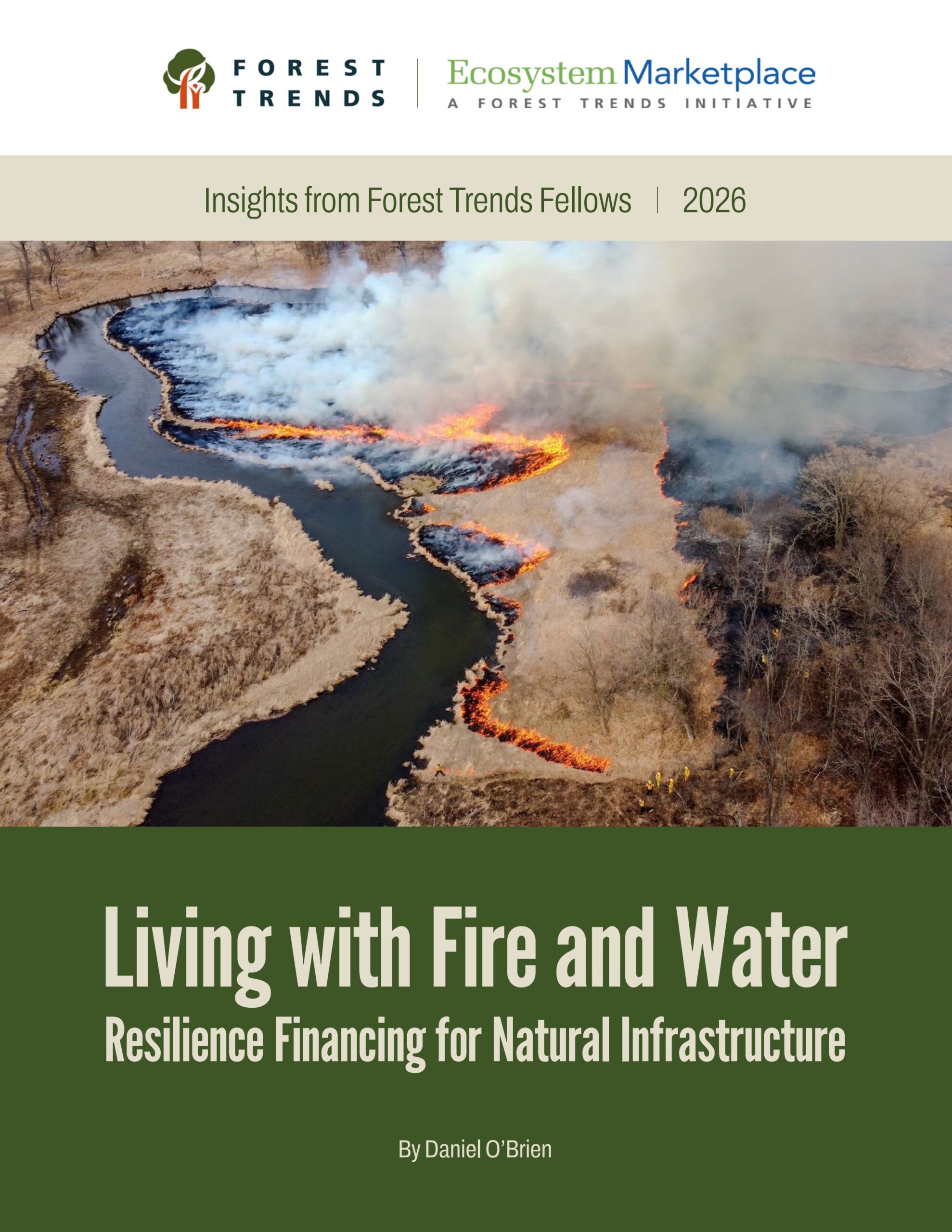
Living with fire and water: Resilience financing for natural infrastructure
This report proposes a resilience-financing architecture to fund natural infrastructure. By wrapping catastrophe bonds with government credit enhancement, it creates a spread to finance landscape-scale mitigation. This mechanism aims to preserve insurability, reduce systemic climate risk, and convert unpriced contingent liabilities into structured, capped financial positions.
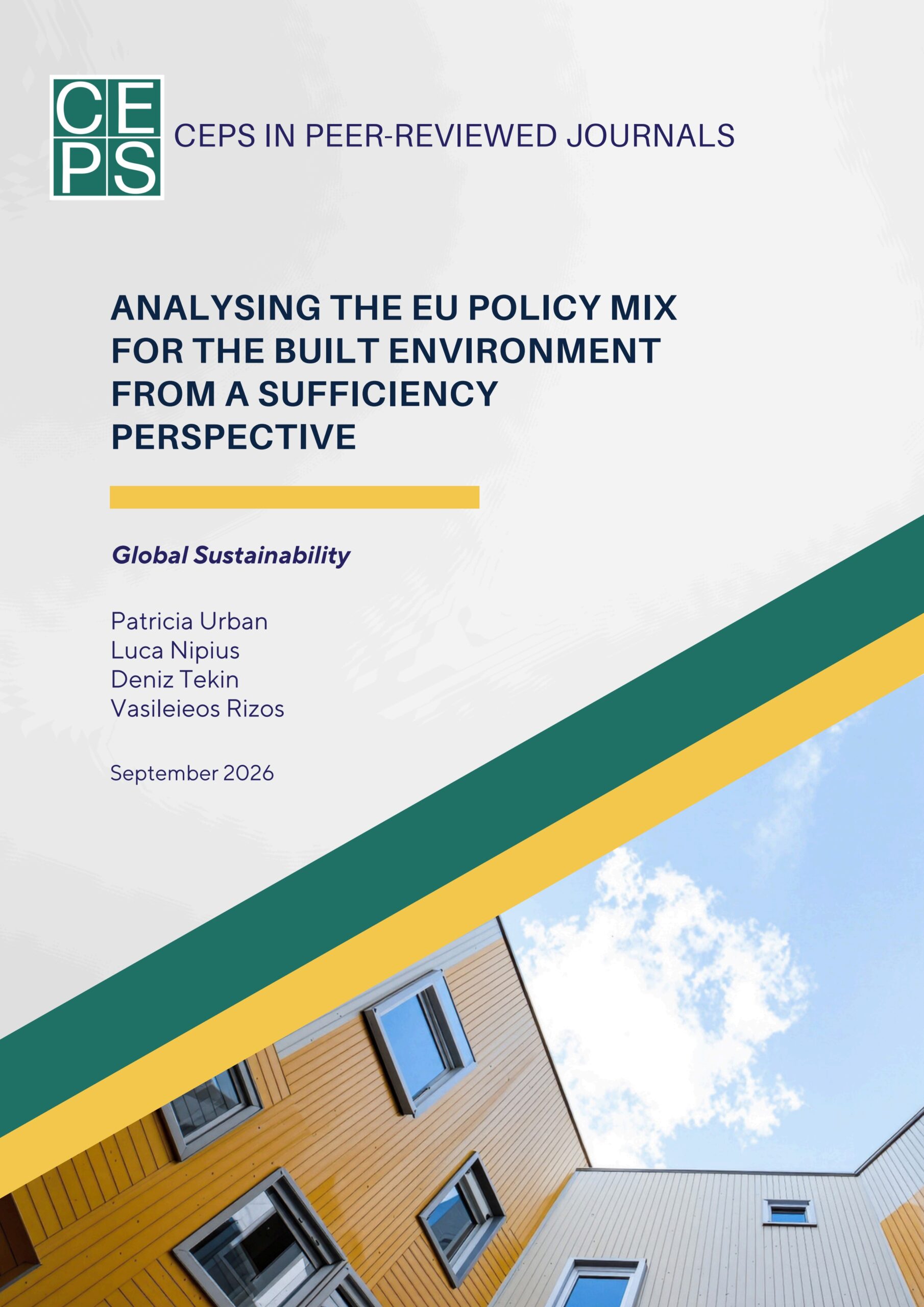
Analysing the EU policy mix for the built environment from a sufficiency perspective
This research assesses the integration of sufficiency principles into European Union building policies. Analysing 16 policy documents, it finds that while measures for reducing consumption and environmental sustainability are prevalent, social dimensions and behavioural changes are often neglected. It recommends prioritising building renovation over new construction to meet sustainability goals.
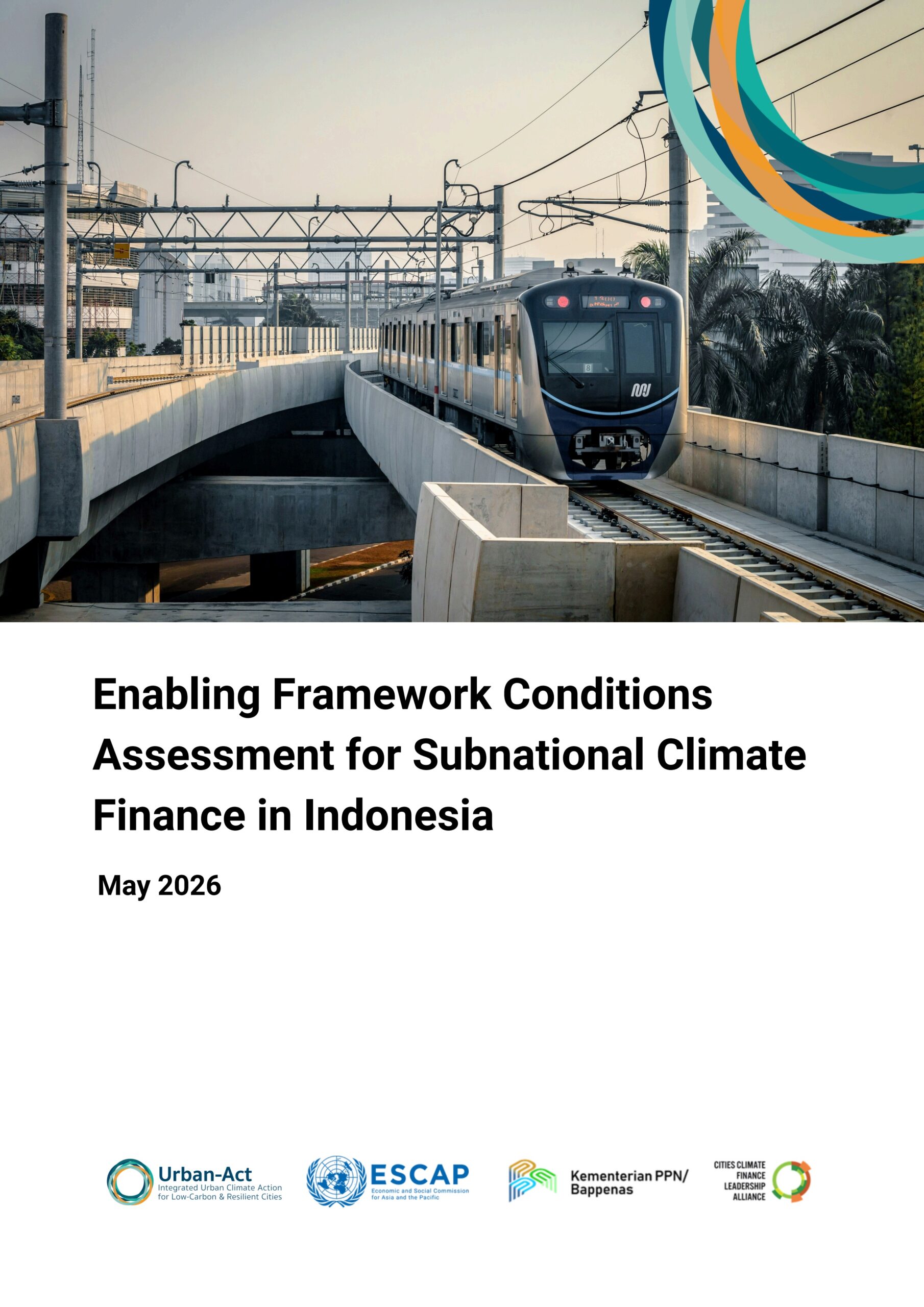
Enabling framework conditions assessment for subnational climate finance in Indonesia
This report evaluates Indonesia's enabling framework conditions for subnational climate finance. It identifies critical gaps in institutional capacity, financial architecture, and data accessibility. Recommendations focus on expanding urban-specific incentives, leveraging blended finance, and synchronising digital platforms to improve local climate governance and bridge the national investment gap.
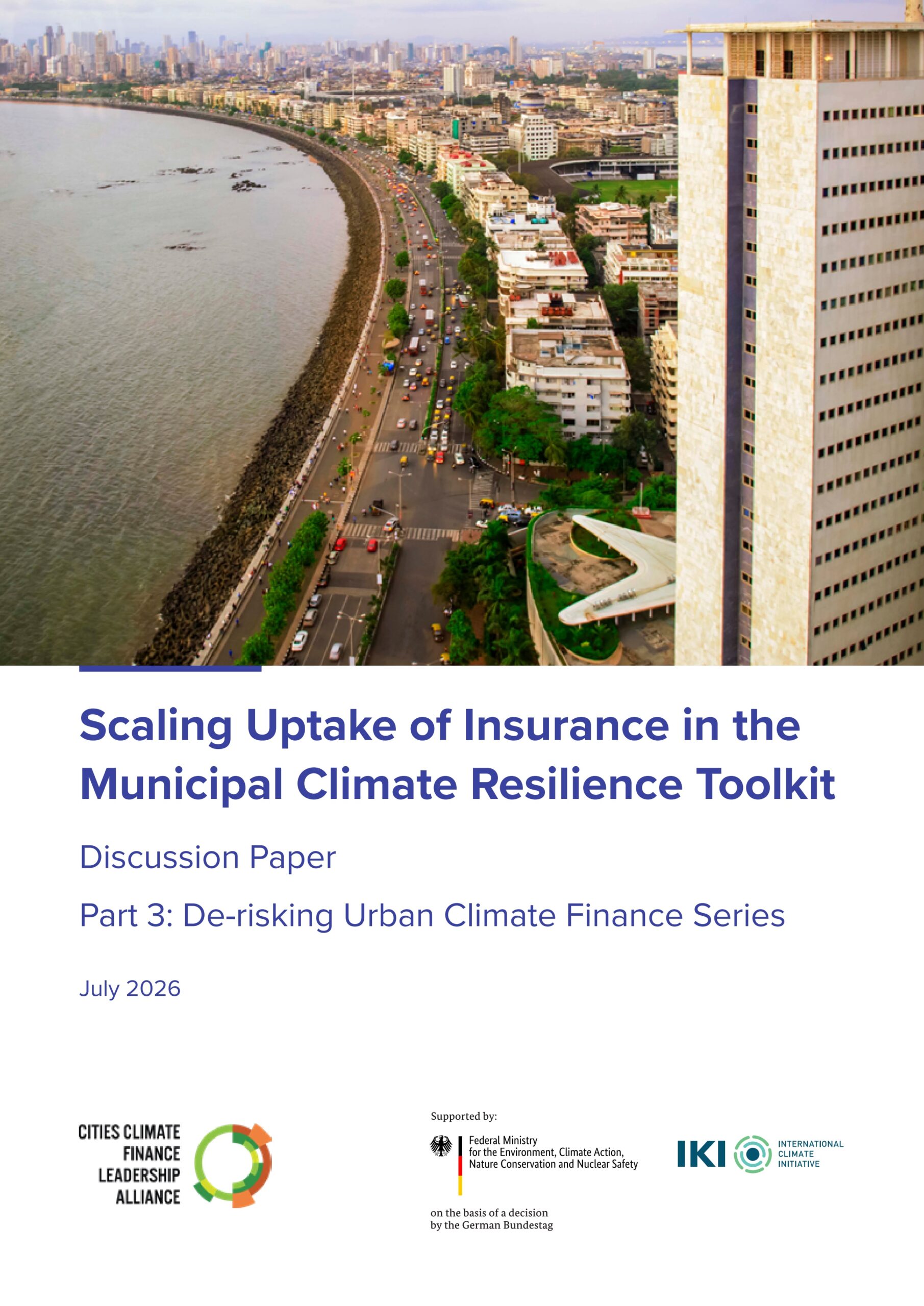
Scaling uptake of insurance in the Municipal Climate Resilience Toolkit: Discussion paper
This research explores scaling parametric insurance to enhance municipal climate resilience in emerging markets. It identifies key barriers to uptake, maps the existing support ecosystem, and proposes three priority actions to improve the financial viability and affordability of insurance solutions for subnational governments worldwide.
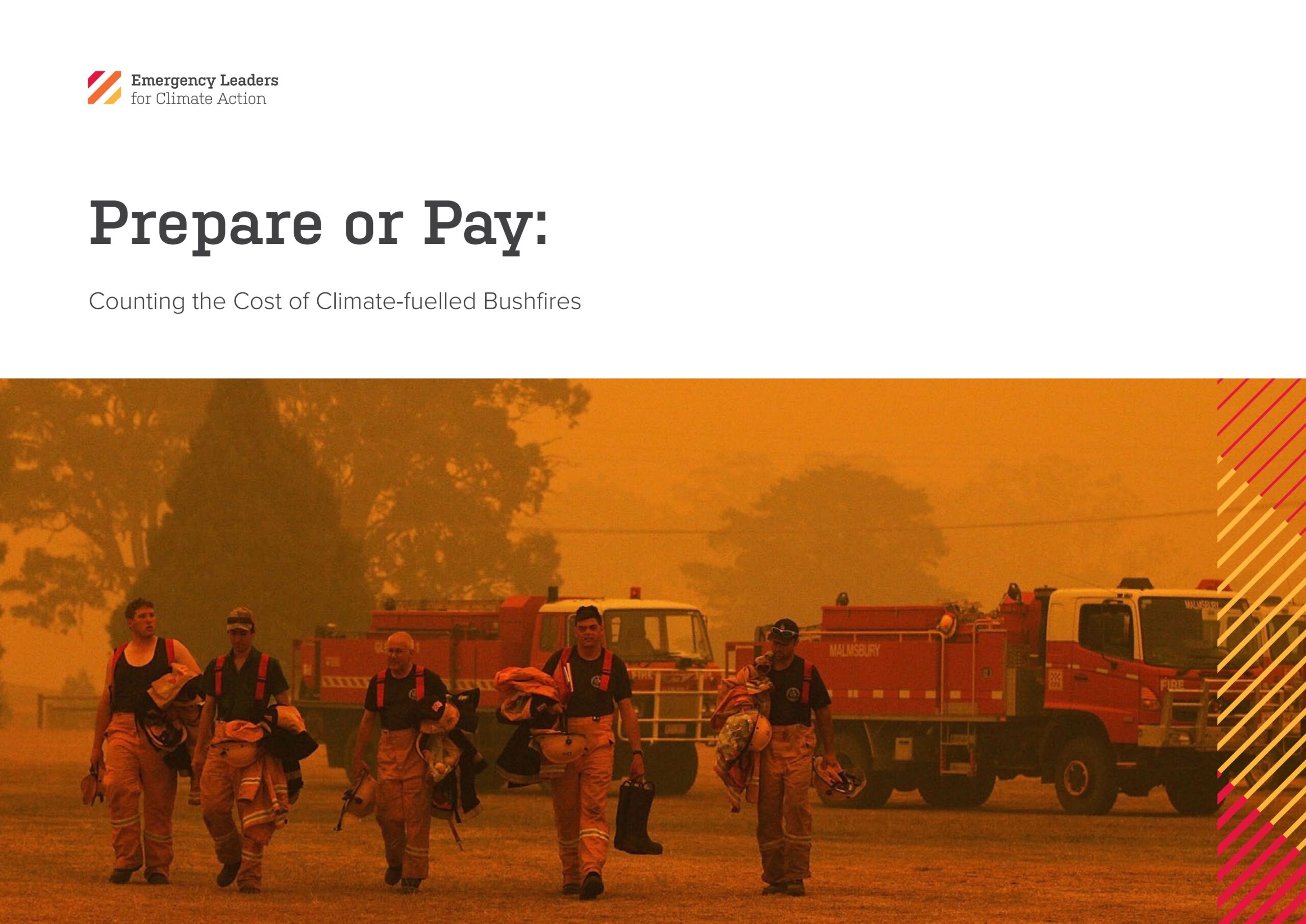
Prepare or pay: Counting the cost of climate-fuelled bushfires
This report quantifies the economic burden of climate-fuelled bushfires in Australia, projecting an average annual cost of $6 billion. It examines how climate change intensifies fire weather and provides recommendations for federal investment in preparedness, community resilience, and the rapid reduction of coal, oil, and gas pollution.
Pricing power in the mortgage market: Evidence from GSE fee waivers
This research examines GSE fee waivers for lower-income first-time homebuyers, revealing that lenders pass through less than 40% of these savings. Intermediaries captured over 60% of the $1.5 billion benefit. High-cost loan officers and non-banks show the lowest pass-through, highlighting significant market power and search frictions.
A global, proxy-based assessment of building climatization vulnerability
This research assesses global building energy efficiency, identifying vulnerable populations living in aged or poorly shaped structures. It reveals that 48 million people are currently at risk, with vulnerability likely shifting towards heat-prone regions by 2100. Disparities in building codes and income levels significantly affect global climate adaptation efforts.
First Street Research Library
The First Street Research Library provides transparent, peer-reviewed reports and climate risk data focused on flooding, fire, and heat. It helps finance professionals quantify physical risks and their economic impacts.
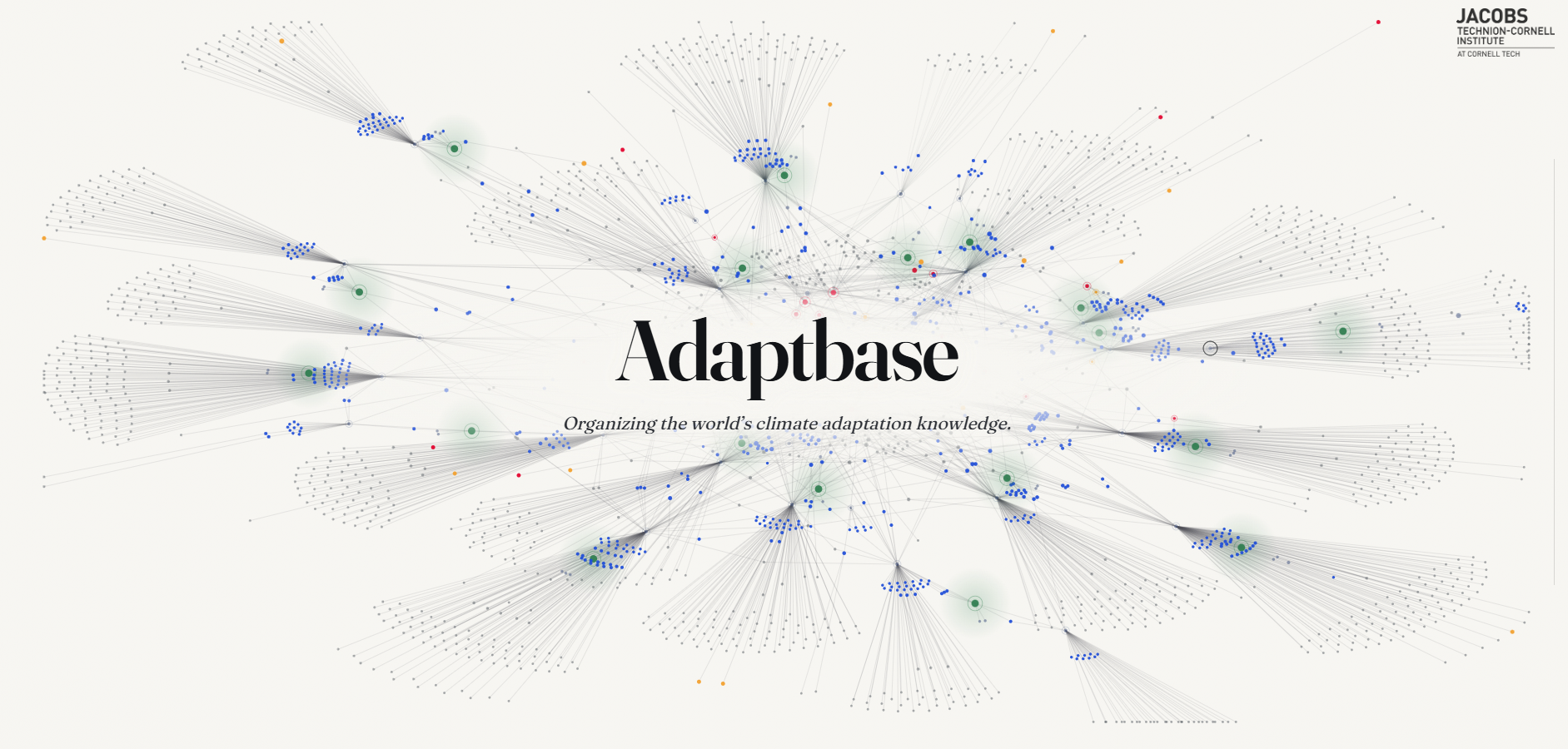
Adaptbase Search
Adaptbase Search is an AI-powered knowledge base that structures climate adaptation data from global city plans. It allows finance professionals to track urban resilience investments, benchmark city responses to climate hazards, and verify adaptation claims through a standardised knowledge graph of actions and outcomes.
Developing regional climate resilience investment plans and project pipelines: Implementation guidance to support regions through the Adaptation Investment Cycle
This guidance outlines the six-phase Adaptation Investment Cycle for European regions to develop Climate Resilience Investment Plans. It details how to address financing barriers, conduct economic appraisals, and structure bankable project pipelines, aiming to bridge the adaptation funding gap through strategic public and private sector engagement.
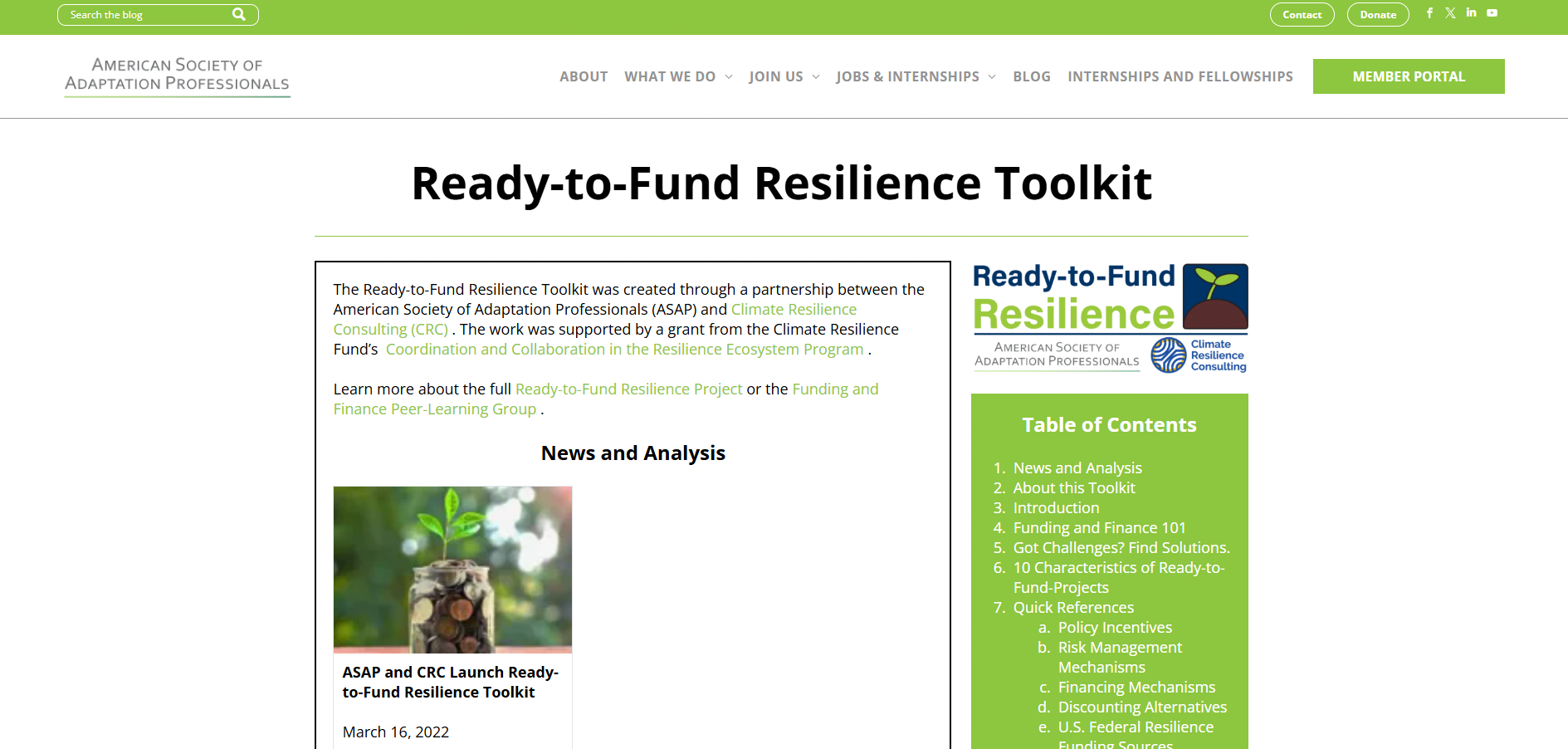
Ready-to-Fund Resilience Toolkit
A framework and diagnostic tool developed by the American Society of Adaptation Professionals to help climate projects move from planning to investment-ready status. It provides criteria for assessing project maturity, equity, and financial feasibility.
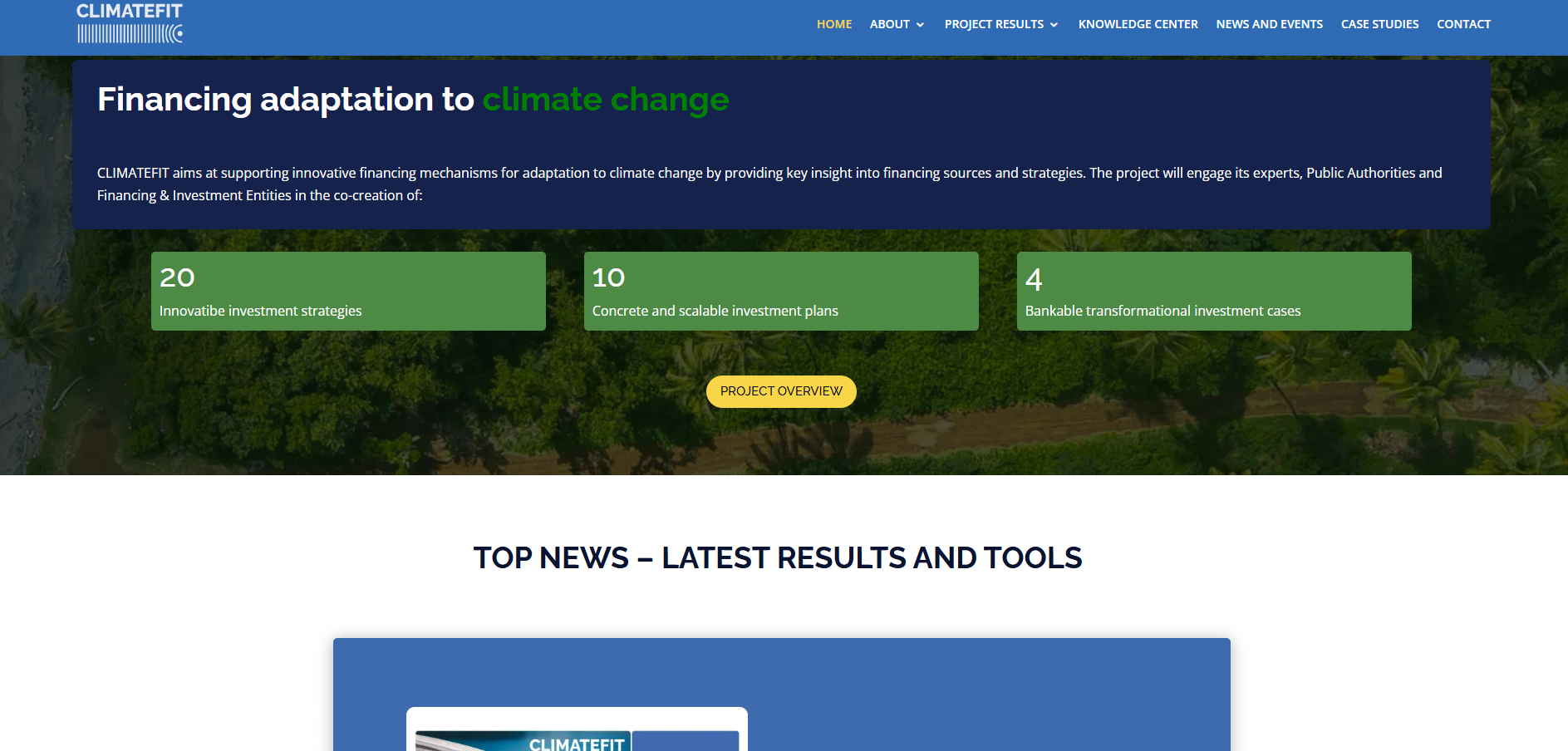
CLIMATEFIT
CLIMATEFIT is an EU-funded initiative that provides public authorities and investors with tools, databases, and methodologies to develop bankable climate adaptation projects and bridge the resilience finance gap.


