
Library | SDGs
GOAL 13: Climate Action
Refine
996 results
REFINE
SHOW: 16


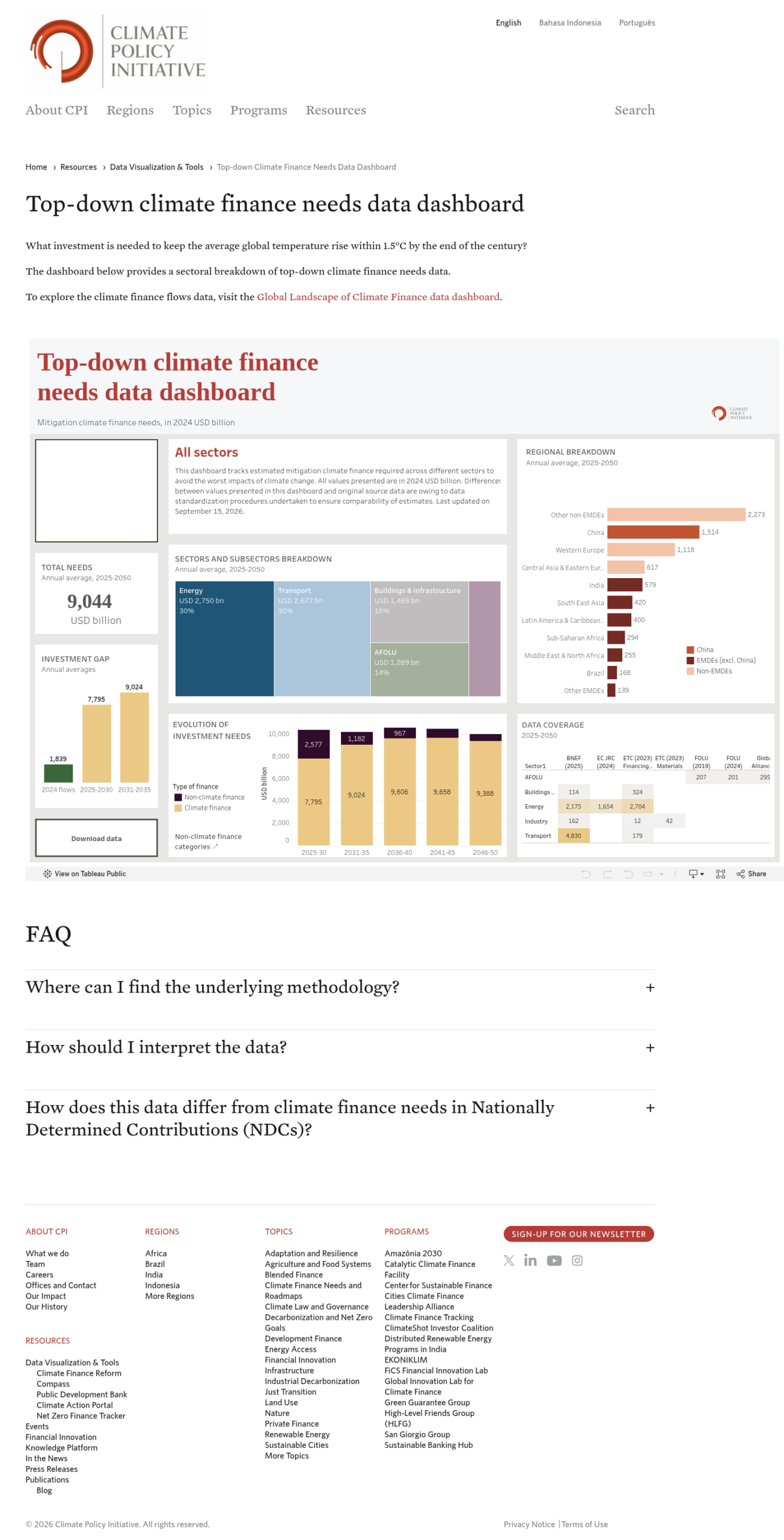
Top-down Climate Finance Needs Data Dashboard
Developed by the Climate Policy Initiative, this dashboard provides interactive visualisations of the global financial requirements for climate mitigation and adaptation, helping finance professionals quantify the investment gap.
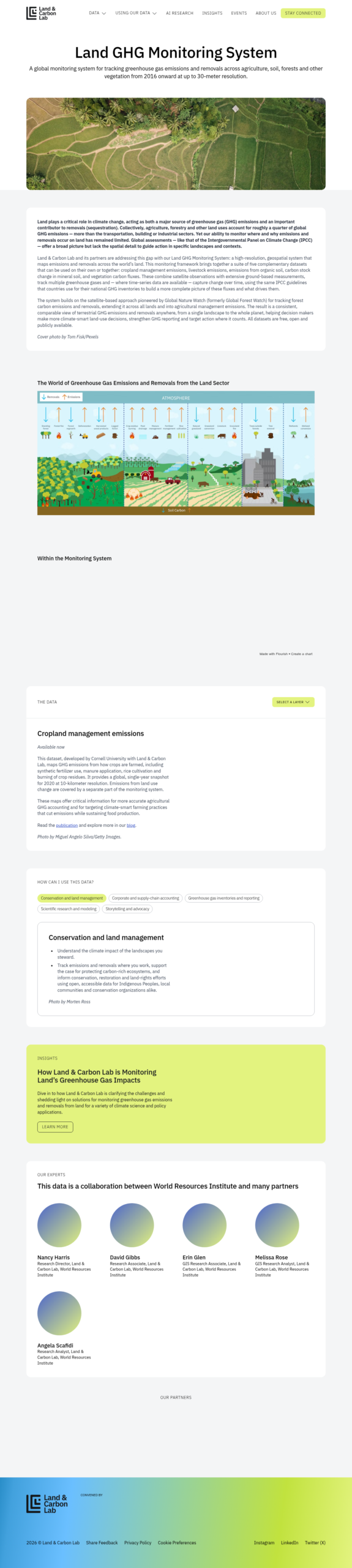
Land GHG Monitoring System
A high-resolution geospatial monitoring system from Land & Carbon Lab and WRI that tracks global greenhouse gas emissions and removals across agriculture, forests, and soils to support corporate accounting and climate-smart land management.
Climate resilience, desertification and applied innovation report: A strategic framework for applied innovation in arid and climate-vulnerable regions
This 2026 report establishes a strategic framework for climate resilience in arid regions. It examines technological solutions in water, agriculture, and energy, highlighting Israel's innovation ecosystem and Azerbaijan's renewable energy transition. The document advocates for integrated systems, cross-border cooperation, and robust governance to combat global desertification and land degradation.
Taskforce on official standards and the Green Bond Principles. Phase 1: Comparison of the Green Bond Principles and the European Green Bond Standard
This report compares the voluntary Green Bond Principles with the regulatory European Green Bond Standard. It identifies high proximity and synergy between the frameworks, providing guidance on how issuers can navigate both sets of requirements to enhance transparency and facilitate global investor recognition in the sustainable finance market.
Embracing carbon uncertainty in portfolio construction
This research introduces a framework for decarbonising sovereign bond portfolios using 'carbon returns'—treating emissions as random variables rather than deterministic values. By applying a modified Hierarchical Risk Parity algorithm with Expected Shortfall, it effectively balances financial and environmental goals, mitigating climate-related tail risks both in-sample and out-of-sample.
Energy transition index series
The Energy Transition Index is a benchmark series providing a structured, data-driven framework to assess national energy systems and track transition progress across 120 countries. It evaluates performance through security, equity, and sustainability lenses, alongside transition readiness factors, helping decision-makers identify gaps and understand the conditions required for resilience.
UDB Currency Risk-Sharing Facility: Instrument design report
The UDB Currency Risk-Sharing Facility manages foreign exchange risks for climate lending in Uganda. By combining partial hedging with tail-risk guarantees, it offers a cost-effective alternative to traditional instruments. This facility enables affordable local-currency financing while protecting the bank's balance sheet against significant Ugandan shilling depreciation.
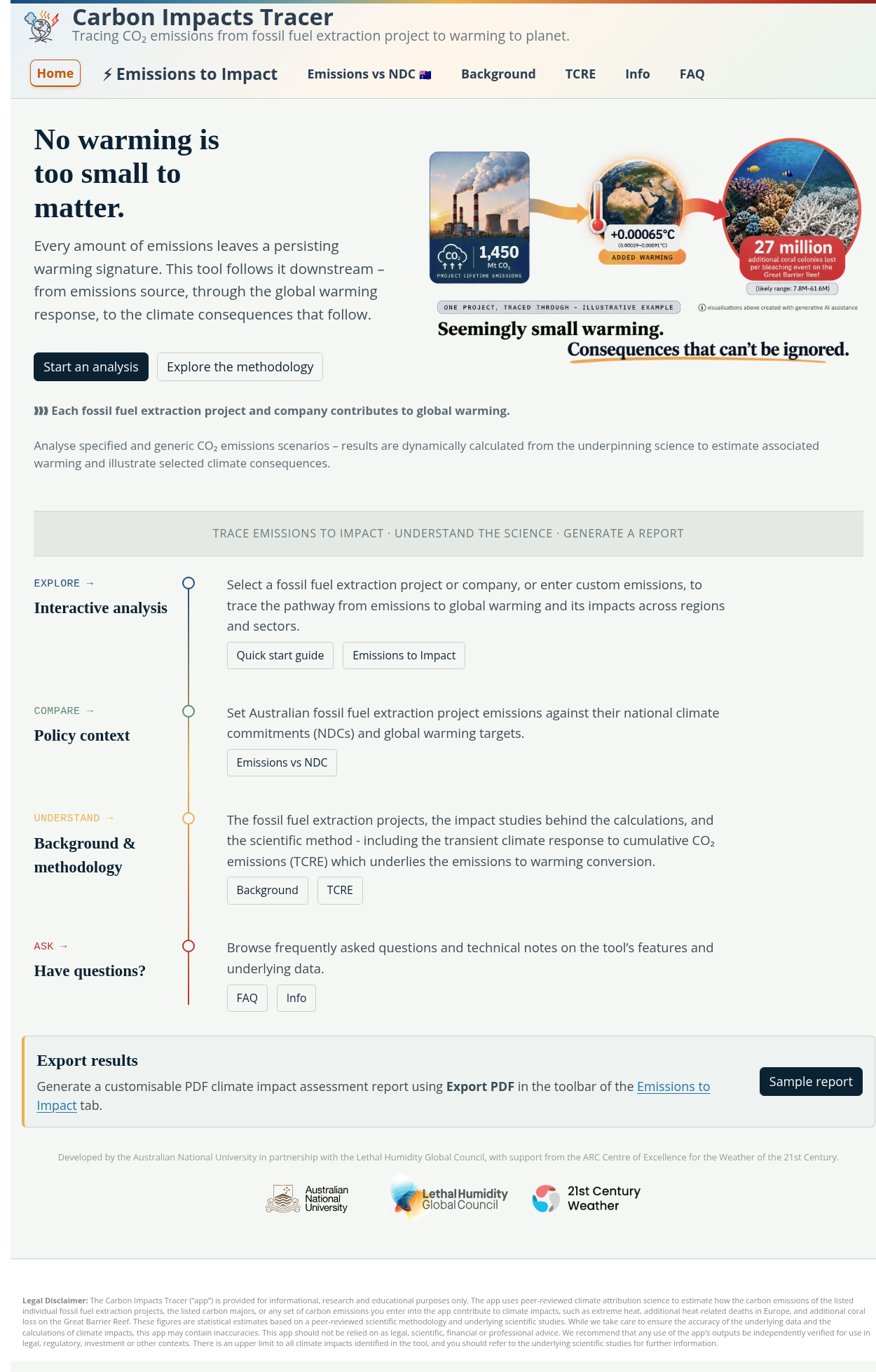
Carbon Impacts Tracer
The Carbon Impacts Tracer is a scientific tool that links CO2 emissions from specific fossil fuel projects and companies to global warming impacts. It enables users to quantify climate consequences such as heat stress, crop loss, and coral degradation.
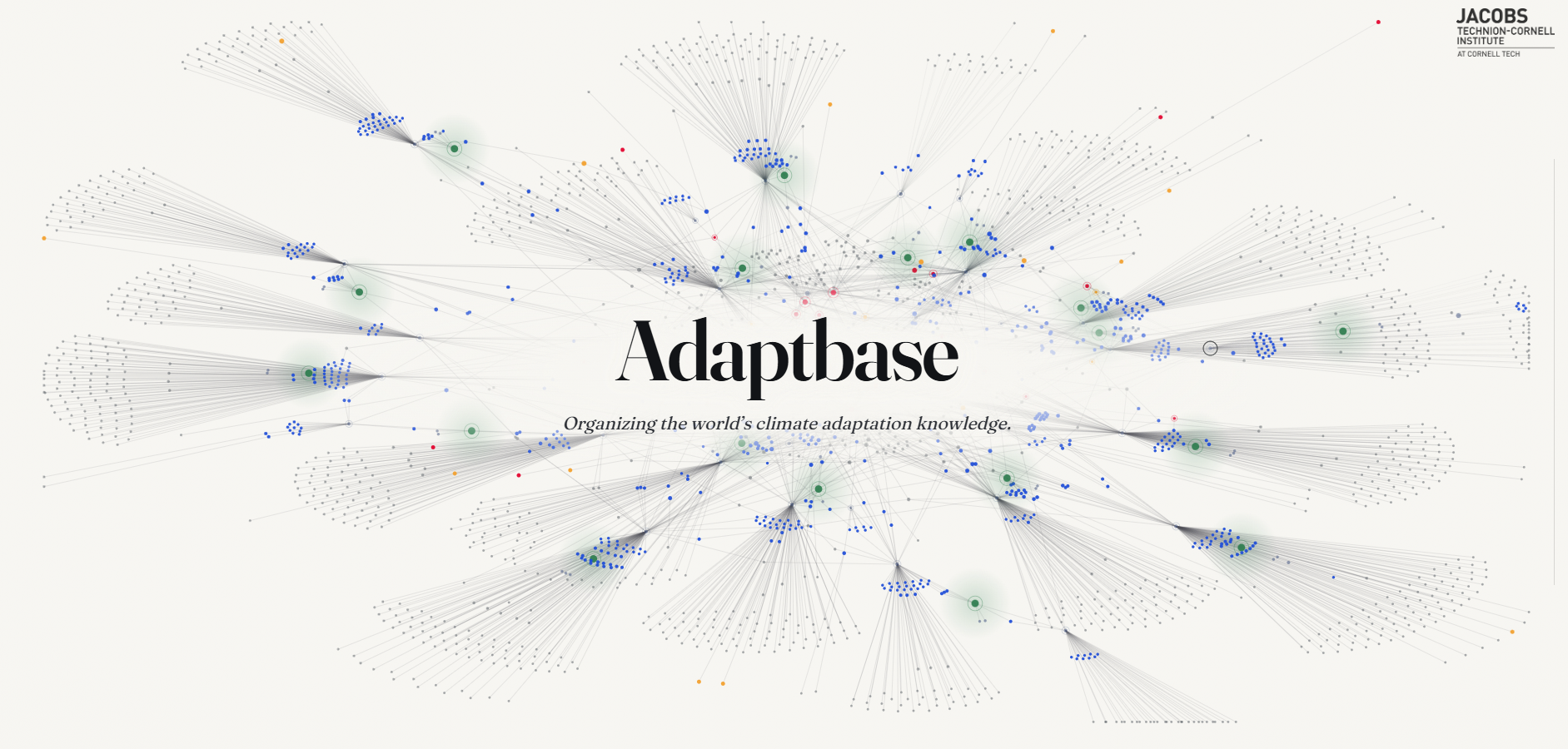
Adaptbase Search
Adaptbase Search is an AI-powered knowledge base that structures climate adaptation data from global city plans. It allows finance professionals to track urban resilience investments, benchmark city responses to climate hazards, and verify adaptation claims through a standardised knowledge graph of actions and outcomes.
Early VfM adaptation toolkit: Delivering value-for-money adaptation with iterative frameworks & low-regret options
This 2014 DFID toolkit by Watkiss, Hunt and Savage guides advisers in designing value-for-money climate adaptation programmes. Using iterative frameworks, it sequences no- and low-regret options across six steps: risk identification, theory of change, option selection, prioritisation, programme design and economic appraisal, with Ethiopian case studies.
Innovation, business cycles, and the climate transition
This research documents that non-green innovation is procyclical, while green innovation is countercyclical. This divergence is driven by green technologies' backloaded profit structures and the reduced cost of skilled R&D labour during downturns. The study highlights that innovation subsidies are significantly more effective when implemented during economic contractions.
Economics of demand-side and supply-side climate policies
This research evaluates demand-side and supply-side climate policies, recommending a portfolio that combines carbon use and extraction pricing to mitigate emissions leakage. It emphasises transmission reform, innovation support, and green industrial policies while analysing the domestic and global distributional consequences for low-income and major fossil fuel producing nations.
Developing regional climate resilience investment plans and project pipelines: Implementation guidance to support regions through the Adaptation Investment Cycle
This guidance outlines the six-phase Adaptation Investment Cycle for European regions to develop Climate Resilience Investment Plans. It details how to address financing barriers, conduct economic appraisals, and structure bankable project pipelines, aiming to bridge the adaptation funding gap through strategic public and private sector engagement.
Guidebook: Mobilising private sector finance for climate change adaptation
This guidebook provides a structured framework for designing and financing climate change adaptation projects in India. It addresses barriers to private sector participation, offers methodologies for risk and impact assessment, and explores diverse funding mechanisms, including blended finance, green bonds, and catastrophe insurance, to bridge the significant adaptation funding gap.
Powering up: Business perspectives on electrification
A global survey of 1,994 business leaders across 18 markets reveals overwhelming support for clean electrification. While 90% expect largely electric operations by 2035 to improve energy security and competitiveness, 72% believe government policy is moving too slowly, citing grid constraints and high upfront costs as significant barriers.
From planetary hazard to financial stability: Disentangling climate risk and institutional responsibility
This report identifies the misalignment between institutional mandates and climate risk expectations. It distinguishes between planetary, economic and financial risks, outlining six distinct responses. The authors argue that current frameworks distract from real-economy decarbonisation and shift climate costs onto public balance sheets, requiring clearer policy distinctions and instruments.


