
Library | SASB Sustainability Sector
All industries
Refine
796 results
REFINE
SHOW: 16


In focus: Impact investing in Asia
Impact investing in Asia is expanding, with $80 billion allocated and strong investor satisfaction. Returns largely meet or exceed expectations, led by private equity. Capital targets financial services, energy and healthcare, addressing a $1.5 trillion SDG gap, with growing private sector participation and regional variation.
Framing and language for effective climate conversations
Guide outlines how framing and language influence climate engagement, especially among ‘middle ground’ audiences. It emphasises aligning messages with shared values, avoiding polarising or technical language, and using practical, relatable framing to build support for emissions reduction and climate action.
Good practices for handling whistleblower disclosures
ASIC report outlines good practices for whistleblower programmes, based on a review of selected firms. It highlights governance, culture, training, monitoring, and use of disclosures to improve performance, alongside executive accountability and board oversight to ensure compliance with Corporations Act requirements.
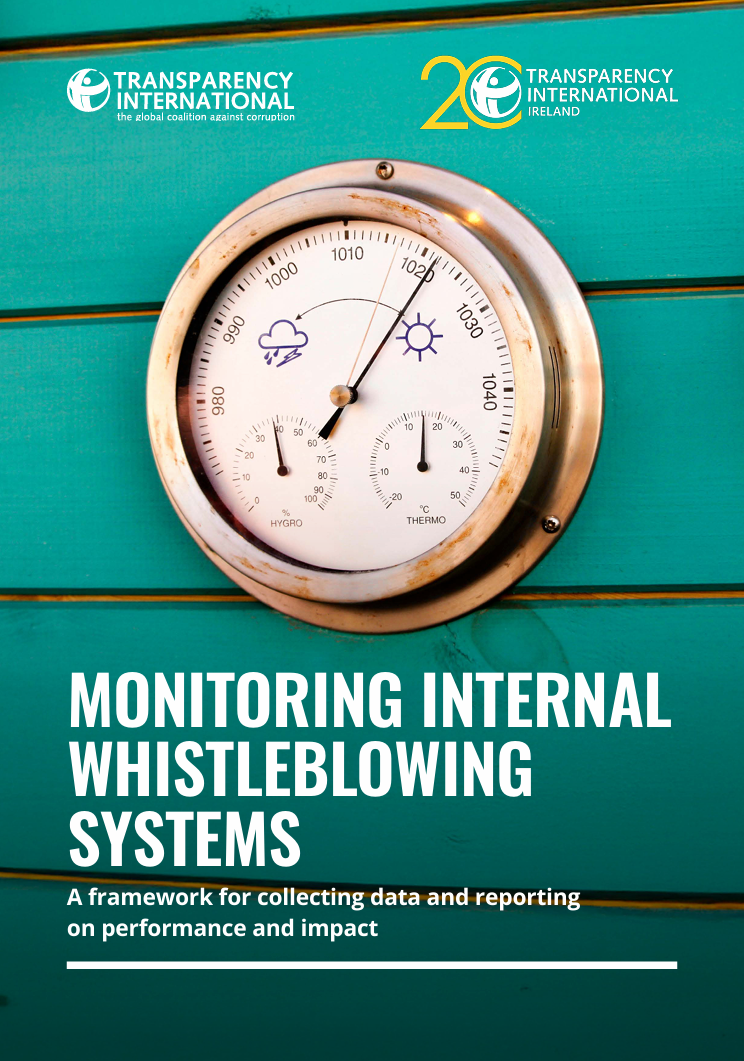
Monitoring internal whistleblowing systems: A framework for collecting data and reporting on performance and impact
Transparency International sets out a framework for monitoring internal whistleblowing systems, covering data collection, reporting, confidentiality, stakeholder accountability, performance indicators, retaliation complaints, trust and awareness measures, and resource tracking to help organisations assess effectiveness and improve protections and governance.
The business case for “speaking up”: How internal reporting mechanisms strengthen private-sector organisations
Explains how internal whistleblowing systems help organisations detect misconduct early, reduce legal and financial risks, and strengthen compliance, culture and reputation. It outlines key features of effective mechanisms and demonstrates their role in improving risk management, preventing losses and supporting long-term value creation.
Australian taxonomy-aligned debt guidance: Issuing use-of-proceeds debt under the Australian sustainable finance taxonomy
Guidance explains applying the Australian sustainable finance taxonomy to use-of-proceeds debt, outlining classification, allocation, and disclosure requirements. It details technical screening criteria, Do No Significant Harm and social safeguards, and supports consistent, transparent identification of climate-aligned investments for issuers and investors.
Strengthening the S in ESG series
Strengthening the S in ESG is a research series examining the design and use of social indicators and metrics within ESG frameworks. It provides guidance and analysis to improve how companies’ impacts on people are measured, supporting more decision-useful insights for investors and better alignment with real business practices.
World of work series: Employment and social trends
Global labour markets remain resilient amid uncertainty, but decent work deficits persist. Informality, working poverty and gender gaps remain widespread, especially in low-income countries. Productivity growth is weak, and demographic shifts and AI add risks. Economic growth alone is insufficient to improve employment quality or social outcomes.
The Climateworks guide to credibility for corporate climate transition plans
Provides an Australian-focused framework for assessing the credibility of corporate climate transition plans, outlining principles, criteria and disclosure expectations. It supports companies, investors and regulators in evaluating emissions targets, governance, strategy alignment and risk management within mandatory climate reporting and net zero transition planning.
Governing for net zero: The board's role in organisational transition planning
This report guides Australian boards on integrating net zero transition planning into strategy, governance, disclosure and stakeholder engagement. It outlines directors’ legal duties, mandatory climate reporting requirements, and practical oversight questions to help organisations manage climate-related risks, opportunities and implementation.
Guidance for applying absolute environmental sustainability assessment on activities at different scales (BETA version)
Provides beta guidance for applying Absolute Environmental Sustainability Assessment, comparing activities’ environmental burdens against planetary boundaries. It outlines a three-phase, nine-step framework, supported by case studies (buildings, cement, EU consumption), and aligns with existing accounting standards while addressing methodological gaps in allocating environmental limits.
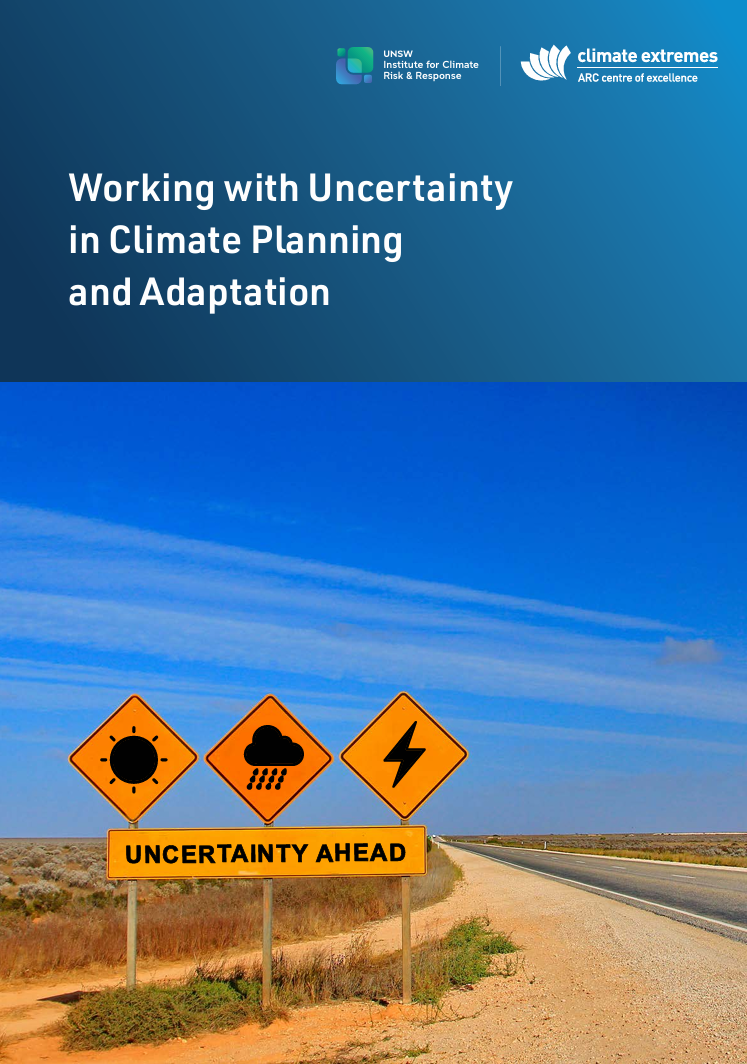
Working with uncertainty in climate planning and adaptation
Explains how uncertainty in climate models affects adaptation planning, highlighting assumptions, variability, model limitations and downscaling challenges. Emphasises using scenarios and probability approaches to inform decisions, while recognising incomplete knowledge and the need for cautious, context-specific interpretation of projections.
Heightened human rights due diligence
UNDP’s training guide explains heightened human rights due diligence for companies in conflict-affected contexts, outlining frameworks, legal expectations and practical steps to assess, mitigate and remedy impacts on human rights and conflict, supported by case studies and tools to guide implementation.
Sustainable Finance Roundup March 2026: Markets, Climate Risk, and the Transition in Practice
This month’s sustainability roundup captures a shift from framework development to real-world application, where climate and nature risks are increasingly embedded across financial systems, legal accountability, and decision-making. It highlights how intensifying physical climate signals, evolving disclosures, and maturing litigation are converging with insights on sovereign risk, energy systems, and corporate strategy. Together, these developments show how sustainability is moving beyond principle—being tested, priced, and enforced across markets, regulation, and the real economy.
Communicating climate change and migration: A user’s guide to navigating the research
This report guides practitioners on communicating climate-linked migration, highlighting research gaps, biases and limited diversity. It emphasises critical engagement with academic literature, improved representation of affected communities, and the need for nuanced, interdisciplinary approaches to inform effective, ethical communication strategies.
Communicating drought risk in a changing climate
Examines public perceptions of drought risk and provides evidence-based guidance for communicating climate-related drought in the UK. Emphasises audience values, narratives, trusted messengers, and linking local impacts to broader climate change to improve engagement and support for adaptation measures.


