
Library | SASB Sustainability Sector
All industries
Refine
796 results
REFINE
SHOW: 16


Tackling governance and financing for sustainability transitions
The report argues current financial systems misallocate capital towards resource-intensive activities, hindering sustainability transitions. It recommends policy, governance and financial reforms to redirect investment towards resource efficiency, low-carbon development and equitable transition pathways, particularly in resource-dependent economies.
Data shows regulation drives action: Forest 500 report 2026
Forest 500 finds that anticipated EUDR regulation is already driving corporate traceability and deforestation action, though progress remains uneven: only 4% of assessed companies are leaders, 63% show partial action and 33% remain laggards.
Discussion paper on state of nature measurement
Discussion paper outlines integrating state of nature metrics into TNFD, GRI and SBTN frameworks. It proposes embedding consensus metrics from the Nature Positive Initiative across assessment, disclosure, transition planning and target-setting, highlighting ecosystem extent and condition as central to evaluating nature-related dependencies, risks and opportunities.
The unseen costs of blue skies: Pollutant substitution and biodiversity loss
China’s PM₂.₅-targeted regulation reduced particulates but increased O₃ via pollutant substitution driven by incentive distortions. Resulting ozone rises increased mortality and reduced biodiversity, offsetting ~24% of policy benefits. Findings highlight welfare losses from narrow performance metrics and the need for multi-pollutant regulation.
Impact statement framework: Valuing, accounting and reporting societal impact
Framework for impact statements, valuing organisations’ societal effects across natural, human and social capital using eQALY. It outlines scope, data, modelling, reporting, governance and case studies to support comparable, decision-useful impact valuation.
Physical risk guide: For asset owners and asset managers
Guide outlines frameworks for assessing, managing and reporting physical climate risks in investment portfolios. It covers exposure mapping, hazard identification, financial impact metrics (e.g. AAL, Climate VaR), scenario analysis, adaptation strategies and regulatory alignment, emphasising integration into governance, risk management and disclosure processes.
Impact trickles down: A general equilibrium theory of stakeholder exit and engagement
Develops a multi-sided matching model showing stakeholder exit or engagement depends on whether harm scales with productivity. When it does, high-productivity stakeholders exit, triggering reallocation spillovers that reduce harm economy-wide. Firm-level analyses underestimate impact by missing these general equilibrium “trickle-down” effects.
A director’s guide to mandatory climate reporting: Version 2
Provides guidance for directors on Australia’s mandatory climate reporting regime, outlining regulatory requirements, governance expectations, and disclosure obligations under AASB S2. Explains implementation timelines, assurance pathways, and practical steps to manage climate-related risks, opportunities, and reporting processes within corporate reporting frameworks.
OECD Green Finance and Investment library
OECD’s Green Finance and Investment series provides policy analysis and guidance to mobilise public and private finance for green growth. It examines how regulatory frameworks and investment strategies can scale funding for low-carbon, climate-resilient and resource-efficient infrastructure, technologies and businesses.
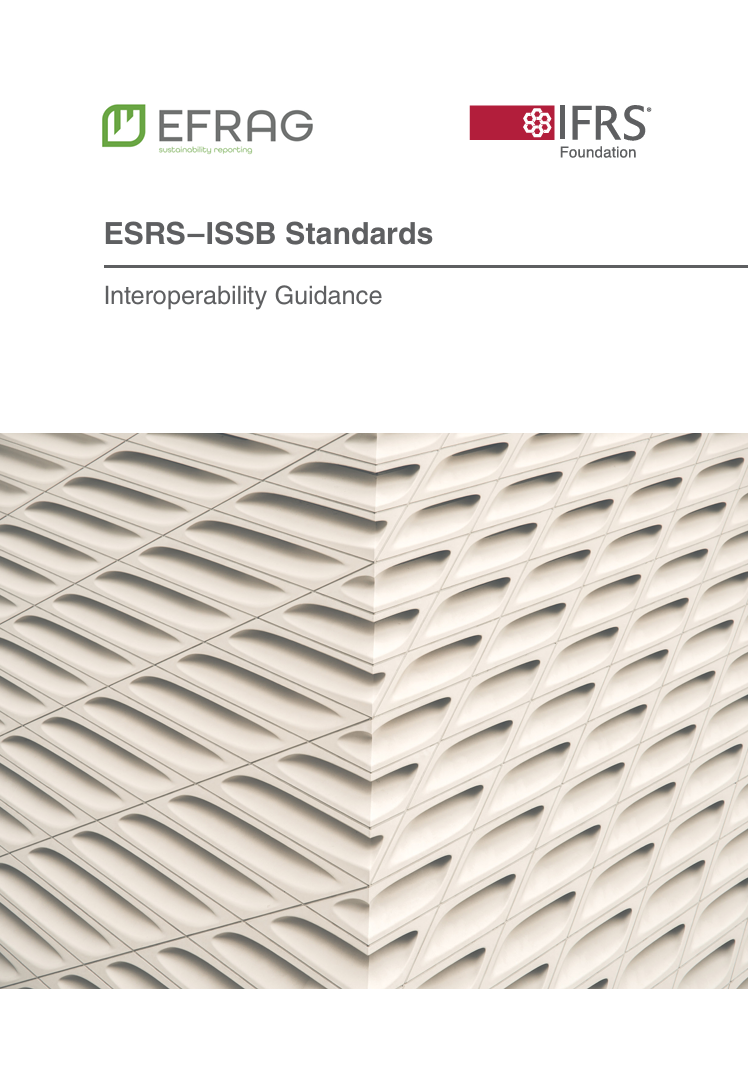
ESRS–ISSB standards: Interoperability guidance
Guidance outlines alignment between ESRS and ISSB sustainability standards, focusing on climate disclosures, materiality and reporting requirements. It maps corresponding provisions, highlights differences, and explains how entities can achieve compliance with both frameworks to improve efficiency and consistency in sustainability reporting.
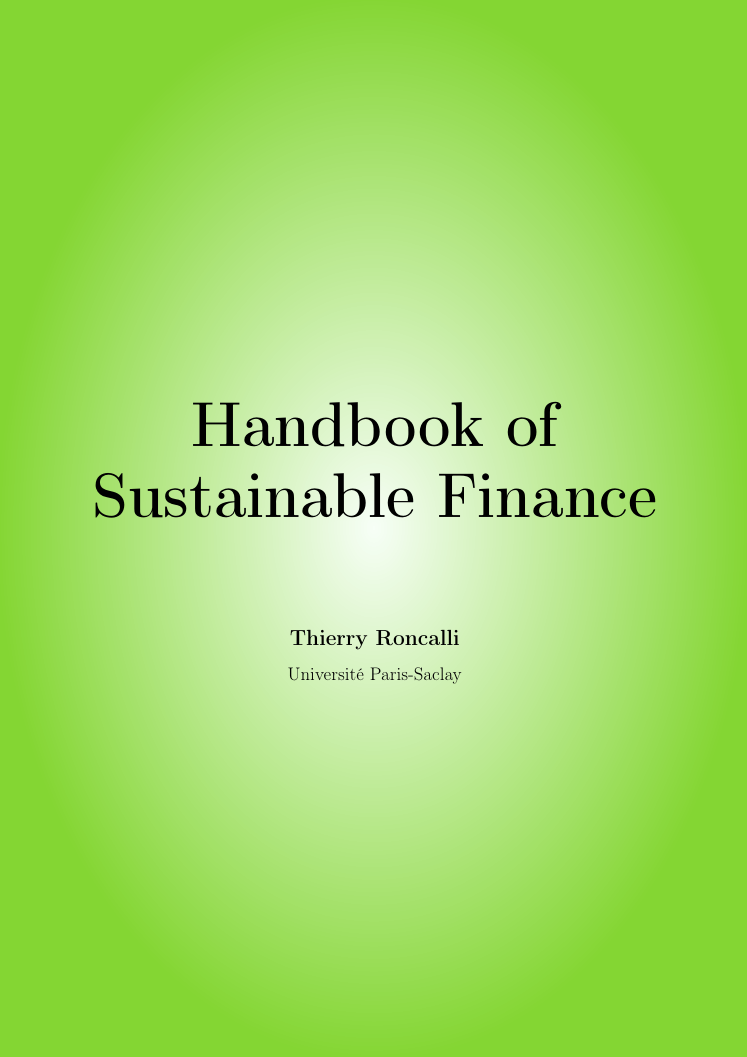
Handbook of sustainable finance
This handbook explains sustainable finance concepts, ESG scoring, regulation, reporting, sustainable products, impact investing, biodiversity, climate risk measurement, transition and physical risk modelling, portfolio construction, stress testing and risk management for finance practitioners.
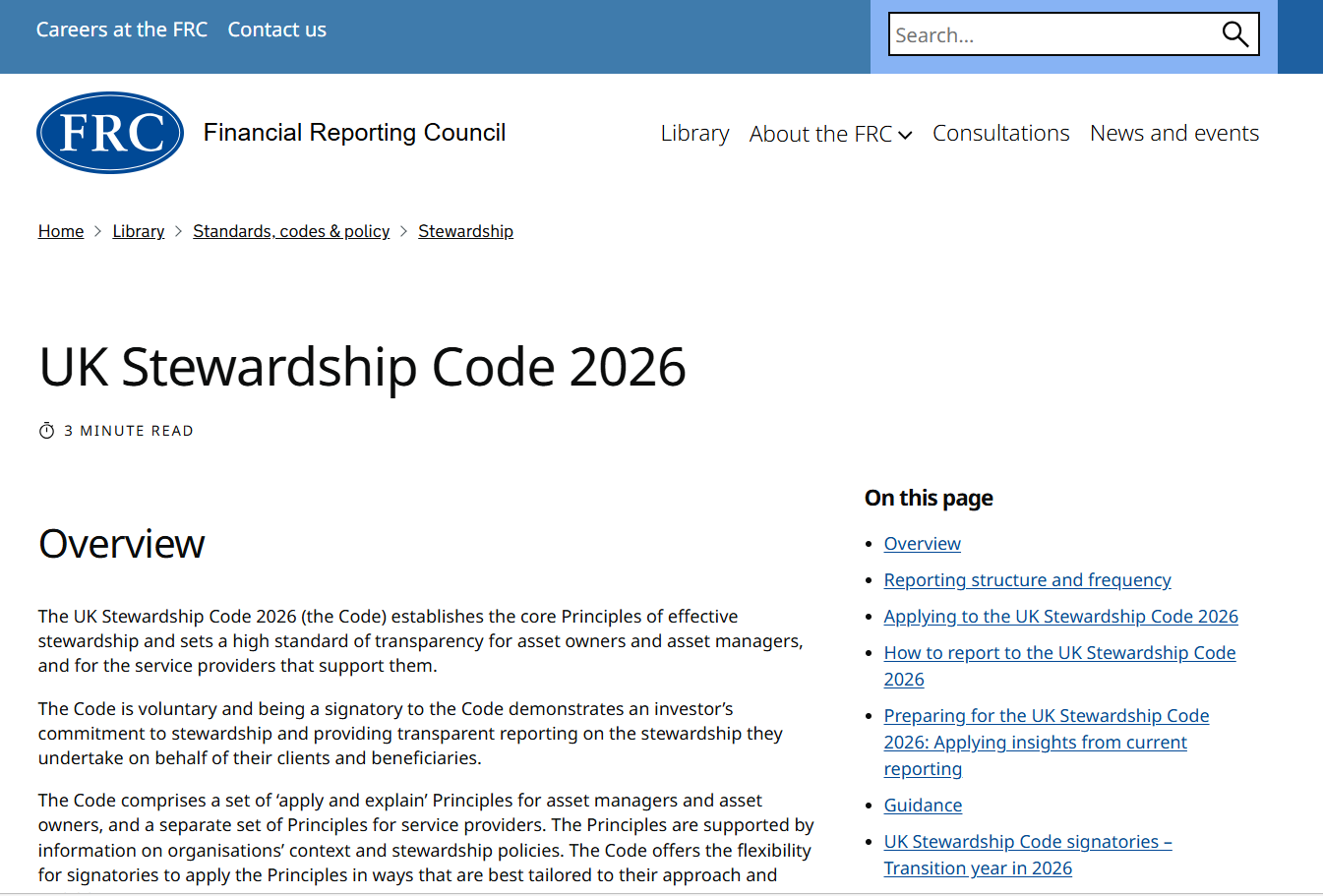
UK Stewardship Code 2026
The UK Stewardship Code (2026) sets voluntary principles for asset owners, managers and service providers to demonstrate effective stewardship through transparent, outcomes-focused reporting, supporting responsible capital allocation and long-term value creation for clients and beneficiaries.
Sectoral roadmaps as the backbone of transition planning: Linking NDCs, finance and the real economy
Sectoral roadmaps translate national climate targets into sector-specific decarbonisation pathways, guiding policy, investment and corporate transition plans. They align real-economy activity with finance, reduce uncertainty, and support risk assessment and capital allocation, strengthening the credibility and implementation of whole-economy transition planning.
IFC's performance standards on environmental and social sustainability
The IFC Performance Standards (2012) form part of the Sustainability Framework, setting requirements for clients to identify, manage, and mitigate environmental and social risks in financed projects. They comprise eight standards covering areas such as labour, resource efficiency, biodiversity, and community impacts, and are widely used as a global benchmark for responsible investment.
Implications of the International Court of Justice’s Advisory Opinion on Climate Change for directors’ duties in relation to climate-related risks
Examines how the ICJ’s climate advisory opinion may elevate climate-related risks and regulatory pressures, increasing directors’ duty of care. Highlights litigation, disclosure, and transition risks, particularly for emissions-intensive sectors, and emphasises informed decision-making and accurate reporting to mitigate liability.
Oxford climate policy monitor: 2025 annual review
Assesses climate policies across 37 jurisdictions and six domains, finding overall strengthening despite political pressures, but slow implementation. Highlights rising policy leadership in developing regions and persistent gaps in ambition and execution relative to Paris Agreement targets.


