
Library | SASB Sustainability Sector
All industries
Refine
796 results
REFINE
SHOW: 16


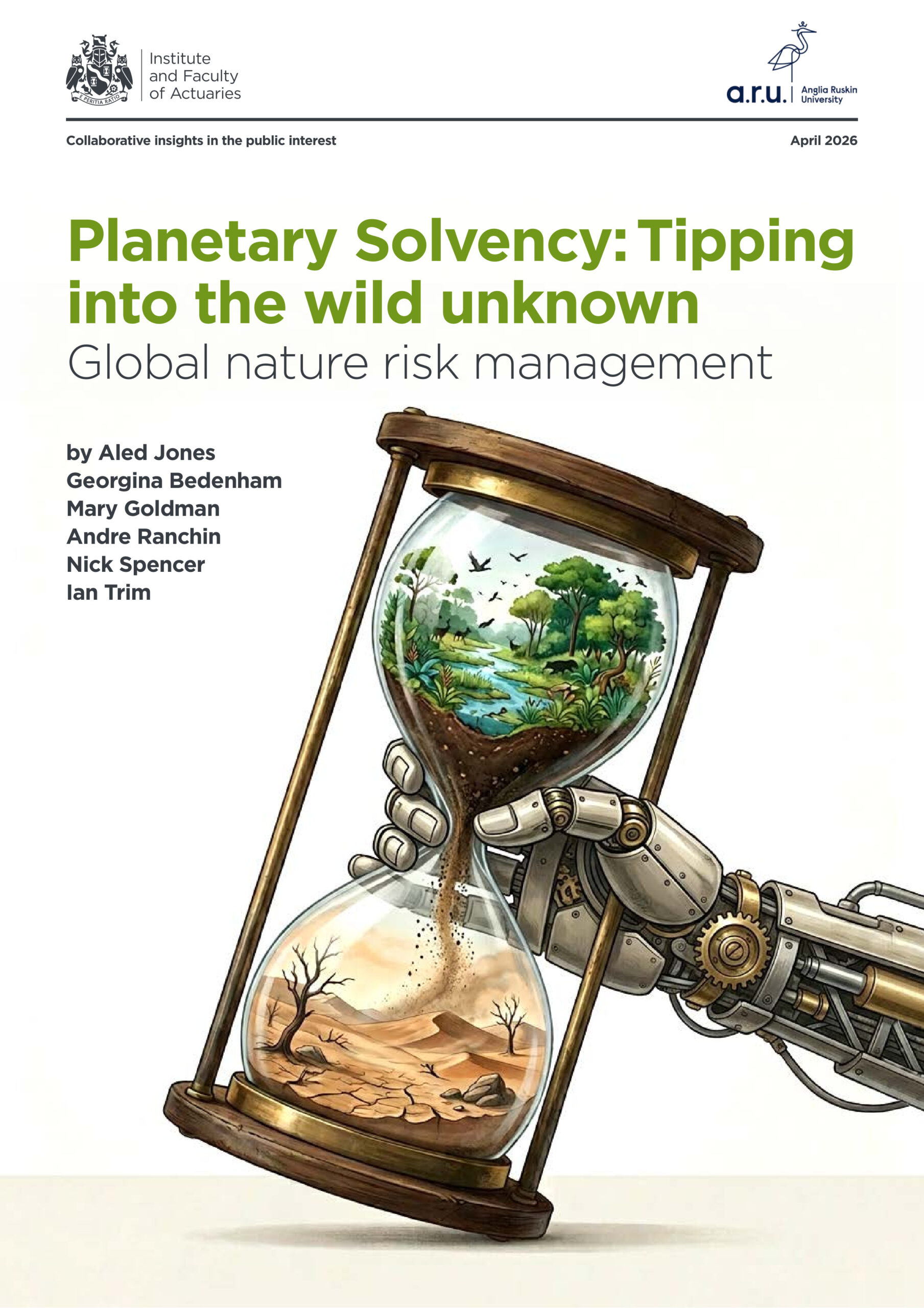
Planetary solvency: Tipping into the wild unknown: Global nature risk management
This report outlines how the degradation of global ecosystems threatens societal and economic resilience. It highlights immediate risks to food systems and health, long-term ecosystem tipping points, and the necessity of integrating biodiversity into financial models. Actuaries and policymakers are urged to adopt systemic, narrative-based risk management strategies.
Value of nature: The investment case for nature-based solutions
This report examines how Ecosystem Service Valuation (ESV) can scale finance for Nature-based Solutions (NbS). By revealing the distribution of socio-economic benefits and costs across stakeholders, ESV provides a standardised framework to inform financial mechanisms and structure effective public-private partnerships.
Integrating climate considerations into environmental impact assessments: Lessons from Latin America and Asia
This report analyses the integration of climate change considerations into environmental impact assessment (EIA) regimes across 20 economies in Latin America and Asia. It evaluates legislative frameworks and climate litigation trends, recommending stronger statutory requirements, detailed technical guidance, and comprehensive assessments of both emissions and adaptation risks.
Climate litigation as a financial risk: Evidence from a global survey of equity investors
This report surveys 811 global equity investors to assess perceptions of climate litigation as a financial risk. It finds that investors view climate lawsuits as financially material, with effects often manifesting early, such as upon media coverage or filing, and affecting both carbon majors and other sectors.
Reforming investment contracts: Why policy - makers must act now — and how
This policy brief highlights the urgent need to reform investor–state contracts to support sustainable development. It explores how fragmented frameworks, outdated stabilisation clauses, and tax incentives undermine national laws. The report recommends strengthening interministerial coordination, assessing existing contracts, and developing national model agreements to improve transparency and policy coherence.
Governance: Hard to build, easy to erode: Global trends, business implications and the role of employer and business membership organizations
This report analyses global governance trends from 1996 to 2024, revealing widespread stagnation and persistent risks of backsliding. It highlights the critical link between stable institutional governance, increased foreign direct investment, and the necessary role of business membership organisations in sustaining long-term policy reforms.
Critical minerals traceability for energy and economic security
IEA finds traceability systems can strengthen critical mineral supply chain resilience by improving visibility, diversification and responsible sourcing. Adoption is increasing but remains uneven due to costs, interoperability issues and limited incentives. The report recommends harmonised standards, financial support and international co-operation to improve energy and economic security.
RIAA Conference Australia 2026 - Companion Resources
Responsible investment has moved well beyond principles and pledges. Today’s challenges require practical capability and informed judgement. The RIAA Conference is a must-attend event for finance, sustainability and industry practitioners who want to focus on the key themes for responsible investment in 2026 and what implementation really looks like. Designed as an immersive, hands-on experience, the program focuses on the systems that underpin strong financial performance, and will help you understand how climate, nature, technology, governance and regulation intersect.
These specially curated companion resources have been recommended by the conference speakers and Altiorem team.
These specially curated companion resources have been recommended by the conference speakers and Altiorem team.
Physical climate risk in the United States equity market: Quantifying state–sector heterogeneity
The report presents an NGFS-aligned framework for assessing physical climate risk in U.S. equities. Using state-level GDP damage projections and sector-specific adjustments, it estimates a roughly 4.0% valuation loss for a U.S. equity benchmark under current policies, highlighting substantial variation across states and sectors.
The thematic assessment report on the interlinkages among biodiversity, water, food and health
IPBES assesses links between biodiversity, water, food, health and climate, finding siloed decisions worsen trade-offs. It identifies integrated governance, sustainable consumption, ecosystem restoration and finance reform as response options to support more just and sustainable outcomes.
Legal opinion: Director’s duties and nature-related risks in the Philippines
CCLI’s legal opinion finds Philippine company directors must consider nature-related and biodiversity risks within their fiduciary duties. The report outlines potential legal, disclosure and governance consequences for failing to manage these risks, while also highlighting directors’ obligations to assess nature-related opportunities supporting long-term corporate resilience.
Legal form and corporate outcomes: Evidence from the societas europaea
Study finds Societas Europaea adoption improves firms’ international positioning, increasing foreign investor ownership and cross-border acquisitions. However, markets generally react negatively, information asymmetry rises, and shareholder returns weaken post-adoption, suggesting governance flexibility and supranational identity benefits may be offset by uncertainty and potential minority shareholder concerns.
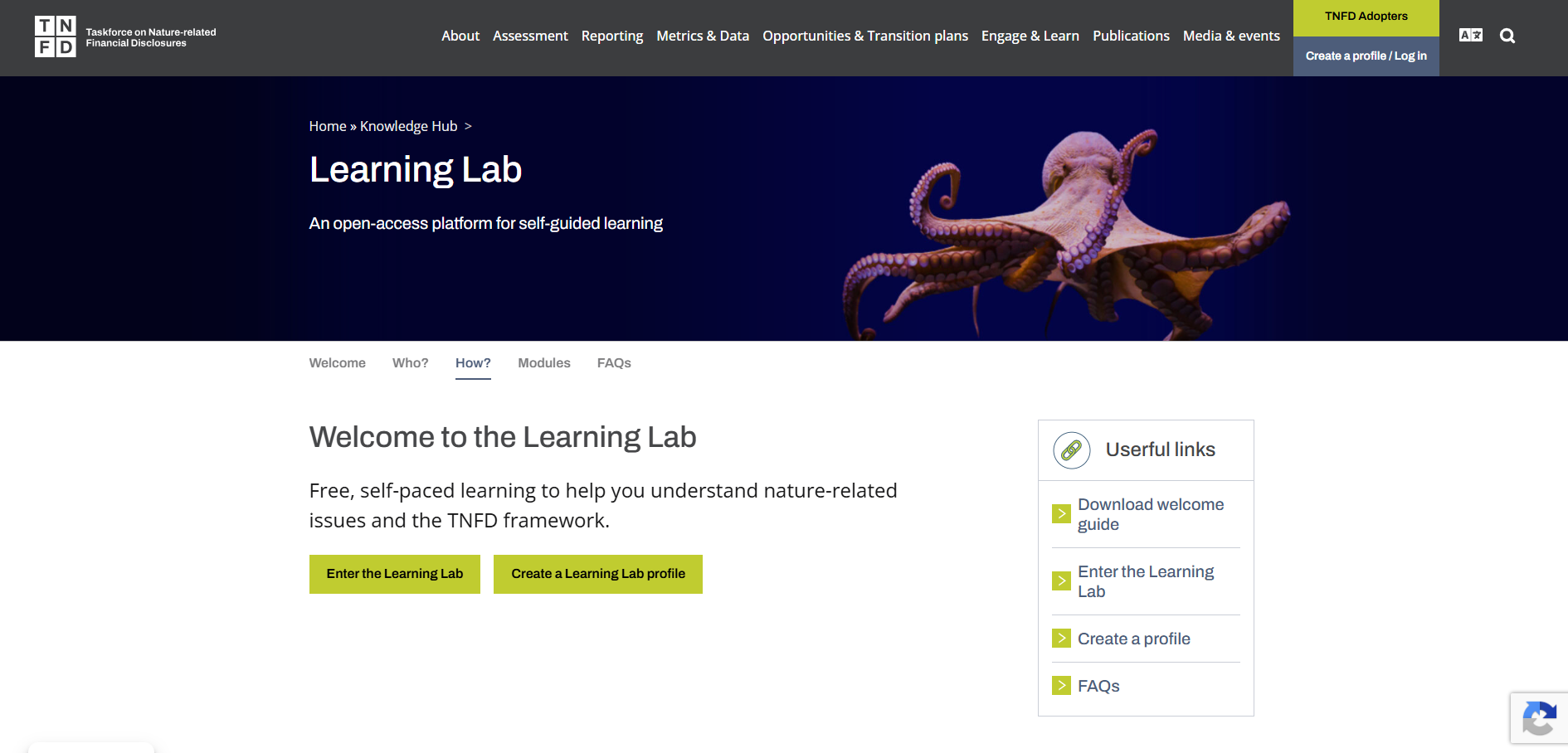
TNFD Learning Lab
TNFD’s Learning Lab is a free, open-access platform offering self-paced modules on nature-related issues and the TNFD framework. It provides videos, webinars, case studies and practical guidance to help finance and business professionals build capability in nature-related assessment, reporting and decision-making.
Systematic stewardship on the waterbed
Tröger argues corporate governance tools, including stewardship, say-on-climate votes and ESG-linked pay, cannot replace broad climate regulation. Firm-level interventions may trigger “waterbed effects”, shifting emissions rather than reducing them. Carbon pricing or comprehensive emissions caps are presented as more effective.
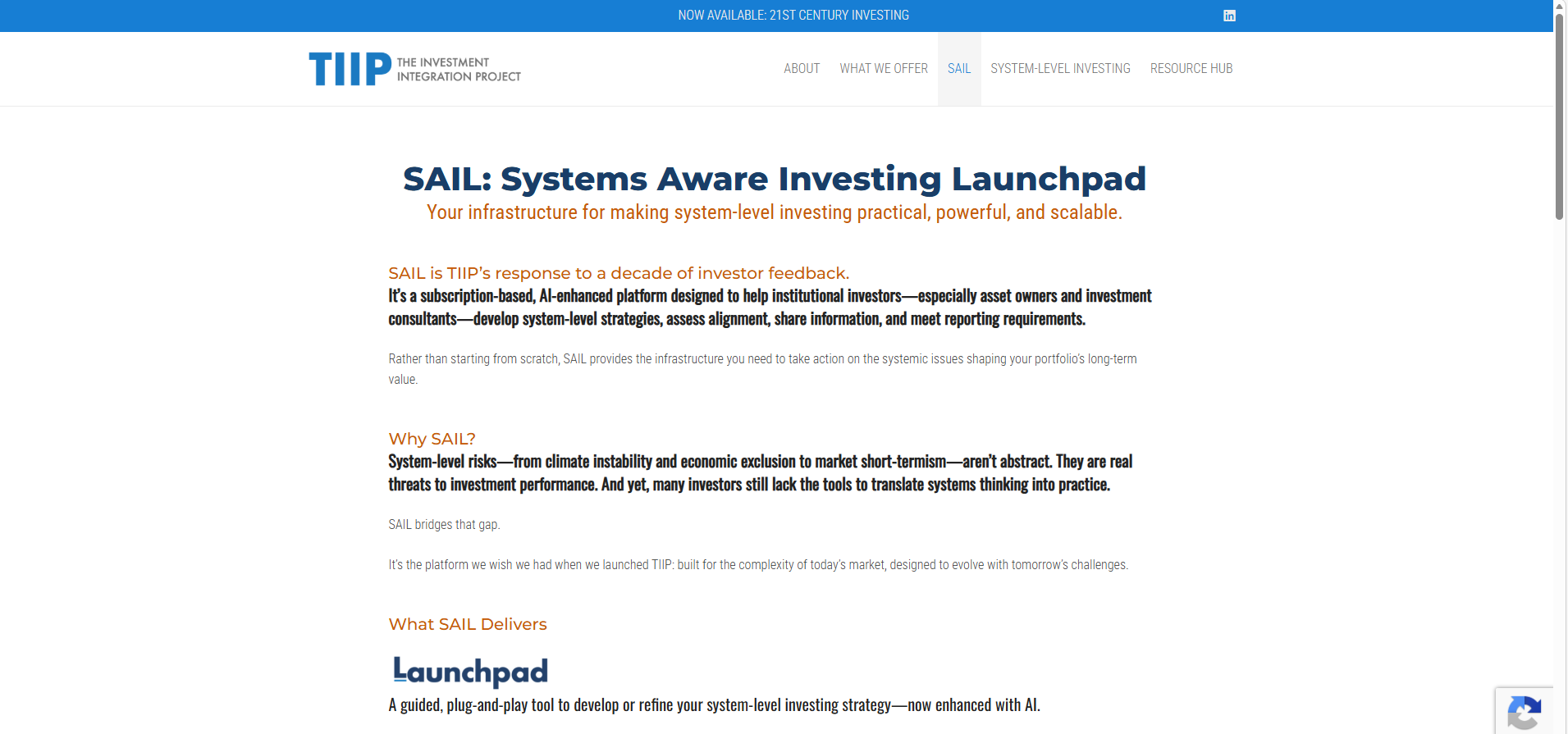
SAIL: Systems Aware Investing Launchpad
SAIL (Systems Aware Investing Launchpad) is an AI-enhanced platform developed by TIIP to support institutional investors in implementing system-level investing strategies. It provides tools for strategy development, benchmarking, reporting and collaboration, helping users assess and manage systemic environmental, social and financial risks.
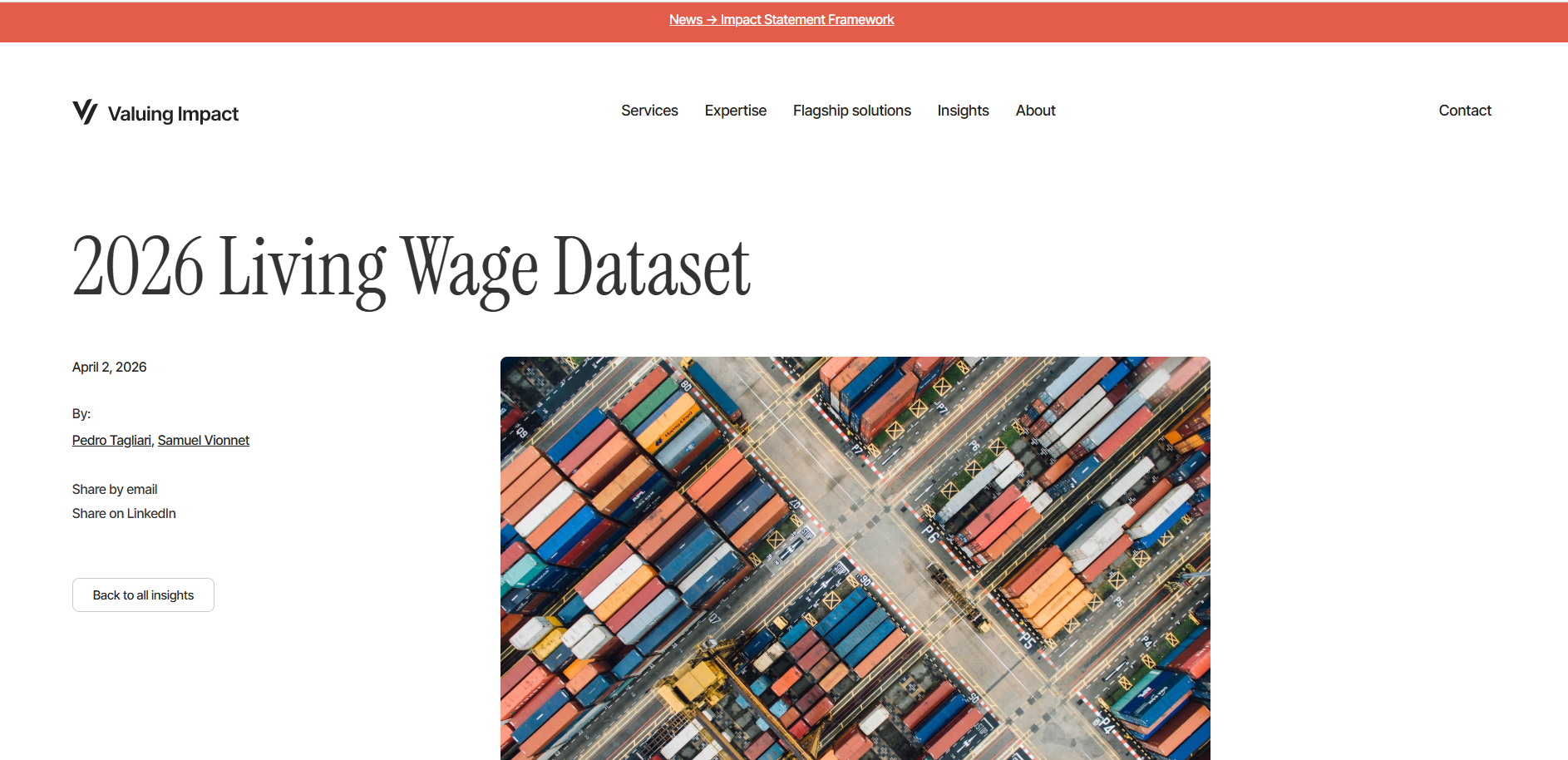
2026 Living Wage Dataset
The 2026 Living Wage Dataset by Valuing Impact is a free global database covering 217 countries and eight household scenarios. It uses the Anker and Anker methodology with updated cost-of-living data to estimate living wages for urban and rural households, supporting sustainability, labour practice and supply chain analysis.


