
Library | SASB Sustainability Sector
Extractives and Minerals Processing
Refine
311 results
REFINE
SHOW: 16


Is the gas industry facing its Volkswagen moment? Gas is more emissions intensive than the gas industry’s marketing arm suggests
Conventional or natural gas is an important short-term fuel for building a reliable renewable energy system in Australia. However, the need for more gas is overestimated by the gas industry. Stakeholders have been misled about the carbon footprint of gas production, transportation and its impact on climate change.
Bankrolling plastics: The banks that fund plastic packaging pollution
Banks continue to finance the global plastics chain, despite the significant risks of lender liability from the impacts of plastic waste. This report highlights the lack of development of any due diligence systems, contingent loan criteria, or financing exclusions at the banks when it comes to the plastic packaging industry.

Bankrolling extinction: The banking sector's role in the global biodiversity crisis
This report explores the contribution of the banking sector to the biodiversity crisis and the destruction of nature as of 2019. The report ranks the 50 largest banks globally based on their financing of unethical operations, finding a large impact on deforestation, ecosystem destruction and overfishing.

Mind the gap: the $1.6 trillion energy transition risk
This report delves into the challenges and degrees of risk facing the oil, gas and thermal coal industry under three different climate scenarios. It was conducted as part of the ET Risk Project funded by the EU Horizon 2020 research and innovation programme.

Vanguard Group: Passive about climate change
As the world’s second largest asset manager, Vanguard Group Inc. has the potential to become a climate action leader. Despite Vanguard’s commitment to the Net-Zero Asset Manager initiative, the report argues that Vanguard’s significant share in fossil fuel exposed companies demonstrates a passive attitude towards climate change.

Investing in the green economy: Sizing the opportunity
This paper emphasises the capacity of the green economy in meeting environmental objectives in decision-making processes. FTSE Russell advocate data as crucial to investors to monitor industry and company-specific contributions to the economy and to assess opportunities in new green products and services.

Transition risks and market failure: a theoretical discourse on why financial models and economic agents may misprice risk related to the transition to a low-carbon economy
The paper has a theoretical focus and looks at the risks associated with transitioning to a low-carbon economy. It looks to highlight externalities that may not be factored into risk models. It concludes in favour of a case of policy intervention and more sophisticated modelling to counter potential market failures.
The growth of Australia's LNG industry and the decline in greenhouse gas emission standards: Increased emissions have offset any gains from renewables' rise in electricity generation
Discusses the growth of Australia’s liquefied natural gas (LNG) industry from 2014-2019. Finding significant growth in greenhouse gas (GHG) emissions during this period. The report provides a brief history and context of Australia’s LNG boom, explains technical aspects of the industry and outlines four factors accounting for GHG growth.
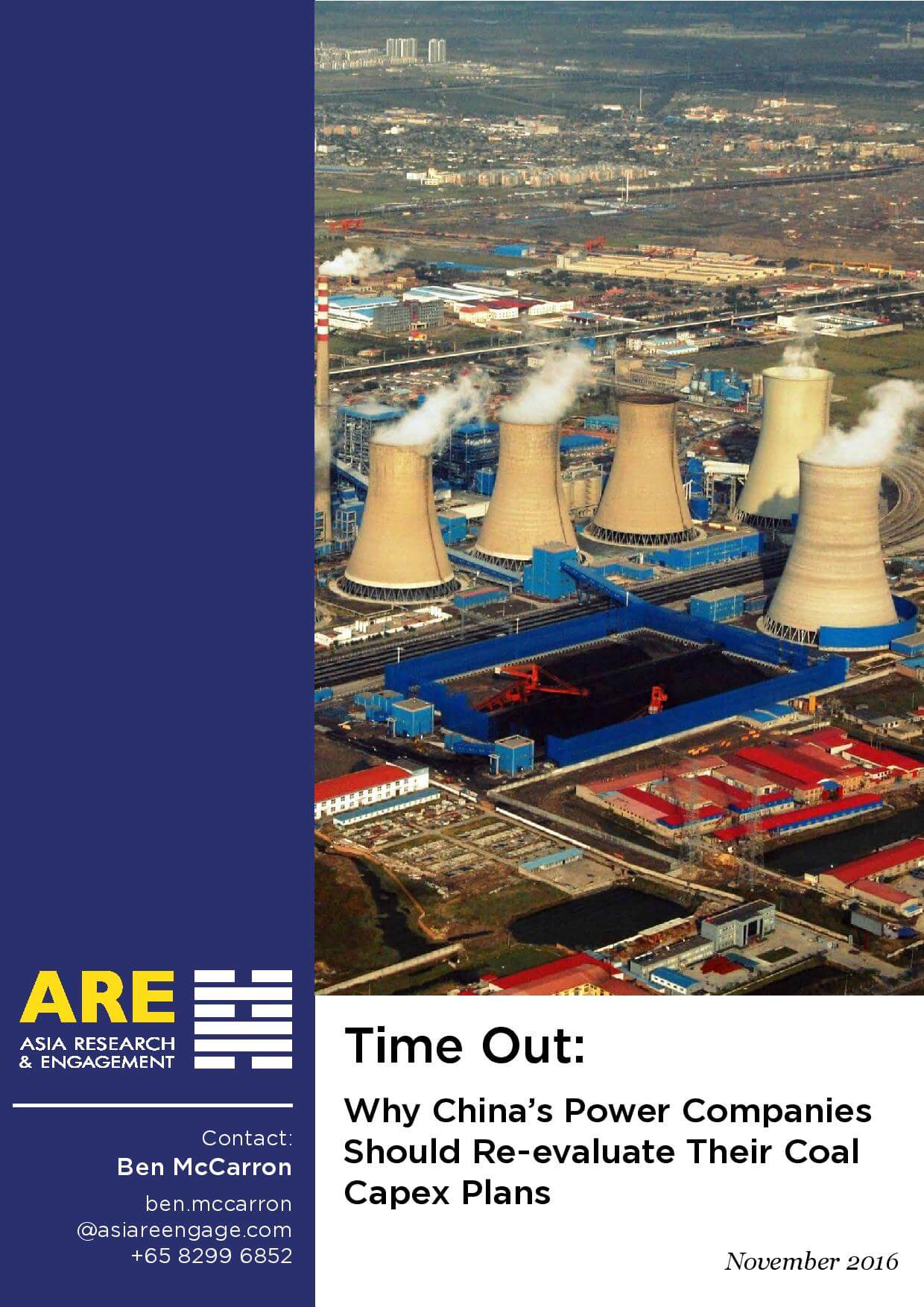
Time out: Why China's power companies should re-evaluate their coal capex plans
This report examines the trend of Chinese power companies’ increasing capital expenditure into coal power in China, and presents evidence of how it can be a financial risk for investors. It also provides recommendations for investors to engage with company management and apply greater scrutiny to company investments in coal fired power.

Investor toolkit: Human rights with focus on supply chains
The purpose of this toolkit is to help investors to engage constructively with the intention to encourage better practice from companies, thereby reducing human rights risks in supply chains. This toolkit focuses on practical engagement points with a business rationale.
Tech giants' investments in renewable power purchase agreements lead the way: Saving money while the sun shines (and the wind blows)
Information and communication technology giants are leading the private sector in the uptake of power purchase agreements and direct renewable investment. There is a strong business case behind their investments, which also contributes to their overall carbon emissions reduction plan
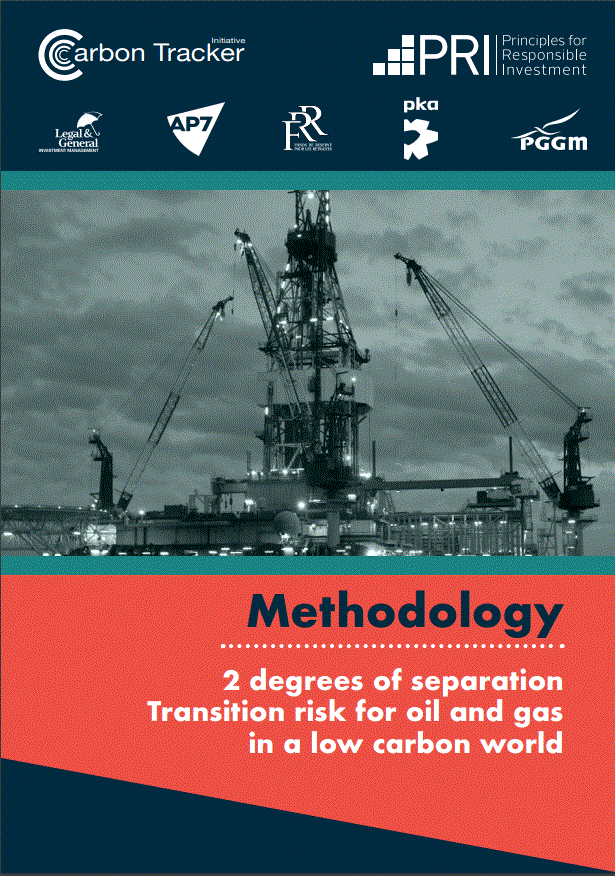
2 degrees of separation: Transition risk for oil and gas in a low carbon world
This methodology was developed for the supply side data and demand scenario used in the asset level analysis of oil and gas production in a carbon constrained world. It shows the marginal costs for oil and gas produced by intersecting 2°C demand with supply curves are higher than the currently prevailing prices for those fuels.
Banking beyond coal: Sustainable development without coal finance
This investor briefing investigates the financing of the coal power industry. Highlighting that bank financing continues to facilitate active development of coal power infrastructure, particularly in developing nations, which is incompatible with the Paris Agreement. Additionally, it provides a call to action for investors to engage with their banks to strengthen coal divestment policies.
Over 100 global financial institutions are exiting coal, with more to come
This report published by IEEFA highlights the fact that over a hundred globally significant financial institutions are divesting from coal projects. It mentions that these major financial institutions, including commercial banks, insurance companies, pension funds, asset management companies, and development finance institutions, are building up the momentum against coal projects.
SDG Industry Matrix: Energy, natural resources and chemicals
The Industry Matrix aims to inspire and inform the private sector, driving it towards inclusiveness and sustainable prosperity by identifying opportunities for greater social and environmental change. This Matrix applies to industries involved in energy, natural resources and chemicals, outlining ways that companies can create value for shareholders as well as society.

Ceres
Ceres is a sustainability nonprofit organisation working with the most influential investors and companies to build leadership and drive solutions throughout the economy. Through powerful networks and advocacy, Ceres tackles the world’s biggest sustainability challenges, including climate change, water scarcity and pollution, and inequitable workplaces.


