
Library | SASB Sustainability Sector
Insurance
Refine
336 results
REFINE
SHOW: 16


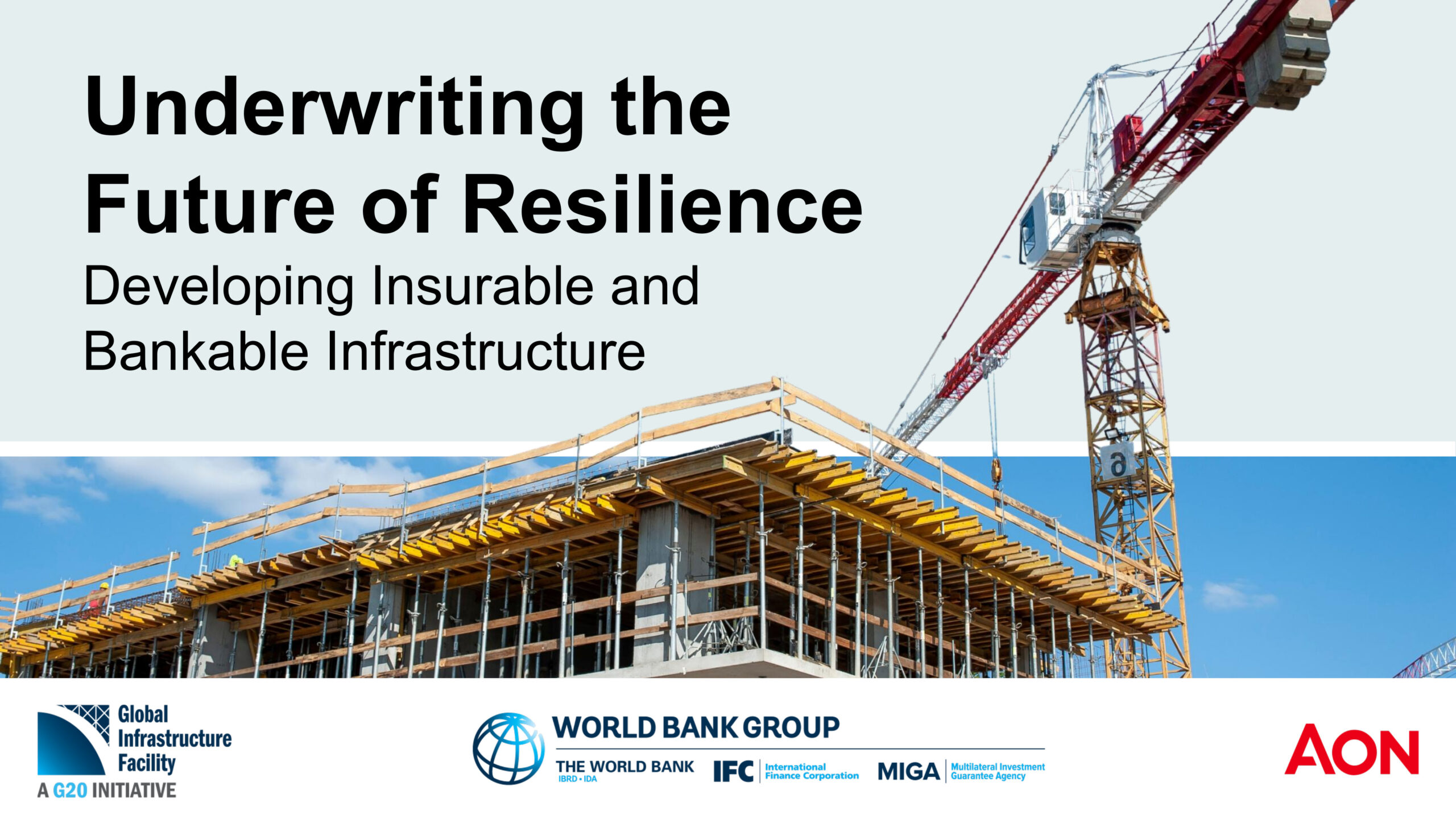
Underwriting the future of resilience: Developing insurable and bankable infrastructure
This report explores how the insurance industry assesses physical climate risks for new social infrastructure projects. It identifies five key enablers to integrate climate resilience across project lifecycles, advocating for early stakeholder engagement and forward-looking risk assessments to ensure long-term asset insurability, bankability, and value in a changing climate.
Building the financial case for urban adaptation: Guidance and case studies
C40 and Rebel outline how cities can structure urban adaptation projects to attract private finance, using ten case studies. Bankability depends on revenue logic, risk allocation, public de-risking, early financier engagement and credible monitoring.

TNFD Learning Lab
TNFD’s Learning Lab is a free, open-access platform offering self-paced modules on nature-related issues and the TNFD framework. It provides videos, webinars, case studies and practical guidance to help finance and business professionals build capability in nature-related assessment, reporting and decision-making.
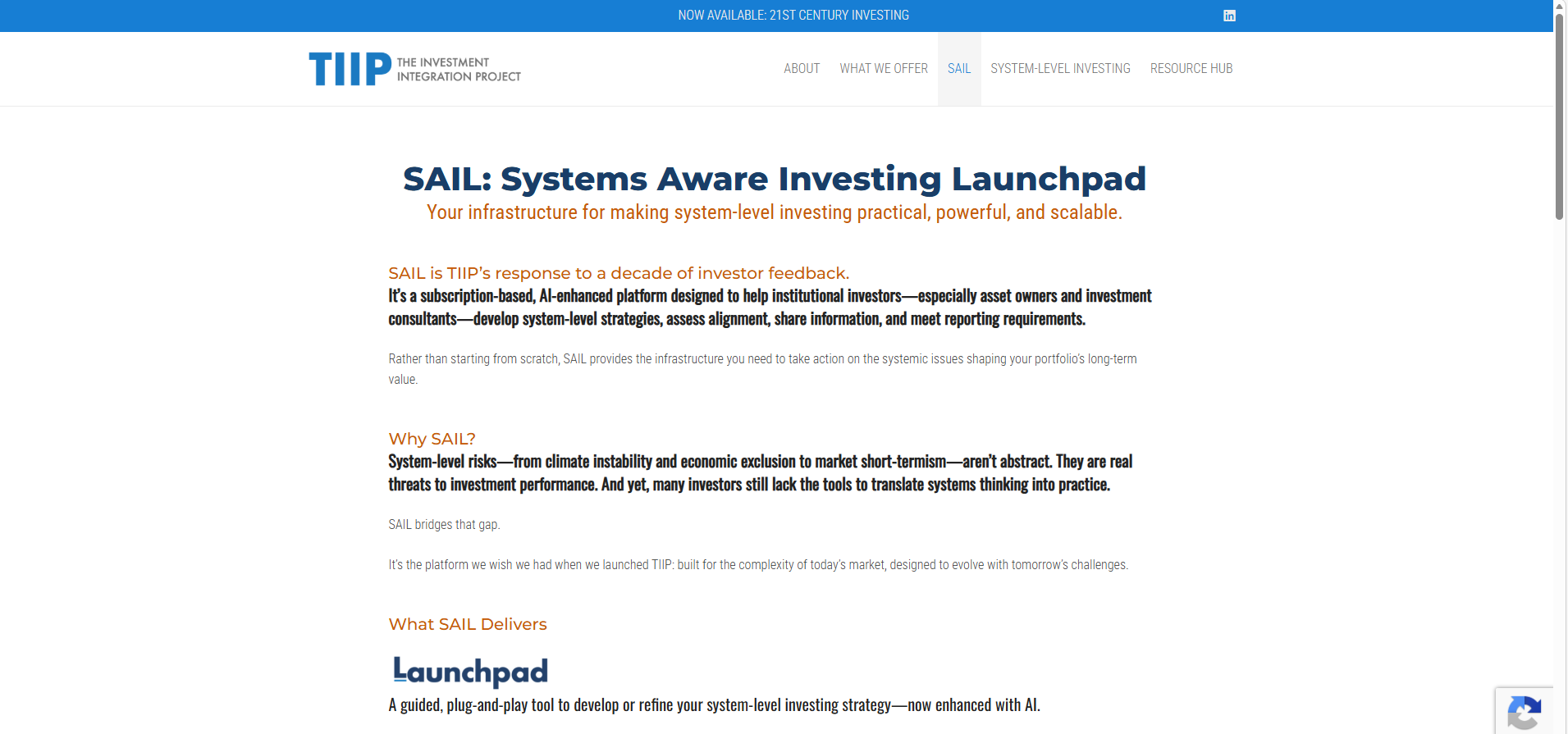
SAIL: Systems Aware Investing Launchpad
SAIL (Systems Aware Investing Launchpad) is an AI-enhanced platform developed by TIIP to support institutional investors in implementing system-level investing strategies. It provides tools for strategy development, benchmarking, reporting and collaboration, helping users assess and manage systemic environmental, social and financial risks.
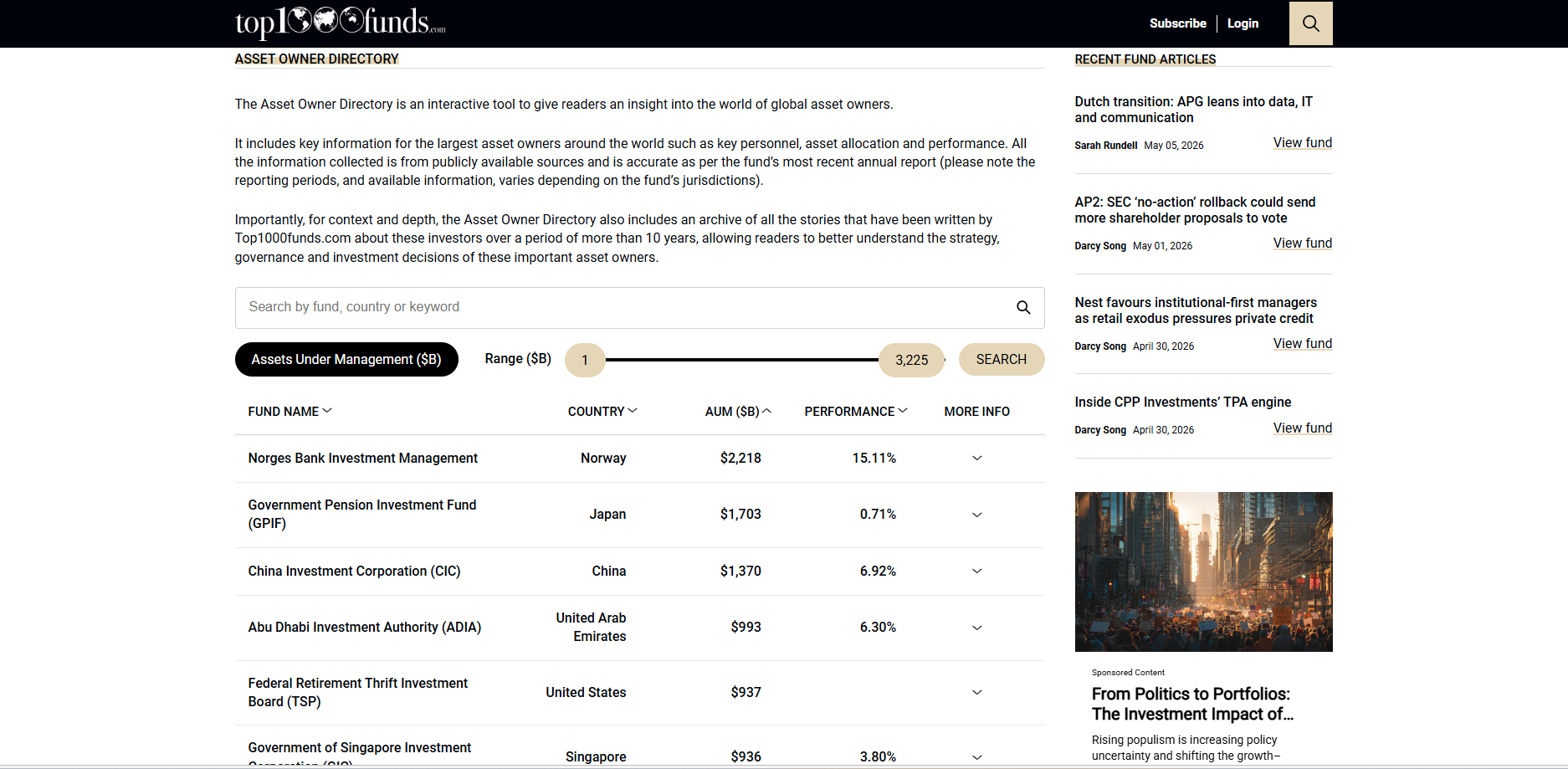
The Asset Owner Directory
The Top1000funds.com Asset Owner Directory is an interactive database of global asset owners. It provides publicly sourced information on key personnel, asset allocation and performance, alongside an archive of related articles covering investors’ strategy, governance and investment decisions.
A director’s guide to mandatory climate reporting: Version 2
Provides guidance for directors on Australia’s mandatory climate reporting regime, outlining regulatory requirements, governance expectations, and disclosure obligations under AASB S2. Explains implementation timelines, assurance pathways, and practical steps to manage climate-related risks, opportunities, and reporting processes within corporate reporting frameworks.
OECD Green Finance and Investment library
OECD’s Green Finance and Investment series provides policy analysis and guidance to mobilise public and private finance for green growth. It examines how regulatory frameworks and investment strategies can scale funding for low-carbon, climate-resilient and resource-efficient infrastructure, technologies and businesses.
Sectoral roadmaps as the backbone of transition planning: Linking NDCs, finance and the real economy
Sectoral roadmaps translate national climate targets into sector-specific decarbonisation pathways, guiding policy, investment and corporate transition plans. They align real-economy activity with finance, reduce uncertainty, and support risk assessment and capital allocation, strengthening the credibility and implementation of whole-economy transition planning.
Horizon Scanning: Risk and regulation in the GCC
This report outlines 2026 financial crime and regulatory risks in the GCC, focusing on AI-enabled fraud, digital assets, cybercrime, beneficial ownership, supply chains, sanctions, and tougher AML/CFT oversight linked to upcoming FATF evaluations and recent legal reforms in the UAE, Bahrain and Saudi Arabia.
Human rights due diligence in the financial sector: A compendium of industry case studies and practice
Examines how financial institutions implement human rights due diligence, aligned with UNGPs and OECD guidelines, using case studies. Highlights challenges in data, prioritisation and leverage, and emphasises integrating human rights into governance, risk processes and client engagement to manage impacts across lending, investment and insurance activities.
Horizon scanning: Financial crime risks and regulation in the UK
This report outlines emerging UK financial crime risks for 2026, highlighting AI-enabled fraud, cyber-enabled crime, sanctions evasion, and organised networks. It examines evolving regulatory expectations, stricter enforcement, and expanded oversight, emphasising the need for proactive risk management, robust controls, and enhanced compliance frameworks.
Mind the gap: An insurance climate vulnerability assessment
APRA assesses Australia’s home insurance protection gap under climate scenarios, finding affordability pressures may increase uninsured households from one in seven to one in four by 2050. Rising weather risks and economic factors drive premiums, widening financial system risks, particularly in regional areas, with implications for households, insurers and banks.
Governing for net zero: The board's role in organisational transition planning
This report guides Australian boards on integrating net zero transition planning into strategy, governance, disclosure and stakeholder engagement. It outlines directors’ legal duties, mandatory climate reporting requirements, and practical oversight questions to help organisations manage climate-related risks, opportunities and implementation.

Sustainable Finance Roundup March 2026: Markets, Climate Risk, and the Transition in Practice
This month’s sustainability roundup captures a shift from framework development to real-world application, where climate and nature risks are increasingly embedded across financial systems, legal accountability, and decision-making. It highlights how intensifying physical climate signals, evolving disclosures, and maturing litigation are converging with insights on sovereign risk, energy systems, and corporate strategy. Together, these developments show how sustainability is moving beyond principle—being tested, priced, and enforced across markets, regulation, and the real economy.
Climate-nature scenario development for financial risk assessment
This report develops integrated climate-nature scenarios for financial risk assessment, showing that combined climate and nature policies provide a fuller view of agricultural, biodiversity and ecosystem-service risks than separate approaches, with implications for central banks, supervisors and future stress-testing frameworks.
Untapped potential: Asset owners and climate policy influence
Assesses major asset owners’ influence on climate policy, finding limited stewardship and advocacy despite significant potential. Most score poorly on climate lobbying oversight and transparency, with few aligning engagement to net zero goals. Highlights gaps in managing asset managers and industry associations, and calls for stronger, coordinated policy engagement.


