
Library | SASB Sustainability Sector
Insurance
Refine
336 results
REFINE
SHOW: 16


CGAP's Impact Path Finder
Impact Pathfinder is an interactive evidence platform developed by CGAP that maps how financial inclusion interventions contribute to development outcomes. It synthesises global research to inform investors, funders and policymakers on effective pathways, contextual factors and evidence gaps.
NatureAlign
NatureAlign is a decision-support tool by Nature Finance that helps financial institutions identify, assess and respond to nature-related risks and opportunities by aligning portfolios, strategies and governance with nature-positive outcomes.
Climate transition and global financial stability
This literature review assesses evidence on how delayed, failed or uneven climate transitions affect UK and global financial stability. It finds intensifying physical and transition risks, potential mispricing and spillovers, and significant uncertainty, highlighting EMDE transitions as central to managing systemic financial risk.
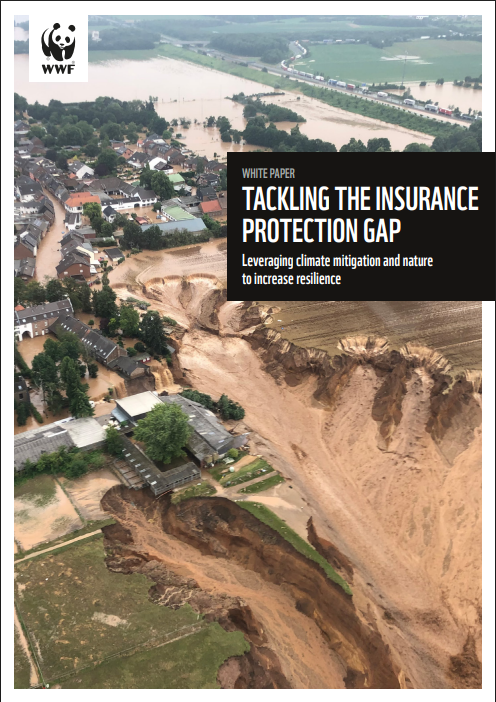
Tackling the insurance protection gap: Leveraging climate mitigation and nature to increase resilience
This white paper analyses how climate change and nature loss are widening insurance protection gaps in advanced economies. It outlines impacts on affordability and coverage, and recommends combining climate mitigation, nature-based solutions, and regulatory reforms to strengthen resilience and maintain insurability.
Adaptation and resilience impact measurement toolkit : A practical framework for financial institutions
Provides a practical framework for financial institutions to measure climate adaptation and resilience impacts. It sets principles, indicators and decision pathways across banks, insurers, DFIs and asset managers, linking outputs, outcomes and impacts to capital allocation, risk management, compliance and reporting.
Fair4All Finance
Fair4All Finance is a UK-based organisation focused on improving financial inclusion. It funds, researches, and supports affordable credit, savings, insurance, and financial resilience solutions for people in vulnerable circumstances, working with policymakers, charities, and financial service providers to scale social impact.

KanataQ Ltd
KanataQ Ltd provides climate and nature risk analytics for financial institutions, corporates and investors. It develops data-driven models, scenarios and tools to assess physical and transition risks, support regulatory reporting, and inform strategic decision-making across climate, ESG and sustainable finance, using forward-looking insights aligned with global climate frameworks and standards.
Scaling finance for nature: Barrier breakdown
This report analyses barriers to scaling private finance for nature, highlighting a US$700 billion annual biodiversity finance gap. It clarifies nature-positive finance, assesses risk–return challenges, regulatory gaps and data issues, and outlines instruments to redirect capital from harmful activities towards halting and reversing nature loss.
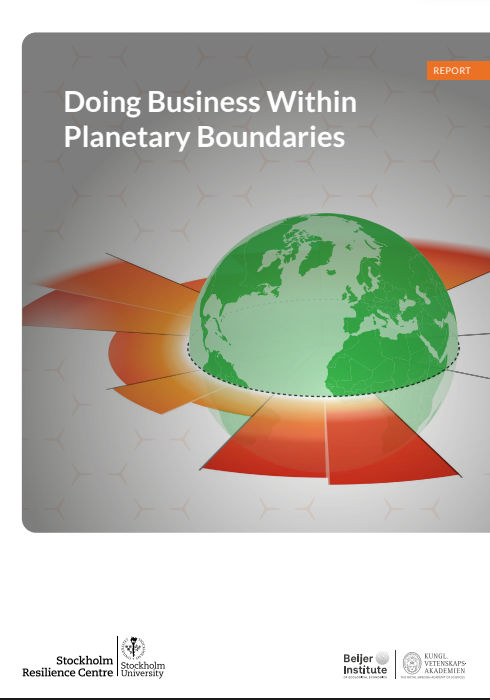
Doing business within planetary boundaries
This report argues that corporate reporting must incorporate absolute, location-specific environmental impacts aligned with planetary boundaries. It proposes science-based disclosures and the Earth System Impact score to improve assessment of cumulative nature-related risks, support credible investment decisions, and enhance comparability beyond carbon-focused metrics.
Defining climate finance justice: Critical geographies of justice amid financialized climate action
The article defines “climate finance justice” as a framework for analysing how financialised climate action shapes equity, power, and outcomes. It critiques climate finance mechanisms, including UNFCCC processes and voluntary carbon markets, and argues for justice-centred approaches that address historical responsibility, governance, and uneven impacts.
Time to plan for a future beyond 1.5 degrees
The report argues that limiting warming to 1.5°C is no longer realistic and may hinder preparedness. It calls for acknowledging higher warming scenarios, accelerating mitigation, and adopting disruptive policy, financial, and governance approaches to manage climate and nature risks in a likely 2°C-plus world.
The 13th national risk assessment: Climate, the 6th “C” of credit
The report analyses US climate-driven mortgage risk, showing floods as the dominant driver of post-disaster foreclosures. Rising insurance costs, coverage gaps and falling property values create hidden credit losses. It argues climate risk should be treated as a sixth core credit assessment factor.
Agreement on international responsible investment in the insurance sector: ESG investment framework for the theme: Controversial weapons and the trade in weapons with high-risk countries
The framework guides insurers in managing ESG risks from controversial weapons and weapons trade with high-risk countries. It outlines international standards, investment screening criteria and due diligence processes, including risk assessment, voting, engagement and exclusion. It also provides guidance on monitoring, accountability and public reporting.
Finance for war: Finance for peace: How values based banks foster peace in a world of increasing conflict
The report analyses global financial links to arms production, showing significant funding for weapons despite rising conflict. It contrasts this with values-based banks, particularly GABV members, which largely exclude arms financing, arguing divestment supports peace, reduces risk, and aligns finance with social and environmental objectives.
From risk to resilience: Integrating adaptation into finance
The report outlines practical frameworks for integrating climate adaptation into financial decision-making, linking physical risk assessment to credit, investment, sovereign risk and financial products. It promotes the ABC framework, data transparency and adaptation-inclusive transition plans to improve resilience, pricing and capital allocation.
A risk professional’s guide to physical risk assessments: A GARP benchmarking study of 13 vendors
GARP benchmarks 13 vendors’ asset-level climate physical risk models, finding wide dispersion in hazard and damage estimates due to differing data, assumptions and methods. The report stresses due diligence, transparency and improved asset data when selecting vendors.


