
Library | Finance relevance
Insurance and risk professionals
Refine
612 results
REFINE
SHOW: 16



Guidelines on Member States' adaptation strategies and plans
These guidelines assist EU Member States in updating climate adaptation strategies and plans. Aligned with the European Climate Law, the report outlines processes for risk assessment, stakeholder engagement, and implementation. It also introduces critical policy areas, including just resilience, nature-based solutions, and climate stress testing.
ERA5 Global Climate Data
ERA5 is the fifth-generation global climate reanalysis tool from the Copernicus Climate Change Service, providing hourly estimates of atmospheric, terrestrial, and oceanic variables from 1940 to the present.
End-use Prices Data Explorer
The End-use Prices Data Explorer, provided by the International Energy Agency, tracks global energy prices across sectors like industry and transport. It helps finance professionals assess the impact of energy costs, taxes, and subsidies on market competitiveness and investment risks.
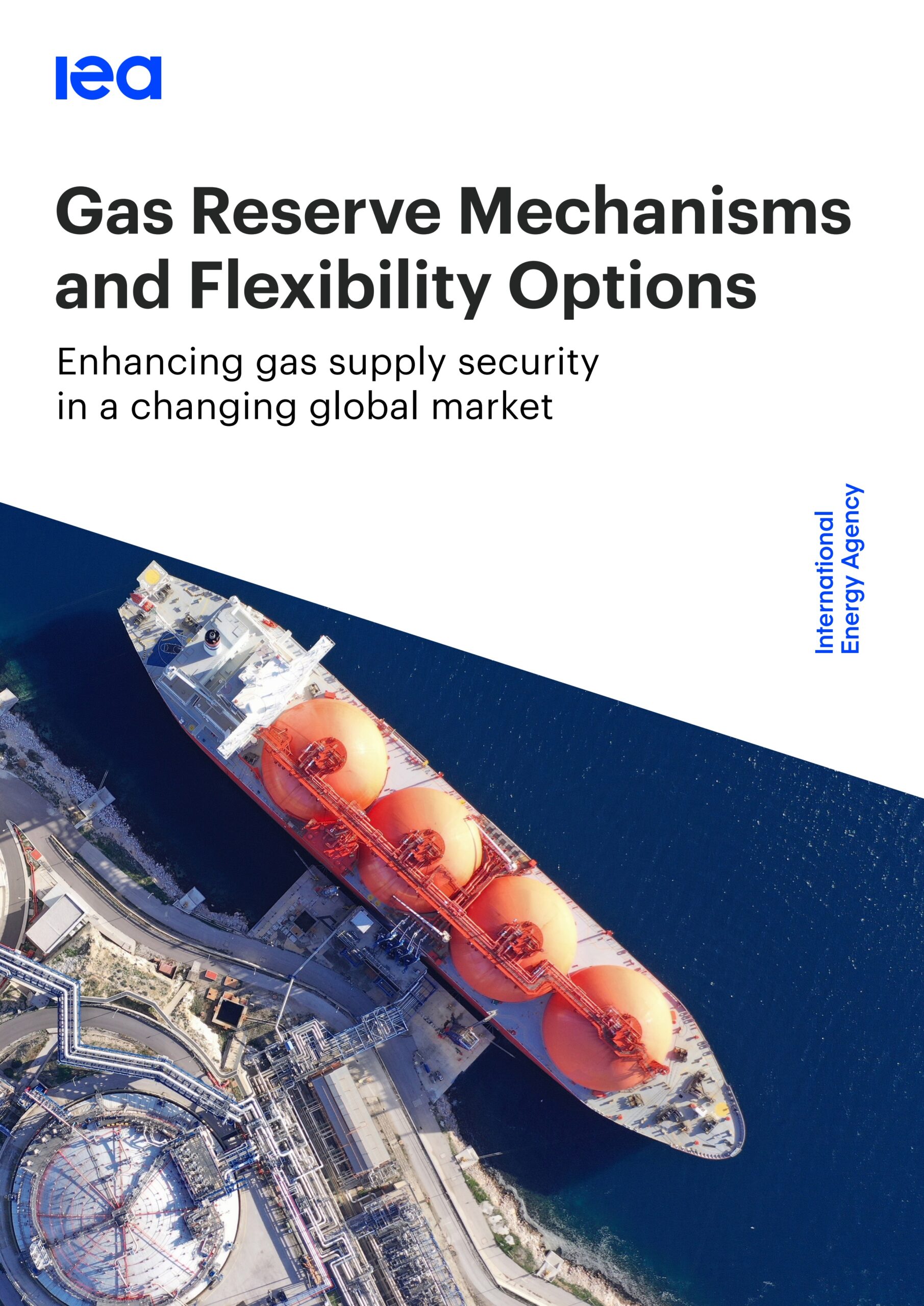
Gas reserve mechanisms and flexibility options: Enhancing gas supply security in a changing global market
This report examines mechanisms to enhance gas supply security, including physical reserves, commercial flexibility, and policy tools. It analyzes the transition to an interconnected, geopolitically complex market, advocating for international cooperation, strategic buffers, and innovative contracting to mitigate future supply disruptions and extreme price volatility.
Trends in climate risk reporting: Lessons from initial voluntary corporate reports under California’s SB 261
This research analyses 154 voluntary corporate climate risk reports submitted under California’s SB 261. It identifies early trends in governance, strategy, risk management, and metrics. Findings highlight that while risk awareness is widespread, gaps remain in financial quantification, quantitative scenario analysis, and the development of formal transition plans.
A heat circuit breaker for the UK: Preparing for a hotter future: A framing report
This report by the National Heat Risk Commission examines the UK’s lack of preparedness for extreme heat following the summer of 2026. It highlights systemic risks, detailing over £4.4 billion in economic costs and 2,877 deaths, while proposing ten key recommendations to strengthen national heat governance and resilience.
Building capacity to identify and assess nature-related financial risks
This report examines nature-related financial risks in the Indonesian and Malaysian palm oil sectors. Using scenario analysis, it evaluates how an intensified El Niño and ecosystem degradation affect production, costs, and credit risk. Findings highlight the vulnerability of upstream producers and the necessity for banks to assess nature-based dependencies.
Assessing biodiversity-related financial risks: Navigating the landscape of existing approaches
This OECD report examines methodologies for assessing biodiversity-related financial risks. It identifies physical and transition transmission channels, reviews metrics like Mean Species Abundance, and highlights the implications of the Kunming-Montreal Global Biodiversity Framework. The findings inform a new supervisory framework for central banks to manage ecosystem-related instability.
Limiting overshoot: Navigating exceedance of 1.5°C and pathways towards return
This report examines the inevitability of exceeding the 1.5°C global warming limit and outlines strategies for navigating this overshoot. It details escalating non-linear risks to ecosystems, food security, and infrastructure, while emphasising that urgent mitigation and transformational adaptation are essential to limit peak temperatures and enable a return.
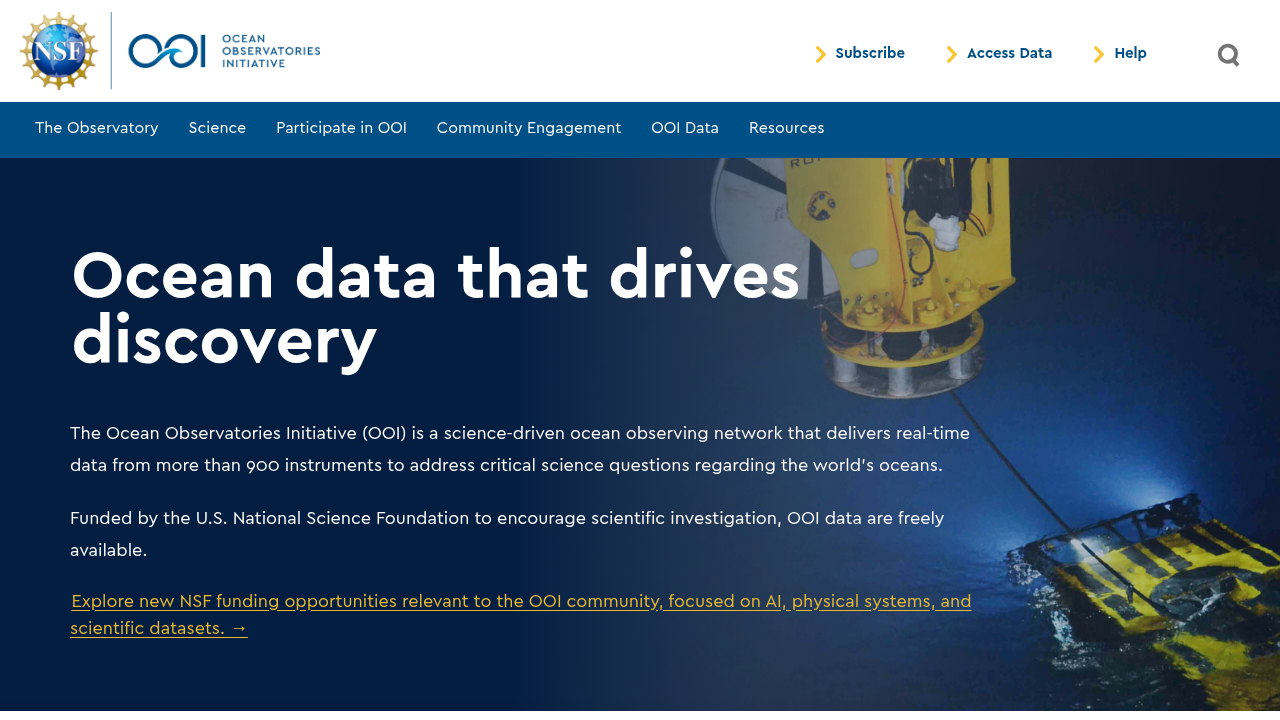
Ocean Observatories Initiative
The Ocean Observatories Initiative is a science-driven network providing real-time data from over 900 instruments. Funded by the U.S. National Science Foundation, it tracks ocean health and climate trends essential for ESG analysis and coastal risk assessment.
Rio Tinto: A just transition case study
This report examines Rio Tinto’s failure to secure a social licence to operate for the Jadar lithium mine in Serbia. It highlights how social risks associated with the energy transition can lead to project abandonment, financial losses, and reputational damage, ultimately impacting bondholders as lithium production becomes more material.
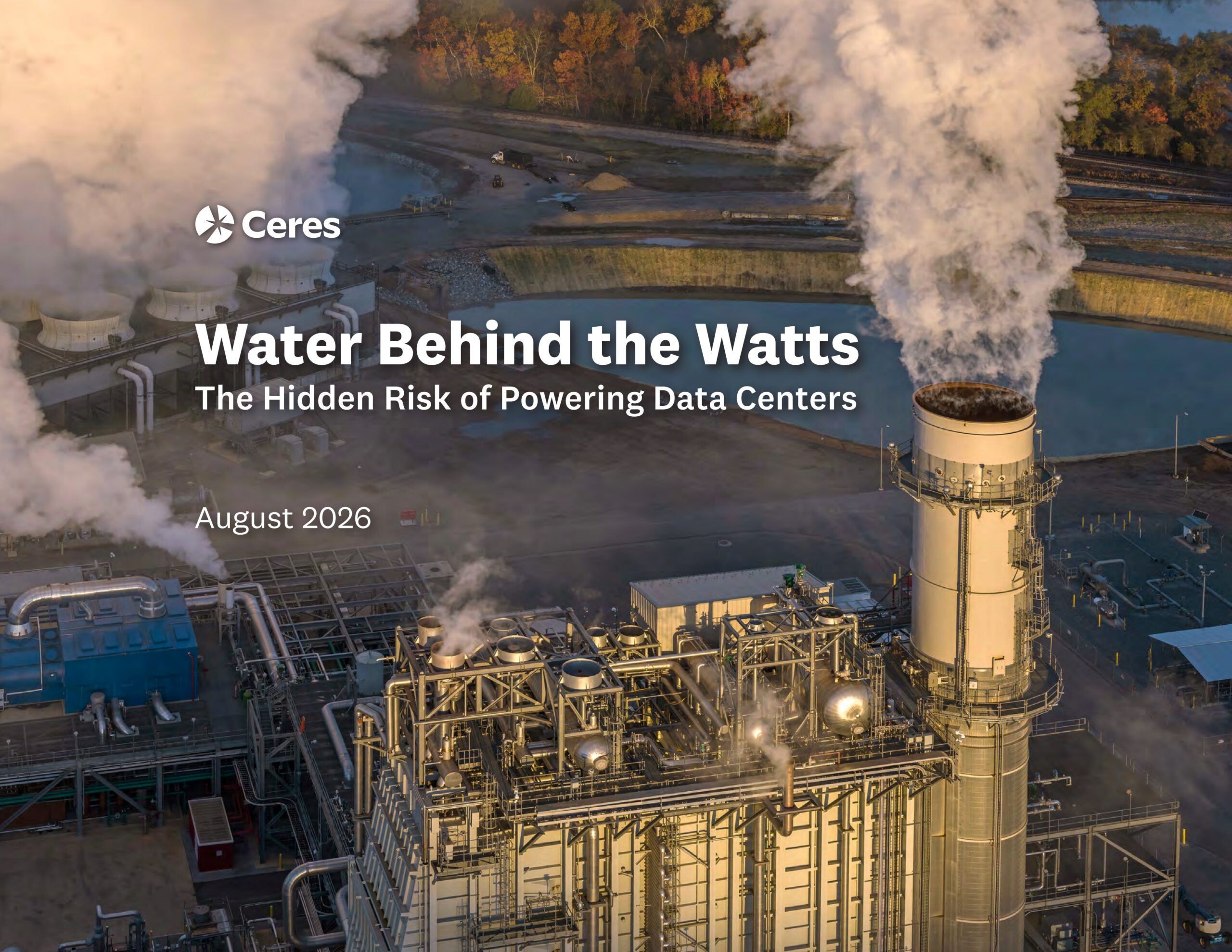
Water behind the watts: The hidden risk of powering data centers
This research identifies that U.S. data centres depend on roughly 3.4 trillion gallons of freshwater annually for electricity generation. The report highlights significant water stress and drought risks across seven key states, recommending that companies, power producers, and policymakers integrate indirect water use into their risk assessments and strategies.
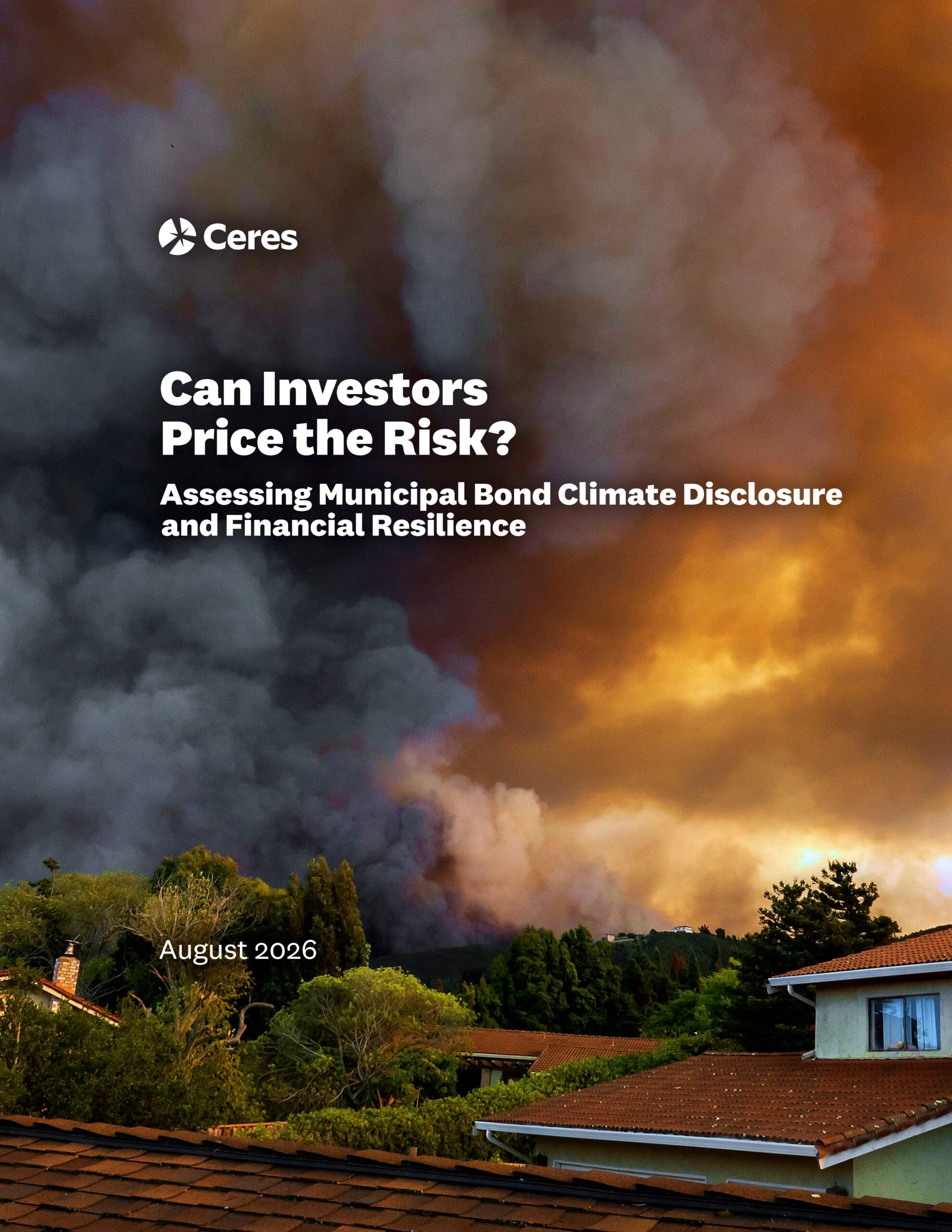
Can investors price the risk? Assessing municipal bond climate disclosure and financial resilience
This report analyses climate risk disclosure in the $4.4 trillion US municipal bond market. Examining 60 high-risk offerings, it finds 33% omit climate references. Disclosures are often generic and backward-looking, lacking the TCFD-aligned metrics necessary for investors to price risk accurately and reward resilience investments.
Progress report: national adaptation plan
This 2026 report by He Pou a Rangi Climate Change Commission assesses New Zealand's progress on its first national adaptation plan. It finds that adaptation efforts are insufficient and recommends six foundational improvements, focusing on funding, legislative alignment, and Māori-led action to address escalating climate risks.
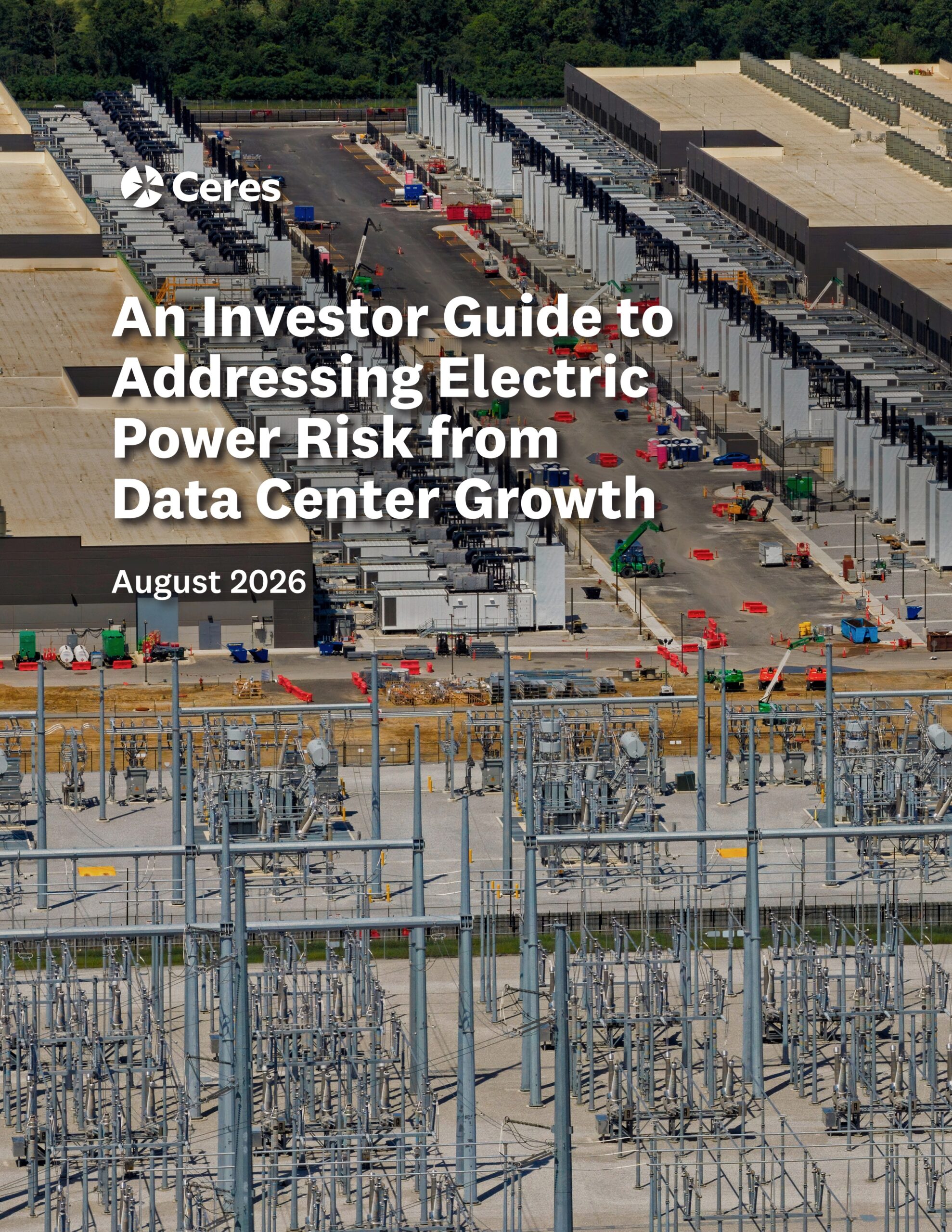
An investor guide to addressing electric power risk from data center growth
This report examines risks to electricity companies from rapid data centre growth, including community opposition and grid reliability. It evaluates solutions like clean energy, flexible contracting, and demand-side management. The guide provides framework questions for shareholder engagement to ensure utilities manage expansion in a financially disciplined and sustainable manner.
The macroeconomic case for investing in climate adaptation
This report synthesises evidence from 300 studies to establish the macroeconomic case for climate adaptation. It projects global GDP per capita losses of 8% by 2050, rising to 12% in lower-income countries. Proactive adaptation offers median benefit-cost ratios of 4:1, bolstering fiscal stability and accelerating sustainable development.


