

Ocean Observatories Initiative
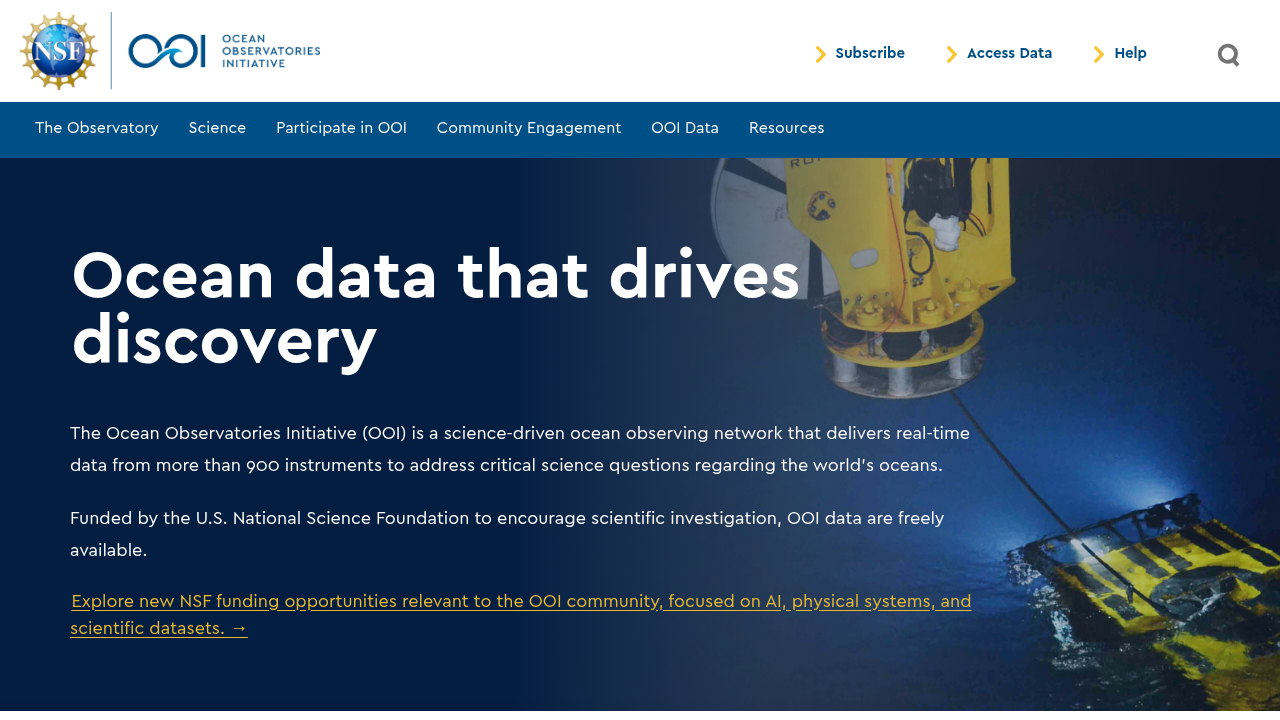
The Ocean Observatories Initiative is a science-driven network providing real-time data from over 900 instruments. Funded by the U.S. National Science Foundation, it tracks ocean health and climate trends essential for ESG analysis and coastal risk assessment.
Please login or join for free to read more.

OVERVIEW
The Ocean Observatories Initiative (OOI) is a science-driven ocean observing network funded by the U.S. National Science Foundation. It delivers real-time and archived data from over 900 instruments across various ocean environments, ranging from the seafloor to the air-sea interface. The initiative is designed to provide long-term, high-resolution data to address critical challenges in ocean science and climate monitoring.
Organisation behind the tool
The tool is funded and overseen by the U.S. National Science Foundation (NSF). The network is managed by various academic and research partners, with the NSF serving as the primary government body responsible for its strategic direction and financial support.
What the tool does
The OOI operates a distributed network of sensor systems across the Atlantic and Pacific Oceans. Key features include:
- Real-time data streaming from more than 900 individual instruments.
- Access to physical, chemical, geological, and biological data through an online Data Centre.
- Monitoring of deep-sea volcanic activity, ocean acidification, and coastal ecosystems.
- Open-access data downloads for historical and live observation records.
Target audience
The primary users are research scientists, educators, and students within the oceanographic community. It is also utilised by policymakers, environmental monitors, and industry professionals interested in marine and climate data.
Relevance to finance professionals
Finance professionals, particularly those in insurance, ESG, and infrastructure, can apply OOI data to several areas:
- Risk assessment – Understanding ocean-driven hazards, such as sea-level changes or extreme weather patterns, to inform catastrophe modelling and insurance premiums.
- ESG analysis – Tracking ocean health metrics like acidification and temperature shifts, which are vital for blue economy investments and corporate environmental reporting.
- Market/commodity insights – Monitoring conditions that affect global fisheries, marine transportation, and offshore energy production.
- Investment context – Utilising long-term environmental trends to evaluate the resilience of coastal infrastructure and aquaculture projects.




