
Library | Finance relevance
Investment managers / asset managers
Refine
1142 results
REFINE
SHOW: 16


Investors, ESG and human rights
This report by the UN Working Group examines how investors use ESG and sustainability approaches globally, highlighting the need for regulatory standards and integration of human rights. It provides key findings and recommendations for states, investors, and other stakeholders to align practices with the UN Guiding Principles on Business and Human Rights.

Unleashing the potential of Islamic Finance: Global perspectives on achieving the SDGs with Islamic finance tools and concepts
This report summarises discussions from a roundtable on Islamic finance’s potential to advance the UN Sustainable Development Goals (SDGs). It explores the alignment of Islamic finance principles with the SDGs, highlighting the need for regulatory clarity, technical capacity building, and incentives to strengthen Islamic finance markets.

Net Zero Investment Framework 2.0
The Net Zero Investment Framework (NZIF) 2.0, updated in June 2024, provides guidelines for investors to align their portfolios with the Paris Agreement goals. It includes detailed methodologies for various asset classes, governance, strategic asset allocation, and policy advocacy, focusing on achieving real economy emissions reductions through independent fiduciary decisions.

How corporate climate change mitigation actions affect the cost of capital
This study explores how corporate climate change mitigation actions influence the cost of capital for Japanese firms from 2017-2021. It finds that higher carbon intensity increases the cost of equity, debt, and overall capital. Climate-related disclosures lower the cost of equity and overall capital, despite raising debt costs.

Investors Against Slavery and Trafficking Asia Pacific (IAST APAC)
Investors Against Slavery and Trafficking Asia Pacific (IASTAPAC) mobilises investors to address modern slavery and human trafficking in their portfolios. IASTAPAC promotes responsible investment practices, provides guidance, and engages with companies to eradicate these issues from supply chains.

An introduction to responsible investment: Human rights for asset owners
This guide by PRI summarises human rights relevance for asset owners, offering strategies for policy, governance, stewardship, and disclosure. It includes case studies, international standards, and practical resources to promote human rights in the financial system.

Unstructured data and AI: Fine-tuning LLMs to enhance the investment process
The report discusses the use of unstructured data and AI, particularly large language models (LLMs), in investment processes. It discusses the benefits of fine-tuning these models to improve investment strategies and includes a case study on using AI in ESG investing.

Can investors curb greenwashing?
This report analyses the phenomenon of greenwashing in companies due to investors' pro-environmental preferences and their penalties for exposing past environmental controversies. The study presents the optimal communication, abatement policies, and greenwashing strategies of corporations, highlighting how investment decisions can clamp down on this practice. Policymakers can make use of these tools to reduce greenwashing and promote environment-friendly policies.

Tackling child labor: A guide for financial institutions
This guide offers banks and financial institutions a framework to address child labour within their clients' operations and value chains. It emphasises enhancing due diligence, improving client engagement, and participating in multi-stakeholder initiatives to mitigate child labour risks.

Investor guidance on responsible contracting
This investor guidance examines the role of contracts in human rights and environmental due diligence (HREDD). It provides investors with tools to engage with companies on responsible contracting practices, aligning with international standards and evolving legislation.

System-level investing: Case studies of investors leading the way
This report from The Investment Integration Project (TIIP) summarises findings from five case studies of leading system-level investors. It begins by explaining the concept of system-level investing, describes how investors adopt this approach, and introduces five early adopters. It also discusses implications for future investment practices and processes.

Public to private divestment in Asia: trends and best practice
The database of Asian mergers and acquisitions (M&As) in high-emission sectors reveals a steady, not increasing, trend from 2020 to April 2024. This shift of high-emission assets from public to private ownership, totalling USD 5-9 billion annually, raises concerns about reduced transparency and accountability in emissions reporting. While not accelerating, this trend has negative implications for investor stewardship and emissions disclosure.

Investing in nature: Opportunities for institutional investors
This guide aims to assist institutional investors in navigating the evolving landscape of nature-based finance. It offers practical insights into various investment opportunities, showcasing case studies that exemplify best practices and innovative approaches in nature investments.

Good practice toolkit: Strengthening modern slavery responses
This toolkit provides guidance on improving business practices under Australia's Modern Slavery Act. It emphasises effective stakeholder and supplier engagement, human rights due diligence, and the use of digital technologies. The toolkit includes practical examples and recommendations for businesses, governments, and civil society to better combat modern slavery.

Modern slavery benchmarking tool
This tool helps businesses to evaluate their efforts in addressing modern slavery. It provides a comprehensive framework to assess risk, policies, and practices, facilitating improvement in combating modern slavery within supply chains and operations. This tool promotes transparency and accountability in corporate practices.
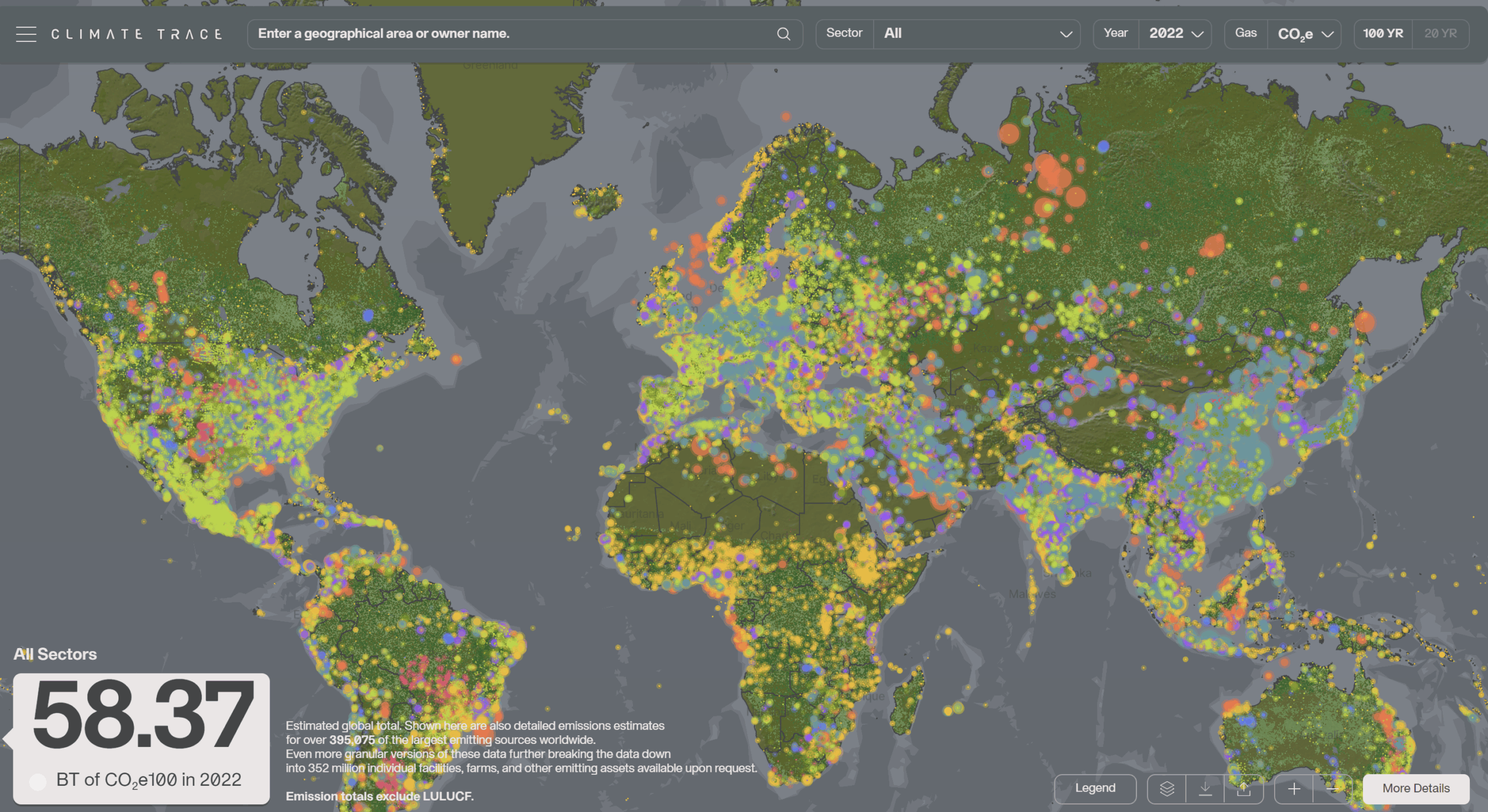
Climate TRACE
Climate TRACE is a comprehensive tool for tracking global greenhouse gas emissions. Utilising satellite data and AI, it provides real-time insights, helping finance professionals assess environmental impacts and make informed decisions. This tool supports ESG integration and sustainability in financial practices.


