
Library | Asset Class
Fixed Income & Cash
Fixed income includes government bonds, corporate bonds and asset-backed securities. Cash typically refers to money market instruments and short-term, highly liquid investments that provide capital preservation and stability.
Refine
311 results
REFINE
SHOW: 16


The promise of fintech: financial inclusion in the post COVID-19 era
This report uses quantitative and qualitative research to further our understanding of developments in digital financial inclusion driven by fintech, and their macroeconomic effects. It also details the impact of the COVID-19 pandemic and discusses the future of fintech’s impacts on financial inclusion.
Bankrolling plastics: The banks that fund plastic packaging pollution
Banks continue to finance the global plastics chain, despite the significant risks of lender liability from the impacts of plastic waste. This report highlights the lack of development of any due diligence systems, contingent loan criteria, or financing exclusions at the banks when it comes to the plastic packaging industry.

Bankrolling extinction: The banking sector's role in the global biodiversity crisis
This report explores the contribution of the banking sector to the biodiversity crisis and the destruction of nature as of 2019. The report ranks the 50 largest banks globally based on their financing of unethical operations, finding a large impact on deforestation, ecosystem destruction and overfishing.

Getting physical: Scenario analysis for assessing climate-related risks
There has been a gap between understanding climate change and the implications it has for finance and the broader economy. This paper provides insight into scenario analysis - using data and climate science to provide more transparency on their financial risks in the medium and long term.

Financing the civic energy sector: How financial institutions affect ownership models in Germany and the United Kingdom
Addresses the concept of civic energy concerning the municipal ownership of energy systems in the UK and Germany by contrasting their banking systems to demonstrate how social and cultural values have shaped the civic energy sector. In turn, this demonstrates the importance of financial institutions in the low-carbon transition.

Global stewardship principles
The International Corporate Governance Network (ICGN) Global Stewardship Principles (GSPs) provide an international framework for investors to implement their fiduciary obligations on behalf of clients and beneficiaries. ICGN’s stewardship principles are a set of aspirational best practices, curated to be used flexibly with individual investor circumstances in mind.
Blueprint for business leadership on the SDGs: A principles-based approach
Business cannot thrive unless people and planet are thriving. This publication presents a framework for the next generation of business leadership with the intention to foster contribution to the United Nations Sustainable Development Goals at scale.

Vanguard Group: Passive about climate change
As the world’s second largest asset manager, Vanguard Group Inc. has the potential to become a climate action leader. Despite Vanguard’s commitment to the Net-Zero Asset Manager initiative, the report argues that Vanguard’s significant share in fossil fuel exposed companies demonstrates a passive attitude towards climate change.

Providing decent work for young workers, parents and caregivers
Provides guidance for companies to fulfil their responsibility to support the decent work of young workers, parents and caregivers across their supply chains. Includes a case study on IKEA’s approach to supporting children’s rights and a second case study on Wipro’s approach to gender diversity.
Unlocking Australia's sustainable finance potential
Recommendations on actions by Australian Government and finance sector for unlocking the potential of sustainable finance in Australia. The basis of these recommendations are the European Union's Action Plan on sustainable finance that was adopted by the European Commission in March 2018 and the likelihood of their success in Australia.

Net zero investment framework: Implementation guide
This report provides a practical framework for investors seeking to implement net zero commitments. It builds on the draft Net Zero Investment Framework published in 2020 by the Institutional Investors Group on Climate Change, broadening to a global perspective.

Digital financial services
Discusses the potential of digital financial services (DFS) to reduce poverty and promote economic growth. Analyses DFS role in financial inclusion within households and emerging markets and developing economies. Examines constraints of regulations and frameworks and provides case studies from countries that have enabled DFS in their economy.

The future of tobacco stocks: a scenario analysis
This report identifies drivers of change within the tobacco industry and the potential risk factors that may arise as a result. The report conducts a scenario analysis that maps out three potential outcomes for the industry and the relative impact on the share price of the world’s largest tobacco companies.

From poor working conditions to forced labour: what's hidden in your portfolio? A guide for investor engagement on labour practices in agricultural supply chains
This guide provides a comprehensive tool for engaging food and beverage companies on labour standards. It incorporates learnings from collaborative investor-company engagement focused on supply chain reporting and third-party resources. Outlining seven expectations for investors to focus on supported by relevant resources and case studies.
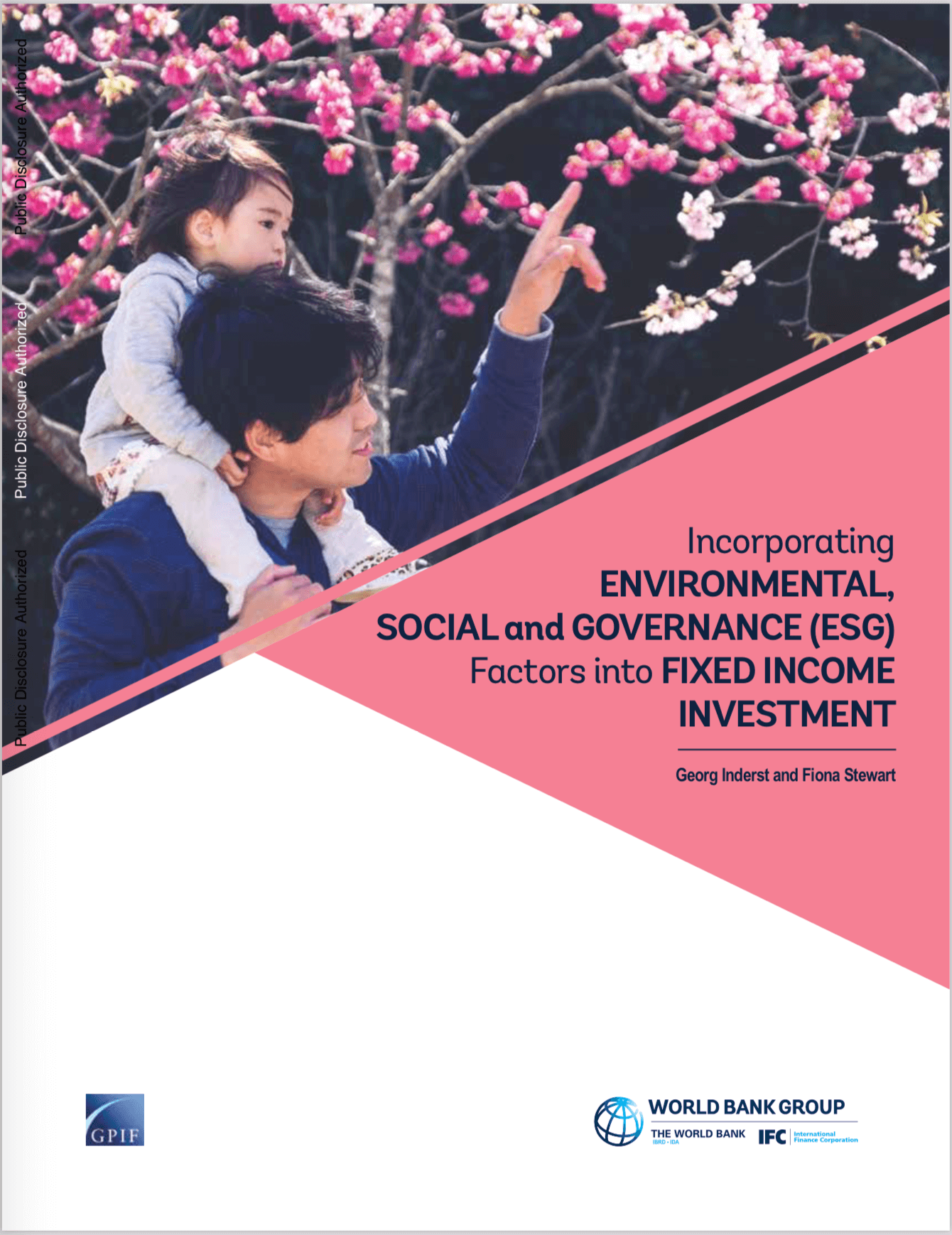
Incorporating environmental, social and governance (ESG) factors into fixed income investment
This report aims to promote strategies for including environmental, social and governance (ESG) criteria in investment decisions within fixed income. It provides an overview on sustainable investing in fixed income across five core areas building on research, practical experiences and a literature review to inform findings.

Sustainability: The bond that endures - Tools and insights for ESG investing in fixed income
BlackRock considers four key areas for environmental, social and governance (ESG) in fixed income: sustainable building blocks such as ESG indexes, a lens for considering the sustainability of government bond issuers, the financial relevance/materiality of ESG characteristics across different industries, and how to build sustainable portfolios using fixed income.


