
Library | Asset Class
Multi-Asset / General
Investment strategies that allocate across multiple asset classes (e.g., equities, bonds, real estate, alternatives) for diversification.
Refine
621 results
REFINE
SHOW: 16


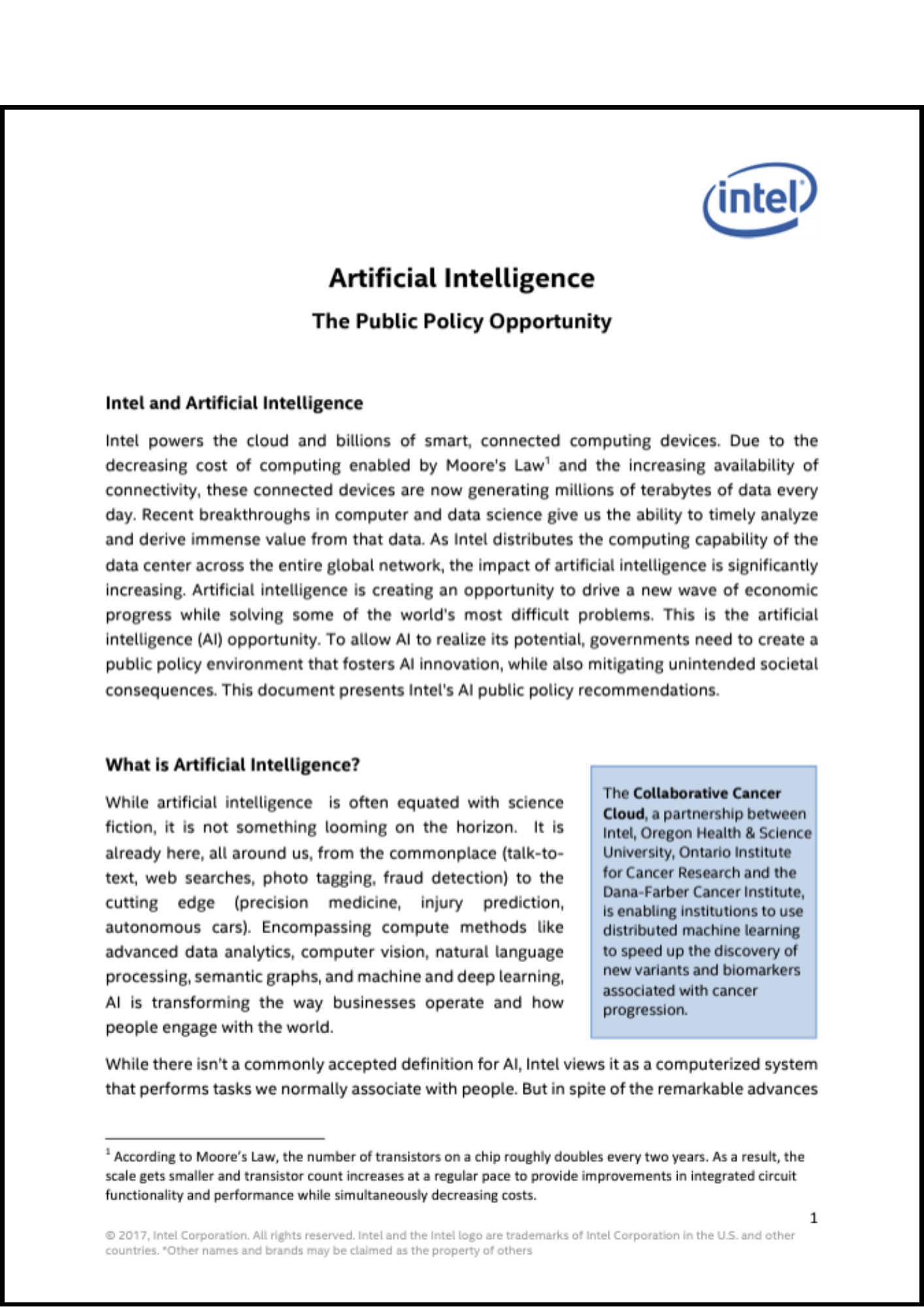
Artificial intelligence: The public policy opportunity
The artificial intelligence (AI) opportunity is here, and it's transforming industry and society. Governments must create public policy environments that encourage AI innovation, while mitigating negative consequences. This report by Intel outlines several key recommendations necessary to realise the potential of AI and to prepare for this transformative technology.

Addressing harmful online content: A perspective from broadcasting and on-demand standards regulation
This discussion paper presents broadcasting and on-demand standards regulation as a model to address harmful online content. It calls for transparency in platform moderation, a flexible approach to regulation in an environment of free expression, and harmonisation of a regulatory approach for globally accessible content.

Australian Ethical
Australian Ethical is a leading ethical investment manager in Australia, offering responsible and sustainable investment options. With a focus on positive impact, they provide ethical superannuation, managed funds, and investment solutions, aligning investments with environmental, social, and governance (ESG) considerations. Explore ethical financial choices with Australian Ethical.

Federal Reserve Bank of New York
Explore the Federal Reserve Bank of New York's (New York Fed) official website. As a key component of the Federal Reserve System, the New York Fed plays a vital role in monetary policy, financial stability, and economic research. Access resources on banking, economic analysis, and financial services provided by this influential institution.
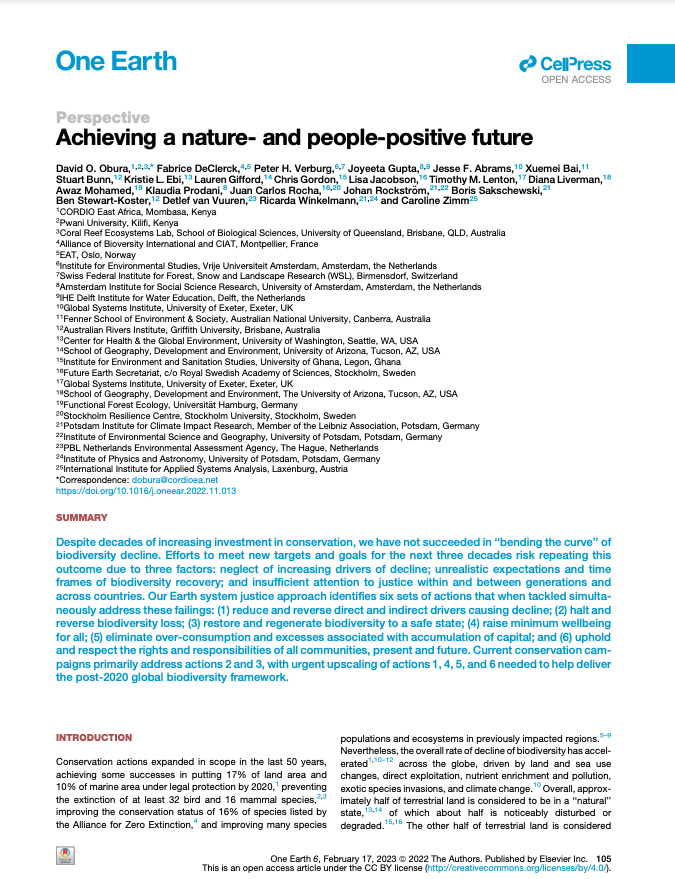
Achieving a nature- and people-positive future
This paper focuses on the discourse surrounding global conservation. It highlights the importance of recognising different responsibilities among actors and countries and calls for human-centred actions to ensure a safe and just future for all. It offers insights on introducing transformational elements to existing campaigns through the Earth System Justice Approach.
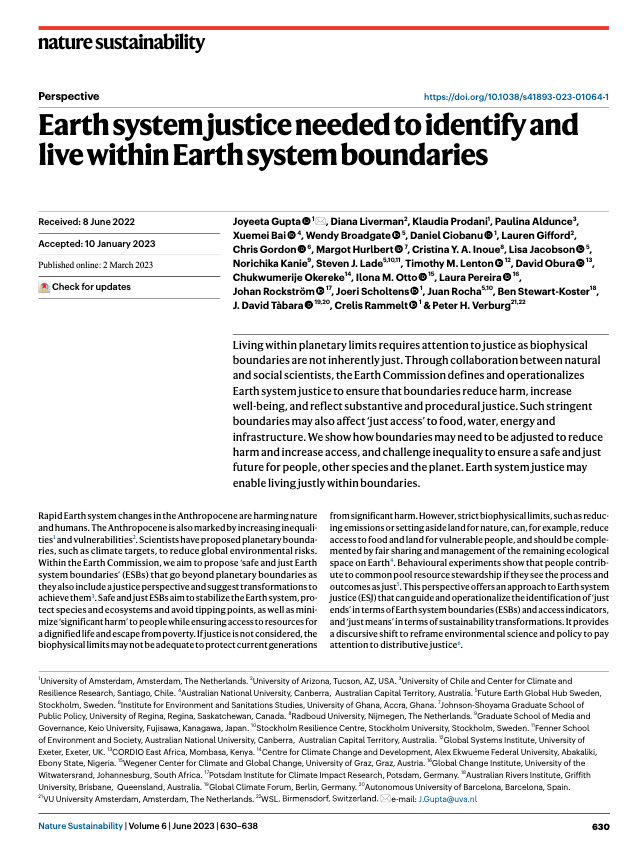
Earth system justice needed to identify and live within Earth system boundaries
This article considers how to integrate principles of justice within Earth’s system boundaries, specifically for climate, the biosphere, water and nutrient cycles, and aerosols. Using the Earth system justice approach, it discusses living within planetary limits whilst minimising significant harm to all people and ensuring equitable access to resources.
Climate impacts at work: Supporting a climate ready workforce
Demonstrates empirical evidence of varied climate change impacts and their effects on workers and organisations across a range of industries, working mostly in Victoria. Workers are being affected in many compounding ways. With climate change impacts continuing to worsen, workers and industry must be supported to adapt to climate change.

Mobilising climate investment in emerging markets: Opportunities for Australian pension and superannuation funds
This report delves into the potential of pension funds in driving climate solutions in developing economies. Highlighting barriers like geopolitical risks and policy uncertainties, the report underscores collaboration, ESG standards, and internal expertise as pivotal for sustainable investments in these regions.

Integrity matters: Net zero commitments by businesses, financial institutions, cities and regions
As the global community faces a climate crisis, the report recommends setting standards and criteria for achieving net zero emissions, addressing concerns about greenwashing, and calling for a just transition for developing countries. The report advocates for a collaborative 'ambition loop' to accelerate global efforts toward a sustainable future.
Aboriginal and Torres Strait Islander best practice principles for clean energy projects
Ten principles placing Australia's First Nations people and communities at the centre of clean energy projects. The Principles ensure that projects provide economic and social benefits, include cultural and environmental considerations, and provide employment opportunities. The Principles are for all stakeholders involved in clean energy projects, including investors and government.
Aggregate confusion: the divergence of ESG ratings
The research investigates the disagreement in Environmental, Social and Governance (ESG) ratings between rating providers. Three factors are identified: measurement divergence, scope divergence and weight divergence. The paper argues for a standardisation of ESG indicators and measurement procedures to reduce the discrepancy in ESG ratings.

Integrating nature: The case for action on nature-related financial risks
The Cambridge Institute for Sustainability Leadership (CISL) has written this paper to equip senior management within financial institutions to integrate nature-related risks into financial decisions. The paper details why action needs to be taken and the steps to accelerate the integration of nature into finance.

Inter-agency Task Force on Financing for Development's financing for sustainable development report series
The "Financing for Sustainable Development" reports explores global financing challenges and opportunities to achieve the Sustainable Development Goals (SDGs). This benchmark report assesses current financial landscapes, identifies financing gaps, and provides actionable recommendations to mobilize resources and reform international financial frameworks, emphasising sustainable and inclusive development.

ESG and financial performance: Aggregated evidence from more than 2000 empirical studies
This study examines the positive relationship between ESG (environmental, social, and governance factors) and corporate financial performance, through examining over 2000 empirical studies; a strong business case is also seen across regions and asset classes. Findings show an expected alpha when embracing ESG in investment strategies.

Private equity and value creation: A fund manager's guide to gender-smart investing
This report examines the increase in adoption of gender-smart investing within the private equity industry by general partners (GPs) and limited partners (LPs). Lessons from over 160 fund managers have been utilised in this step-by-step guide to choosing gender-smart investment strategies, and putting policies into practice within firms and portfolios.
Project SAGE series - Gender-lens investing
The 'Project SAGE' series are benchmark reports released by the Wharton Social Impact Initiative, tracks venture capital, private equity, and private debt investments with a gender lens. The project's goal was to provide a “point in time” capture of the expanding gender lens investing opportunities globally.


