
Library | Asset Class
Other Real Assets
Tangible assets with intrinsic value beyond financial instruments, e.g., timberland, farmland, or natural resources.
Refine
108 results
REFINE
SHOW: 16


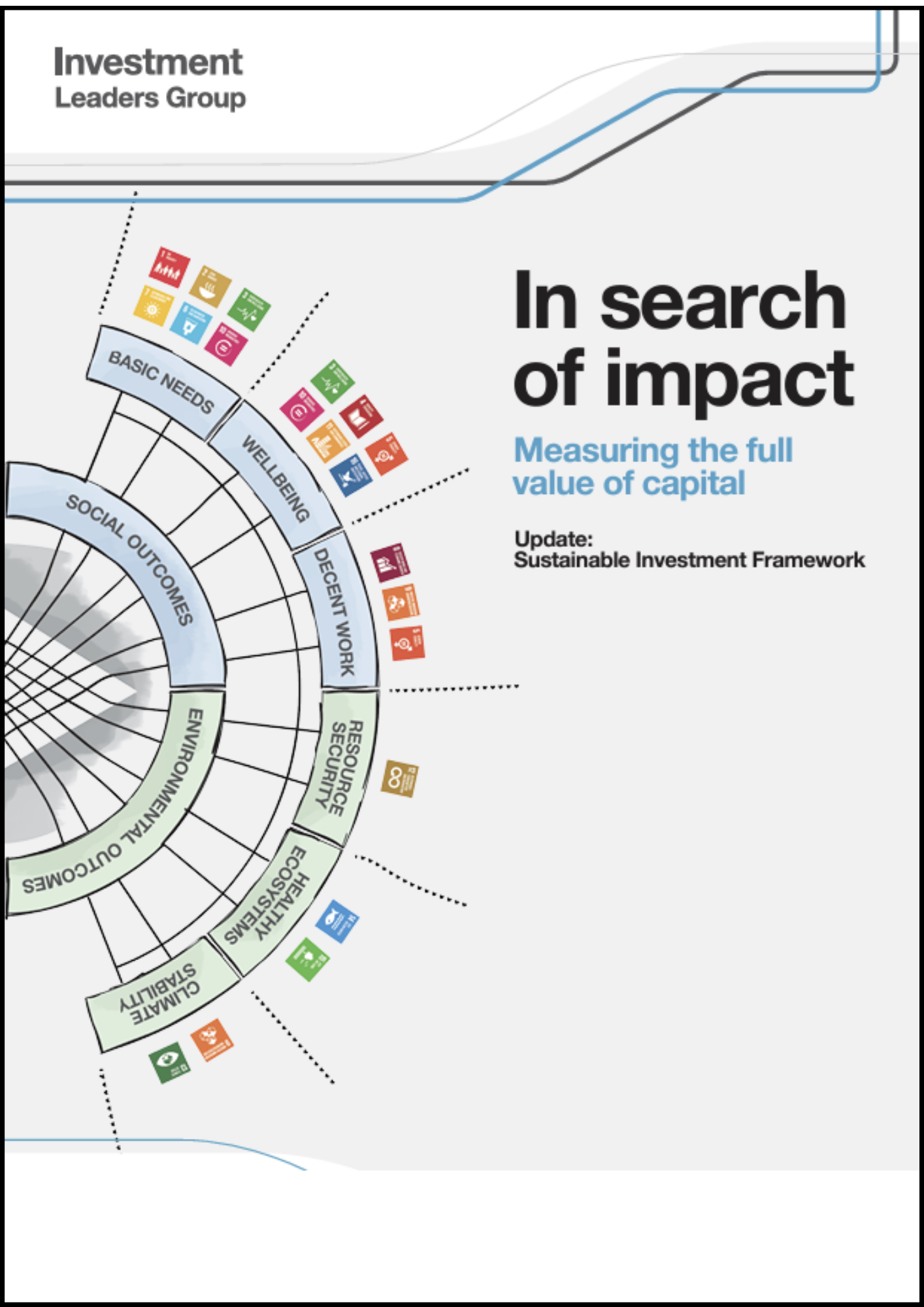
In search of impact: Measuring the full value of capital
This report outlines a sustainable investment framework, designed to empower individuals and organisations to better understand and make informed investment choices. The framework utilises six themes to communicate the impact of financial flows into the economy and contains theoretically grounded metrics that can be practically applied.

Impact investing for pensions
This report analyses the growth of impact investing strategies among European pension funds. The report examines challenges and opportunities, regulatory restrictions, impact measurement and management, private equity case studies, and emerging investments in affordable and social housing.

Towards financing large-scale holistic landscape restoration in Europe: Recommendations for EU policy actors to attain inspirational, social, natural and financial returns
The report provides financing recommendations for large-scale holistic landscape restoration in Europe, addressing climate change, biodiversity loss, and food and water insecurity. It emphasises the effectiveness of landscape finance in promoting healthy ecosystems, offering practical frameworks for policymakers to accelerate impactful activities and align natural and community needs for comprehensive restoration.
Earth system justice needed to identify and live within Earth system boundaries
This article considers how to integrate principles of justice within Earth’s system boundaries, specifically for climate, the biosphere, water and nutrient cycles, and aerosols. Using the Earth system justice approach, it discusses living within planetary limits whilst minimising significant harm to all people and ensuring equitable access to resources.

Integrity matters: Net zero commitments by businesses, financial institutions, cities and regions
As the global community faces a climate crisis, the report recommends setting standards and criteria for achieving net zero emissions, addressing concerns about greenwashing, and calling for a just transition for developing countries. The report advocates for a collaborative 'ambition loop' to accelerate global efforts toward a sustainable future.

Recommendations of the Taskforce on Nature-related Financial Disclosures
This report aims to provide a unified approach to the disclosure of natural dependencies, impacts and risks for financial institutions and corporates. As the issue of natural loss and climate change continues to grow, a harmonised way of tackling these risks needs to be agreed to safeguard against material impacts.

Investors can assess nature now: A guide to assessing water and deforestation issues in investment portfolios
First Sentier Investors presents a five-step approach for sector and company-level assessments of nature and biodiversity with a focus on freshwater and forests.
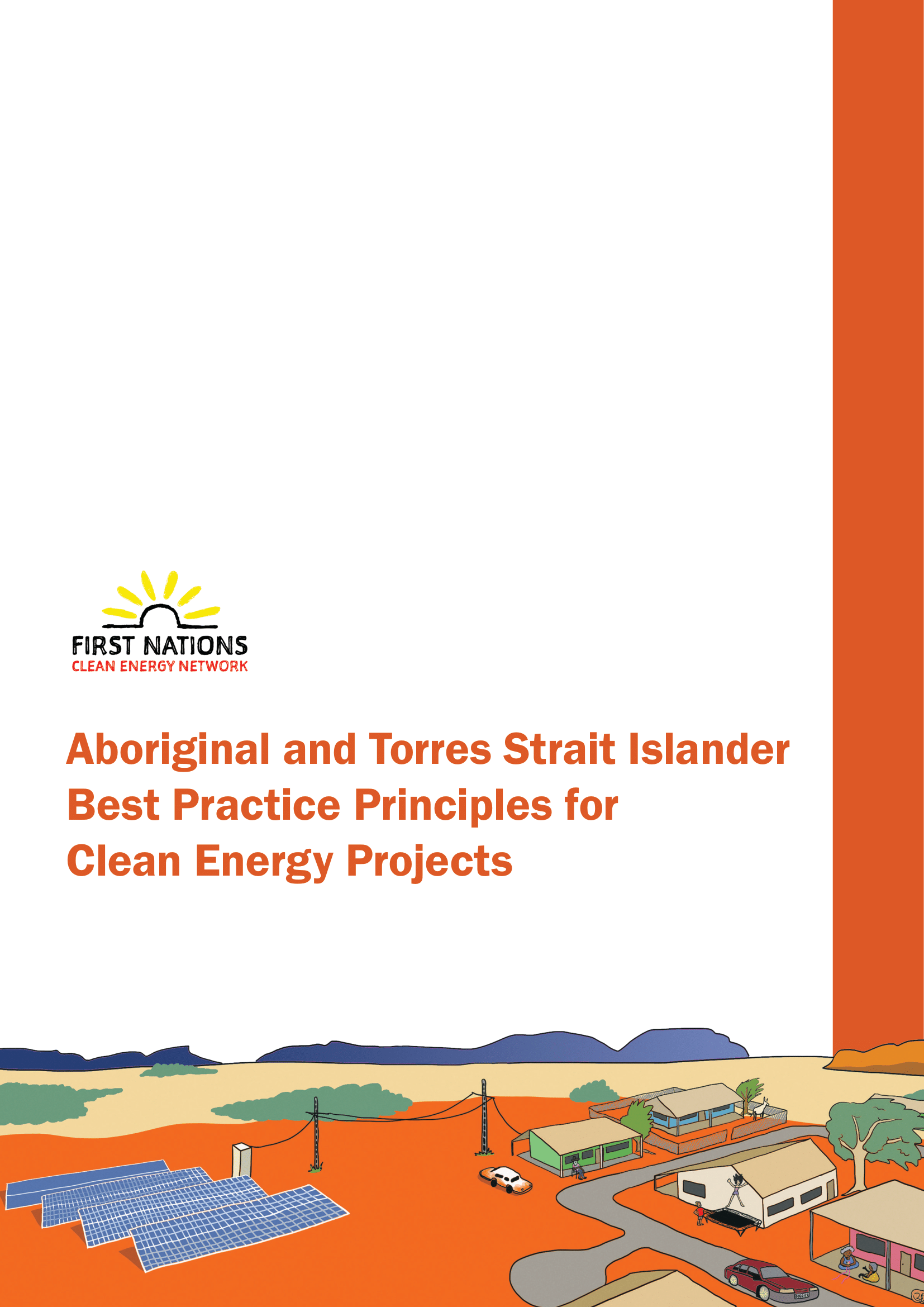
Aboriginal and Torres Strait Islander best practice principles for clean energy projects
Ten principles placing Australia's First Nations people and communities at the centre of clean energy projects. The Principles ensure that projects provide economic and social benefits, include cultural and environmental considerations, and provide employment opportunities. The Principles are for all stakeholders involved in clean energy projects, including investors and government.

Responsible sourcing: The business case for protecting land and environmental defenders and indigenous communities' rights to land and resources
This reports presents a business case for companies, particularly those with agricultural, timber and mineral supply chains, to take action on protecting and promoting rights of land and environmental defenders (LEDs). It also provides practical steps businesses can take to protect and promote these defenders’ rights.

Handbook for nature-related financial risks: key concepts and a framework for identification
The Cambridge Institute for Sustainability Leadership (CISL) has created this handbook and a framework for the identification of nature-related financial risks. It builds on the Dasgupta Review of the economics of biodiversity, enabling financial institutions to begin embedding nature into mainstream financial models, risk frameworks, and portfolio strategies.

Factory farming in Asia: Assessing investment risks
Asia's meat, dairy, and seafood industries are increasingly vulnerable to risks with the potential to damage returns. This report analyses twelve Asia-Pacific markets identifying five areas of risk including food safety and nutrition, public health, environment, animal welfare and labour standards. Each area of risk includes key questions for investors.

The emergence of foreseeable biodiversity-related liability risks for financial institutions: A gathering storm?
This report proposes a framework for financial institutions to consider biodiversity-related liability risks in their broader assessment of financial risks associated with biodiversity. Understanding the potential of liability risks will help financial institutions identify, price and mitigate the direct and indirect impacts of biodiversity-related risks.

How markets price ESG: Have changes in ESG scores affected stock prices?
This report takes a statistical look at the impact of historical ESG score shifts on stock prices valuation. It further determines financial performance implications for a broad spectrum of companies based on an ESG valuation curve.

Net zero investment framework: Implementation guide
This report provides a practical framework for investors seeking to implement net zero commitments. It builds on the draft Net Zero Investment Framework published in 2020 by the Institutional Investors Group on Climate Change, broadening to a global perspective.
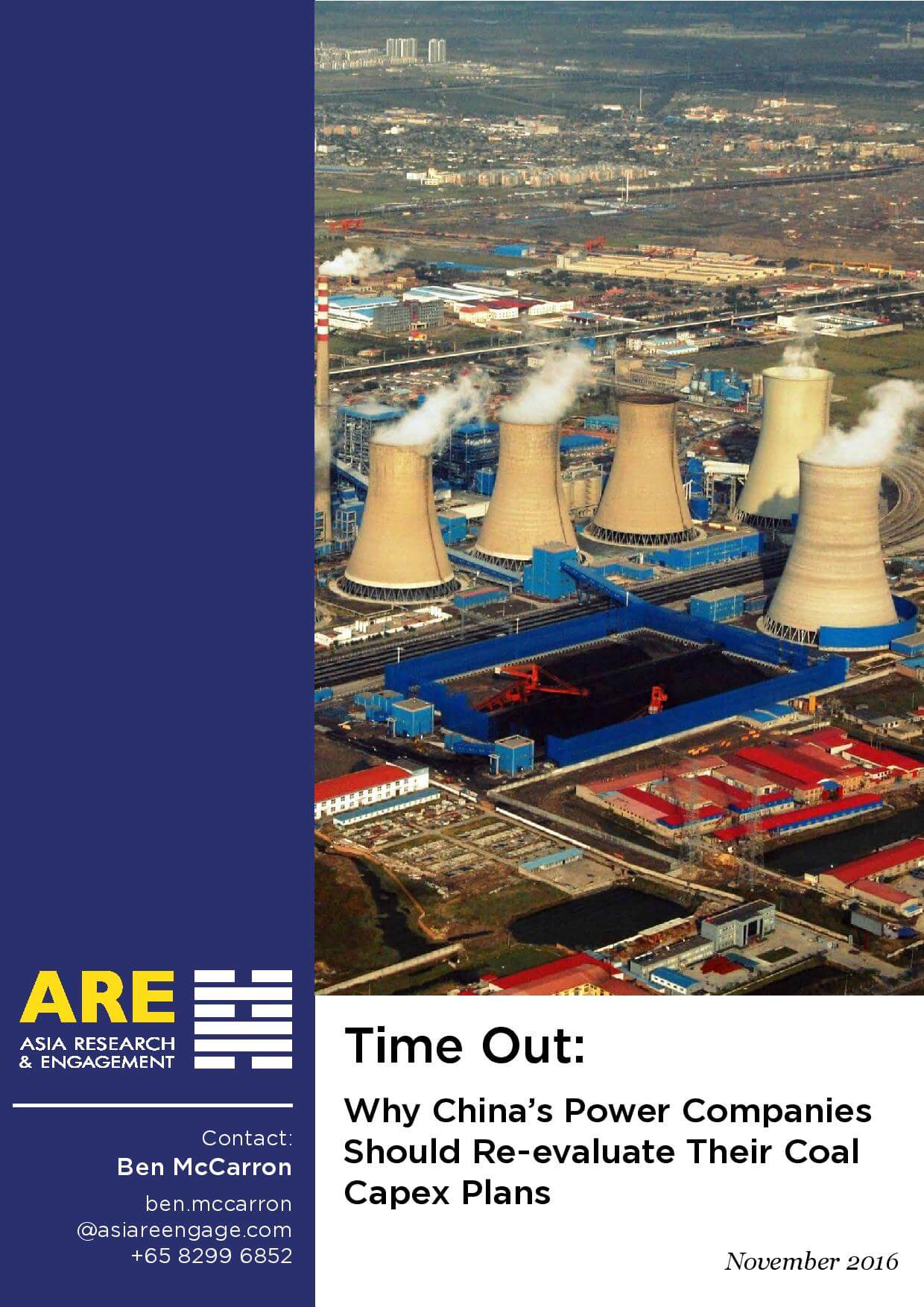
Time out: Why China's power companies should re-evaluate their coal capex plans
This report examines the trend of Chinese power companies’ increasing capital expenditure into coal power in China, and presents evidence of how it can be a financial risk for investors. It also provides recommendations for investors to engage with company management and apply greater scrutiny to company investments in coal fired power.

From poor working conditions to forced labour: what's hidden in your portfolio? A guide for investor engagement on labour practices in agricultural supply chains
This guide provides a comprehensive tool for engaging food and beverage companies on labour standards. It incorporates learnings from collaborative investor-company engagement focused on supply chain reporting and third-party resources. Outlining seven expectations for investors to focus on supported by relevant resources and case studies.


