
Library | Sustainable Finance Practices
ESG Integration and analysis
Tools, methodologies, and frameworks for embedding ESG factors into financial analysis, valuation, credit assessment, underwriting, and portfolio management, while separating out broader strategic elements.
Refine
539 results
REFINE
SHOW: 16


Pursuing impact within a portfolio: Insights from institutional asset owners
This report explores how institutional asset owners integrate impact goals into portfolio strategy. Through four case studies, it examines aligning financial returns with social and environmental outcomes using an impact lens. It highlights investment approaches addressing climate change, health, regional development and systemic inequality across diverse asset classes and geographies.
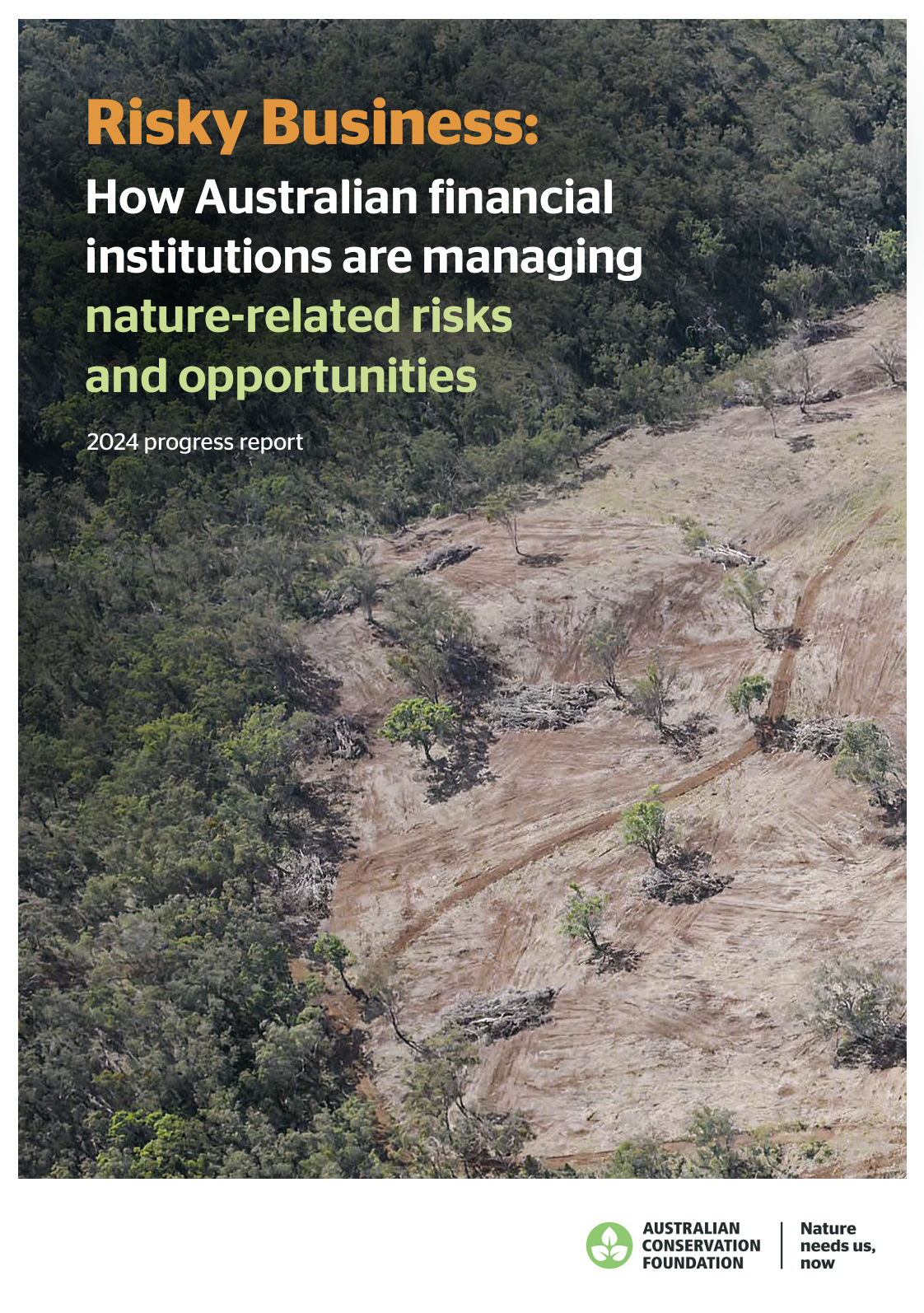
Risky business: How Australian financial institutions are managing nature-related risks and opportunities
This report assesses how ten banks and ten super funds in Australia are addressing nature-related risks and opportunities. It evaluates their strategies, risk management, target setting, and stakeholder engagement, highlighting areas of progress and identifying where further action is needed to mitigate financial risks associated with nature loss.
Climate risk and adaptation in global food
The report outlines rising climate risks to global food supply chains, projecting up to $38 trillion in damages by 2050. It explores mitigation and adaptation strategies across crops, livestock, and fisheries, and highlights investor actions to build resilience, support sustainable practices, and adapt to shifting market, environmental, and regulatory conditions.
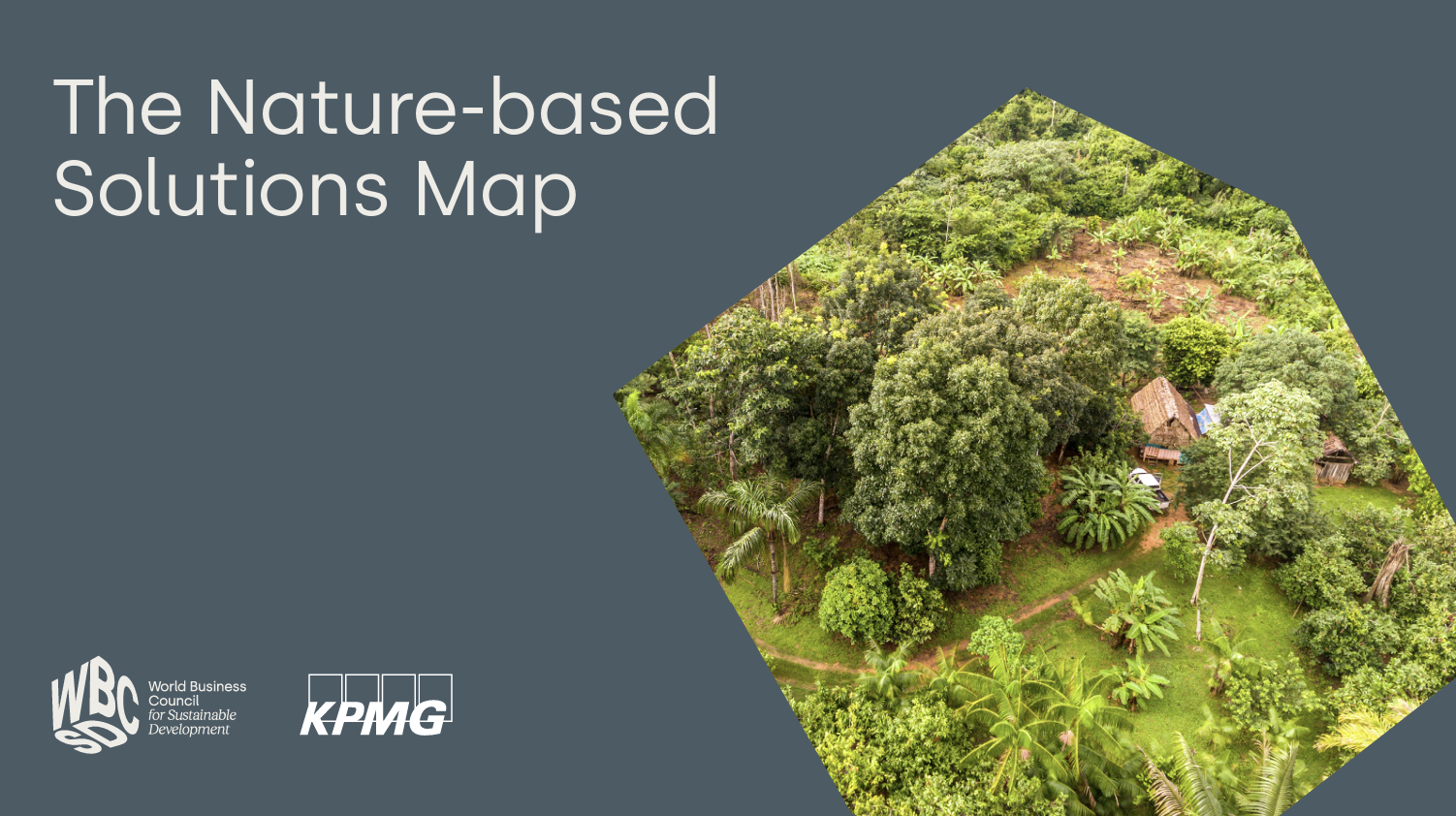
The nature-based solutions map
This tool is designed to help businesses identify relevant nature-based solutions (NbS) for addressing challenges related to core business operations, climate, nature, water, and social equity. It categorises NbS based on business needs and biomes, facilitating decision-making. The map serves as a starting point, requiring further development for implementation.
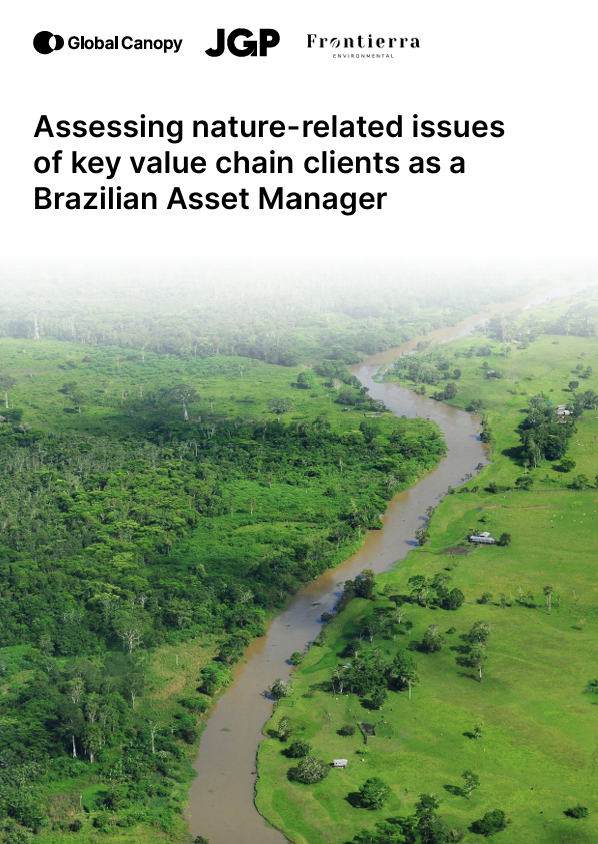
Assessing nature-related issues of key value chain clients as a Brazilian Asset Manager
This case study details JGP's participation in piloting the Taskforce on Nature-related Financial Disclosures (TNFD) LEAP approach. The study focuses on assessing JGP's exposure to tropical deforestation through companies connected to the agriculture sector in its investment portfolio.
The blended finance playbook for nature-based solutions
This playbook contains a collection of useful case studies for investors, highlighting growing evidence of investment opportunities in nature. The playbook also contains guidance for investors looking to grow their blended finance portfolio.

Earth Security
Earth Security partners with companies, investors, and governments to quantify the economic value of ecosystems, promoting investments in nature-based solutions. Their initiatives include developing mangrove-positive investment funds and integrating natural infrastructure for climate resilience.
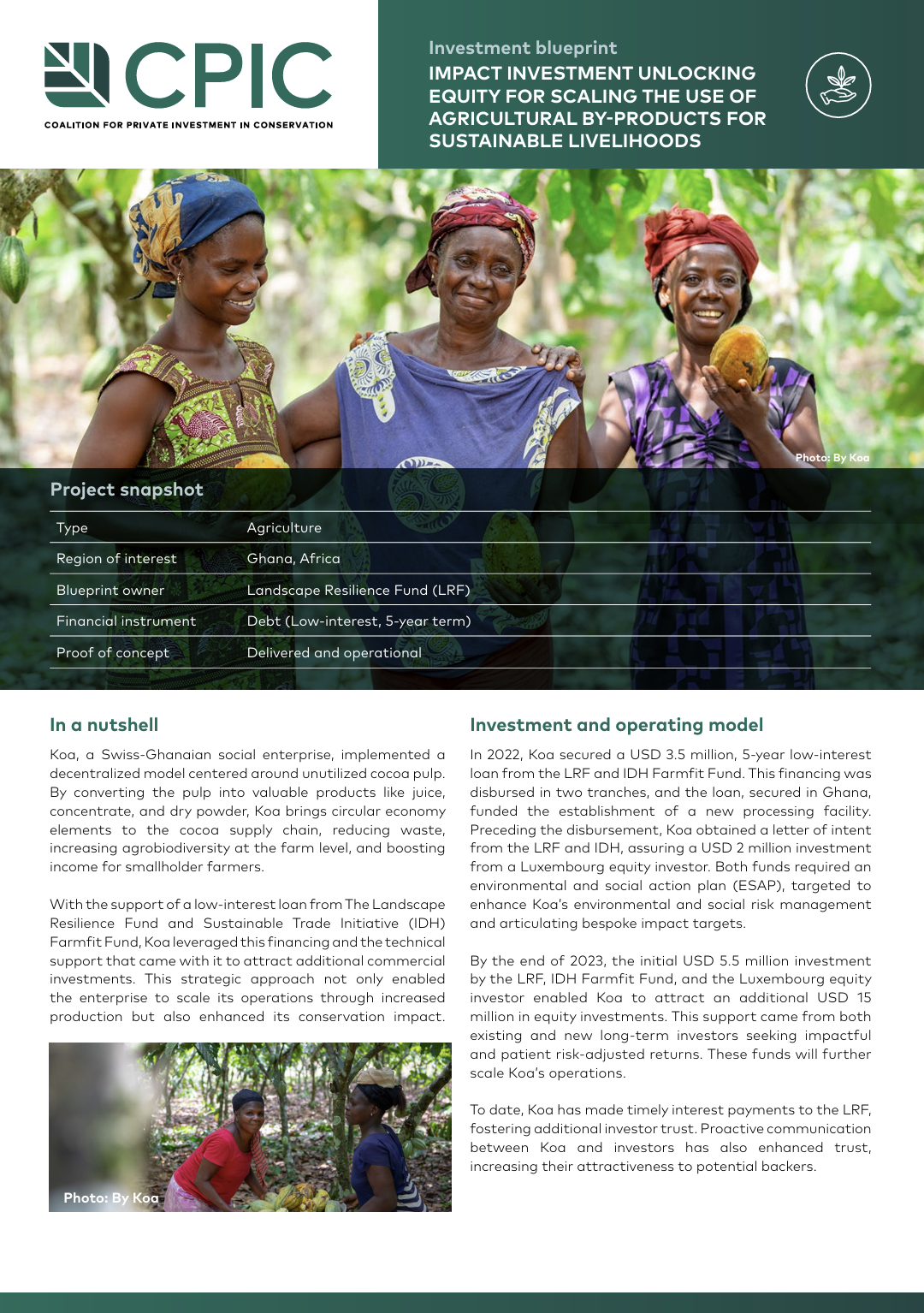
Impact investment unlocking equity for scaling the use of agriculture by-products for sustainable livelihoods
This blueprint provides a model for using private finance to develop compensatory habitats through habitat banking. It demonstrates how investors can generate returns while contributing to biodiversity conservation and habitat restoration.
Conservation Capital case studies
Conservation Capital provides various case studies showcasing successful conservation finance initiatives that integrate business principles with environmental conservation efforts. These case studies highlight projects that generate both financial returns and positive conservation outcomes.
Storm clouds and silver linings: Long-term investing in an age of geopolitical uncertainty
The report explores the impact of geopolitical uncertainty on long-term investing, highlighting risks and opportunities for institutional investors. It emphasises the need for integrating geopolitical considerations into investment strategies, governance, and decision-making frameworks. The report provides practical tools for investors to assess geopolitical resilience, manage risks, and engage with stakeholders while balancing short-term pressures with long-term value creation.

TNFD's Learning Lab
The TNFD Learning Lab is a free, open-access platform offering self-paced modules to help individuals understand nature-related issues and the TNFD's recommendations. It includes educational videos, webinars, and resources, covering foundational concepts and practical applications. Registration is required to access the content.
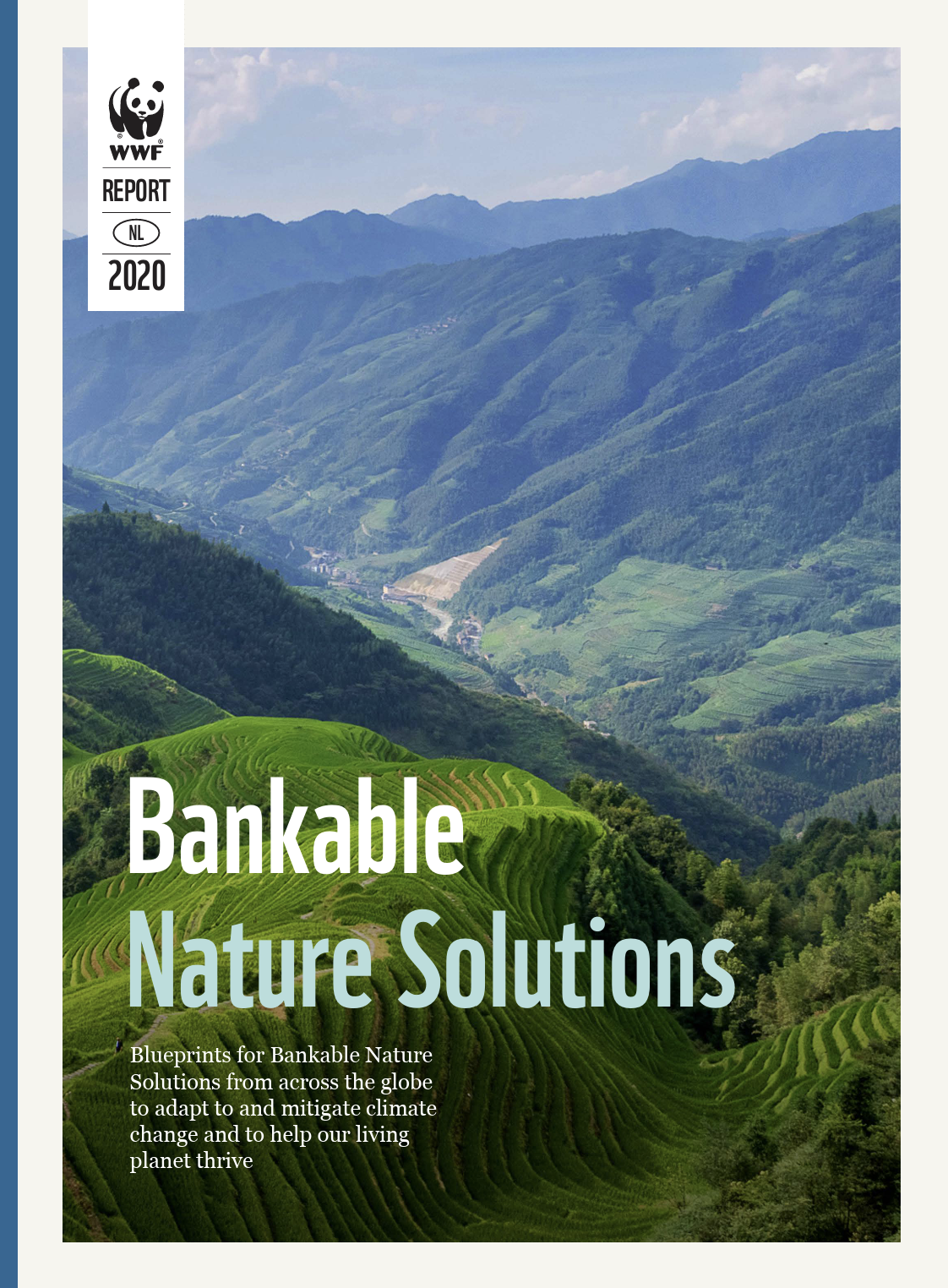
Bankable nature solutions
This report aims to support readers in understanding Bankable Nature Solutions (BNS) and start identifying and developing their own BNS project by providing Blueprints for Bankable Nature Solutions from across the globe to adapt to and mitigate climate change and to help our living planet thrive.

Decarbonisation investment solutions for sectors: A discussion paper on Sector Transition Plans and their importance to investors
The report from the Investor Group on Climate Change (IGCC) discusses the development and importance of sector transition pathways to support Australia’s decarbonisation. It highlights how clear pathways aligned with the Paris Agreement can guide investment, minimise risks, and foster collaboration among investors, governments, and companies to achieve net-zero emissions by 2050.

Contextualising ESG funds' engagement strategies in Asia
The report examines the engagement strategies of ESG funds in Asia, highlighting the unique challenges posed by regulatory constraints, concentrated ownership, and political influences. Using a structured engagement pyramid, the study categorises ESG fund strategies, ranging from investment screening to direct corporate control. Despite obstacles, notable regional features can support ESG initiatives, such as shareholder voting mechanisms and strategic collaborations. The report provides insights into how ESG funds navigate these challenges to influence corporate governance and sustainability outcomes in Asia.

How to build a better ESG fund classification system
The report outlines the challenges of ESG fund classification and proposes a structured framework based on three observable features: ESG information use for risk-adjusted returns, policies controlling ESG exposure, and explicit impact objectives. It critiques existing regulatory approaches and suggests improvements for investor clarity, regulatory effectiveness, and research utility.

CDSB framework: Application guidance for biodiversity-related disclosures
The CDSB Framework application guidance for biodiversity-related disclosures (the Biodiversity Application Guidance) has been produced by CDSB to assist companies in the disclosure of the material information about the risks and opportunities that biodiversity presents to an organisation’s strategy, financial performance and condition within the mainstream report (biodiversity-related financial disclosure). It is designed to supplement the CDSB Framework for reporting environmental and climate change information to investors (CDSB Framework).


