
Library | Sustainable Finance Practices
Governance and directors’ duties
Resources on the responsibilities of boards and directors in overseeing sustainability, ensuring accountability, fulfilling fiduciary duties, and promoting long-term value creation.



Refine
153 results
REFINE
SHOW: 16


Governance of AI adoption in central banks
This BIS report outlines central banks’ AI use cases, associated strategic, operational, cyber and reputational risks, and advocates adapting existing risk-management and three-lines-of-defence frameworks, supported by an adaptive AI governance model and ten practical actions, to balance innovation with security, compliance, data privacy and organisational resilience.
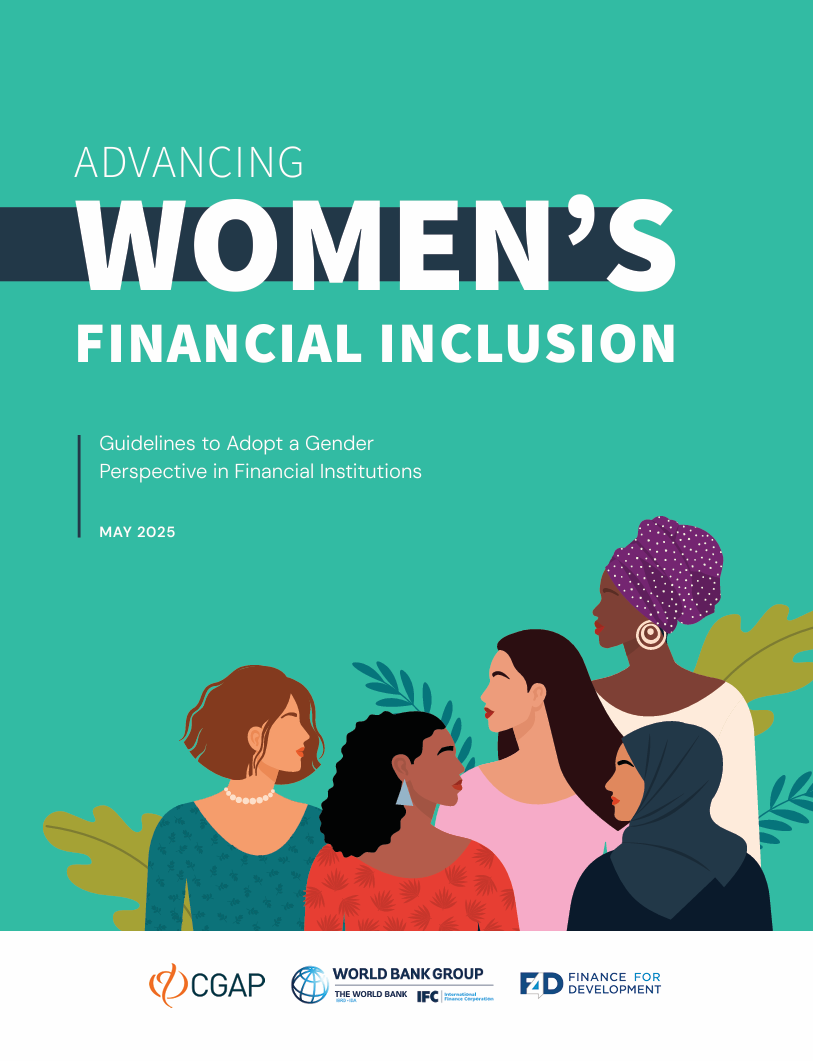
Advancing women’s financial inclusion: Guidelines to adopt a gender perspective in financial institutions
The report outlines guidelines for financial institutions to integrate gender perspectives across governance, management, staffing, communications, and product design. It promotes data-driven policies, bias reduction, inclusive culture, tailored financial solutions for women, and strategic partnerships to enhance women’s financial inclusion and strengthen institutional performance.

Sustainable Finance Roundup November 2025: Transition Turning Points and Rising Accountability
This month’s sustainable-finance roundup highlights faster transition momentum, rising physical risks and a tightening focus on accountability. COP30 reinforced expectations for stronger 2035 targets, while national actions underscored diverging paths toward decarbonisation. Markets continued shifting toward clean energy and resilience, and new science made climate harms more visible. With regulatory scrutiny and litigation increasing, transition credibility and real-economy resilience are becoming core drivers of financial risk and investment decisions.

Nature enters the boardroom
This report examines how Australian boards are beginning to integrate nature into governance, identifying rising awareness of nature-related risks, early adoption of frameworks such as TNFD, and varied oversight and disclosure practices. It highlights barriers, emerging approaches, and the growing financial relevance of nature for organisational decision-making.
Nature-related risks and directors’ duties under the law of England and Wales
The report analyses how nature-related risks arising from companies’ dependencies and impacts on nature affect directors’ duties under English law. It concludes that directors must identify, assess, and manage material nature-related risks under sections 172 and 174 of the Companies Act 2006 and ensure transparent, accurate disclosure to meet statutory and governance obligations.
Drivers of behavioral change and non change in transition times
The Drivers of Behavioural Change and Non-Change in Transition Times report, published by IpBc/GIECo in 2025, examines psychological, social, and organisational factors influencing why individuals and institutions act—or fail to act—on sustainability. Drawing on behavioural science, it identifies mindsets, emotions, implicit cognition, and systemic barriers as key determinants of ecological and climate-related behavioural shifts.
The architecture of power: Patterns of disruption and stability in the global ownership network
This report summarises global corporate ownership networks from 2007 to 2012, introducing an Influence Index to measure shareholder power. It finds increasing concentration among major institutional investors, particularly passive funds, forming a resilient super-entity that centralises corporate control and poses implications for competition and financial stability.
Committee diversity effect on corporate investment risk practices
This study investigates how diversity within corporate committees influences investment risk practices among ASX 300 firms (2018–2020). Using a composite index of gender, independence, and non-executive representation, the authors find that greater committee diversity enhances long-term strategic investment decisions and efficiency, improving governance and financial performance.
Navigating diversity, equity and inclusion: An asset owner perspective
This report summarises how asset owners integrate diversity, equity and inclusion (DE&I) into organisational policies, investment management and stewardship. Drawing on interviews with 21 organisations, it highlights varying maturity levels, regulatory developments, data challenges and best practices shaping DE&I implementation across the pensions and investment industry.

More than just good ethics: new research links corporate diversity to better investment decisions
New research on Australia’s ASX 300 companies finds that diversity within board committees, particularly in terms of gender, independence, and professional background, leads to smarter and more efficient investment decisions. The study shows that diverse committees make more disciplined and forward-looking choices, linking inclusion directly to better financial performance and long-term value creation.
2019 Hutley opinion: Climate change and directors’ duties
This report summarises legal opinions by Noel Hutley SC and Sebastian Hartford Davis for the Centre for Policy Development, concluding that Australian company directors must assess, disclose and manage foreseeable climate risks. It highlights growing regulatory and investor expectations, making climate oversight a key element of directors’ duties and liability exposure.
ESG: A panacea for market power?
This paper, “ESG: A Panacea for Market Power?” by Philip Bond and Doron Levit (2024), examines how firms’ social (“S”) ESG policies affect market competition. It finds that moderate ESG actions such as fairer treatment of workers or customers can reduce market power and improve welfare, while overly aggressive policies harm both firms and stakeholders. The authors show that competition in ESG policies among socially minded firms can deliver efficient, welfare-maximising outcomes, linking ESG adoption to market structure, corporate governance models, and executive incentives.
Outsourcing active ownership in Japan
This report summarises private shareholder engagements in Japan by Governance for Owners Japan between 2009 and 2019. Findings show high success rates and positive abnormal returns, with quiet activism proving more effective than public campaigns. Evidence indicates such private engagements support Japan’s governance reforms and long-term shareholder value.

Research Institute of Economy, Trade and Industry (RIETI)
Research Institute of Economy, Trade and Industry (RIETI) is a Japanese policy think tank founded in 2001. RIETI conducts theoretical and empirical economic research, bridges academe and government, and offers evidence-based trade, industry and economic policy recommendations.
Exit versus voice
This report summarises research comparing the effectiveness of “exit” strategies, such as divestment and boycotts, with “voice” strategies, such as shareholder engagement, in influencing corporate behaviour. It concludes that when most investors are even slightly socially responsible, engagement leads to socially optimal outcomes, whereas exit rarely does and can reduce welfare.

Evaluation project on the effects of engagement
The report by Japan’s Government Pension Investment Fund (GPIF) evaluates how engagement by external asset managers has affected investee companies from 2017–2022. Using causal inference analysis across over 26,000 engagements, it finds positive links between engagement and improvements in corporate value, governance, decarbonisation, and diversity.


