
Library | Sustainable Finance Practices
Laws and regulations
Government policies, legislation, and regulatory frameworks that shape sustainable finance practice, including mandatory disclosure rules, climate law, financial regulation, and ESG-related requirements.

Refine
461 results
REFINE
SHOW: 16


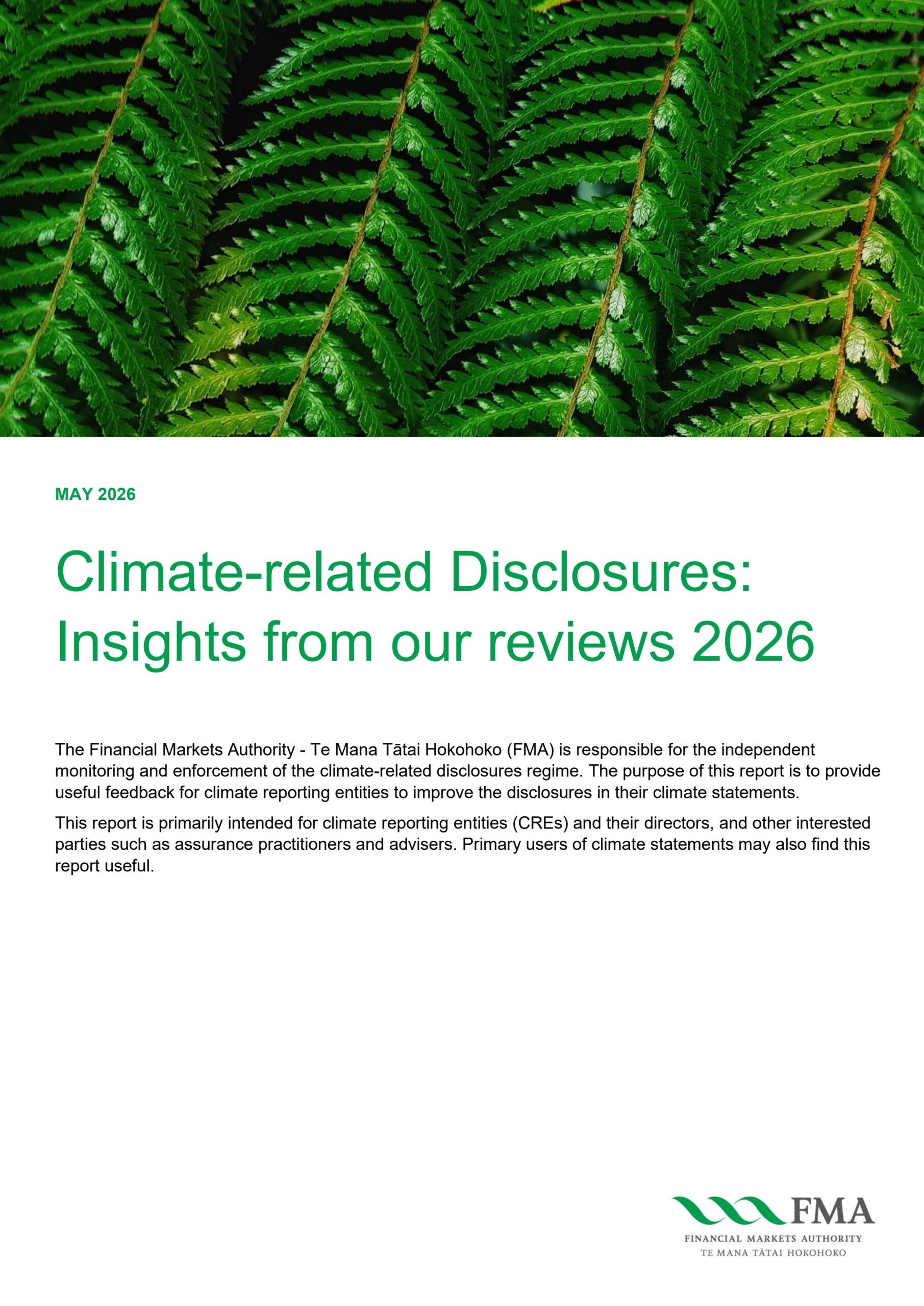
Climate-related disclosures: Insights from our reviews 2026
This Financial Markets Authority report reviews 62 climate statements from the second reporting period in Aotearoa New Zealand. It identifies improvements in reporting structures but highlights gaps in physical risk analysis and assurance compliance. Future monitoring will focus on education to improve data substantiation and risk disclosure quality.
Why shareholder-driven corporate social responsibility failed
This report analyses why shareholder-led corporate social responsibility failed in the early 2020s. It argues that political forces blocking government regulation also dismantle private CSR initiatives. Using the BlackRock-Texas conflict as evidence, it concludes that direct political action is the only viable path for systemic change.
Templates in the EU Inc. regulation proposal
This research evaluates the European Commission’s Proposal for an optional 28th corporate law regime. It argues that proposed model articles of association fail to support venture capital-backed firms. The authors identify four shortcomings regarding scope, process, logic, and safe-harbour effects, suggesting a dedicated drafting track and broader coverage.
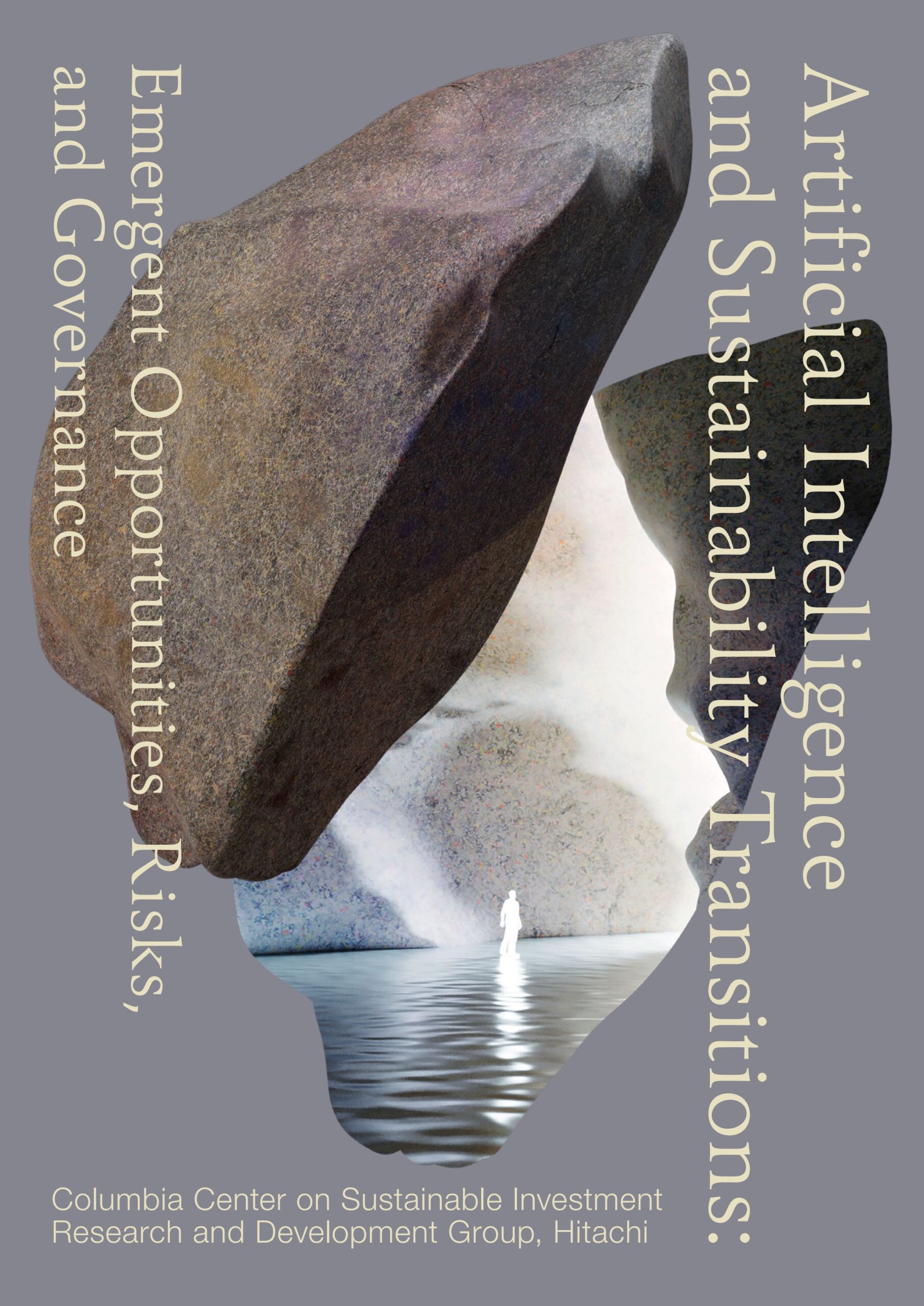
Artificial intelligence and sustainability transitions: Emergent opportunities, risks, and governance
This report examines the intersection of artificial intelligence and sustainability transitions, detailing opportunities and risks across environment, energy, labour, finance, and democracy. It proposes a three-layered governance framework and a phased roadmap for global scientific alignment, interim safety measures, and a binding international framework convention to ensure societal well-being.
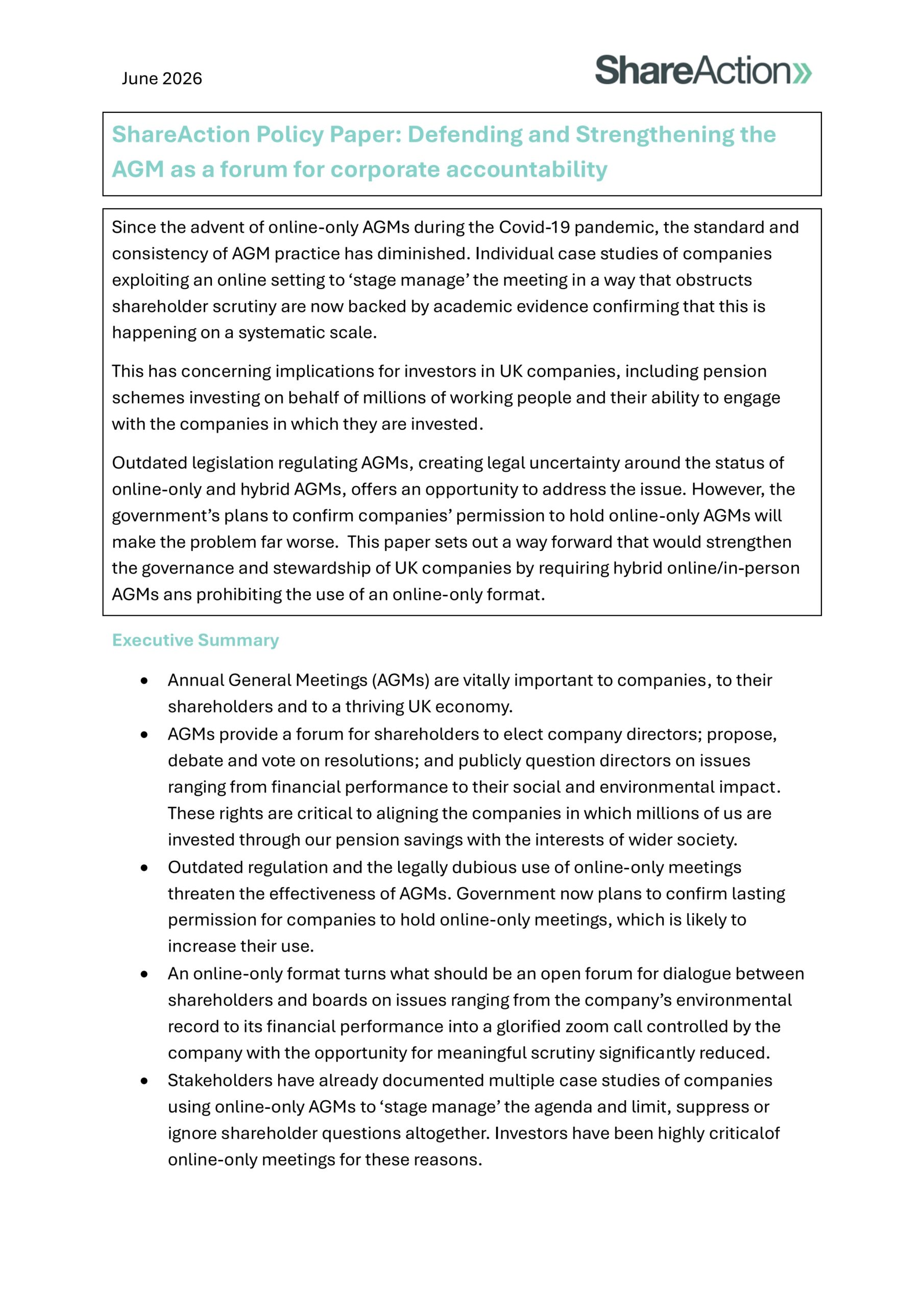
ShareAction policy paper: Defending and strengthening the AGM as a forum for corporate accountability
This ShareAction report advocates for mandatory hybrid AGMs to ensure corporate accountability. It argues that online-only formats diminish shareholder scrutiny and enable management to stage-manage proceedings. The document recommends amending the 2006 Companies Act and provides case studies of poor virtual AGM practices across several major companies.
The current state of BRSR in corporate India 2.0
This report analyses Business Responsibility and Sustainability Reporting (BRSR) data from 300 Indian companies over three years. It identifies progress in disclosure quality, energy intensity trends, and assurance practices. Recommendations focus on standardisation and sector-specific guidance to enhance the decision usefulness of sustainability data for investors and regulators.
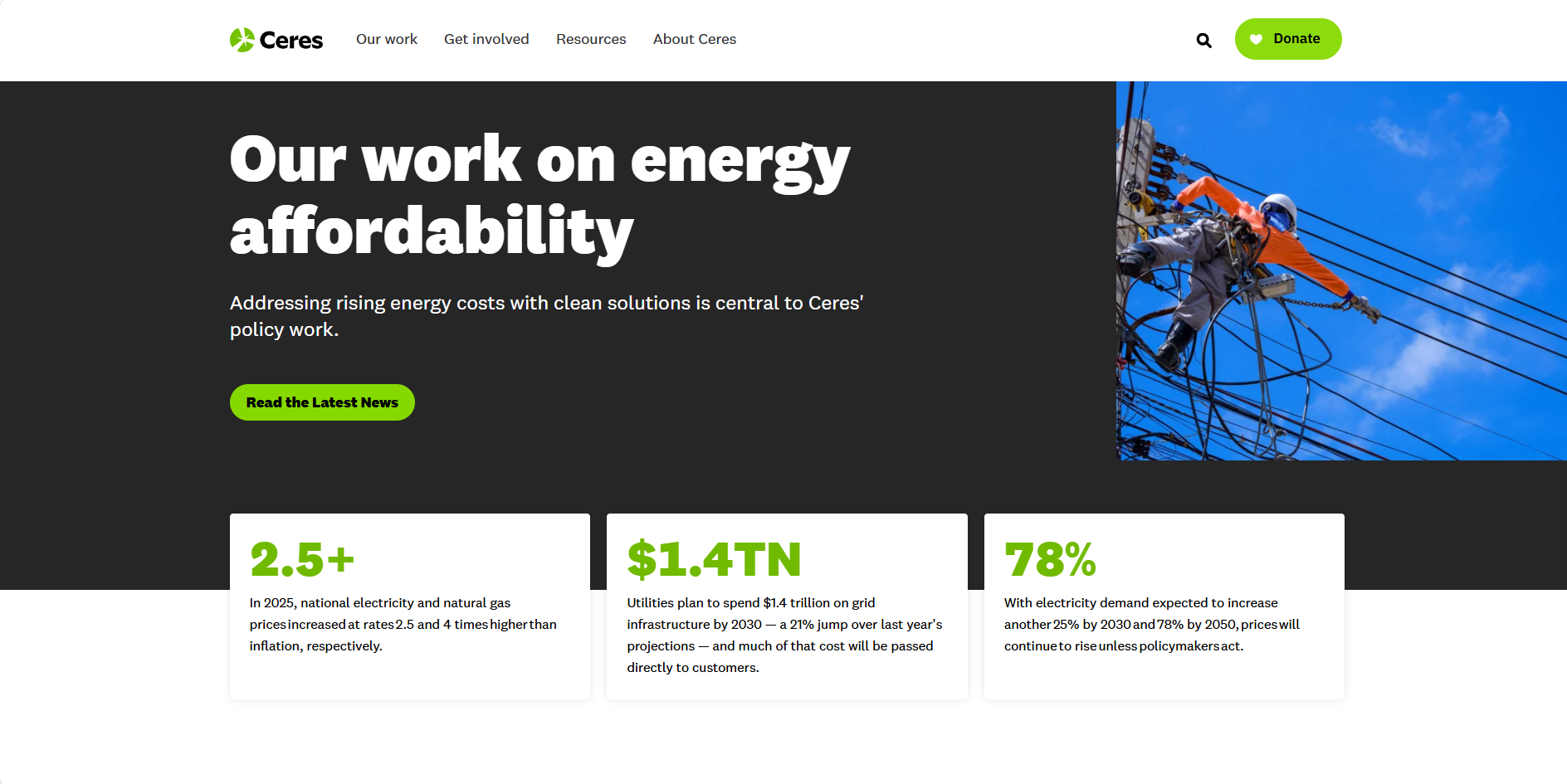
Ceres: Our work on energy affordability
A Ceres initiative and playbook focused on curbing rising energy prices through clean energy expansion, providing policymakers and investors with strategies for a modern, efficient, and affordable energy system.
Environmental crime: From blind spot to business risk
This report identifies environmental crime as an illicit economy worth USD 300 billion, posing significant financial risks to global businesses. It examines how illegal goods permeate supply chains and details tightening regulations. The research provides strategic actions for organisations to improve traceability and manage exposure effectively.
Global sustainable investment review series
This benchmark series provides a factual mapping of the state of responsible and sustainable investment across major global financial markets. Produced biennially, it offers regional insights and policy recommendations to help finance professionals navigate evolving regulatory frameworks, standardised methodologies, and the transition to a net-zero economy through international cooperation.

Mobilising capital for India’s critical minerals sector
This report examines financing challenges in India's critical minerals sector across upstream, midstream, and recycling segments. It evaluates the National Critical Mineral Mission's role in addressing capital gaps and suggests de-risking projects to ensure commercial viability and support India’s energy transition goals through strategic policy and international partnerships.
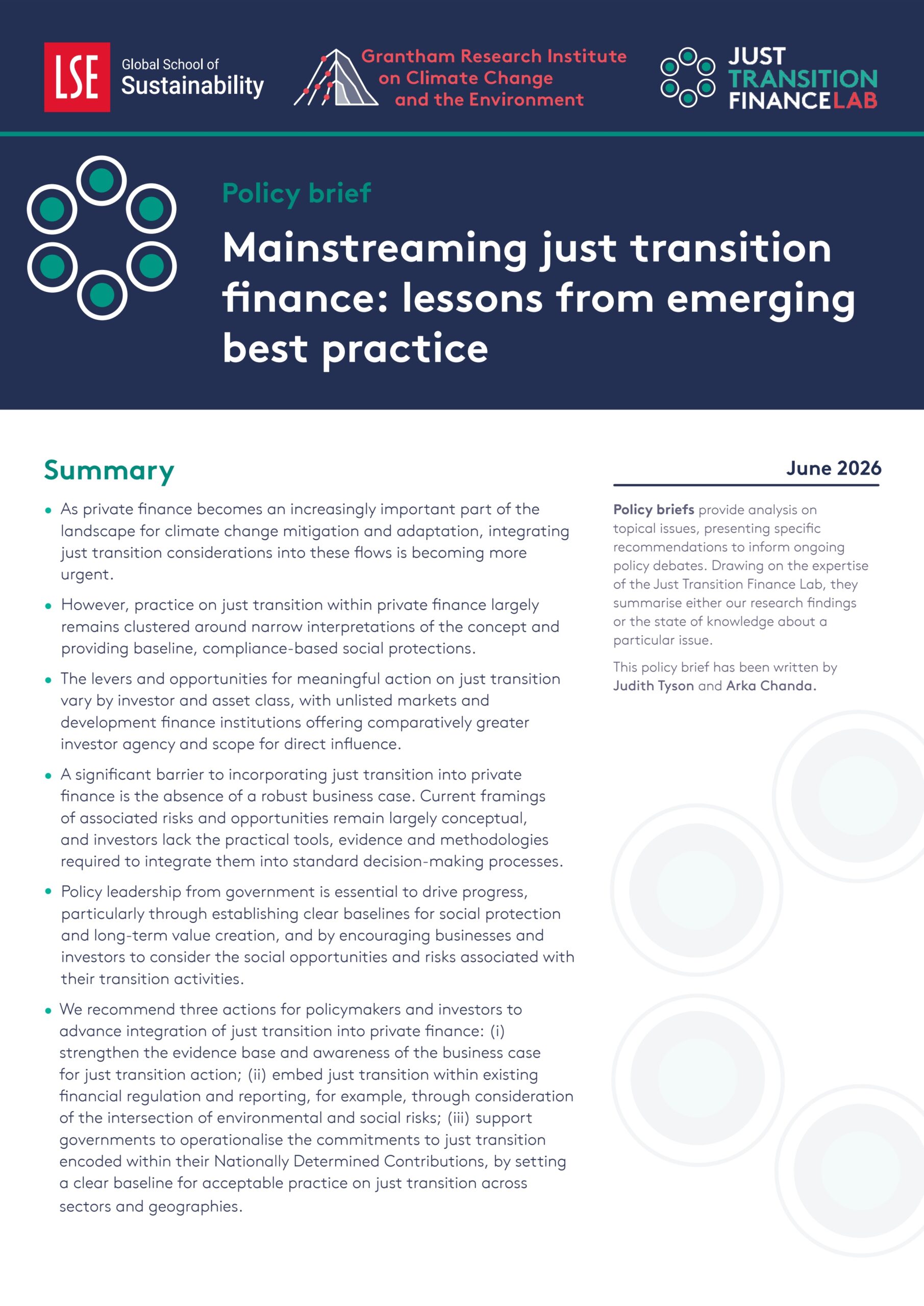
Mainstreaming just transition finance: Lessons from emerging best practice
This report examines the integration of just transition principles into private finance. It highlights structural barriers, including the lack of robust business cases and quantifiable evidence. Recommendations include embedding just transition into existing regulatory frameworks, strengthening the evidence base for commercial benefits, and aligning private incentives with national commitments.
Cyber risk stress testing for banks
This report examines cyber risk stress testing for banks, contrasting system-focused and firm-focused approaches. Drawing on exercises by the Bank of England, the Danish Financial Supervisory Authority, and the European Central Bank, it outlines scenario design, operational resilience, and the role of disclosure in establishing best practices.
Mapping social and environmental due diligence legislation
This OECD report maps 21 legislative measures across 11 jurisdictions concerning social and environmental due diligence. It identifies key areas of convergence and divergence in regulatory scope and requirements. The findings aim to support international policy co-operation, reduce implementation complexity, and promote consistent global enforcement approaches.
A well-adapted UK: The fourth independent assessment of UK climate risk (CCRA4-IA)
This report assesses the UK’s climate risks to 2050, identifies priority adaptation actions across key sectors, and outlines investment, policy and governance measures to strengthen resilience. It provides evidence-based recommendations to support climate adaptation planning and reduce long-term economic and societal impacts.
AI data centers and electricity demand: Taming the energy guzzlers
This paper examines AI data centre electricity demand and its costs for ratepayers and the environment. It finds that Big Tech market capitalisations have risen far above predicted levels since ChatGPT's 2022 launch, while data centres drive up electricity prices and fossil fuel use. Regulatory reforms and innovations are recommended.
Carbon tariffs, emissions leakage, and production relocation
This paper examines whether carbon tariffs prevent emissions leakage from firm relocation in a North-South duopoly model. It finds that carbon tariffs combined with export rebates form the optimal carbon tax regime, preventing leakage when the northern firm's emissions intensity exceeds fifty percent of the southern firm's, and can benefit both countries.


