
Library | Sustainable Finance Practices
Laws and regulations
Government policies, legislation, and regulatory frameworks that shape sustainable finance practice, including mandatory disclosure rules, climate law, financial regulation, and ESG-related requirements.

Refine
550 results
REFINE
SHOW: 16


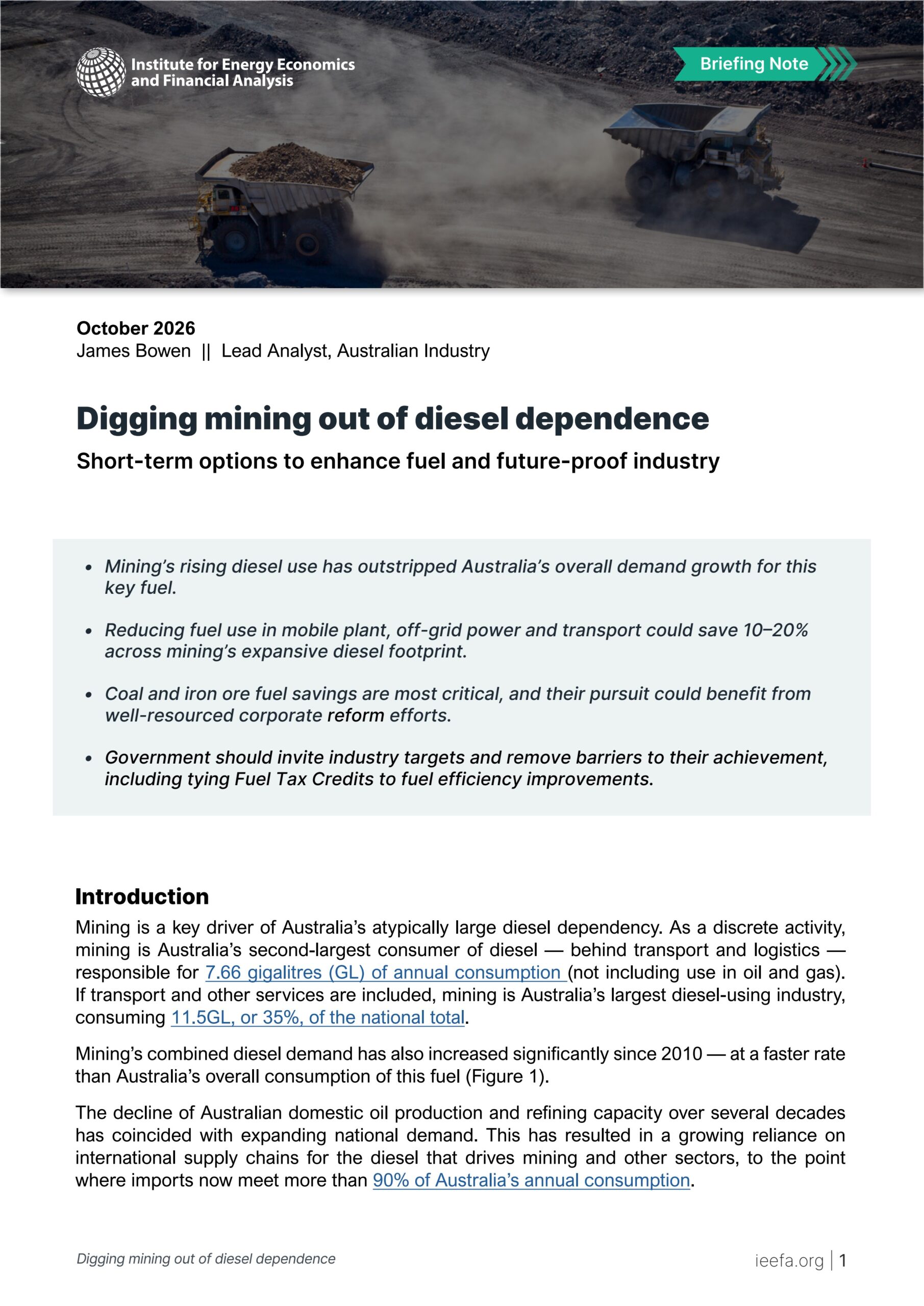
Digging mining out of diesel dependence: Short-term options to enhance fuel and future-proof industry
This report examines Australia's mining industry's heavy reliance on diesel and identifies short-term efficiency improvements to reduce consumption by 10–20%. It highlights critical roles for coal and iron ore sectors, explores barriers like the Fuel Tax Credit system, and proposes policy reforms to enhance national fuel security.
National development banks: Policy integration for climate
This research analyses the integration of national development banks (NDBs) into climate policies across 103 economies. It highlights that only 17.5% of countries explicitly reference NDBs in climate commitments. The report provides recommendations for governments and NDB leadership to strengthen institutional alignment and improve climate finance effectiveness.
The price of climate talk: Central bank communication, climate governance, and sovereign risk premia
This research examines how central bank climate communication affects 10-year sovereign bond yields. Using a dataset of over 17,000 speeches, it finds that climate-related discourse increases yields by making risks more salient. This effect is stronger in countries with independent central banks, reflecting the role of institutional credibility.
The economic value of decarbonising the Pilbara
This report evaluates the economic impact of applying a A$50 million Fuel Tax Credit cap to decarbonise the Pilbara. It estimates A$7.1 billion to A$13.2 billion in economic value, including A$5.6 billion in induced investment, 16,800 cumulative jobs, and significant carbon abatement facilitated by common-user transmission infrastructure.
Climate governance under pressure: The Anti-ESG movement’s impact on Canadian institutional investors
This report analyses the impact of the US anti-ESG movement on Canadian institutional investors. It examines governance challenges in integrated markets, shifts in proxy voting, and regulatory changes. Despite political spillover, the analysis highlights the resilience of Canadian legal frameworks and the ongoing commitment to climate-risk oversight.
IPSASB SRS 1, Climate-related disclosures
This IPSASB standard establishes principles for public sector entities to disclose climate-related risks and opportunities. Aligned with IFRS S2, it mandates disclosures regarding governance, strategy, risk management, and performance metrics. The standard prioritises accountability for long-term fiscal sustainability and service delivery, with an effective date of 1 January 2028.
Unlocking textile circularity in the EU: From challenges to opportunities
This report examines barriers and enablers for scaling up textile recycling in the EU. Combining literature reviews with 20 stakeholder interviews, it identifies technological, financial, and regulatory constraints. Recommendations include supporting demand-side measures, funding sorting technology research, and strengthening value chain collaboration to achieve circularity targets.
Public procurement and AI governance: Developing a strategic framework for middle powers
This report evaluates how 'AI middle powers' can use public procurement as a strategic governance tool to mitigate risks from foreign-led frontier AI. It proposes a framework of contractual guarantees and recommends international coordination to increase bargaining leverage, enhance visibility, and secure data sovereignty against technological dependencies.
Governing global externalities: Investor voice amid fragmented policy
This research examines how corporate stewardship and policy advocacy address global externalities. Stewardship is more effective when foreign regulation is absent and leakage is high. However, if foreign regulation is feasible, stewardship can crowd out policy, while advocacy can encourage international regulatory coordination through strategic complementarity.
Crosswalking SBTN freshwater requirements with CSRD water disclosures
This report compares the SBTN freshwater framework with EU CSRD and ESRS requirements. It identifies areas of alignment, such as materiality assessments and basin-level analysis, while highlighting differences in scope. SBTN provides the scientific foundation for setting targets that support mandatory reporting obligations under European standards.
Bank executive compensation and risk-taking
This research investigates bank executive compensation since the Great Financial Crisis. It finds that longer deferral horizons successfully reduce risk-taking and encourage prudent capital management. However, evidence regarding variable pay caps is inconclusive. Case studies from 2023 failures highlight governance shortcomings in risk-adjusting performance metrics and compensation schemes.
Spillover effects of regulatory inspections: Evidence from OSHA
Occupational Safety and Health Administration inspections significantly reduce injuries at nearby, uninspected workplaces. An inspection reduces injuries at same-ZIP-code establishments by 11 per cent, preventing six times more injuries through spillovers than direct effects. These findings suggest conventional evaluations substantially understate the social returns to regulatory enforcement.
Analysing the EU policy mix for the built environment from a sufficiency perspective
This research assesses the integration of sufficiency principles into European Union building policies. Analysing 16 policy documents, it finds that while measures for reducing consumption and environmental sustainability are prevalent, social dimensions and behavioural changes are often neglected. It recommends prioritising building renovation over new construction to meet sustainability goals.
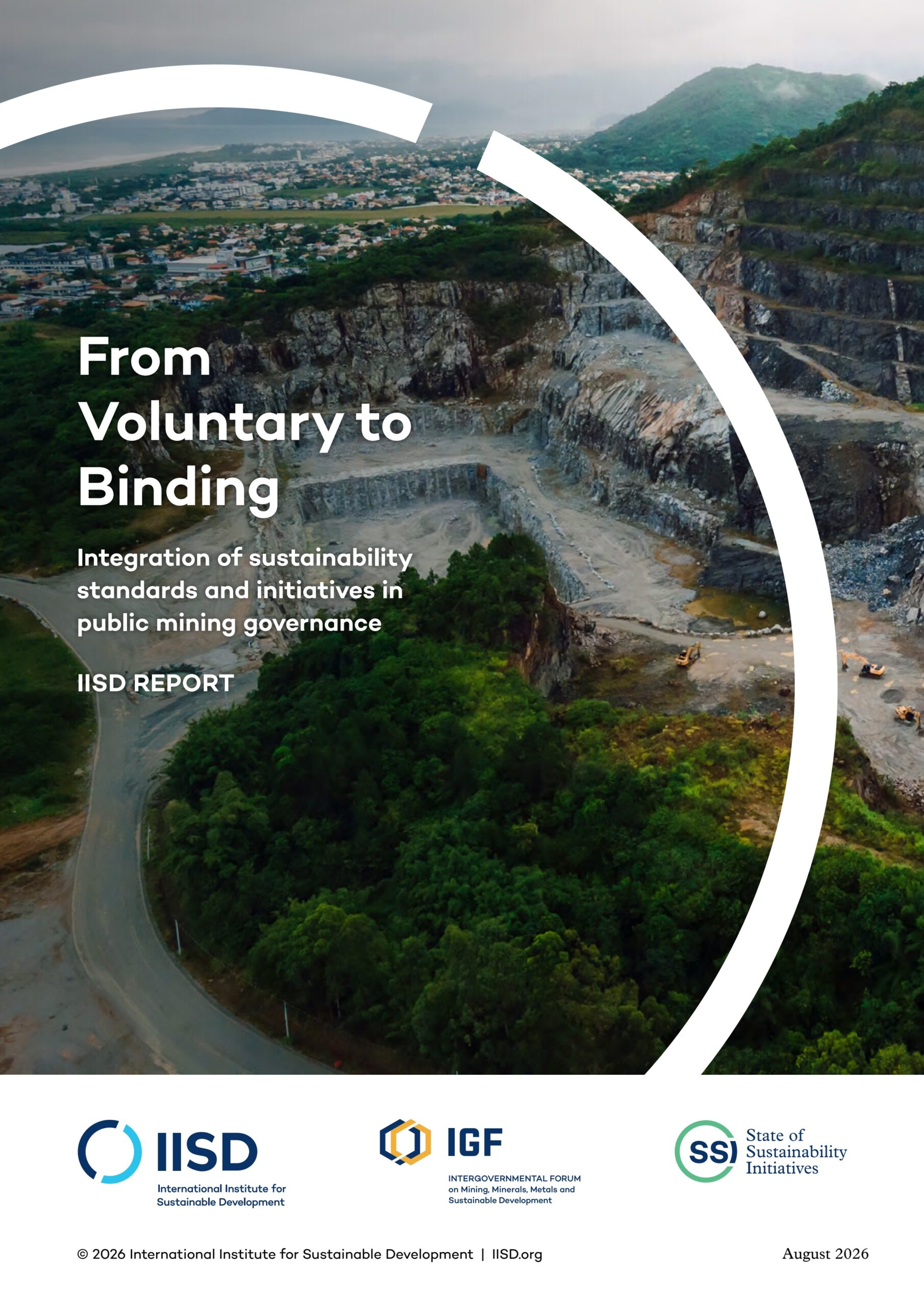
From voluntary to binding: Integration of sustainability standards and initiatives in public mining governance
This report examines the integration of sustainability standards and initiatives (SSIs) into public mining governance. Through surveys and case studies in Brazil, Madagascar, and Sweden, it demonstrates how voluntary standards complement mandatory regulations to address environmental, social, and governance risks, supporting policy formulation, implementation, and transparent reporting.
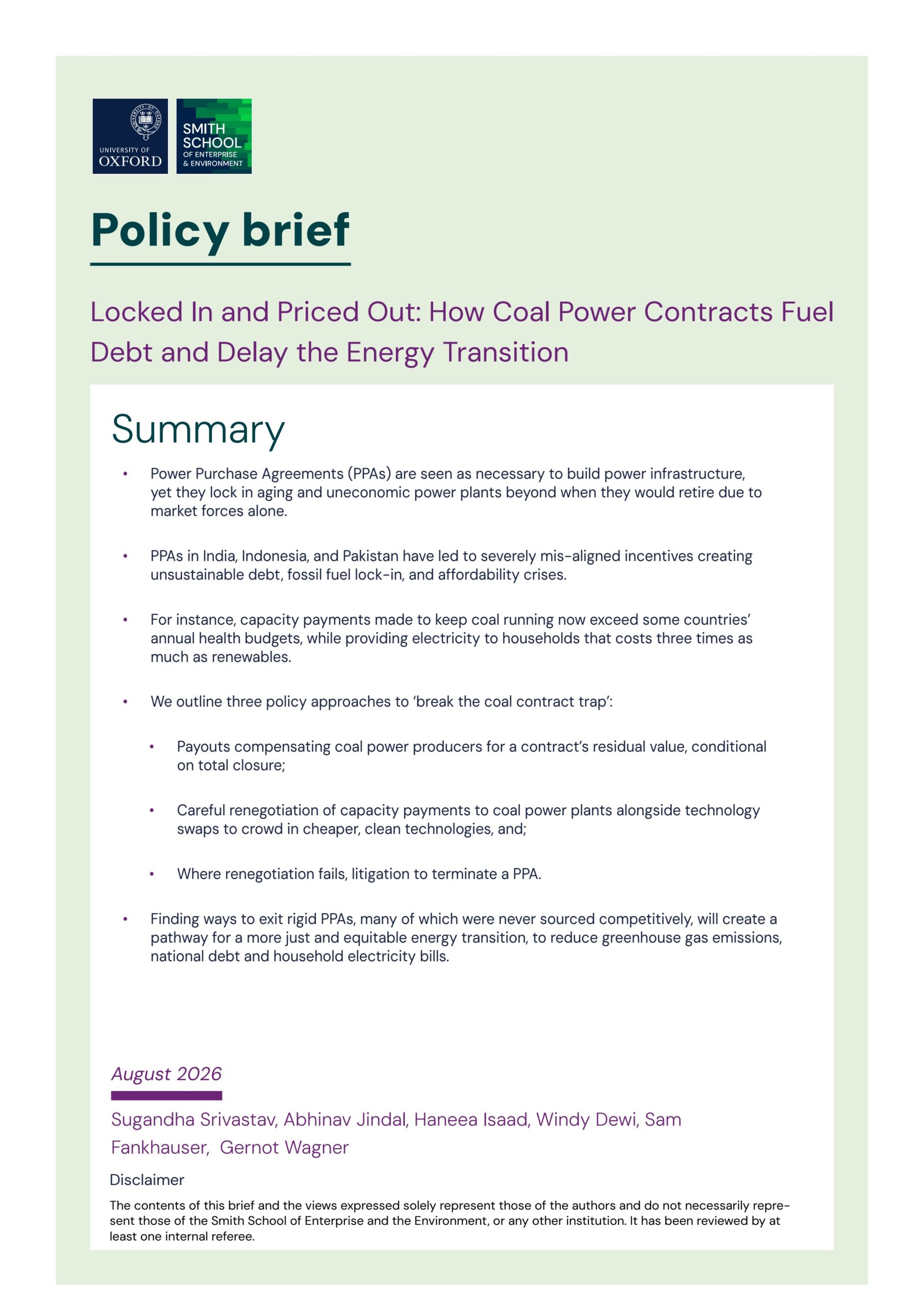
Locked in and priced out: How coal power contracts fuel debt and delay the energy transition
This report examines how rigid power purchase agreements for coal power in India, Indonesia, and Pakistan create unsustainable debt and delay the energy transition. It highlights how these contracts lock in expensive, polluting energy and proposes policy solutions including payouts, technology swaps, renegotiation, and litigation.
The impact of patient capital
This research examines how investor patience influences venture capital strategies and startup outcomes. Using a 2014 Chinese reform and a survey experiment, it demonstrates that longer-horizon investors, such as insurers, lead funds to adopt longer holding periods and earlier-stage investments, significantly improving portfolio innovation and successful exit rates.


